-
202060
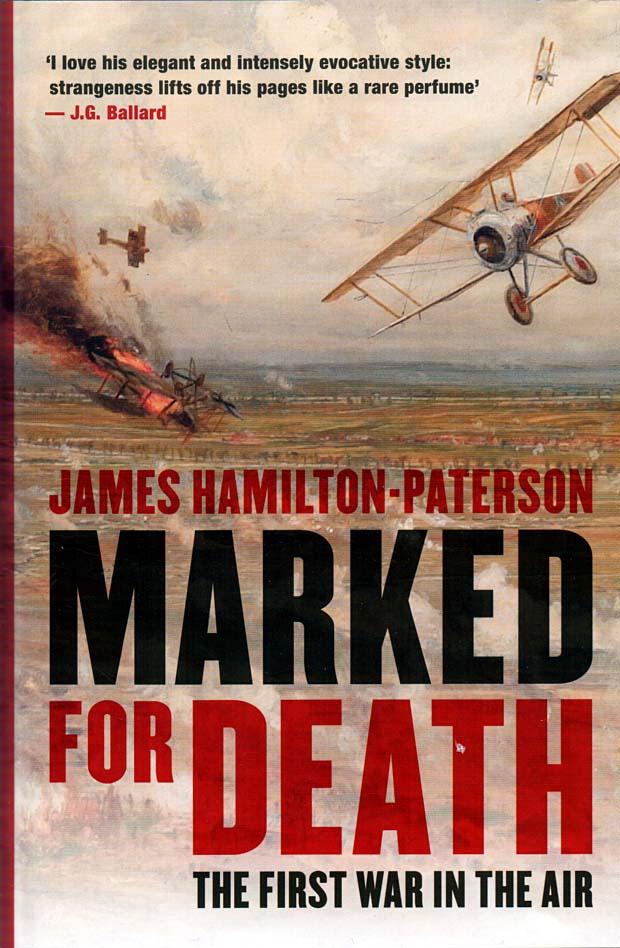
Hamilton-Preston, James
- Marked for Death The First War in the Air
Head of Zeus Ltd., London, 2015.
Octavo; hardcover, with silver-gilt spine titles, decorated endpapers and a burgundy ribbon; 356pp., with 16pp. of monochrome and full-colour plates. Dustwrapper. Remainder. New. "Early in the history of military aviation, the Dutch aircraft designer and pilot Anthony Fokker famously remarked, "Every man who went aloft was marked for death, sooner or later, once his wheels had left the ground." Those skepticisms seemed justified when war erupted in August 1914. Engines were weak, and weight so critical that a pilot's chances of getting off the ground were reduced simply by donning a heavy sheepskin flying coat. Speeds were 50 to 60 miles an hour; indeed, a good headwind could cause a plane to fly backward relative to the ground. Most existing aircraft could scarcely lift the deadweight of a gun and ammunition - one early plane had a gunner perched in a crude wooden box in front of the propeller, his head only inches from the swirling blade. Luckily, there were swift improvements. Within four years, both adversaries boasted planes that could climb to 20,000 feet and fly at more than 200 mph in a dive, reaching g-forces that could have reduced earlier models to instant firewood. One important invention was a synchronized machine gun able to fire through the propeller arc (first developed by Germany, followed quickly by Britain). According to the author, the concept of aerial combat quickly achieved a firm grip on public imagination, a throwback to a cleaner sort of war: gladiatorial, personal, even romantic, a vivid contrast to trench fighting. Newspapers gave glowing accounts of such aces as the German Red Baron, Manfred von Richthofen, 54 of whose 80 victims were shot down in flames. By his estimate, some 50,000 aircrew (from both sides) died in the war, including training and accidents. As he writes, airmen shared with the infantry an identical 70 percent chance of injury or death. Several men who were brave to the point of recklessness gave aviation significant boosts. Consider Noel Pemberton Billing, a strapping (six feet four inches) eccentric who learned of a German Zeppelin balloon facility near the French border. Wearing civilian clothes that would have got him shot as a spy had he been caught, Billing reconnoitred the sheds to plan a raid. Three aircraft were crated and shipped by ferry and truck to France, reassembled and each outfitted with four twenty-pound bombs. As Mr. Hamilton-Paterson writes, a new hydrogen plant the Germans had just built disappeared in a huge fireball. James Hamilton-Paterson, an Australian, is an expert on British aviation. He concedes that aviation in the vast conflict was little more than a highly visible sideshow and had limited influence in the war's outcome. But after four years, as technology developed, aviation was clearly going to change the nature of warfare and ensure its own future." - Joseph C. Goulden
Click here to order
$24
|
|