lamdha books -
Catalogue of books on birds

Click on the small images at right to see a larger picture

76442
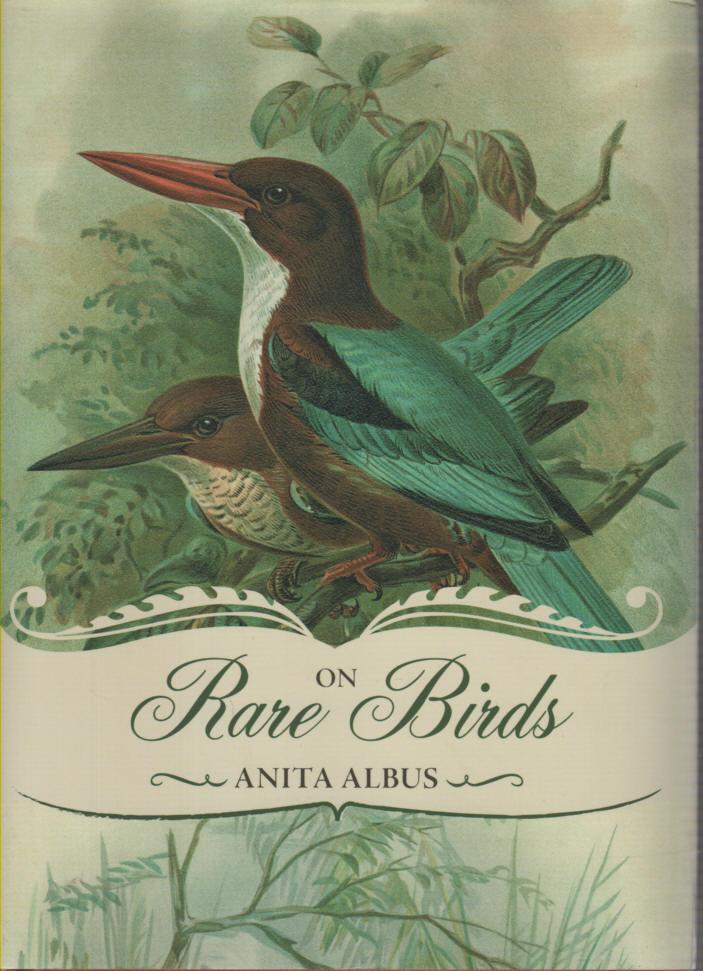
Albus, Anita (Gerald Chapple, trans.)
On Rare Birds
New South Books, University New South Wales, Sydney, NSW, Australia, 2011.
Quarto; hardcover, with decorated boards and endpapers; 276pp., with many colour & monochrome illustrations. Minor wear; near fine in like dustwrapper. This book tells the compelling stories of ten rare or extinct bird species - from the tragic demise of the once abundant passenger pigeon to the shooting death of the last Carolina Parakeet in the wild, and from the startling natural defenses of the 'willful Nightjar' to the diverse cultural significance of the Kingfisher. Some stories bear sad witness to precious species we have lost, but they are all fascinating and often heart-warming or humorous depictions of the unique lives and loves of birds.
Click here to order

$22
98613
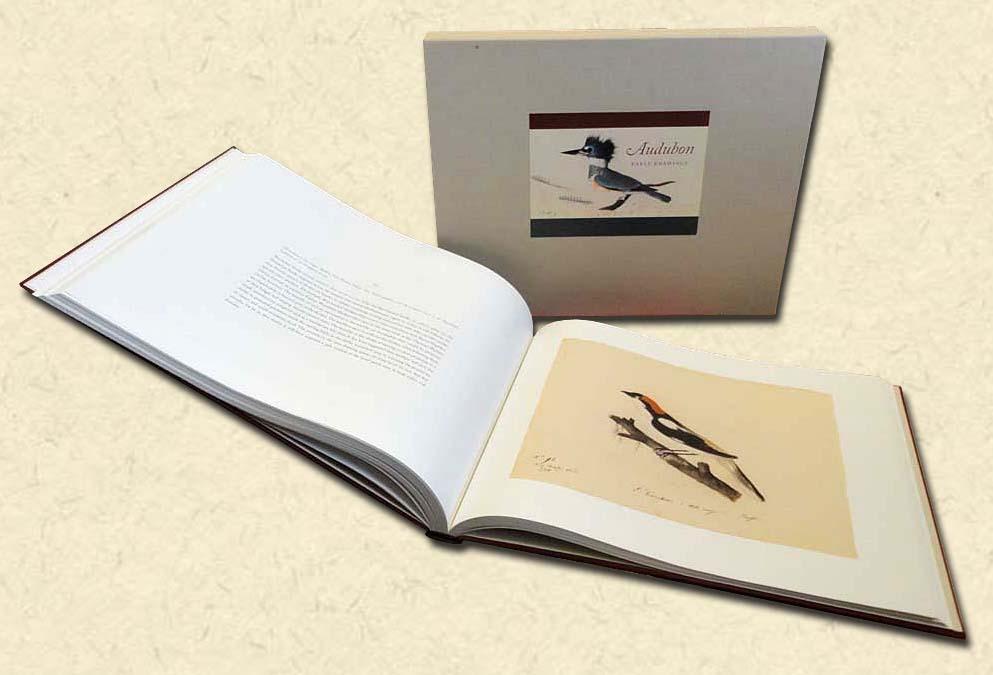
Audubon, John James (Foreword by Leslie A. Morris; Introduction by Richard Rhodes; Scientific Commentary by Scott V. Edwards; Jennifer Snodgrass, ed.)
Audubon Early Drawings
The Belknap Press of Harvard University Press, Cambridge MA, 2008.
Landscape quarto; hardcover, with gilt spine titles; 252pp., with many colour illustrations. Minor wear. No dustwrapper as issued. Fine in a slightly rubbed slipcase with a tipped-on illustrated label. "One of the great pleasures of [this book], with its lavish reproductions and scientific notes, is that it allows us to see the naturalist turning into the artist, laboring not merely to give his birds scientific accuracy but an almost uncanny life force. In his excellent introduction, Richard Rhodes, the author of a superb biography of Audubon, emphasizes the degree to which Audubon was obsessed with giving dead birds life. This was an artistic problem, but it seems to have had a quasi-mystical quality for Audubon as well. He wanted the creature, drained of life and colour, to spread its wings again. Audubon tried various strategies - hanging the birds from the ceiling by a foot or beak with their wings spread - though the early results were dismal until he hit on a special system: a board covered with sharpened wires in the form of a grid. He impaled the dead bird in a lifelike pose of his own devising and then transferred the bird's likeness to paper, similarly marked with a grid, to ensure proportional accuracy. The book's centerpiece consists of the 116 drawings, reproduced in large format and full color, made during Audubon's first decade in the United States (though the volume includes renderings of European birds made during a visit back to France in 1805.) While this is apprentice work, and many of the birds hold the upright patient pose of a businessman sitting for a portrait, there are several drawings that carry the signature animation that became Audubon's hallmark, whether in the case of a gray catbird opening its wings or a belted kingfisher with the hairstyle and charisma of a punk rocker." - Jonathan Rosen.
Click here to order

$75
216080
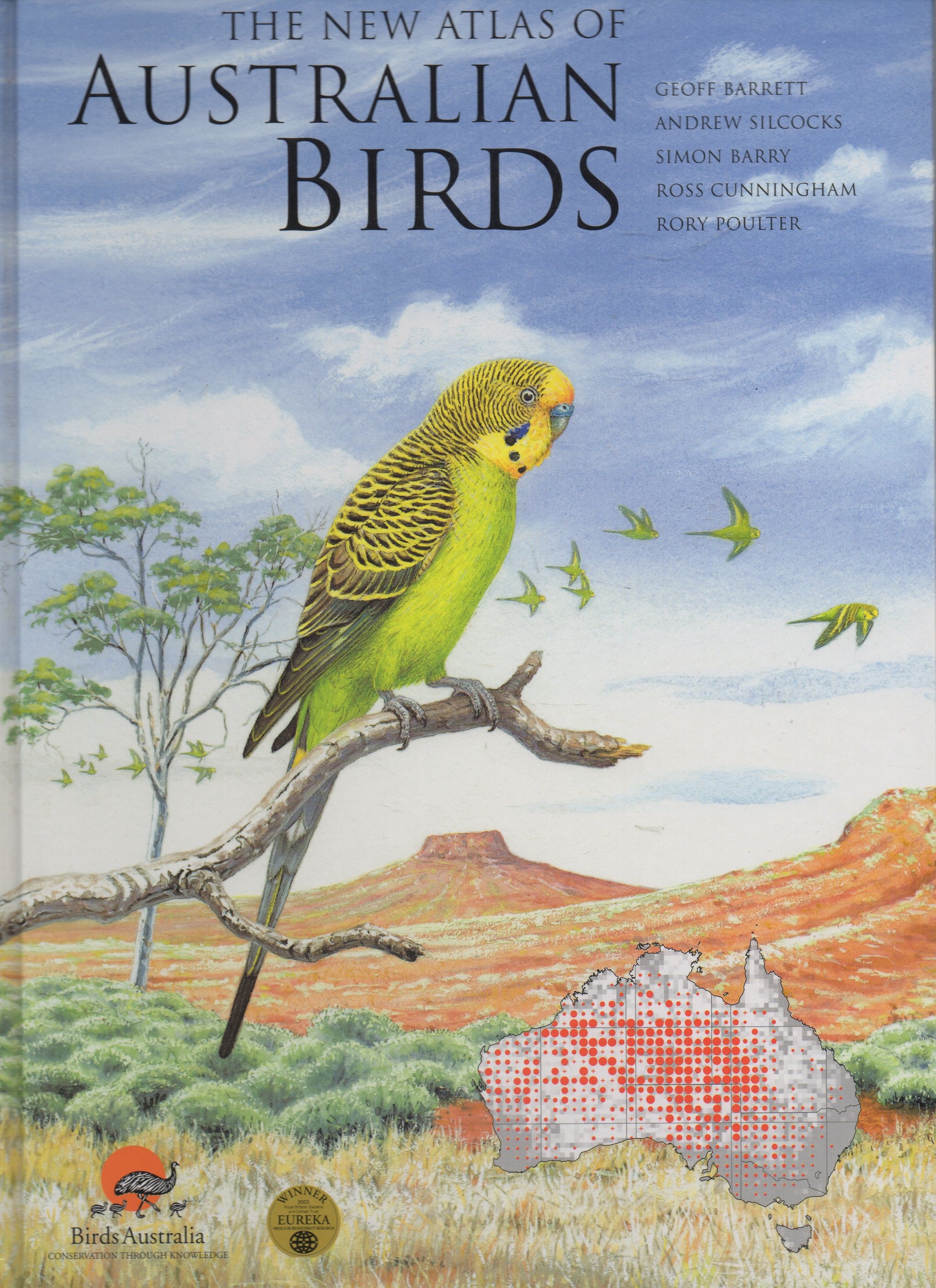
Barrett, Geoff; Andrew Silcocks; Simon Barry; Ross Cunningham; Rory Poulter
The New Atlas of Australian Birds
Royal Australian Ornithologists Union, Hawthorn East, 2003.
First edition. Large quarto hardcover; illustrated boards; 824pp., monochrome illustrations, distribution maps in black and red; appendices (5). Minor wear only; one or two very faint marks on side edges; small bump on head of spine. No dustwrapper as issued. Near fine. The idea of an Australian bird atlas based on data collected by volunteer observers (atlassers) was first mooted in 1972. Because of the daunting scale of the task, however, to test feasibility, a pilot atlas was carried out on the southern coast of New South Wales from March 1973 to September 1974 with 168 volunteers covering an area of 13,600 square kilometres. Some 20 years after the commencement of fieldwork for the first Atlas, in 1997, Birds Australia began negotiations with Environment Australia towards obtaining funding for a new atlas project. In 1998, a grant from the Natural Heritage Trust's Bushcare and Wetlands programs was approved. Fieldwork began in August 1998 and has continued since, though after about four years there was a funding cut-off as well as a deadline for book publication purposes late in 2002. Methodology was based on that of the first Atlas but improved by the use of GPS receivers and scannable survey sheets. During the four-year period over 7,000 atlassers completed 279,000 surveys, producing 4.7 million records of 772 bird species. Coverage was greater than the first Atlas since, as well as the Australian continent and major islands, the second Atlas included records from Australia's territorial waters and the external territories of Christmas Island, Cocos (Keeling) Islands and Norfolk Island. As with the first Atlas, the results have been published as "The New Atlas of Australian Birds"
Click here to order

$150
56292
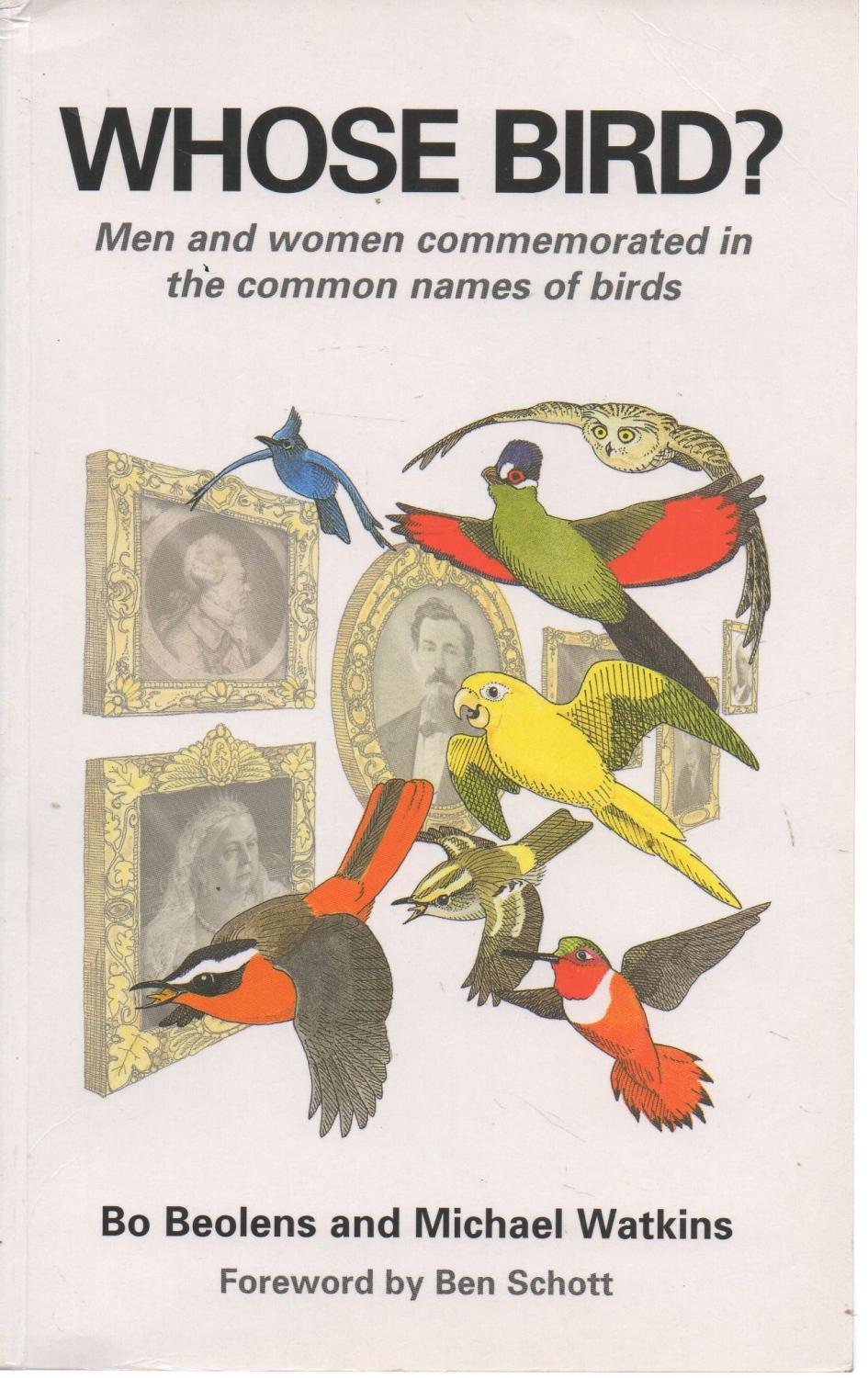
Beolens, Bo & Michael Watkins
Whose Bird? Men and women commemorated in the common names of birds
Christopher Helm, London, 2003.
Paperback, octavo, 400pp., monochrome illustrations. Cover edges and corners slightly worn; bumped head of spine; creased corners. Else very good. Birders often wonder who exactly is being commemorated in the names of many of our most familiar bird species. Was Bonaparte's Gull named after Napoleon? "Whose Bird?" answers this kind of question and many more by presenting - in a handy A-Z format - a potted biography of every individual who has ever given their name to a species of bird. In total, 2,246 birds and 1,124 people are covered. With many astonishing and bizarre details, this is a sui generis compendium.
Click here to order

$16
68286
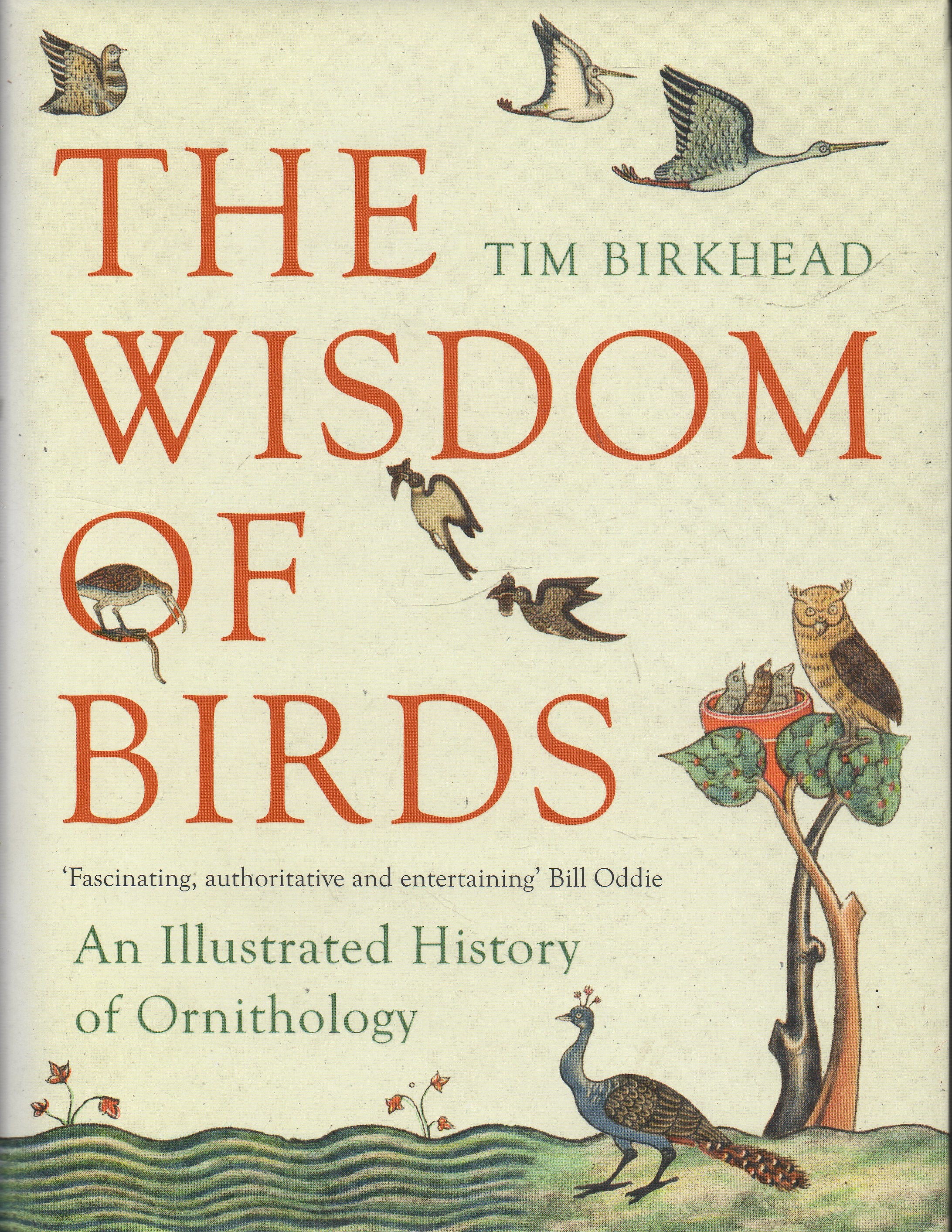
Birkhead, Tim
The Wisdom of Birds An Illustrated History of Ornithology
Bloomsbury, London, 2008.
Small quarto hardcover; green boards with gilt spine title and decoration; ochre endpapers; 433pp., colour illustrations. Minor wear only; near fine in like dustwrapper. In The Wisdom of Birds, Birkhead takes the reader on a journey that not only tells us about the extraordinary lives of birds - from conception and egg, through territory and song, to migration and fully fledged breeder - but also shows how, over centuries, we have overcome superstition and untested 'truths' to know what we know, and how recent some of that knowledge is. Conceived for a general audience, and illustrated throughout with more than 100 exquisitely beautiful illustrations, many of them rarely, if ever, seen before, The Wisdom of Birds is a book full of stories, knowledge and unexpected revelations.
Click here to order

$32
209604
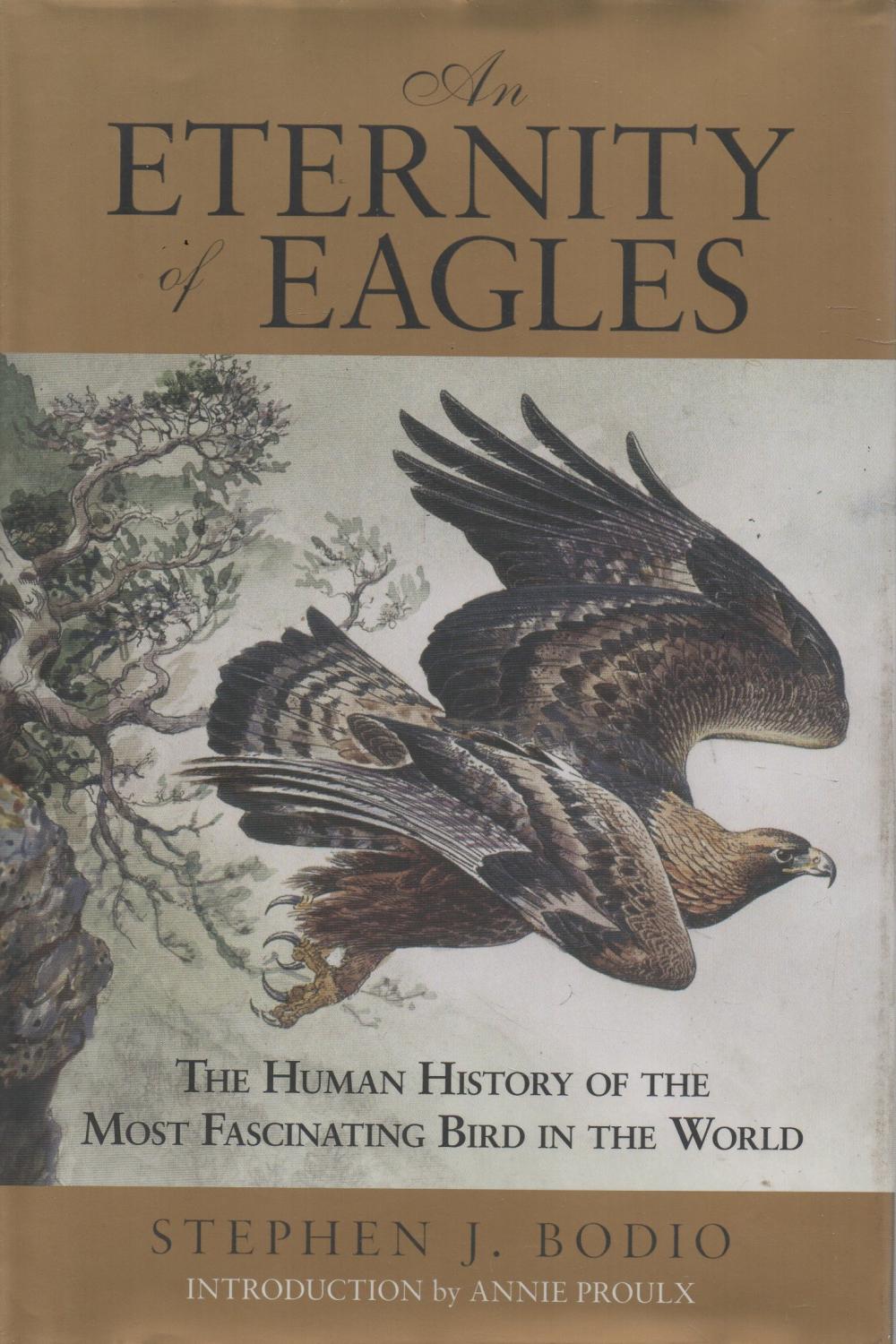
Bodio, Stephen
An Eternity of Eagles The Human History of the Most Fascinating Bird in the World
Lyons Press, Guilford, 2012.
Octavo hardcover; black boards with gilt spine titling; 202pp., colour & monochrome illustrations. Mild rubbing to dustwrapper. Wrapper now professionally protected by superior non-adhesive polypropylene film. Near fine. An Eternity of Eagles follows Bodio's book about his travels with the hunters of Mongolia, Eagle Dreams. He provides reproductions of paintings by such artists as John James Audubon, Louis Agassiz Fuertes, Emil Doepler and especially the Russian Vadim Gorbatov, whose paintings and color photography of Kazakh and Mongolian eagle-falconers add another dimension to the narrative and complement the author's own photography. Bodio comprehensively covers the world of eagles, including golden eagles, bald eagles, the endangered Philippine monkey eating eagle and the huge harpies of Africa and South America. He also provides a history of humans' relations with the bird. Particularly interesting are a petroglyph from Kazakhstan from about 1300-1200 B.C. and a Chinese hunting scene featuring a hare chased by hounds, an eagle and a hunter on horseback, circa A.D. 350-450. Kazakhs hunt wolves and deer and other creatures with eagles from horseback, and Bodio thinks the ancestors of the Kazakhs may have been the first to hunt this way. He provides eyewitness accounts from publications by travellers and discusses how the birds are captured and trained to hunt. The author also includes a chapter on how these noble creatures were, for a long time, treated as vermin, hunted from the ground and air and poisoned. In the United States, these practices have been outlawed and bird numbers are recovering. - Kirkus review
Click here to order

$24
86965
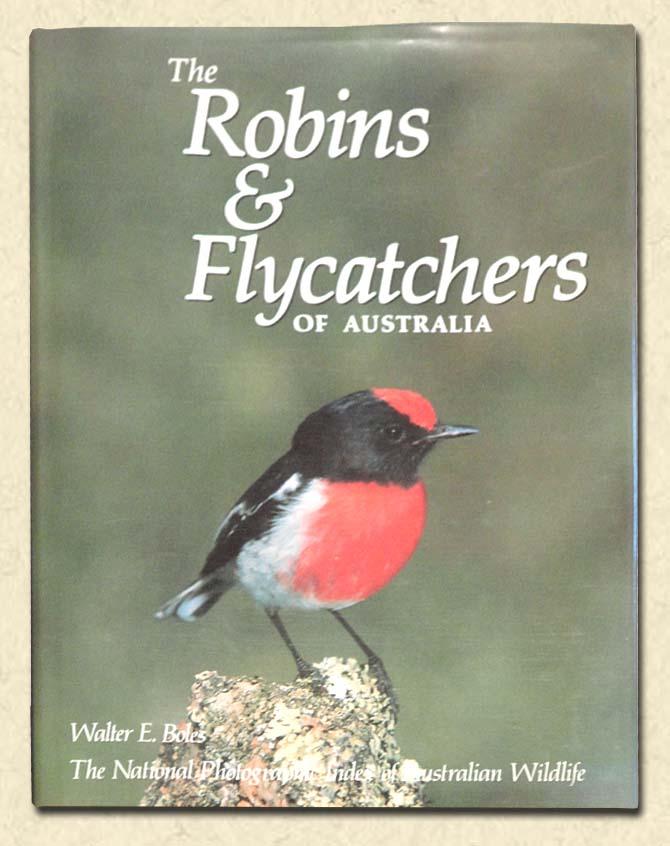
Boles, Walter E.
The Robins & Flycatchers of Australia
Angus & Robertson, North Ryde NSW, 1988.
Quarto; hardcover; 508pp., with many colour illustrations. Minor wear; a few internal marks and spots. Otherwise very good to near fine in like dustwrapper. Inhabitants, for the most part, of woods and forests, these birds, widely known as robins, flycatchers and monarchs, are largely insectivorous and arboreal, though many robins forage on the ground. Although a few, such as the thrushes, are introduced, the majority of species are native and represent a cluster of families that, according to recent studies, appear to have their origins in Australia. Lucid, informative narratives introduce each species group, while synopses present a summary of fascinating details about such aspects as habitat, breeding and world distribution. Fine colour photographs portray the biology of each species - its behaviour, nest, eggs, young, appearance at rest and in flight and its various plumages.
Click here to order

$85
217298
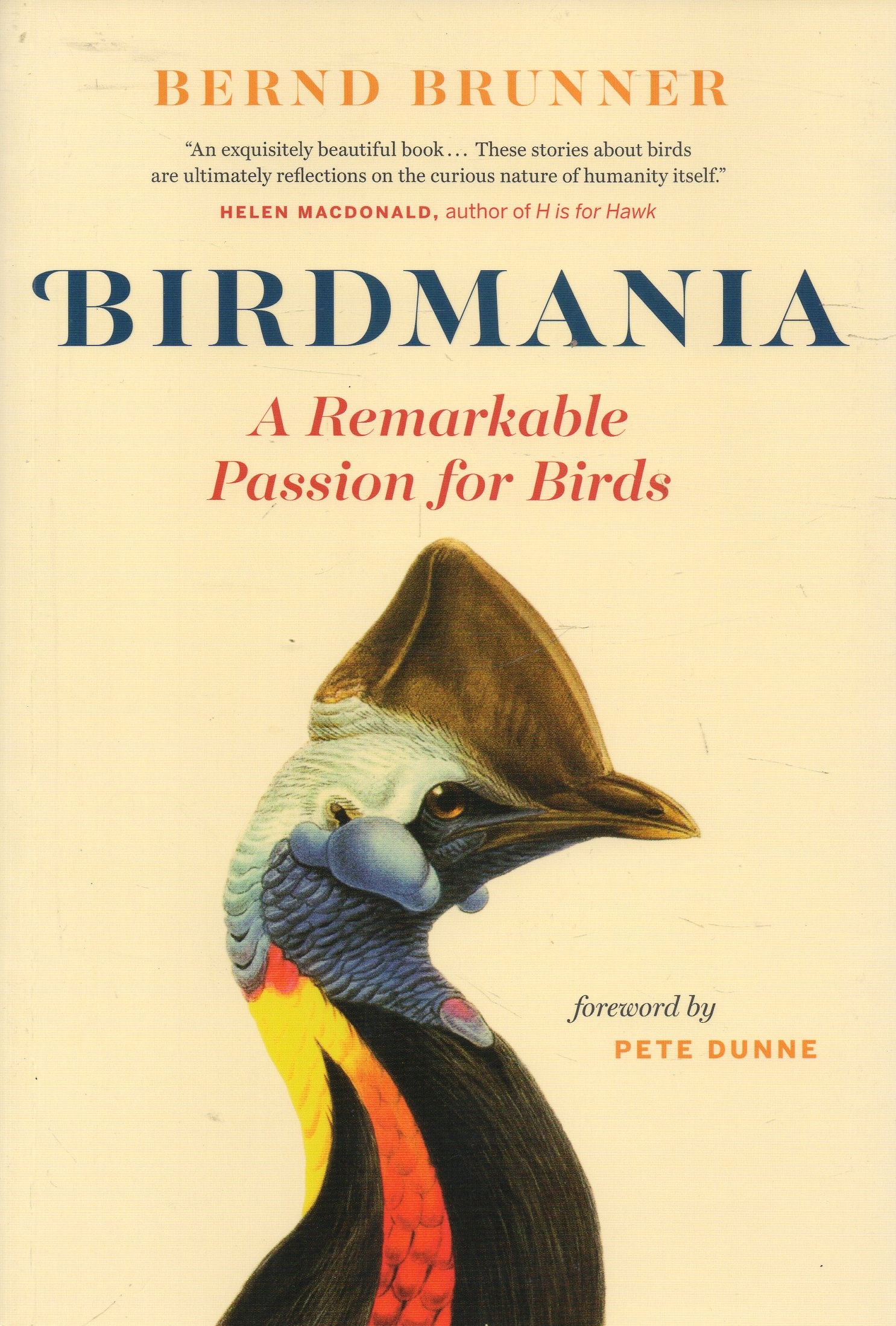
Brunner, Bernd (trans. Jane Billinghurst)
Birdmania: A Remarkable Passion for Birds
Allen & Unwin, Crows Nest, 2017.
Gate-fold octavo paperback; 292pp., colour illustrations. Minor wear only; a few scattered spots on text block edges. Very good. There is no denying that many people are crazy for birds. Packed with intriguing facts and exquisite and rare artwork, Birdmania showcases an eclectic and fascinating selection of bird devotees who would do anything for their feathered friends. In addition to well-known enthusiasts, such as Aristotle, Charles Darwin, and Helen Macdonald, Brunner introduces readers to Karl Russ, the pioneer of "bird rooms" and lover of the Australian budgerigar, who had difficulty renting lodgings when landlords realised who he was; George Lupton, a wealthy Yorkshire lawyer, who commissioned the theft of uniquely patterned eggs every year for twenty years from the same unfortunate female guillemot who never had a chance to raise a chick; Ambrose Pratt who leaves us a beautiful example of a devoted relationship between a lyre bird and an Australian hermit; Mervyn Shorthouse, who posed as a wheelchair-bound invalid to steal an estimated ten thousand eggs from the Natural History Museum in Tring; and Tibbles the 19th century cat, who belonged to the lighthouse keeper on Stephens Island in New Zealand, and who collected many of Lord Walter Rothschild's bird samples. As this book illustrates, people who love birds, whether they are amateurs or professionals, are as captivating and varied as the birds that give flight to their dreams.
Click here to order

$20
94425
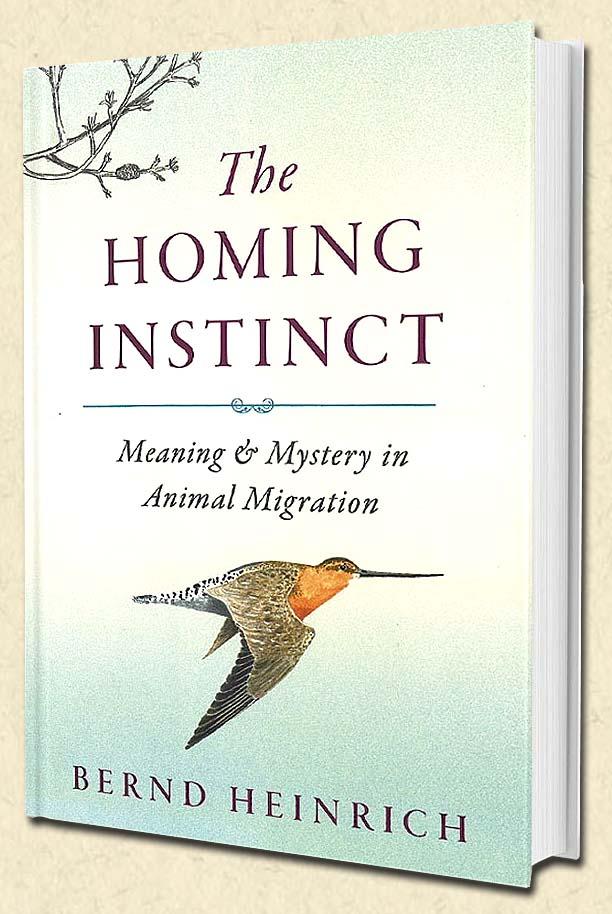
Heinrich, Bernd
The Homing Instinct: The Story and Science of Migration
William Collins, London, 2014.
Hardcover, octavo; black boards with silver gilt spine titling and decoration, dark beige endpapers; 352pp., monochrome illustrations. Minor wear; mildly toned text block edges. Near fine otherwise in like dustwrapper. Heinrich explores the fascinating science behind the mysteries of animal migration: how geese imprint true visual landscape memory over impossible distances; how the subtlest of scent trails are used by many creatures, from fish to insects to amphibians, to pinpoint their home; and how the tiniest of songbirds are equipped for solar and magnetic orienteering over vast distances. Most movingly, Heinrich chronicles the spring return of a pair of sandhill cranes to their pond in the Alaska tundra. With his marvellously evocative prose, Heinrich portrays the psychological state of the newly arrived birds, articulating just what their yearly return truly means, to the birds and to those fortunate enough to witness this transcendentally beautiful ritual. The Homing Instinct is an enchanting study of this phenomenon of the natural world, reminding us that to discount our own feelings toward home is to ignore biology itself.
Click here to order

$20
91560
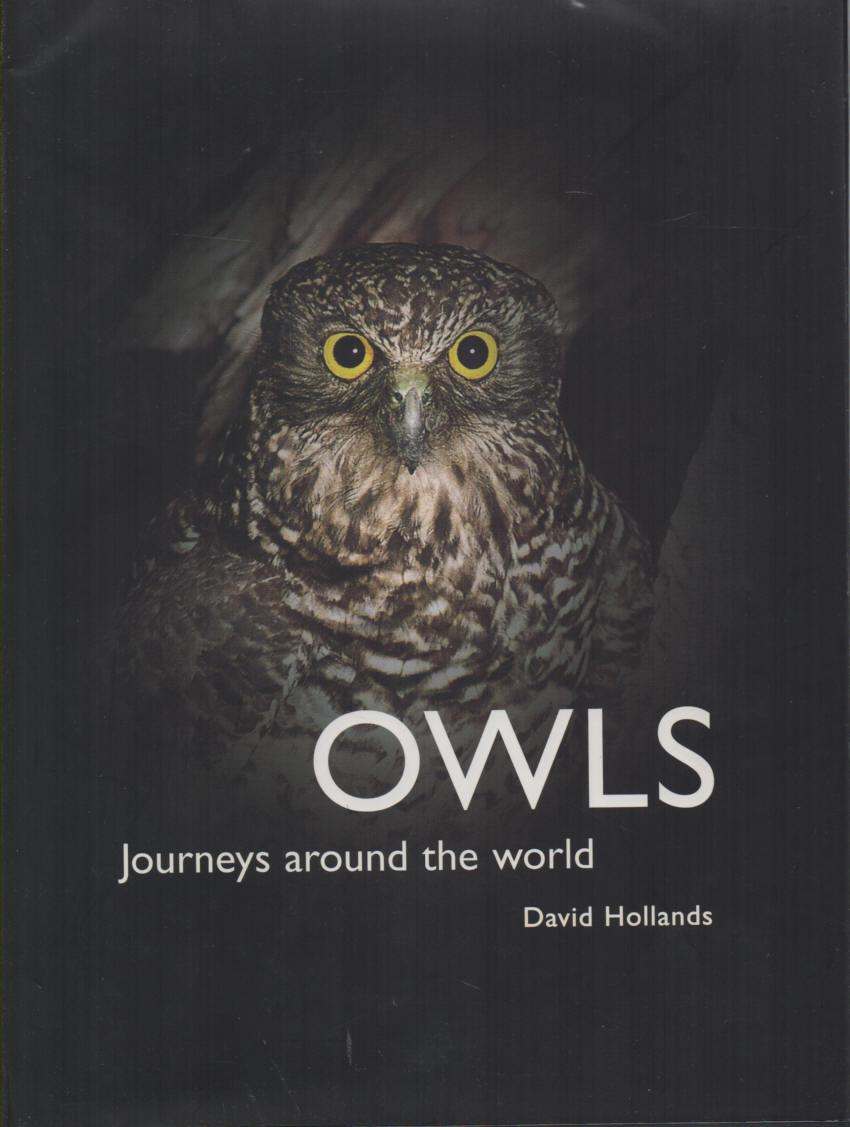
Hollands, David
Owls: Journeys Around the World
Bloomings Books, Melbourne, 2004.
Quarto hardcover; illustrated boards with white lower board and spine titling, grey endpapers; 236pp., colour illustrations. Minor wear only; rubbing to dustwrapper. Near fine otherwise in like dustwrapper. "I have a passion for owls. It has been there for longer than I can remember and shows no sign of going away. Some of my friends regard it as a disease or an obscure form of insanity and there seems no doubt that, once caught, the condition is lifelong and incurable. Surely no normal man would forsake his bed to spend his nights in the darkness of the forest, listening for a sound which might never come at all," writes the author. Beginning in 1961, but mostly in the last ten years, he has travelled to every continent except Antarctica, looking for owls, studying and photographing them, experiencing the countries where they live and meeting many remarkable people along the way. The result is an amalgam of all these things; a book, not just about owls but also about their dwindling habitat and the remarkable people who interact and care for them. The essays are stimulating and evocative, taking the reader with the author on a succession of journeys. They contain a wealth of owl observation and information and convey the wonder of these mysterious birds, the variety of their lifestyles and the fascinating places where they live.
Click here to order

$35
84199
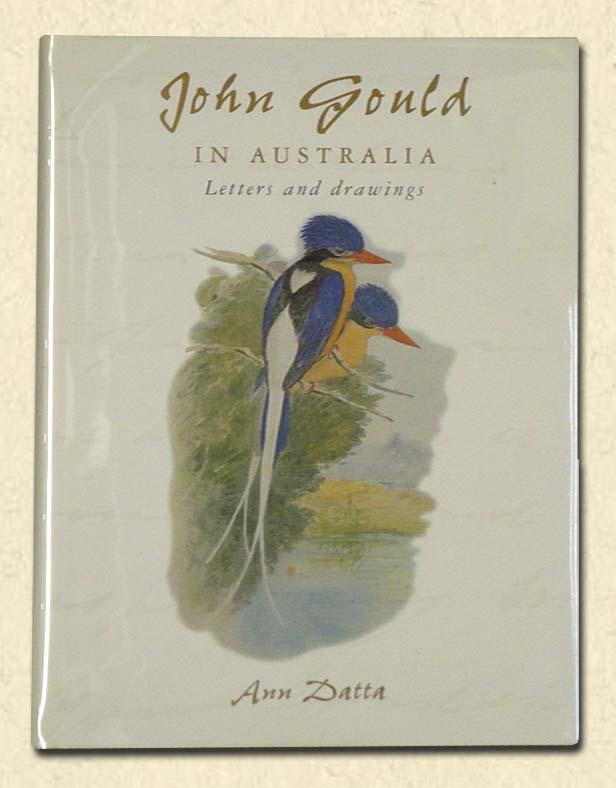
[John Gould] Datta, Ann
John Gould in Australia Letters and drawings
The Miegunyah Press/Melbourne University Press, Carlton South, Vic., Australia. 1997.
Quarto; hardcover, with gilt spine titling; 502pp., with many monochrome and full-colour illustrations. Mild spotting of the text block top edge; some softening of the spine heel; old security tag on the last page. Dustwrapper now professionally protected by superior non-adhesive polypropylene film. Fine. Edition of 1000 copies In 1838 John Gould and his artist wife Elizabeth arrived in Australia to spend nineteen months studying and recording the natural history of the continent. By the time they left Gould had not only recorded most of Australia's known birds and collected information on nearly 200 new species, he had also gathered data for a major contribution to the study of Australian mammals. In connection with his work in Australia Gould amassed a voluminous correspondence which is today housed in The Natural History Museum, London. This collection of more than 3000 items is of immense importance for the light it throws on Gould's working methods and for its historical value to Australian ornithology. A selection from these letters is presented here, together with a catalogue containing detailed summaries of the contents of every item.
Click here to order

$180
68417
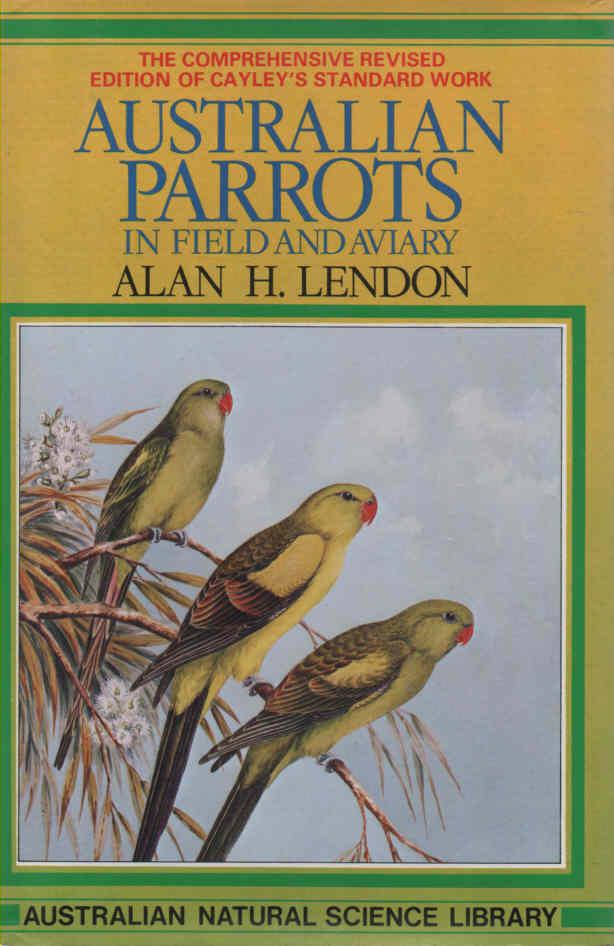
Lendon, Alan H.
Australian Parrots in Field and Aviary The Comprehensive Revised Edition of Cayley's Standard Work
Angus & Robertson, Sydney NSW, 1979.
Reprint. Hardcover, octavo, 342pp., monochrome illustrations. Light spotting to text block edges; a little rubbing to lower board edges; upper portion of dustwrapper faded; else fine and wrapper now professionally protected by superior non-adhesive polypropylene film.
Click here to order

$25
200505
Mannering, Eva (ed.)
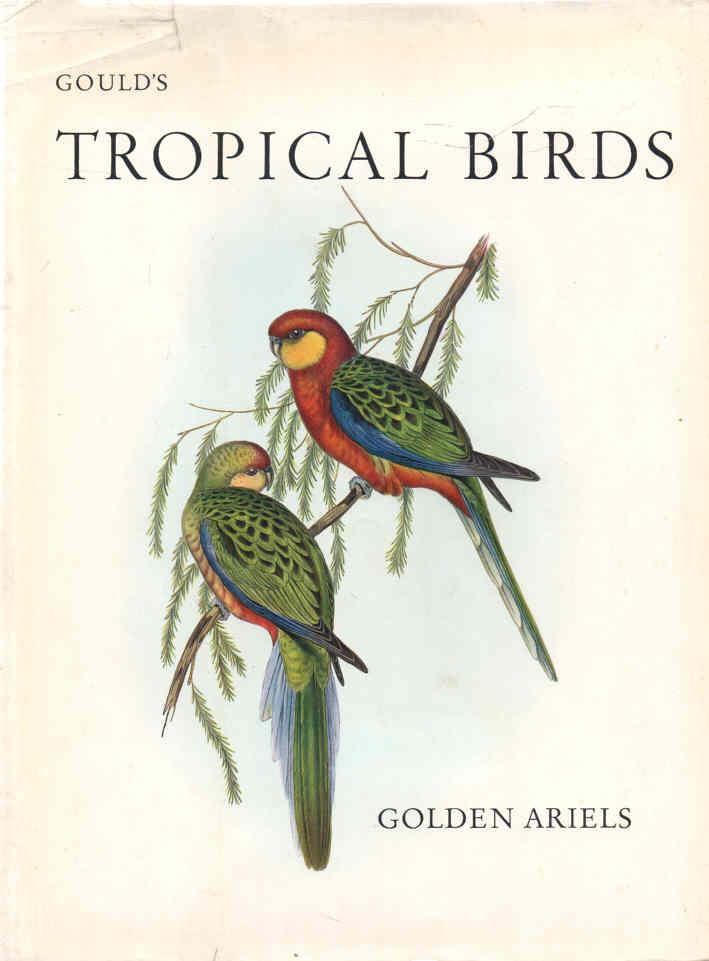
Gould's Tropical Birds
Golden Ariels/The Ariel Press Ltd., London, 1964.
Quarto; hardcover, decorated papered boards with upper board titles; 12pp., with 23pp. of colour plates. Mild wear; mild wear to the board edges; some spotting to the text block edges; mild offset to the endpapers; previous owner's name in ink to the half-title page. Dustwrapper is mildly rubbed; edgeworn with a few small tears and associated creasing; spotted on the verso; now backed by archival-quality white paper and professionally protected by superior non-adhesive polypropylene film. Very good.
Click here to order

$28
76788
North, Alfred J.
Nests and Eggs of Birds Found Breeding in Australia and Tasmania Volume One
Oxford University Press, Melbourne Vic., 1984.
Quarto; hardcover, with gilt spine titles; 366pp., with many monochrome illustrations. Moderate wear; boards discoloured and wear to edges and corners. Light pink discolouration to rear panel of dustwrapper; minor edgewear; now professionally protected by superior non-adhesive polypropylene film. Very good. This is one of the great works of Australian ornithology. Publication of the first volume, known as the Australian Museum special Catalogue, began in 1901 and was completed in 1904. Another three volumes appeared in the next ten years. It was immediately acclaimed as a major achievement, one reviewer describing it as 'really more of a life history of our 'birds' than a catalogue on nests and eggs, and it has remained a much-loved and invaluable document for ornithologists, amateur and professional, ever since. North, who was virtually Australia's only professional ornithologist at the turn of the century, endeavoured to present detailed information on the eggs, nests and breeding habits of all Australian birds. In this facsimile edition Walter Boles testifies in the foreword that 'Most of North's information is still valid... it has been supplemented but rarely replaced".
Click here to order

$50
54405
Olsen, Penny
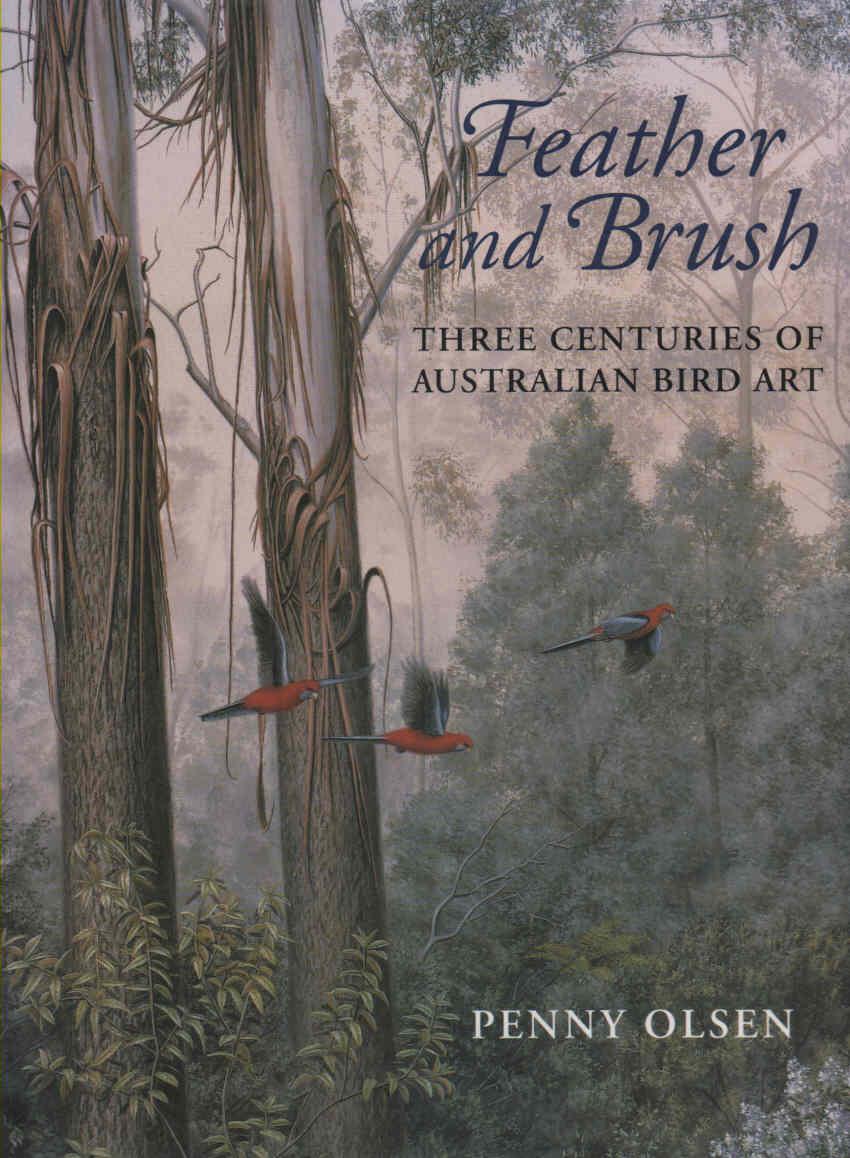
Feather and Brush
CSIRO Publishing, Melbourne, 2001.
Quarto, hardcover; blue boards with gilt spine titling, blue endpapers; 227pp., Colour plates and illustrations. Minor wear; mild fraying to lower board corners; slight rubbing to dustwrapper, mildly sunned spine. Very good to near fine and wrapper now professionally protected by superior non-adhesive polypropylene film. Traces the 300 year history of Australian bird art and contains more than 250 images representing the work of a hundred artists.
Click here to order

$80
216081
Parry, Veronica A.
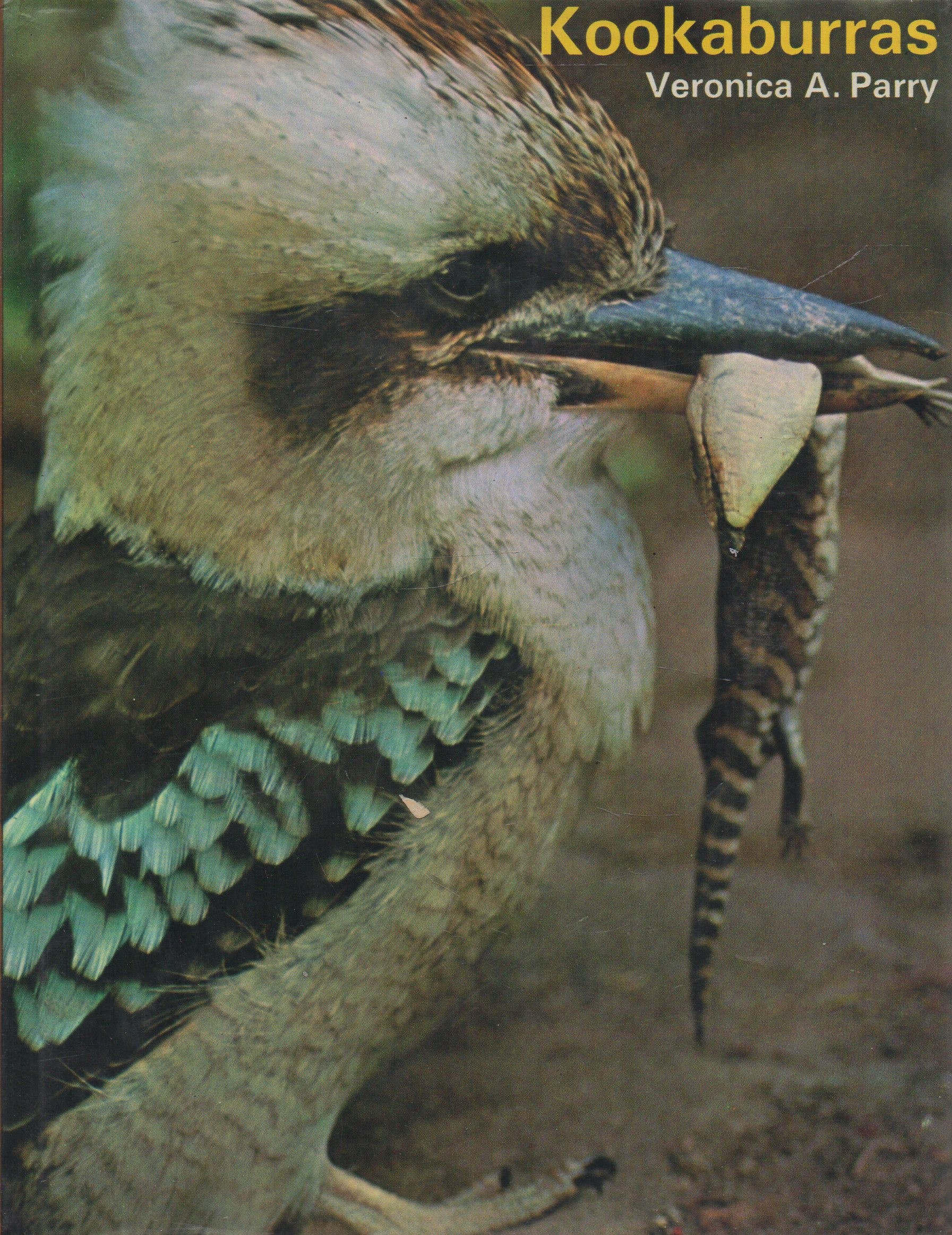
Kookaburras
Taplinger, New York, 1972.
Quarto hardcover; dark red boards with gilt spine titling; 109pp, colour and monochrome illustrations. Minor wear; well-browned and spotted text block edges; faint offsetting to the endpapers. Illustrated dustwrapper with one inch tear on upper rear corner and very slightly sunned spine panel and adjacent; minimal wear to edges (now professionally protected by superior non-adhesive polypropylene film). Very good. The author first heard the 'laughter' of the kookaburra when working part-time in San Diego Zoo. She was fascinated by the sound and would go to work early just to hear it. She dreamed of visiting Australia and studying the bird in its natural bushland setting. Two years later Professor Marshall of Melbourne's Monash University offered her a postgraduate scholarship. The kookaburra, or laughing jackass, Dacelo gigas, is a member of the kingfisher family and feeds mainly on large insects and small reptiles and amphibians. At a maximum of 47 cm in length, and with a 10-cm bill, the kookaburra is larger than most kingfishers, but its brown and tan plumage is drab by the standards of the family. Kookaburras nest during the spring and lay 2 to 4 white eggs in tree holes or termite nests. Their loud cries, which resemble human laughter and are typically chorused at dawn and dusk, are one of the characteristic sounds of the Australian bush.
Click here to order

$30
92308
Pint-Correia, Clara
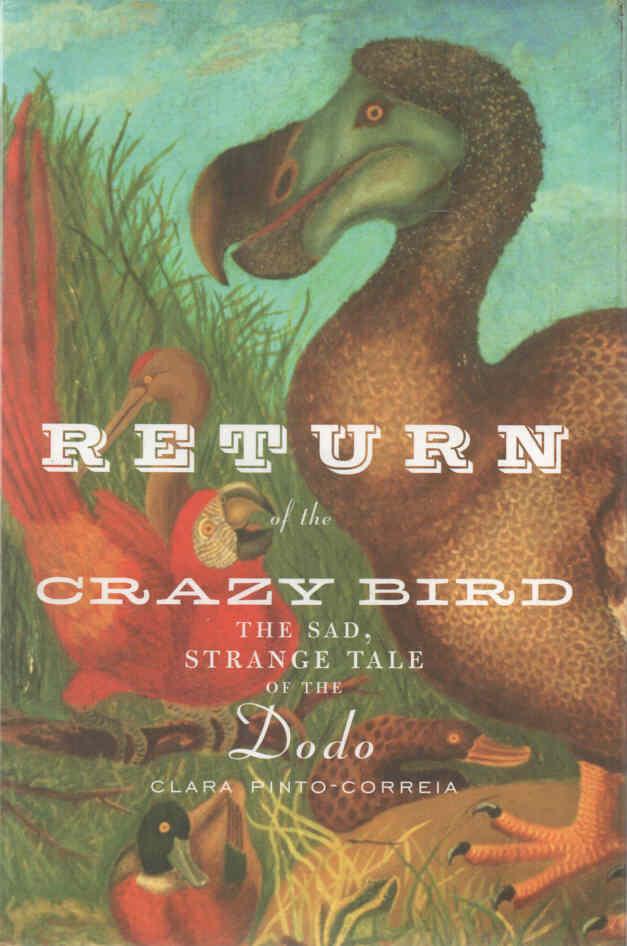
Return of the Crazy Bird The Sad, Strange Tale of the Dodo
Copernicus Books/Springer-Verlag New York Inc. New York NY, 2003.
Octavo; hardcover, quarter-bound in papered boards with gilt spine-titles; 216pp., with maps and many monochrome illustrations. Minor wear; some spotting to the text block top edge. Dustwrapper now professionally protected by superior non-adhesive polypropylene film. Near fine. The dodo went from being newly discovered to extinction in little more than a century. This flightless, odd-looking bird was seen for the first time by Europeans and then annihilated by Europeans all between the early sixteenth and the second half of the seventeenth century. By the nineteenth century all that remained of the 'crazy bird' was a patchwork of tall tales, contradictory reports, incompatible illustrations and a single dodo's skull and foot. The dodo had become, in short an unsolvable puzzle that persisted in art, literature and scientific speculation. This book considers this bumbling and ungainly creature in our collective scientific and literary imaginations from its island paradise of Mauritius to its ill-fated and unseemly extinction.
Click here to order

$22
209574
Robin, Libby
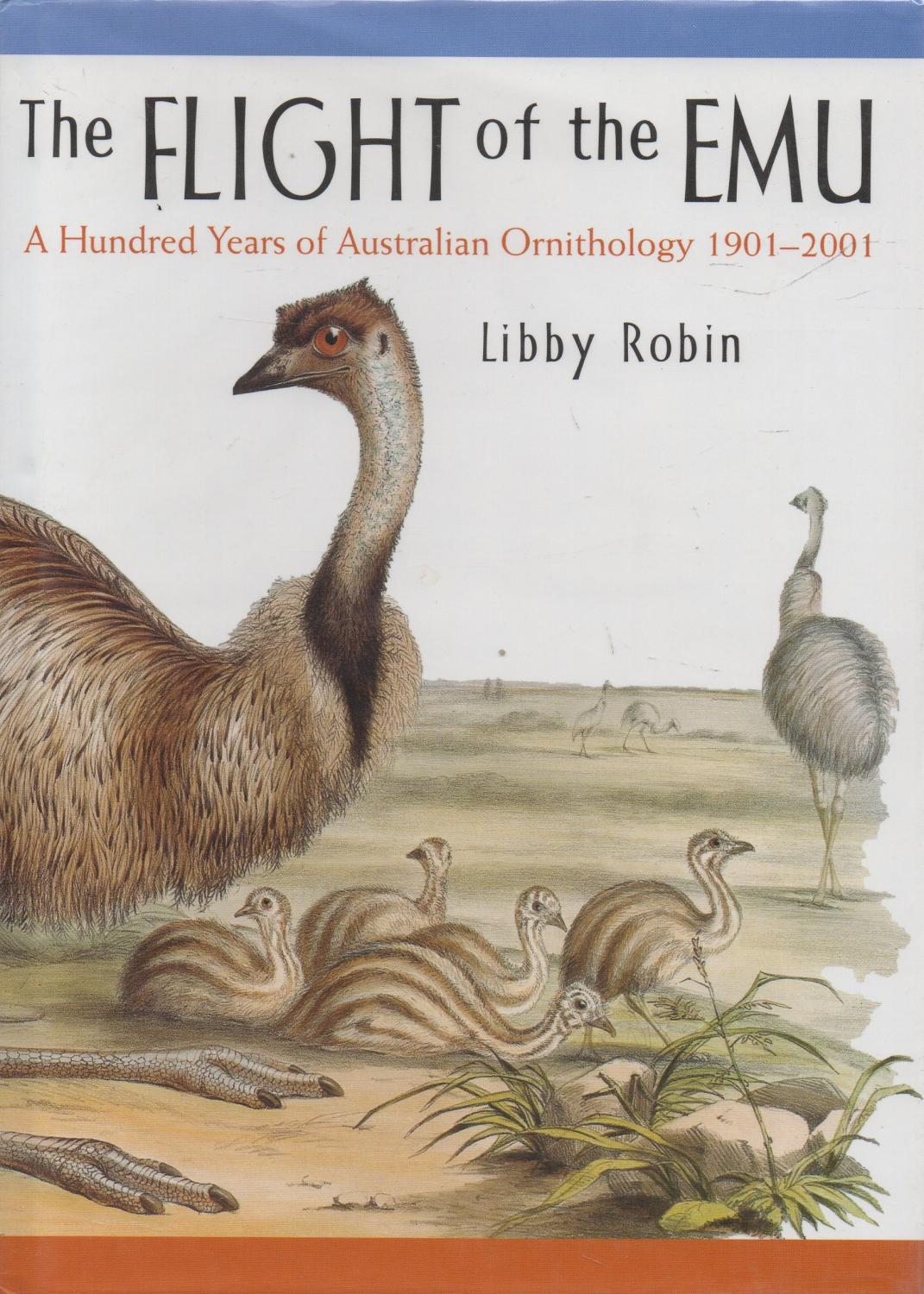
The Flight of the Emu A Hundred Years of Australian Ornithology 1901-2001
Melbourne University Press, 2001.
Hardcover, royal octavo; white boards with gilt spine titling, blue endpapers; 492pp., colour and monochrome plates and illustrations. Rubbing to board edges and corners, one or two tiny marks on upper board; front endpaper clipped at corner; a few faint spots on upper text block. Very good to near fine. Wrapper now professionally protected by superior non-adhesive polypropylene film. The Flight of the Emu tells the story of Australian birding in the twentieth century. The Emu is the journal of the former Royal Australasian Ornithologists' Union, now known as Birds Australia. In this engrossing book, Libby Robin describes the achievements and the increasing importance of ornithology in Australia - both amateur and professional - over the past hundred years. From Bass Strait to the Kimberley, collectors have searched for and identified hundreds of species of Australian birds. This is a discipline in which exceptional amateur contributions have helped to shape science. Libby Robin explores the tensions between amateur and professional ornithologists, and discusses issues of conservation and environmental management, scientific collecting, smuggling and bird protection. She tells stories from campouts, expeditions and congresses derived from oral history, letters and 'reading between the lines' of published reports. The search for the Night Parrot, the protection of the Lyrebird, the identification of the Noisy Scrub-bird, have all involved enthusiastic bird lovers as well as scientists. Ornithological research takes place in museums, universities, government agencies, community groups and the CSIRO. Bird-banding has introduced many people to the passion of ornithology, as well as providing a method of valuable data-collection about birds. The Flight of the Emu also details international scientific expeditions and the influences of Australian birds on international debates. 'Birdos' have a great sense of humour, and the pleasure and fun of bird watching, whether it be serious scientific observation, 'twitching' or just a relaxing hobby, comes through strongly in this clear, friendly and richly-illustrated book.
Click here to order

$30
15243
Sauer, Gordon C.
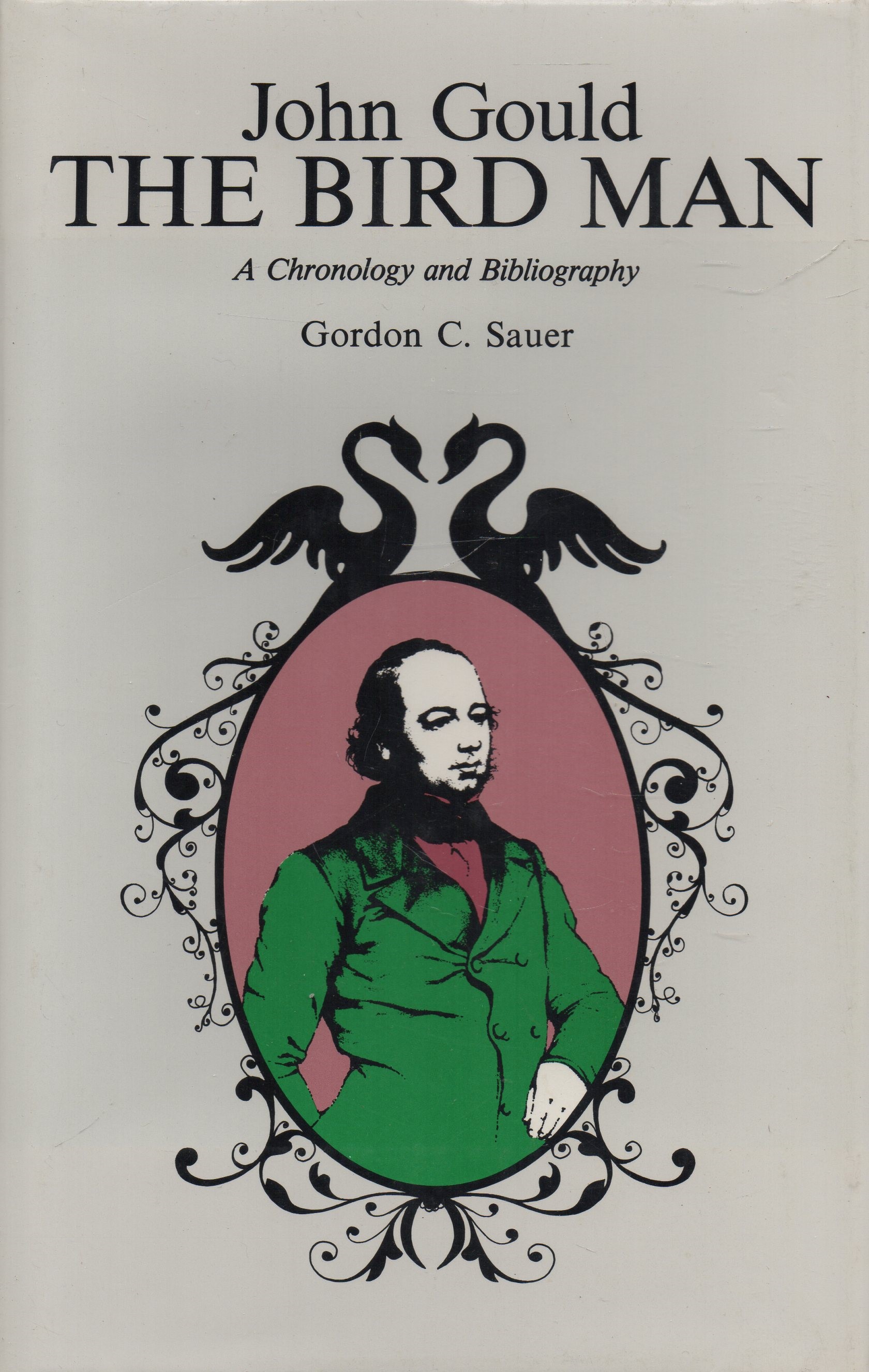
John Gould, The Bird Man: A Chronology and Bibliography
Lansdowne Editions, 1982.
Quarto, hardcover; green boards with teal endpapers; 416pp., 36 colour and numerous monochrome plates. Slightly cocked; browned and spotted text block edges; mild offsetting to the endpapers. Illustrated dustwrapper now professionally protected by superior non-adhesive polypropylene film. Very good. Provides all the basic data on Gould's life, his works, his family, his associates and his times.
Click here to order

$45
54537
Serventy, Vincent N (Senior ed.)
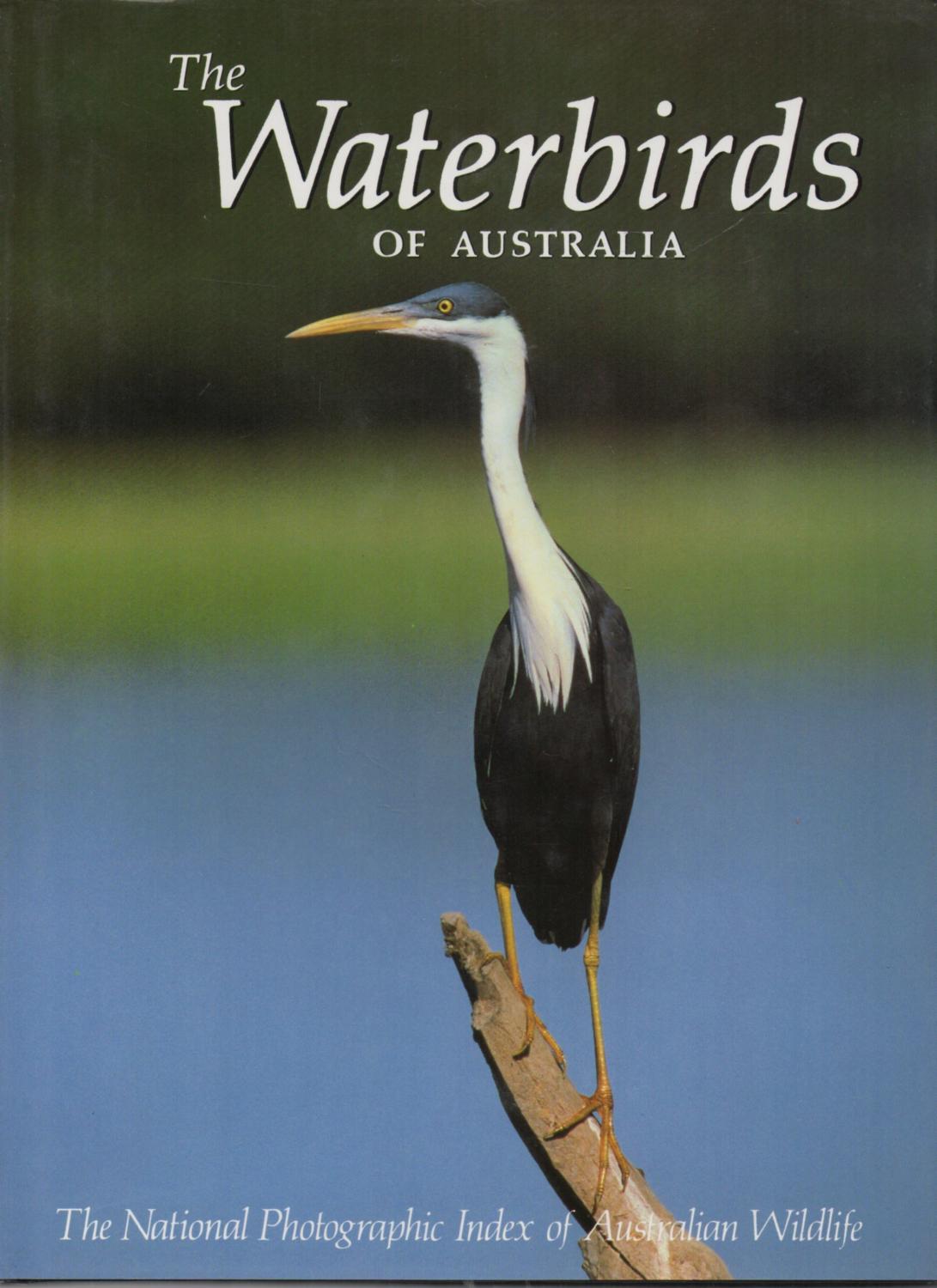
The Waterbirds of Australia The National Photographic Index of Australian Wildlife
Angus & Robertson, North Ryde, 1985.
Quarto hardcover; black boards with gray upper board and spine titling, black endpapers; 331pp., colour plates. Mild rubbing to board corners and slight wear to dustwrapper edges. Otherwise minor wear only; near fine in like dustwrapper now professionally protected by superior non-adhesive polypropylene film. Most waterbirds are large and conspicuous though some are rare and obscure. Few sights in nature are more spectacular than a vast ibis rookery in the Riverina, or whistling-ducks in dense camps of thousands in remote tropical swamps of the Top End, black swans congregating in huge flocks on extensive lakes, or grebes courting in some quiet backwater of a cumbungi swamp. Sadly, many waterbirds are threatened by loss of habitat, as vast areas of wetlands continue to be drained, polluted or otherwise altered for irrigation, flood control, urban development and sport. The Waterbirds of Australia, while providing serious and comprehensive reference, also captures the variety and elegance of these splendid birds. Technical data - identification of species, habitat, nest, diet and so on are set out separately, together with a distribution map, while John Douglas Pringle, from a mass of records and scientific reports has distilled eminently readable accounts of the way of life and history of each of the waterbirds described here.
Click here to order

$120