lamdha books -
Catalogue of books on Australian architecture

Click on the small images at right to see a larger picture

209093
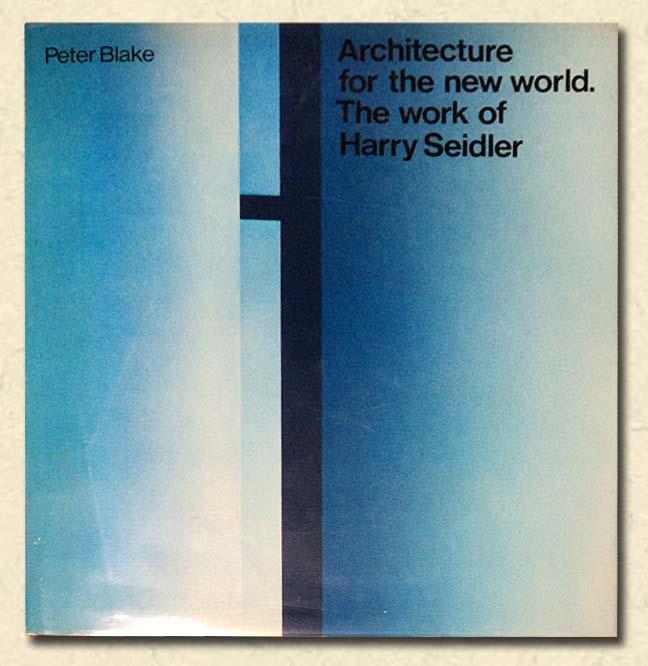
Blake, Peter
Architecture for the New World - signed The Work of Harry Seidler
Horwitz Australia, Sydney NSW, 1973.
Quarto; hardcover, with upper board titling; 264pp., with many colour and monochrome illustrations. Mild wear; scraping to board corners and edges; lightly toned and spotted text block and page edges; offsetting to preliminaries; inscribed in ink to the previous owner by Harry Seidler to the half-title page. Dustwrapper rubbed and edgeworn with tiny losses at spine panel extremities; spotting to rear and spine panels; a few small scrapes; now backed with archival-quality white paper and professionally protected by superior non-adhesive polypropylene film. Very good.
Click here to order

$185
74498
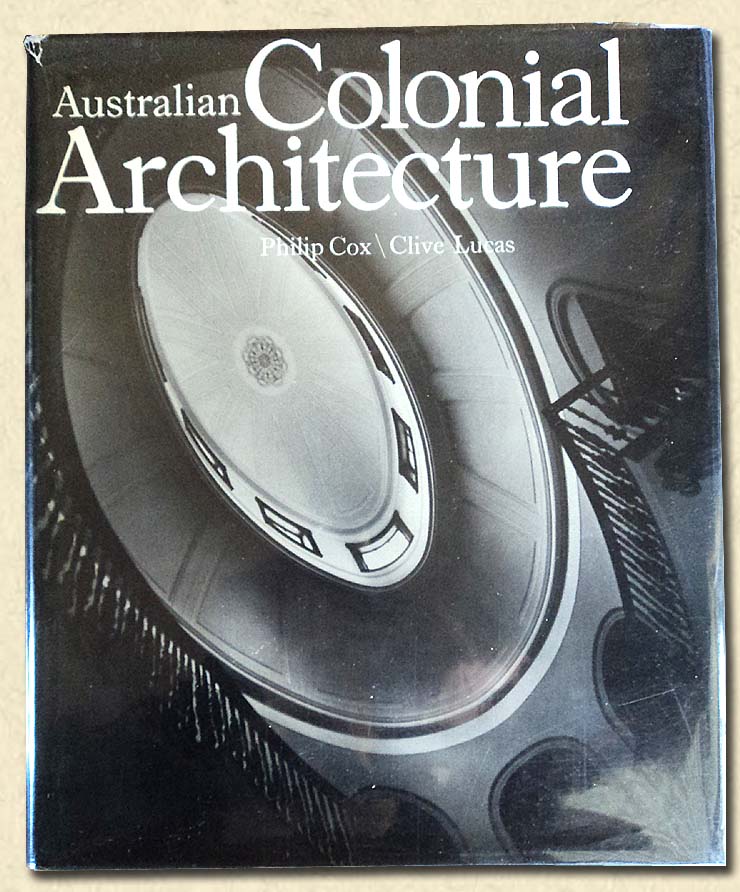
Cox, Philip & Clive Lucas (Wesley Stacey photos.)
Australian Colonial Architecture
Landsdowne Editions, East Melbourne, 1978.
Large quarto hardcover; black pebble-textured boards with silver gilt spine and upper board titles; lime green endpapers; 280pp., monochrome illustrations. Minor wear; lightly toned text block edges with one or two spots; slight rippling to early page fore-edges; minor edgewear and chipping to black dustwrapper, small scrapes at corners. Very good to near fine in like dustwrapper now professionally protected by superior non-adhesive polypropylene film. Comparing British and colonial vernacular examples, the book describes the architectural developments of the first 60 years of British settlement in Australia and also traces the colonial revival of the early 20th century. Includes notes and references, a list of references contemporary to 1814, a glossary, a bibliography, illustration sources and an index.
Click here to order

$60
207563
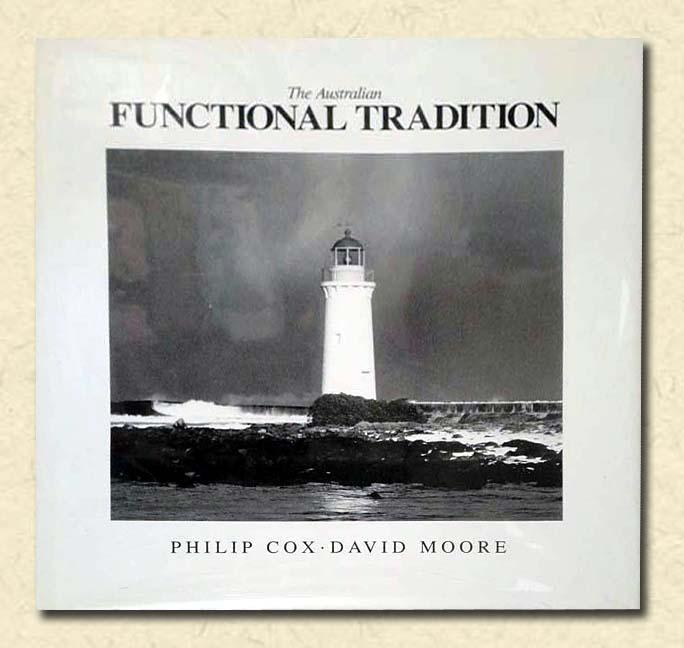
Cox, Philip (David Moore, illus.)
The Australian Functional Tradition
The Five Mile Press, Fitzroy Vic., 1988.
Square quarto; hardcover; 228pp., with a monochrome frontispiece and many illustrations likewise. Mild wear; text block top edge lightly dusted; flyleaf creased lightly; spotting to the preliminaries. Dustwrapper lightly rubbed and edgeworn; now professionally protected by superior non-adhesive polypropylene film. Very good. This book represents a collection of buildings of utilitarian origin with fine aesthetic qualities. These are not the grand public buildings designed by notable architects, but the shearing sheds and oast houses, the warehouses and bond stores, the bridges and wharves, the lighthouses and gaols that were and indeed still are part of the economic lifeblood of Australia. Functional tradition describes those buildings arising from necessity and practicability rather than aesthetic stirring. Yet they achieve an unconscious beauty of form in their simplicity and honesty of construction, in their strength of purpose and visual impact.
Click here to order

$40
215612
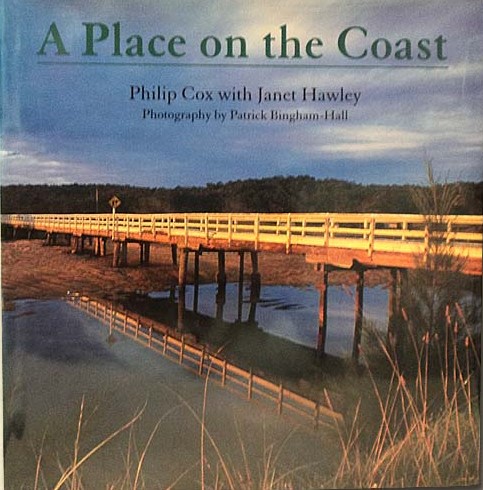
Cox, Philip with Janet Hawley (photos. Patrick Bingham-Hall)
A Place on the Coast: signed copy
Five Mile Press, Noble Park, 1997.
Large quarto hardcover; blue boards with white spine titling and blue endpapers; 124pp., colour illustrations. Inscribed to owner by Philip Cox. Small bump and three tiny associated tears on lower board edge, chipping at corners; faint spotting and tiny mark on upper text block edge. Illustrated dustwrapper with tiny chip on lower front edge, now professionally protected by superior non-adhesive polypropylene film. Very good. Newspaper clipping laid in.
Click here to order

$30
73974
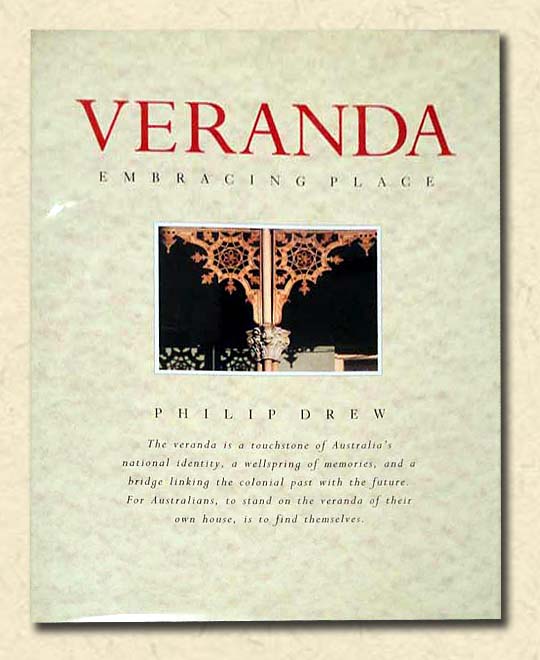
Drew, Philip
Veranda Embracing Place
Angus & Robertson/HarperCollins Publishers, Pymble NSW, 1992.
Quarto; hardcover; 246pp., with colour and monochrome illustrations. Minor wear. Dustwrapper now professionally protected by superior non-adhesive polypropylene film. Near fine. Beginning in the fifteenth century the author explores the Portuguese origins of the word veranda; first found in Vasco da Gama's account of his meeting with the Rajah of Calicut, called the Samuri. From Moorish courtyards, Mughal tents and the verandas and porches of North America the architectural and social history of the veranda is explored as both a physical and cultural construction. In literature, theatre, art and mind the veranda in Australia is discussed as an icon and a source of cultural identity.
Click here to order

$35
201101
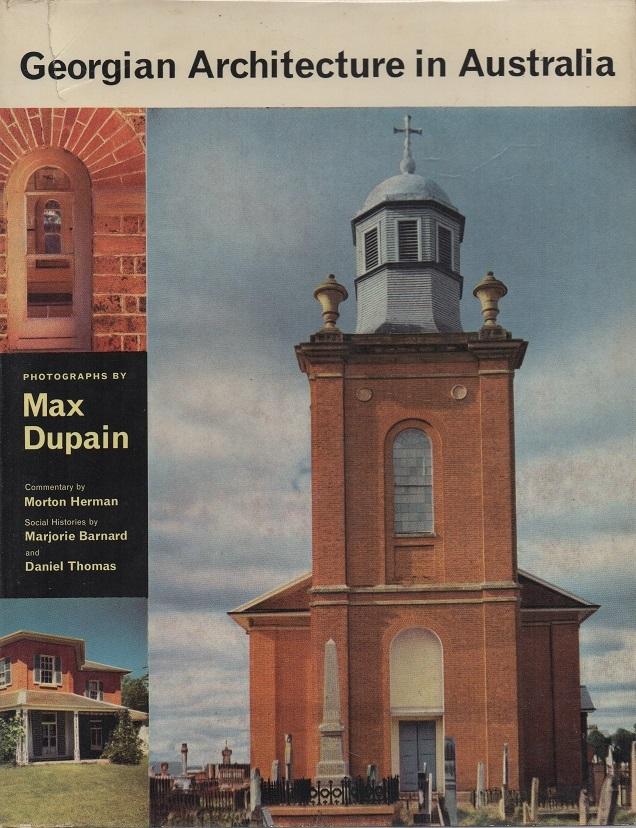
Dupain, Max (illus.); Morton Herman (ed,) with Marjorie Barnard & Daniel Thomas
Georgian Architecture in Australia - signed by Daniel Thomas
Ure Smith, Sydney NSW, 1963.
First edition: quarto; hardcover, with upper board titling and decorative endpapers; 147p., with many monochrome illustrations. Mild wear; previous owner's name and inscription by one author; mild rubbing to board bottom edges; light spotting to the text block edges. Illustrated dustwrapper with small tear to the top edge of the upper panel; slight edgewear; now professionally protected by superior non-adhesive polypropylene film. Very good. This book contains over one hundred photographs by Max Dupain of the best surviving Georgian buildings in New South Wales and Tasmania, the two States old enough to have architecture of the period. These houses, churches and bridges, the work of architects like Francis Greenway, John Verge, James Blackburn and John Lee Archer, are shown here. Morton Herman has written a commentary on Australian Georgian architecture, and notes on the individual buildings illustrated; and Marjorie Barnard and Daniel Thomas have contributed brief social histories of New South Wales and Tasmania.
Click here to order

$55
67075
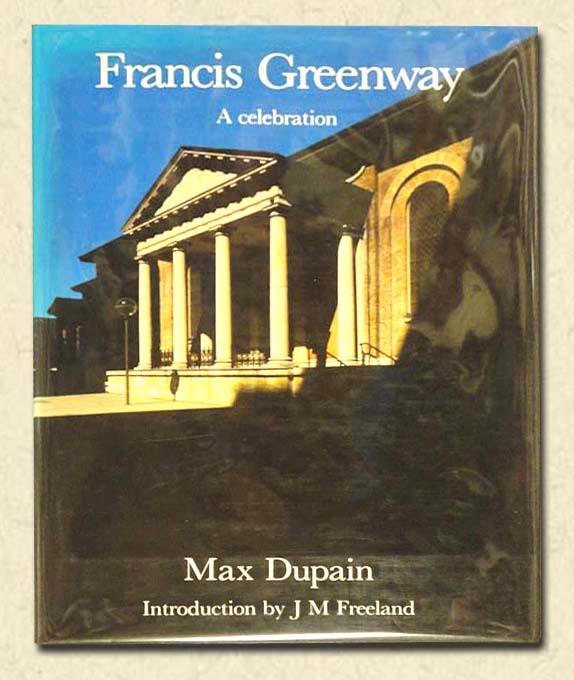
Dupain, Max (Introduction by J.M. Freeland)
Francis Greenway
Cassell, Sydney NSW, 1980.
Quarto; hardcover, with silver-gilt upper board and spine titling and illustrated endpapers; 135pp., with monochrome illustrations. Mild wear; toning and spotting to text block edges; spine faded. Dustwrapper now professionally protected by superior non-adhesive polypropylene film. Very good to near fine. This book presents the story of the turbulent life and times of the controversial architect Francis Greenway. It is at the same time an inspiring and tragic story, for the man who could design buildings of such breathtaking harmony and near-perfection was deeply divided within himself. Photographs by Max Dupain capture the beauty of the buildings.
Click here to order

$45
81318
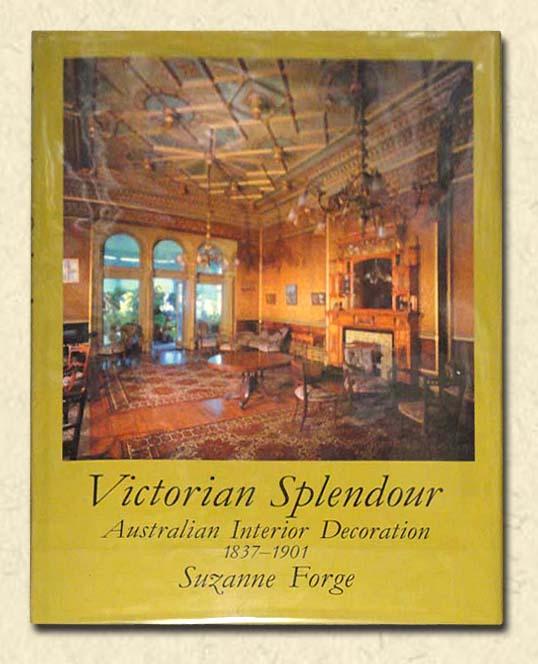
Forge, Suzanne (Irvine Green, illus.)
Victorian Splendour Australian Interior Decoration 1837-1901
Oxford University Press, Melbourne Vic., 1982.
Quarto; hardcover, with gold upper board and spine titling and illustrated endpapers; 160pp., with many colour and monochrome illustrations. Minor wear; scuffing to board edges and corners; faint spotting to text block edges. Minimal edgewear to dustwrapper; now professionally protected by superior non-adhesive polypropylene film. Very good to near fine. "In the Victorian era, a decorative style distinctive for its abundance of ornament was established. The Victorians had a passion for ornament, which they thought was natural, necessary, civilized, enjoyable and positively elevating." This book describes rare examples of surviving Victorian interiors in Australia, ranging from the millionaire's mansion to the cottage. The book also deals with the Victorian approach to decorating the various rooms.
Click here to order

$35
203985
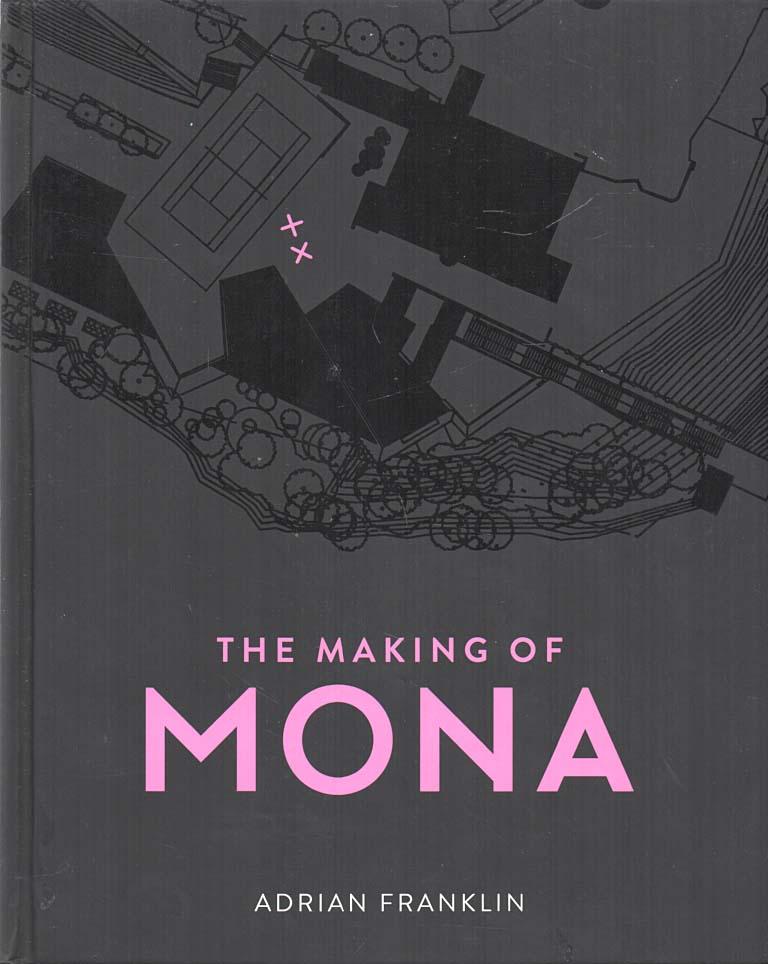
Franklin, Adrian
The Making of MONA
Viking/Penguin Books (Aust.) Pty. Ltd., Melbourne Vic., 2014.
Quarto; hardcover, illustrated boards with upper board titles, decorative endpapers and an electric-pink ribbon; 354pp. (all edges dyed electric-pink), with many full-colour illustrations. Mild wear; covers quite rubbed. No dustwrapper as issued. Very good. Adrian Franklin's The Making of MONA collects anecdotes and images about the making of the Museum of Old and New Art. It dismantles the dismissive view of David Walsh as an eccentric millionaire-genius and of MONA as a representation of his weird mind. The early chapters situate Walsh as collector and MONA as a private museum in larger historical contexts. The phenomenon of collecting is considered through the frame of modern consumerist society, while the history of the Western museum and concepts of museology such as the Wunderkammer and the white cube are used to explain MONA's ideology. Franklin emphasises the importance of collaboration at MONA. This is represented through the many voices that tell the stories of MONA: from the architects and designers, to curators and collectors, marketing managers, reviewers and of course Walsh himself. The tale of the ridding of wall labels in MONA is one example of this collaborative process, responding to Walsh's distaste for labels at his earlier Moorilla Museum of Antiquities, leading to the creation of the O device. The book builds a reading of MONA through the carnival trope. While this is at times stretched, it does allow Franklin to undermine the view of MONA as self-indulgent contemporary consumerism and present it as a place of generosity, tolerance and inclusiveness, traits that are too often overlooked. The book looks sleek and hip, recalling Monanisms. The colour scheme of hot pink on black is straight from 'Brand MONA', something Franklin discusses at length. Many high-quality images ranging across the collection of MONA, its architecture, construction and other miscellanea." - Kelli Rowe
Click here to order

$45
32552
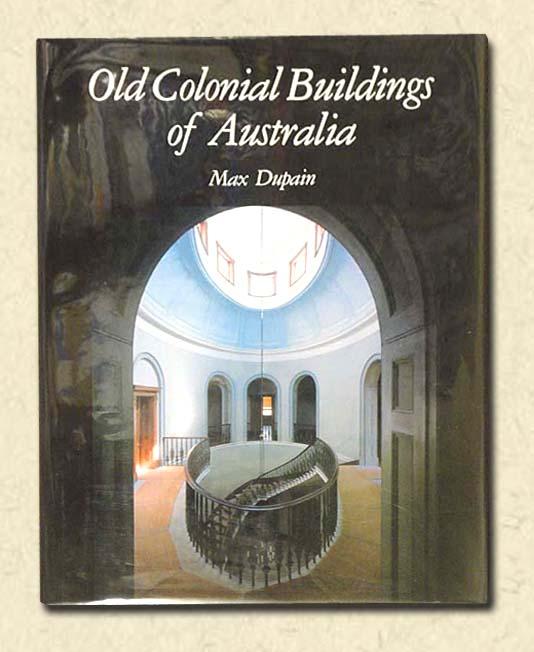
Freeland, J.M. (Max Dupain, illus.)
Old Colonial Buildings of Australia
Methuen Australia Pty. Ltd., Sydney NSW, 1980.
First edition: quarto; hardcover; dark green boards with silver-gilt spine and upper board titles and illustrated endpapers; 176pp., with many monochrome and full-colour illustrations. Mild wear; some offset to the preliminaries and mild spotting to text block edges. Dustwrapper lightly rubbed; now professionally protected by superior non-adhesive polypropylene film. Near fine. Australia has only recently discovered the richness and depth of her early architectural history. Until about 20 years ago, we wantonly destroyed many unique and irreplaceable buildings; luckily, many examples of the best work still stand. In this book, expert architectural photographer Max Dupain illustrates the golden thread of originality which interweaves our heritage. In both full colour and black-and-white, the cameraman sees with the artist's eye the diverse features of the great and small buildings of our past. He shows us the neat symmetry of Experiment Farm Cottage at Parramatta; he leads us in and around Queens Square in Sydney and points out the strength and dignity of Francis Greenway's simple harmonies; he takes us up the noble staircase of Elizabeth Bay House where we can glimpse the grand style of another age; he introduces us to the stables, bridges, farmhouses, churches and government buildings that are the endowment of every Australian. Through Dupain's magic eye we can visit and relive the past, now restored to enhance the present. In his accompanying text, Professor J.M. Freeland provides a brief but illuminating history of the evolution of architecture, Australian style, from the first great strides taken by the early giant, Francis Greenway, to the less dramatic but nevertheless distinctive contributions made by those who followed him.
Click here to order

$50
40946
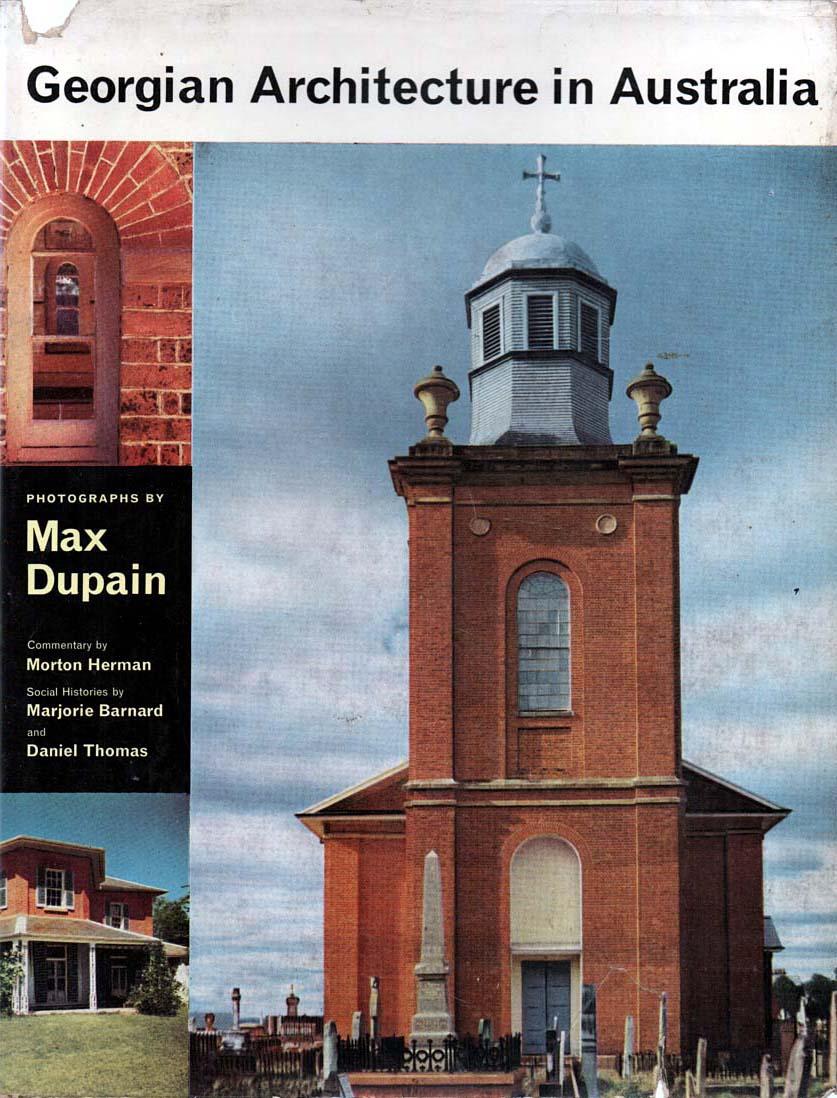
Herman, Morton, with Marjorie Barnard & Daniel Thomas (Max Dupain, illus.)
Georgian Architecture in Australia
Ure Smith, Sydney NSW, 1963.
First edition: quarto; hardcover, with green upper board title label and decorated endpapers; 147pp., with many monochrome plates. Mild wear; rubbing and wear to lower board edges; corners scraped; browning to endpapers; browned and spotted text block edges. Dustwrapper with two small missing segments on upper front and rear panels with some general scraping to edges and corners; now backed by archival-quality white paper and professionally protected by superior non-adhesive polypropylene film. Very good. This book contains over one hundred photographs by Max Dupain of the best surviving Georgian buildings in New South Wales and Tasmania, the two States old enough to have architecture of the period. These houses, churches and bridges, the work of architects like Francis Greenway, John Verge, James Blackburn and John Lee Archer, are shown here. Morton Herman has written a commentary on Australian Georgian architecture, and notes on the individual buildings illustrated; and Marjorie Barnard and Daniel Thomas have contributed brief social histories of New South Wales and Tasmania.
Click here to order

$45
84143
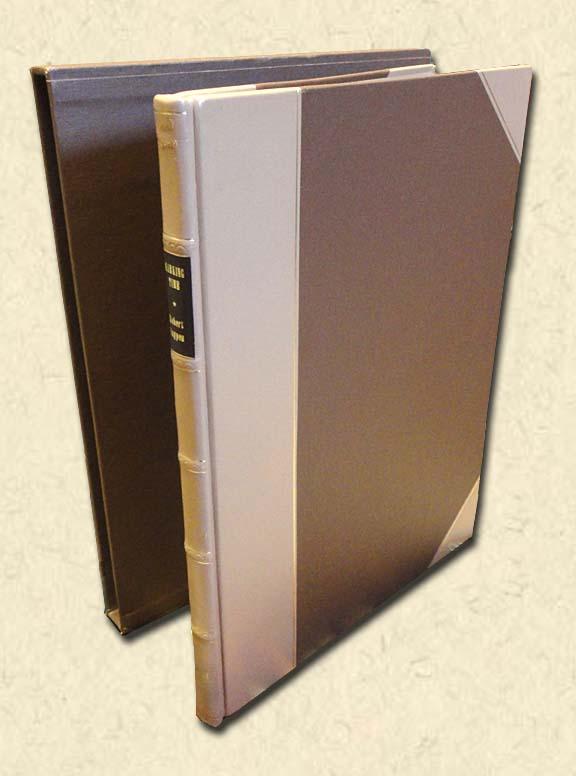
Ingpen, Robert
Marking Time - signed Australia's Abandoned Buildings
Rigby Ltd., Adelaide SA, 1979.
First edition: quarto; hardcover, half-bound in tan leather with gilt spine-titling on a brown label in compartments between five raised and blind-stamped bands with gilt rules; 128pp. on laid paper with many full-colour illustrations on lacquered stock. Mild wear; some scuffing to the leather at the head of the spine; signed and numbered by the author in ink on the half-title page. Near fine in a lightly scuffed slipcase with a brown ribbon. Number 32 of a signed and slipcased limited edition of only 100 copies. Robert Ingpen's sixty paintings cover domestic, public, agricultural and industrial buildings in a way which gives a remarkable cross-section of our heritage and an insight into the trends which formed an Australian lifestyle. His text for each section of the book, and captions to illustrations, further illuminate the strange human reasons why such buildings were constructed only to be abandoned.
Click here to order

$120
89303
Keating, John D.
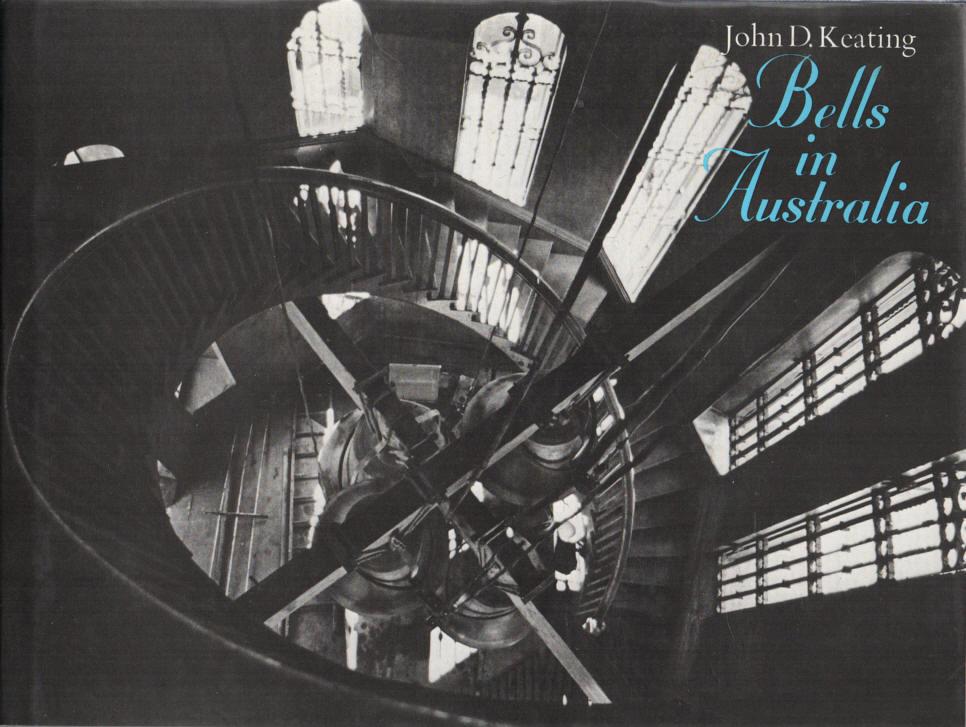
Bells in Australia
Melbourne University Press, Carlton Vic., 1979.
Landscape octavo; hardcover, with silver-gilt spine-titling; 150pp., with many monochrome illustrations. Mild wear; some mild insect damage to the board edges; faint scattered spotting throughout, mainly to the preliminaries; some mild spotting of the text block edges. Dustwrapper is mildly rubbed with some edgewear; now professionally protected by superior non-adhesive polypropylene film. Very good. The manufacture, accommodation and use of bells within Australia is a relatively obscure topic, but this book successfully covers all bases. Accompanied by beautiful photography, this is an overview of the subject covering all instances of bells - both secular and sacred - within the country from the earliest days. From campaniles to carillons and all things campanological, this is the sine qua non of Australian bells.
Click here to order

$20
42331
Latta, David
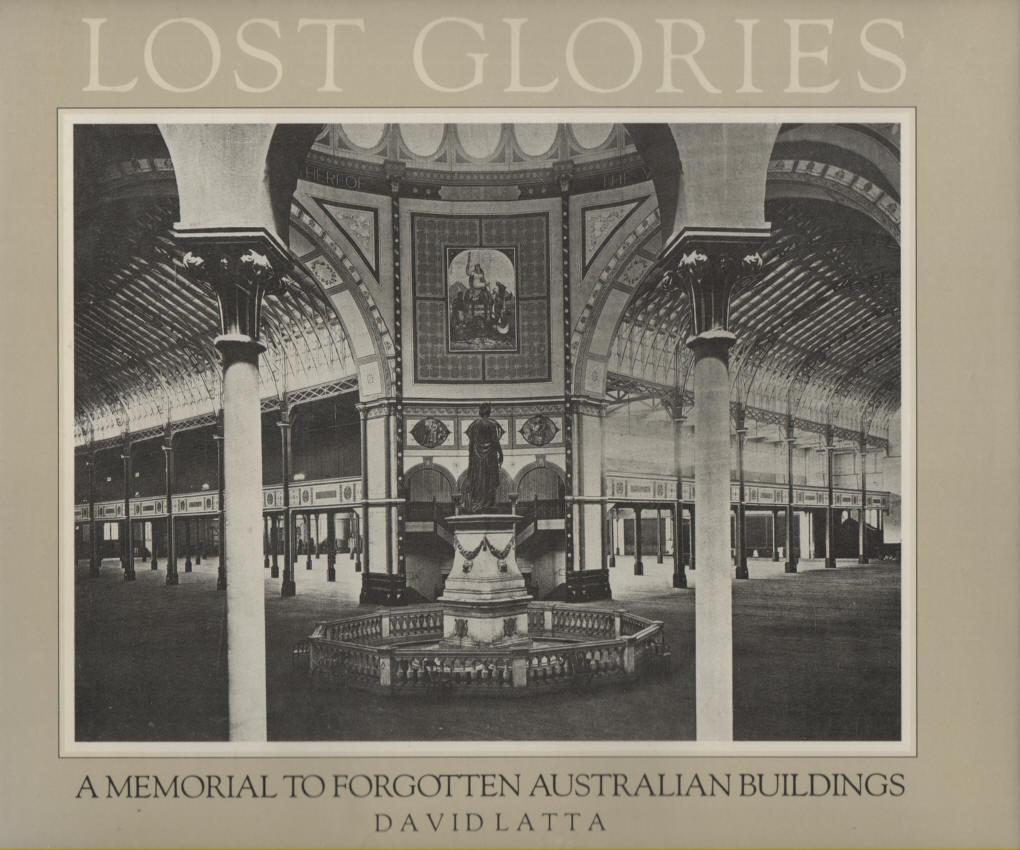
Lost Glories A Memorial to Forgotten Australian Buildings
Angus & Robertson, North Ryde NSW, 1986.
Landscape quarto; hardcover, with an upper board decoration and decorated endpapers; 176pp., with many monochrome illustrations. Minor wear. Dustwrapper faded along spine with mild edgewear; now professionally protected by superior non-adhesive polypropylene film. Very good to near fine. The twenty buildings in this book range from the handsome but workmanlike Adelaide Observatory, which owed its existence to the enthusiasm of Sir Charles Todd, Builder of the Overland Telegraph, to mansions such as Melbourne's Norwood, a three-storey fever dream of red brick and stucco that reflected the extravagances of the 1890 boom years; hotels such as the stately South Australian and the more opulent Menzies, where Mark Twain once stoked the boilers; and public buildings such as Sydney's "temple to the industrial arts", the Garden Palace. The history of each building has been reconstructed from newspaper reports and books of the period, diaries, rate books and letters, skilfully interwoven with contemporary events and characters to present an entertaining picture of life in the colonies.
Click here to order

$25
73659
Moore, Robert, Sheridan Burke & Ray Joyce
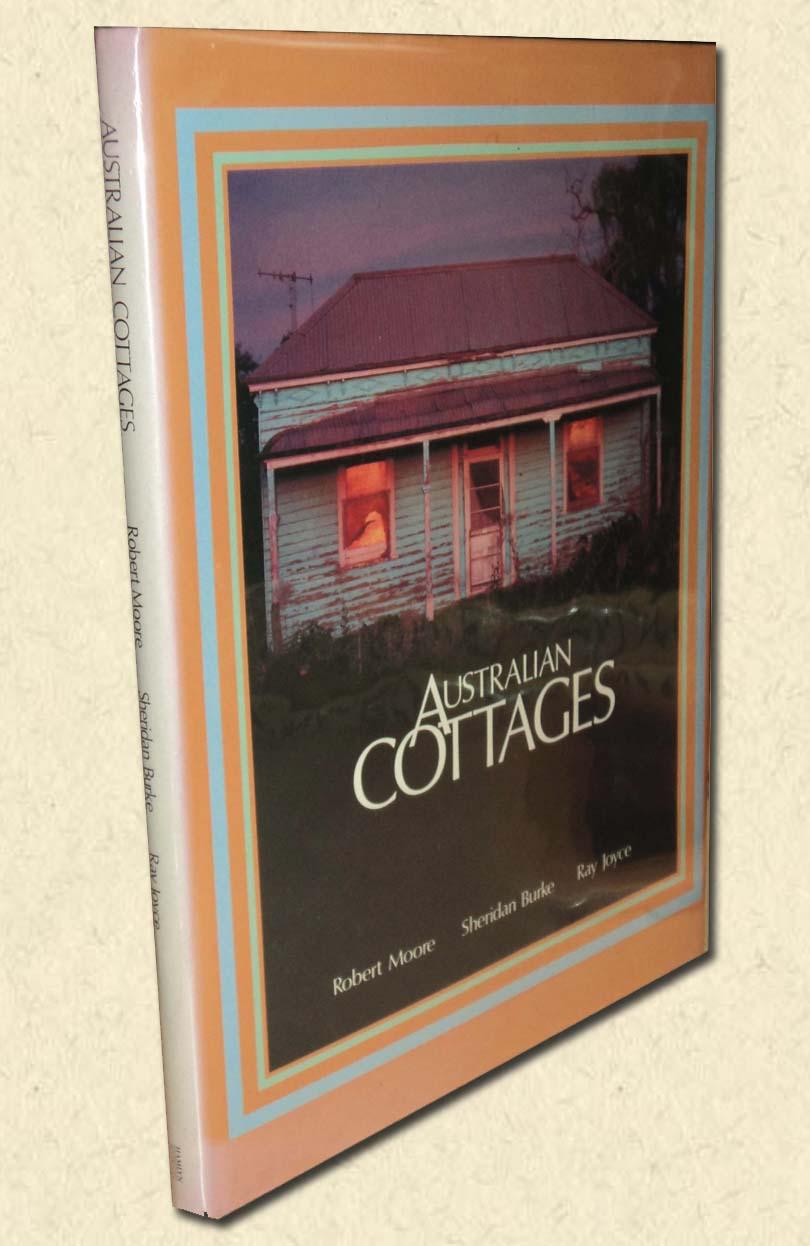
Australian Cottages
Hamlyn Australia / Octopus Publishing Group, Port Melbourne, Vic., Australia, 1989.
Quarto; hardcover; orange boards with white spine titling and decorated endpapers; 128pp., with many full-colour illustrations. Slight wear and discolouration to board edges and corners; lightly toned and spotted text block edges. Dustwrapper sunned along the spine panel and three or four perforations on rear spine edge. Very good with wrapper now professionally protected by superior non-adhesive polypropylene film. Not sufficient in stature for description as a house, cottages are often victims of their own quintessential pragmatism. Many have been lost due to the decay of their rude components, or gradually improved and renovated with little consideration for their original form and detail. The image of the detached cottage in its private garden setting dominates our national lifestyle to a remarkable degree. In this book cottage life, gardens and interiors are examined with emphasis on the Australian adaptation of old world traditions.
Click here to order

$30
209603
Spearritt, Peter
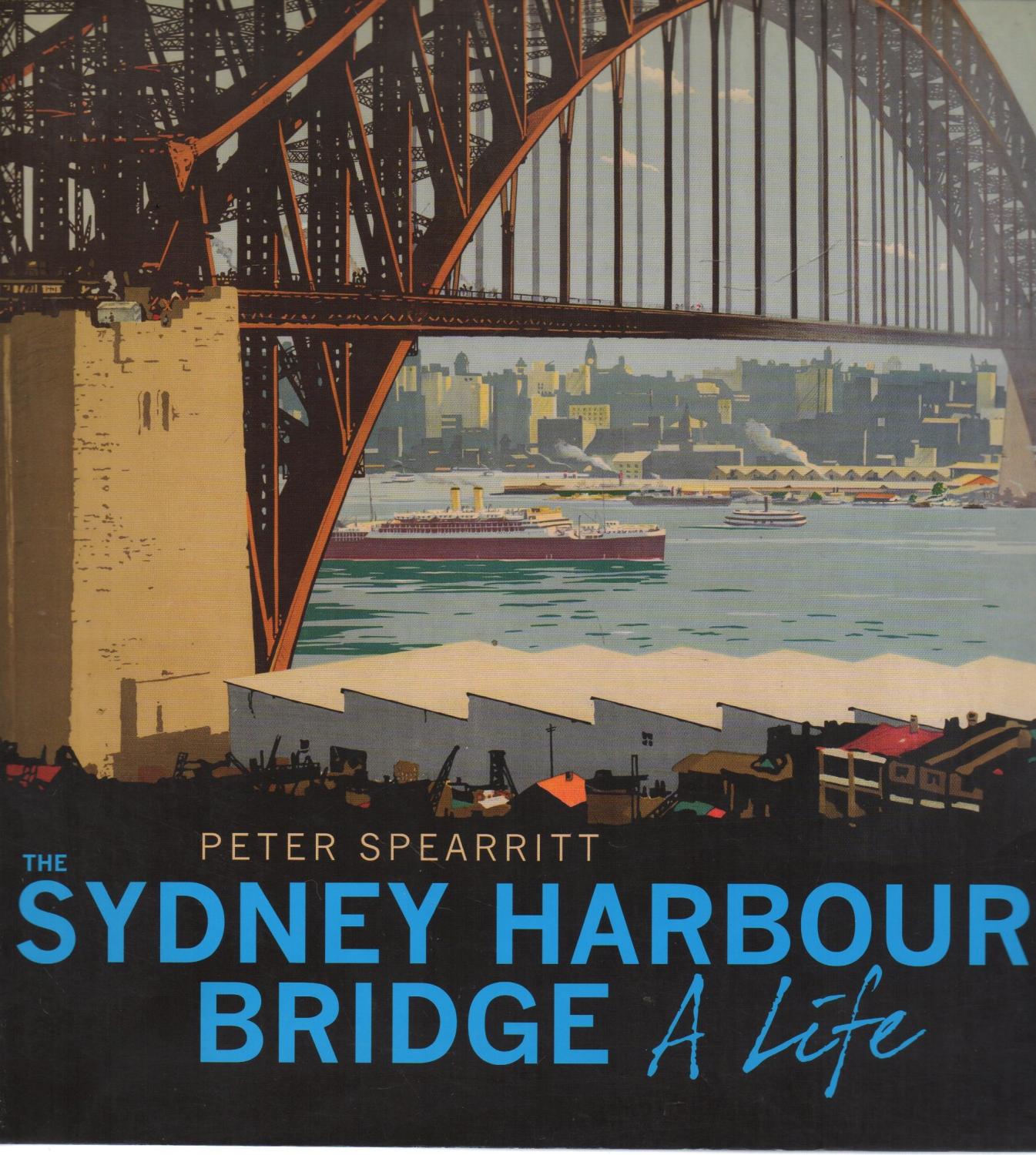
The Sydney Harbour Bridge: A Life
Newsouth, Sydney, 2011.
Square quarto paperback; 175pp., colour & b&w illustrations. Mild edge and corner wear to covers. Near fine otherwise. The revised edition of the classic biography of the bridge, celebrating its rich history and its life as a working structure. It tells the extraordinary story of its design and construction, the unexpected drama of its official opening, and the way it has taken a central place in Sydney's celebrations and become a much-loved symbol of the city.
Click here to order

$25
201264
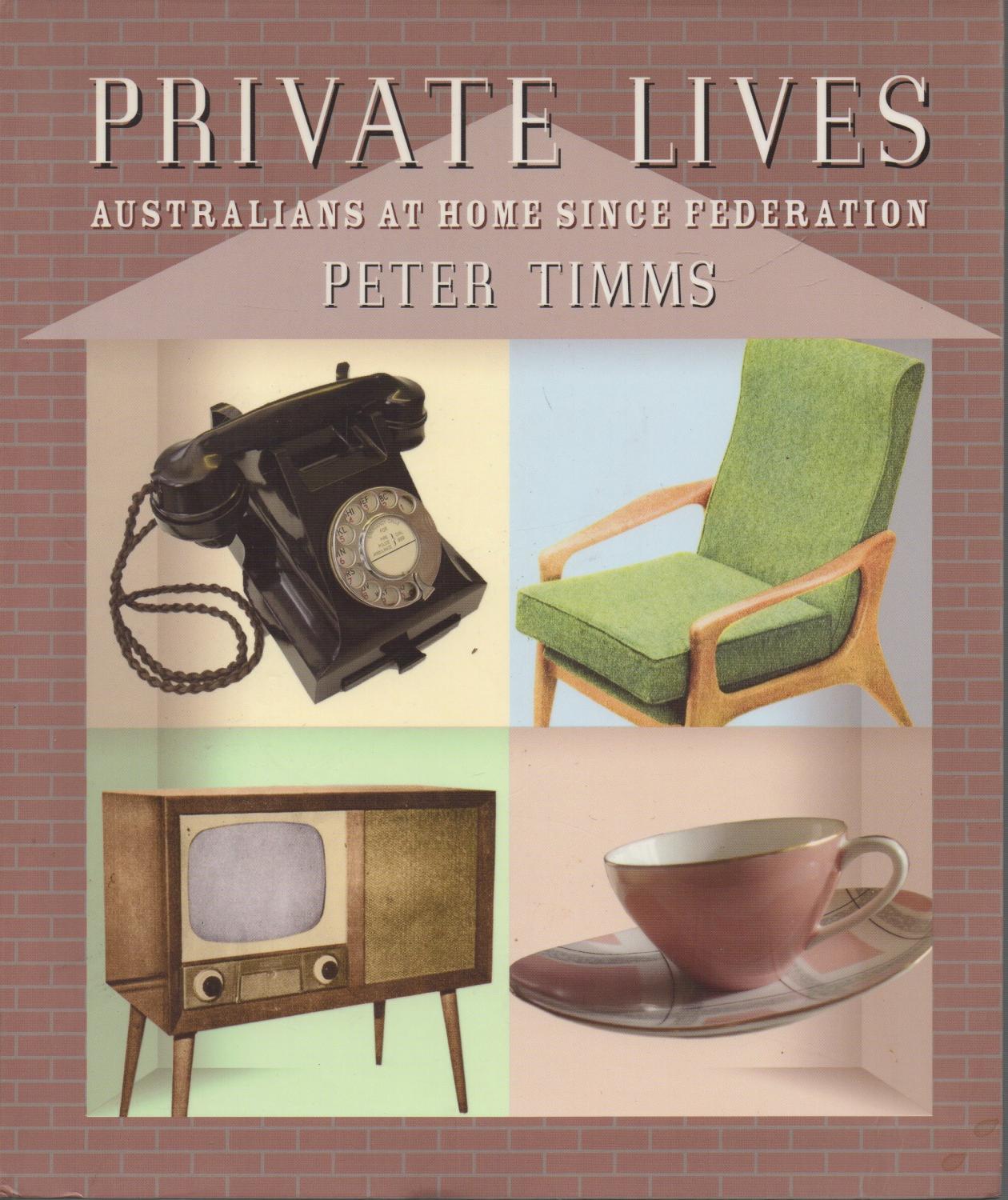
Timms, Peter
Private Lives Australians at Home since Federation
Miegunyah Press, Melbourne Vic., 2008.
Quarto; gatefold paperback with decorated endpapers; 259pp., with colour and monochrome illustrations. Minor wear. Very good to near fine. 'Private Lives is a room-by-room tour of the Australian way of living since 1900. Here the suburbs are seen, not as desolate, lifeless and clusters of little boxes but something far richer and more rewarding.' - Courier Mail
Click here to order

$23