-
86569
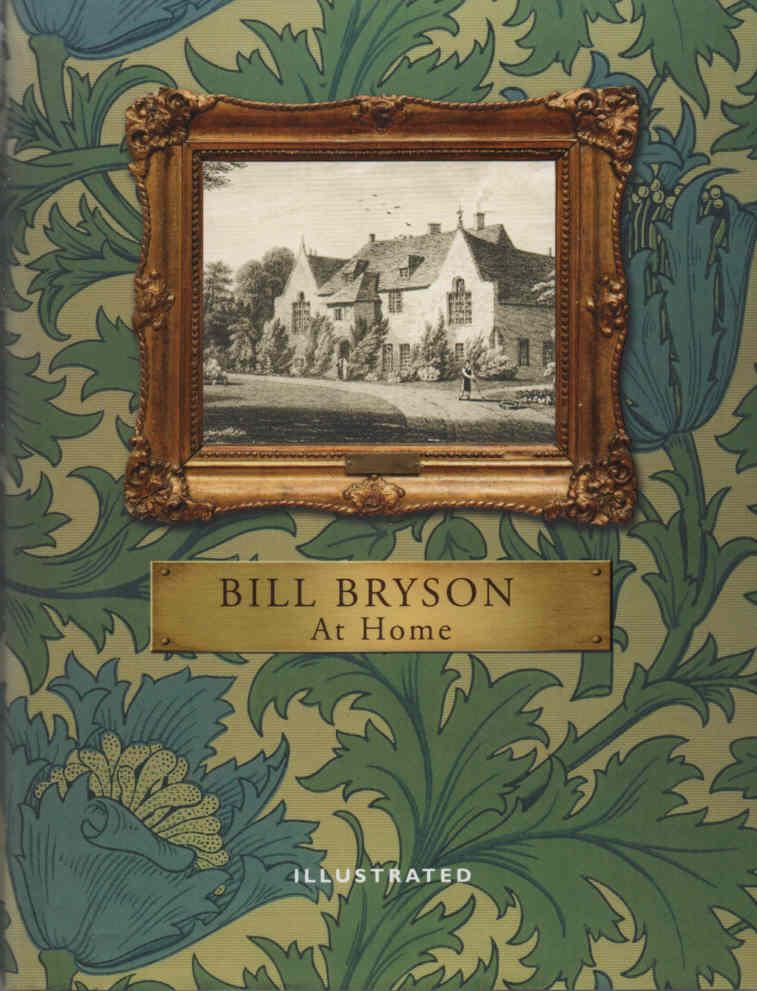
Bryson, Bill
- At Home A Short History of Private Life
Doubleday, London, 2013.
Quarto; hardcover, with gilt spine-titling and decorative endpapers; 553pp., colour and monochrome plates and illustrations. Die-cut dustwrapper. Very minor wear. Fine. "In the first chapter of At Home, Bill Bryson surveys his own home, an old Norfolk rectory, and considers the career of the young rector for whom it was built in 1851. Thomas JG Marsham would have enjoyed an income of around 500-400,000 pounds today. He was, Bryson writes, one of 'a class of well-educated, wealthy people who had immense amounts of time on their hands. In consequence, many of them began, quite spontaneously, to do remarkable things'. He cites the examples of George Bayldon, whose services were so poorly attended he converted half his church into a hen-house, and Reverend George Garrett, who pioneered submarine design. They've disappeared now and country vicars are neither rich nor leisured, but Bryson is about as close to a modern equivalent as you can find. At Home has all the hallmarks of being written by someone with a certain sort of intellectual thirst, a lavish income and too much time on his hands, qualities that in our own age are more likely to be found not in clergymen, but bestselling authors. While Bryson's book purports to be about private life, it's really about whatever takes his fancy. This is Bryson's big book of whims. Home, he claims, is where history ends up. And his method is to lead us on a history of Britain and North America via the rooms in his house. Thus, the chapter on the kitchen is where he discourses on the Duke of Marlborough, who was 'said to be so cheap, he refused to dot his 'I's when he wrote, to save on ink' ...In the last third of the book, there's a mad dash through the greatest hits of the Industrial Revolution for what seems like completeness's sake. It's as if the headmaster has walked in and schoolmaster Bryson has been forced to take the Beatles off the turntable and relate the facts of the spinning Jenny. A mistake, as he's always better off-topic, relating how Charles Darwin draped himself with electrified zinc chains and doused his body with vinegar, and how John Lubbock, the man who gave the world bank holidays, also spent three months trying to teach his dog to read. So rather than being a book about home or private life, this is an idiosyncratic sweep through the makings of modernity, and there's a sudden swerve at the end, as Bryson concludes with a mini-critique of the age whose birth he's just described. It's almost, well, a sermon, as if Bryson has realised that he really is Thomas JG Marsham's latterday heir. And it begs the question: what subject will the Reverend Bryson choose to turn to next?" - Carole Cadwalladr
Click here to order
$32
|
|