lamdha books -
Catalogue of books on the civilisations of ancient Greece and Rome

Click on the small images at right to see a larger picture

95791
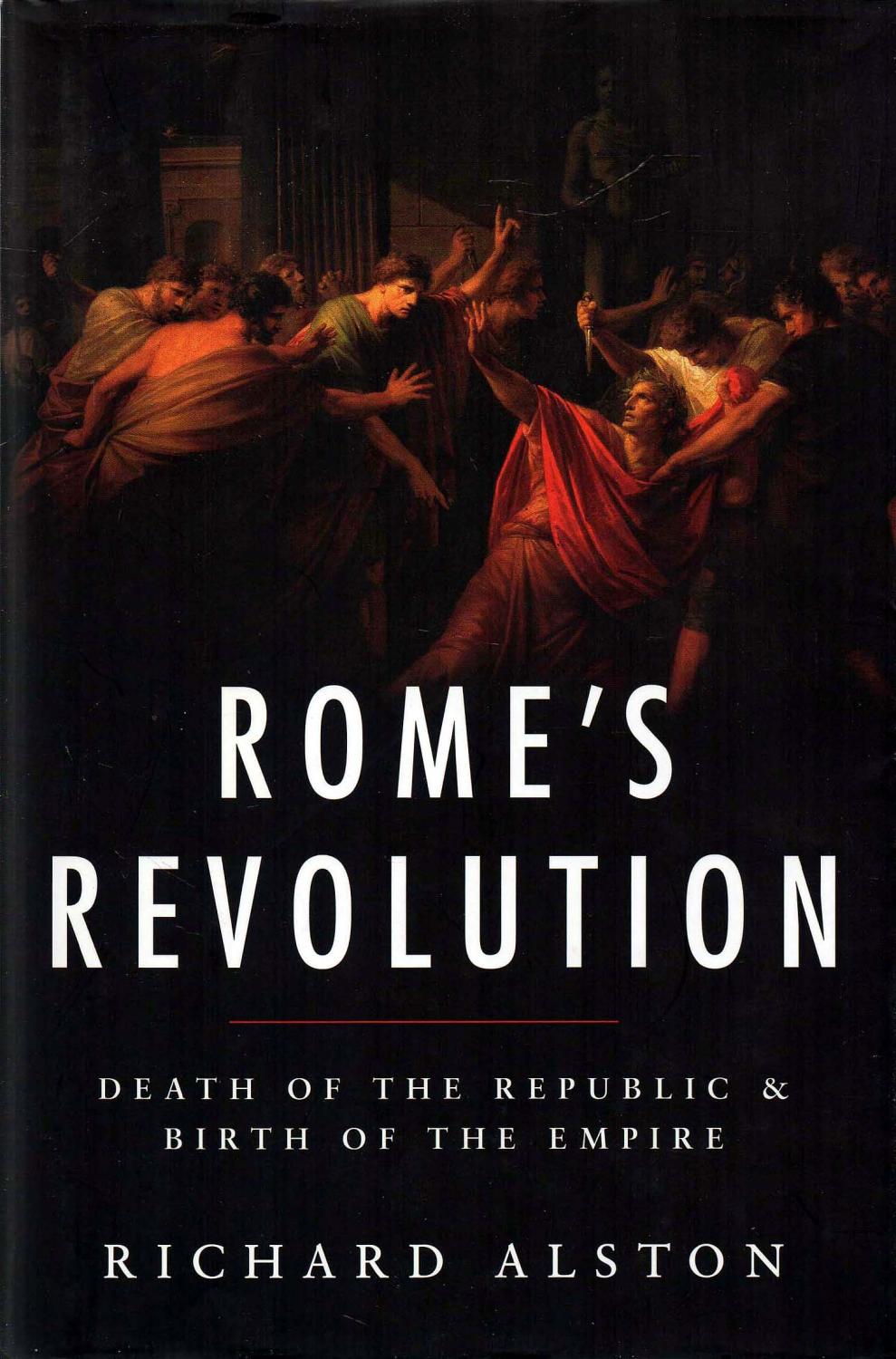
Alston, Richard
Rome's Revolution Death of the Republic & the Birth of the Empire
Oxford University Press, Oxford UK, 2015.
Octavo hardcover; 385pp., monochrome illustrations. Dustwrapper. Remainder, new. Novelized, televised, and endlessly scrutinized by scholars, the fall of the Roman Republic marks one of history's great turning points. Historians have studied the descent of the Republic into civil war as a great political tragedy, a warning from the past about the unsustainability of empires; political scientists have labelled it a parable about militarism, populism, moral decay, or the inevitable corruption of political systems. Yet the familiar story of the Roman Republic's downfall continues to be the story of its elites. What if we started thinking about Roman politics not from the perspectives of Caesar and Cicero, but from the point of view of the soldier, the peasant, or the pauper? In an original account of what he calls Rome's revolution, Richard Alston reinscribes these humble protagonists into their tumultuous era. They, like the ruthless aristocrats they swore allegiance to, were political agents, negotiating their positions in the context of a 'failed state.' Rome's Revolution blends riveting historical narrative with socio-economic analysis, restoring a rich context to the cataclysmic violence of the period. In addition to chronicling the drama of aristocratic rivalries, the book digs beneath the high politics of Cicero, Caesar, Antony and Octavian to examine the problems of making a living in first-century BC Italy. Portraying the revolution as the crisis of a violent society - both among the citizenry and among a ruling class whose legitimacy was dwindling - Rome's Revolution provides new insight into the motivations that drove men to march on their capital city and slaughter their compatriots.
Click here to order

$25
203053
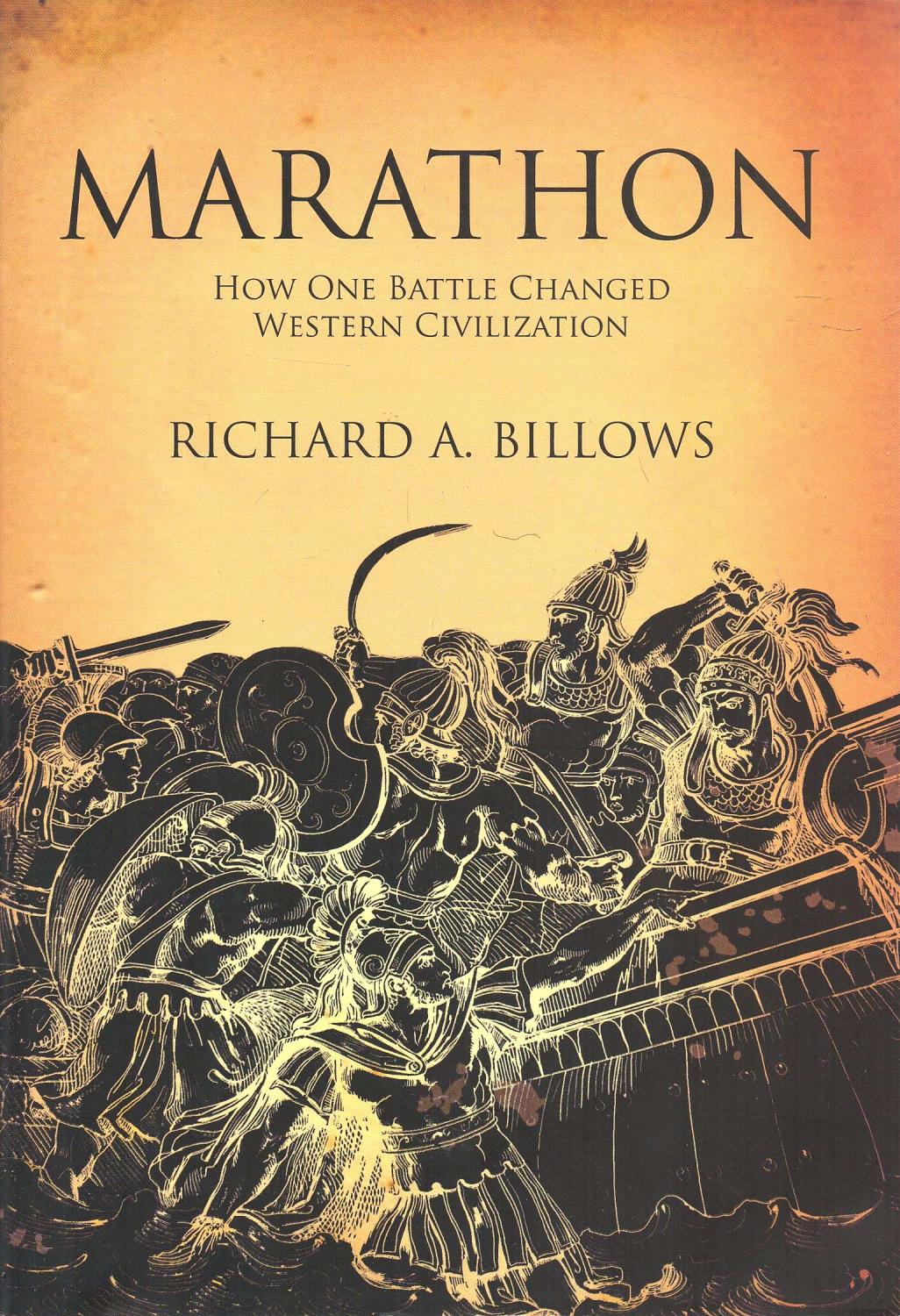
Billows, Richard A
Marathon How One Battle Changed Western Civilization
Overlook Duckworth, New York, NY, USA, 2010.
Octavo; hardcover, quarter-bound in papered boards with blind-stamped upper board decoration; dustwrapper; 304pp., untrimmed, with monochrome photographic illustrations and 5 maps. Minor wear only; near fine. John Stuart Mill once famously commented that, even more so than the Battle of Hastings, the Battle of Marathon was the most important military engagement to impact upon the history of Britain. In this retelling of the events of that battle, Richard Billows evaluates the encounter of Kleisthenes' Athenians with the larger army of the Persians under Darius and winds up in full support of Mills's position. Taking every aspect of the encounter in turn, from battlefield topography to arms and armour, Billows ticks off the elements that detail how this battle was perhaps critical in moulding the development of Western culture.
Click here to order

$23
92457
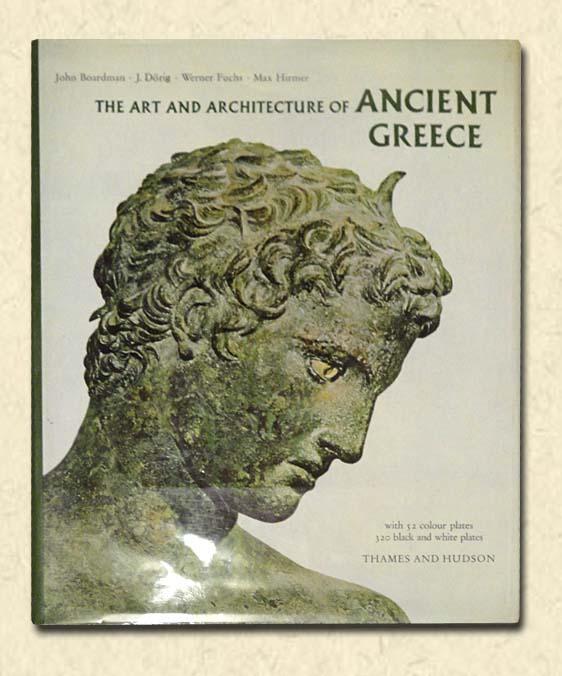
Boardman, John, et al.
The Art and Architecture of Ancient Greece
Thames & Hudson, London, 1967.
Quarto; hardcover, with gilt spine -titles and upper board decoration; 600pp., with 52 tipped-in full-colour plates and many colour and monochrome illustrations, 189 text figures. Previous owner's bookplate, preliminaries quite spotted. light spotting to text block edges; dustwrapper worn at edges, some small scrapes and minor tear. Wrapper now professionally protected by superior non-adhesive polypropylene film. This comprehensive work represents the last word in scholarly discussion and meaningful illustration of the astonishing artistic achievement of ancient Greece, the culture to which Western civilization owes more than to any other. Architecture, sculpture, painting, vase painting, and all branches of the applied arts are copiously represented in this survey, which ranges over 1000 years. Greek art remains a constant source of delight and instruction to us because in it we discern all the standards, conventions, strengths and weaknesses that have since been embodied in Western art down to the present day. Moreover, each year fresh researches alter our assessment of it, compelling us to reconsider even the most familiar works. A valuable feature of the work is that the authors do not confine their attention to original works. They also consider Greek and Roman copies which have preserved for posterity the beauty of many important works which have not survived in their original form.
Click here to order

$80
89228
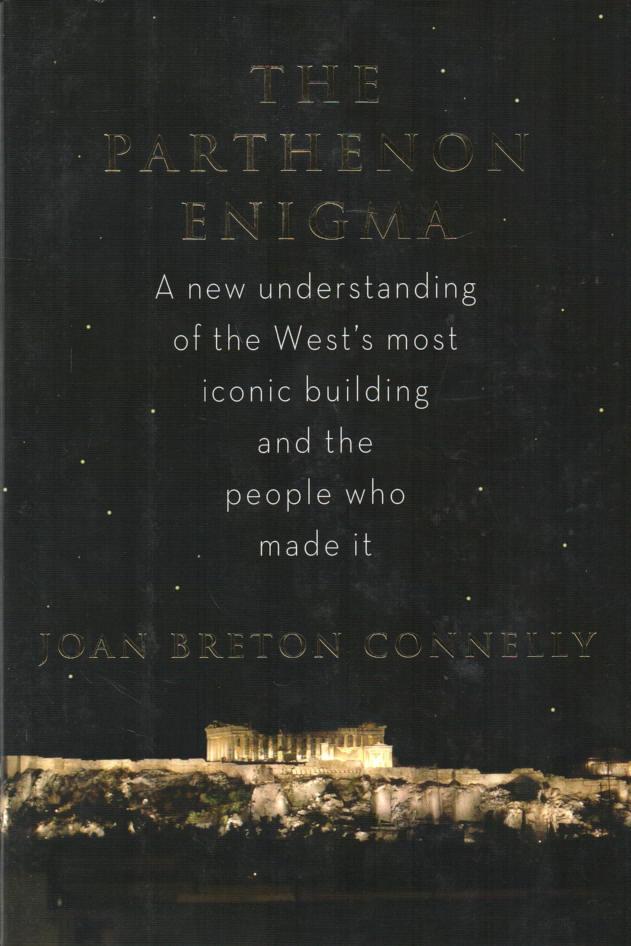
Breton Connelly, Joan
The Parthenon Enigma A new understanding of the West's most iconic building and the people who made it
Borzoi Books/Alfred A Knopf/Random House LLC., New York NY, 2014.
Octavo; hardcover, quarter-bound in papered boards with gilt spine-titling and illustrated endpapers; 486pp., untrimmed, with maps, diagrams, many monochrome illustrations and 8pp. of full-colour plates. Dustwrapper. Remainder. New. Built in the fifth century B.C., the Parthenon has been venerated for more than two millennia as the West's ultimate paragon of beauty and proportion. Since the Enlightenment, it has also come to represent our political ideals, the lavish temple to the goddess Athena serving as the model for our most hallowed civic architecture. But how much do the values of those who built the Parthenon truly correspond with our own? And apart from the significance with which we have invested it, what exactly did this marvel of human hands mean to those who made it? In this revolutionary book, Joan Breton Connelly challenges our most basic assumptions about the Parthenon and the ancient Athenians. Beginning with the natural environment and its rich mythic associations, she re-creates the development of the Acropolis the Sacred Rock at the heart of the city-state from its prehistoric origins to its Periklean glory days as a constellation of temples among which the Parthenon stood supreme. In particular, she probes the Parthenon's legendary frieze: the 525-foot-long relief sculpture that originally encircled the upper reaches before it was partially destroyed by Venetian cannon fire (in the seventeenth century) and most of what remained was shipped off to Britain (in the nineteenth century), along with the Elgin marbles. The frieze's vast enigmatic procession a dazzling pageant of cavalrymen and elders, musicians and maidens has for more than two hundred years been thought to represent a scene of annual civic celebration in the birthplace of democracy. But thanks to a once-lost play by Euripides (the discovery of which, in the wrappings of a Hellenistic Egyptian mummy, is only one of this book's intriguing adventures), Connelly has uncovered a long-buried meaning, a story of human sacrifice set during the city's mythic founding. In a society startlingly preoccupied with cult ritual, this story was at the core of what it meant to be Athenian. Connelly reveals a world that beggars our popular notions of Athens as a city of staid philosophers, rationalists, and rhetoricians, a world in which our modern secular conception of democracy would have been simply incomprehensible. The Parthenon's full significance has been obscured until now owing in no small part, Connelly argues, to the frieze's dismemberment. And so her investigation concludes with a call to reunite the pieces, in order that what is perhaps the greatest single work of art surviving from antiquity may be viewed more nearly as its makers intended. Marshalling a breathtaking range of textual and visual evidence, full of fresh insights woven into a thrilling narrative that brings the distant past to life, The Parthenon Enigma is sure to become a landmark in our understanding of the civilization from which we claim cultural descent.
Click here to order

$25
92621
Cameron, Alan
Porphyrius the Charioteer
Clarendon Press, Oxford UK, 1999.
Hardcover, octavo; 280pp., monochrome illustrations. Dustwrapper. Remainder, new. Porphyrius Calliopas was the greatest of all the heroes of the sixth century Byzantine hippodrome, celebrated in the "Anthology" and in the monumental reliefs. Only two bases of monuments survive, the second found in 1963. This book, first published in 1973, presented the first published study of this second base, elucidating the iconography and explaining the inscriptions. The author, Cameron, infers that there were a further five monuments to Porphyrius and other contemporary charioteers, now lost, and reconstructs their careers, their fame and their material rewards. He also discusses the changing fortunes of the hippodrome under various successive Emperors, the vexed issue of faction violence, and the important way in which the victorious charioteer was seen as a reflection of the victorious Emperor.
Click here to order

$25
77972
Dando-Collins, Stephen
The Great Fire of Rome The Fall of the Emperor Nero and his City
Da Capo Press/Perseus Books Group, London, 2010.
Octavo; hardcover; 263pp. Dustwrapper. Remainder. New. "Australian-born historian Dando-Collins vividly recreates one of history's most famous events. On a warm summer night in 64 C.E., a small fire broke out in a Roman shop; fanned by winds, the fire spread quickly, destroying huge parts of the city. The emperor, Nero, an accomplished lyre player and singer, was in Antium for a singing competition, and when news of the fire reached him, he reluctantly set sail for home. Nero announced an ambitious rebuilding plan, with bounties for landowners who completed reconstruction of buildings on their land in a prescribed period. Nero also planned for wider streets, which made him unpopular with many. Seeking to assign blame for the fire, Nero settled on the priests of Isis, persecuting them at public festivals. This drew the ire of Nero's critics, who believed the emperor himself had set the fire. Nero spent the last four years of his life in seclusion. Drawing heavily upon the conflicting accounts of the fire and Nero's rise and demise in the works of Roman historians Tacitus, Suetonius, and Cassius Dio, historian Dando-Collins energetically recreates the days leading up to the fire, the conflagration itself, and the subsequent decline of Nero's fortunes." - Publishers Weekly.
Click here to order

$23
98858
Dunbabin, T.J.
The Western Greeks The History of Sicily and South Italy from the Foundation of the Greek Colonies to 480 B.C.
Oxford at the Clarendon Press, London, 1968.
Reprint: octavo; hardcover, with gilt spine titles; 504pp. with a frontispiece map and other maps. Mild wear; text block edges mildly spotted. Dustwrapper mildly rubbed; spine panel lightly sunned; now backed by archival-quality white paper and professionally protected by superior non-adhesive polypropylene film. Very good.
Click here to order

$75
96425
[Gaius Valerius Catullus] Dunn, Daisy
Catullus' Bedspread The Life of Rome's Most Erotic Poet
William Collins/HarperCollins Publishers, London, 2016.
Octavo; hardcover; 312pp., with maps and diagrams, 8pp. of colour plates and many monochrome illustrations. Minor wear. Dustwrapper. Near fine. "The subtitle of Daisy Dunn's first book - 'the life of Rome's most erotic poet' - may prove something of a letdown for the dirty mac brigade. Aficionados of lively, finely crafted biography, however, are well served. Dunn acknowledges that independent evidence of Catullus's life in the last century BC is all but nonexistent, leaving the poetry - assumed to be autobiographical - as the chief source of illumination. She skilfully avoids the pitfalls of obscurity or glibness, and the central thread of Catullus's great love for the married Clodia Metelli, the 'Lesbia' of his poems, is both haunting and fascinating. Weaving well-researched social history with a compelling account of political machinations in Rome, the picture here is not just of a libertine prone to writing of his obscene desires, but a soulful man at the heart of a remarkable age." - Alexander Larmand
Click here to order

$23
216201
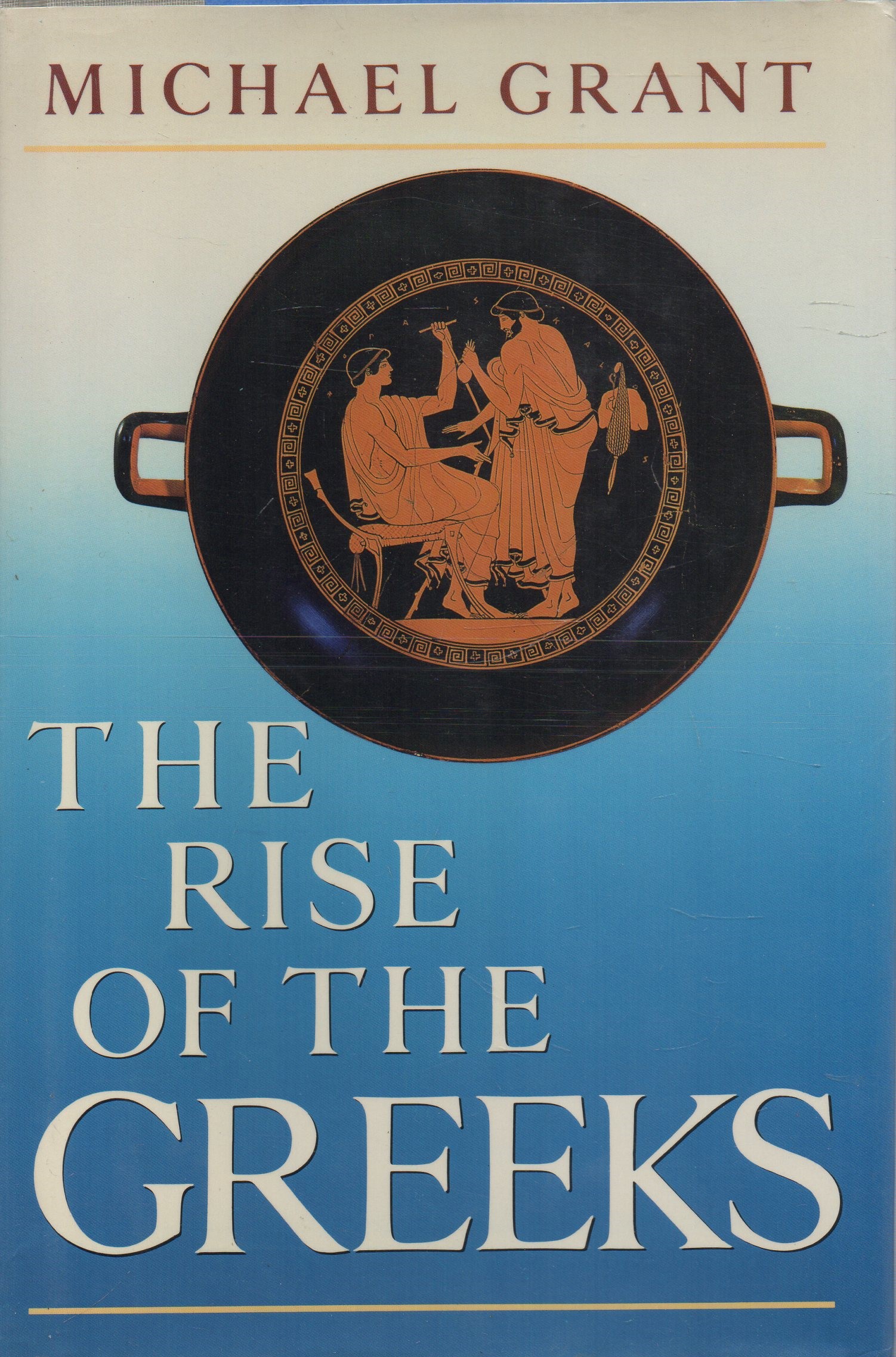
Grant, Michael
The Rise of the Greeks
Charles Scribner's Sons, New York, 1988.
First US edition. Octavo; hardcover; quarter bound blue boards with gray cloth spine and gilt spine-titling; 391pp., with 13 maps and 16pp. of black & white photographic plates. Small bump on lower board edges, some rubbing; very lightly toned text block edges. Minor wear otherwise very good to near fine in like dustwrapper with slight wear to edges, now professionally protected by superior non-adhesive polypropylene film. When most people think of the Ancient Greeks they think of the Golden Age of Greece's Fifth Century. Masterful Hellenophile Michael Grant teaches us in this volume that earlier periods in Greek history - in fact even the earliest period, from 1000 to 495 BC - had as much to offer in terms of creativity and dynamism as the later eras. Grant takes us on a tour to the far-flung city-states that covered a wider area than afterwards, from Italy to Russia to Asia Minor, who nevertheless proudly declared their Hellenistic nationhood; he details the trends in pottery and its major artistic shockwaves; he notes the rise of the Phoenician alphabet as a tool for trade and communication and which led directly to the writing of Homer's great sagas. In short, he instructs us that 'early' does not equate with 'uninteresting' as far as ancient Greek culture is concerned.
Click here to order

$25
207676
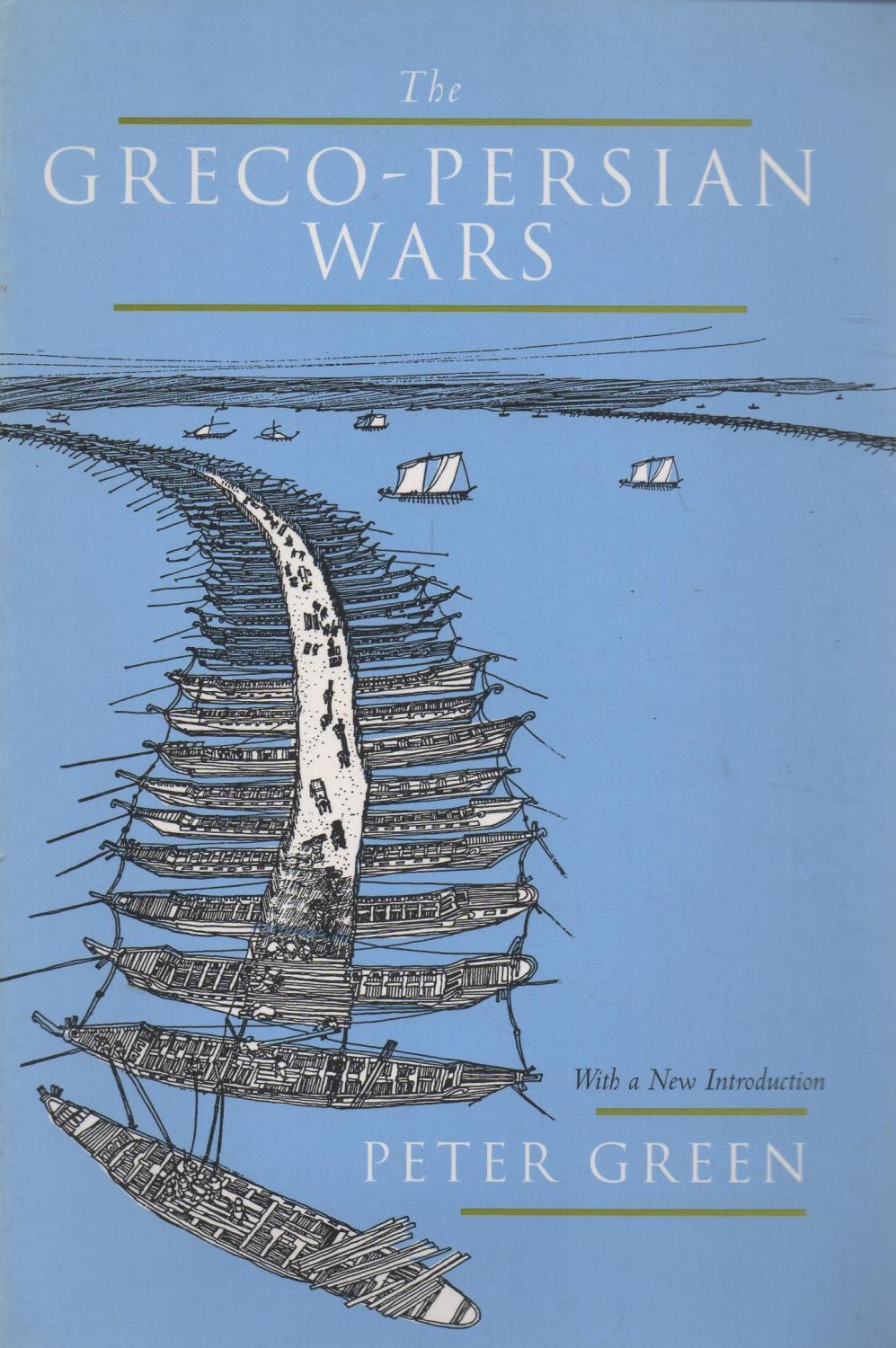
Green, Peter
The Greco-Persian Wars
University of California Press, Berkeley, 1998.
Octavo paperback; 344pp., b&w maps and illustrations. Minor wear only; slight wear to edges and corners; spine slightly faded. Otherwise very good to near fine. The long and bitter struggle between the great Persian Empire and the fledgling Greek states reached its high point with the extraordinary Greek victory at Salamis in 480 B.C. The astonishing sea battle banished forever the spectre of Persian invasion and occupation. Peter Green brilliantly retells this historic moment, evoking the whole dramatic sweep of events that the Persian offensive set in motion. The massive Greek victory, despite the Greeks' inferior numbers, opened the way for the historic evolution of the Greek states in a climate of creativity, independence, and democracy, one that provided a model and an inspiration for centuries to come. Green's accounts of both Persian and Greek strategies are clear and persuasive; equally convincing are his everyday details regarding the lives of soldiers, statesmen, and ordinary citizens. He has first-hand knowledge of the land and sea he describes, as well as full command of original sources and modern scholarship.
Click here to order

$30
7461
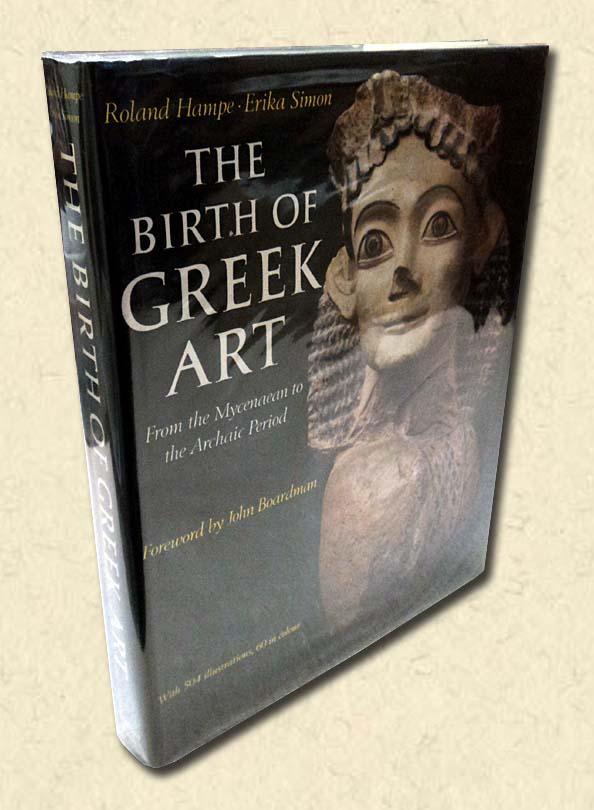
Hampe, Roland, and Erica Simon (Foreword by John Boardman)
The Birth of Greek Art From the Mycenaean to the Archaic Period
Thames & Hudson Ltd., London, 1981.
Hardcover quarto, 316pp., 60 colour and 444 monochrome illustrations. Light spotting to text block edges, a couple of very small marks; boards very good; dustwrapper lightly worn with some minor scorings. Very good. Wrapper now professionally protected by superior non-adhesive polypropylene film). How far back can we trace the origins of Greek Art? Is it confined to the fortunes of great City States such as Athens and Corinth, or are flickerings of its glory to be seen in earlier cultures? And, if so, who were these precursors, and what do we know of them? This brilliant and scholarly book demonstrates how the roots of Greek Art reach back long before its generally accepted beginnings in 1000 BC, when, as scholars have previously held, it was the product of a gradual renaissance following the destruction of the Bronze Age civilizations. The authors argue, on the basis of works of art richly illustrated and fully analysed here, that the origins of Greek Art do not lie in the so-called Dark Ages, but that they should be sought in the Golden Age of Mycenae 600 years earlier. This fascinating society was once believed to have totally succumbed to waves of destruction before the Dark Ages in about 1000 BC, but it can now be seen to have survived in Greek myths and artistic conventions right through to the high period of Classical Art. This confirms the discovery, made through the decipherment of Linear B, that the Mycenaeans spoke an early form of Greek and were thus the direct cultural precursors of Classical Greek civilization. The novel approach taken by the authors concentrates on this astonishing continuity of Greek Art. By examining the objects class by class - architecture, metalwork, pottery, engraved gems, jewellery, sculpture, ivory, stone vessels, weapons - they are able to show how certain techniques and materials have survived throughout the centuries, and how some were lost for ever. Their superb blend of scholarship and of rich and wide-ranging illustration offers the reader a unique opportunity to understand the complex and potent strands of tradition that culminate in the splendours of Ancient Greece.
Click here to order

$95
207717
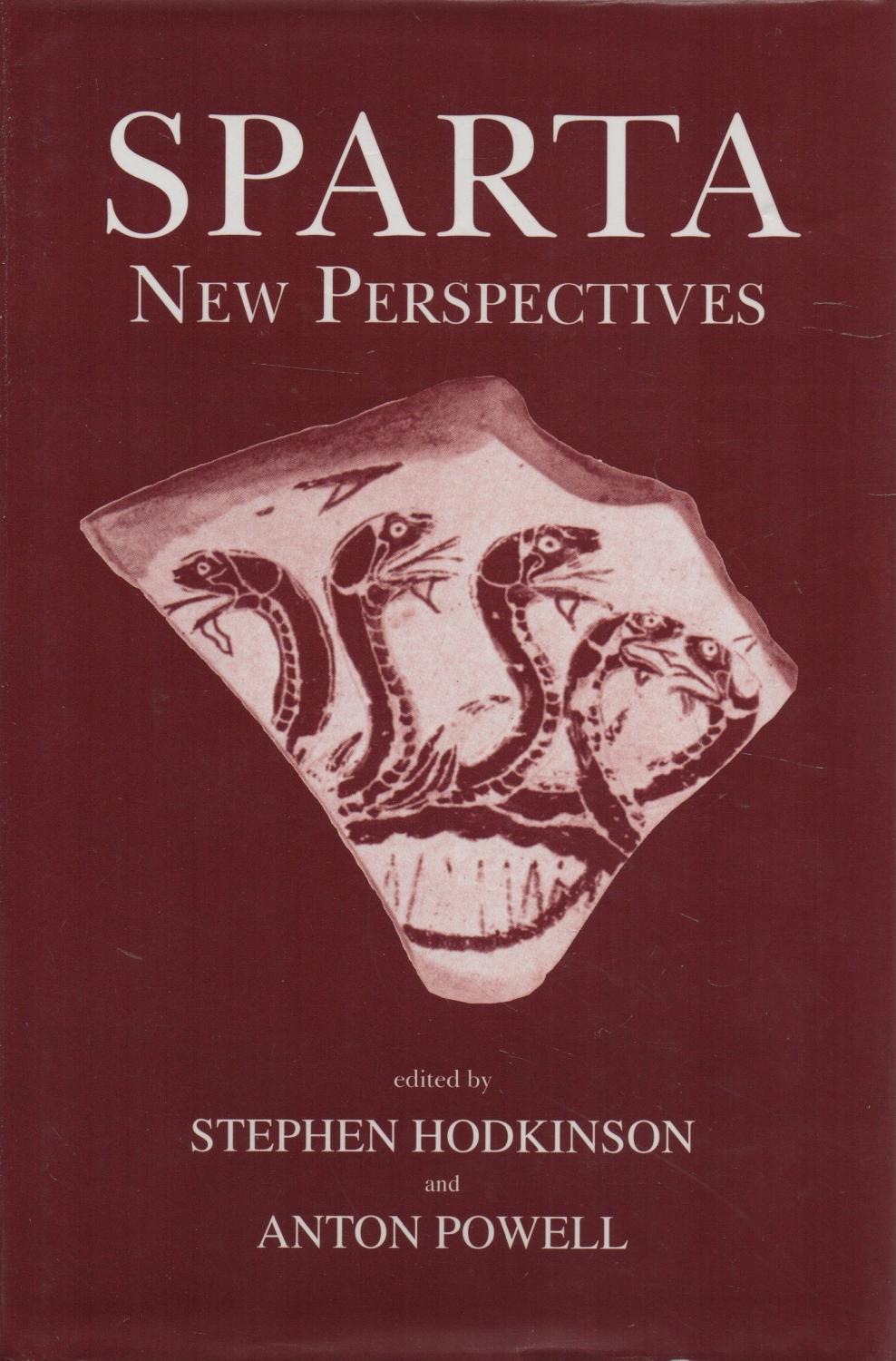
Hodkinson, Stephen, & Anton Powell
Sparta New Perspectives
Gerald Duckworth Ltd., London, 1999.
Octavo; hardcover, with gilt spine titling; 427pp., with many monochrome illustrations. Moderate wear; a few small marginal pencil marks. Dustwrapper now professionally protected by superior non-adhesive polypropylene film. Near fine.
Click here to order

$75
202109
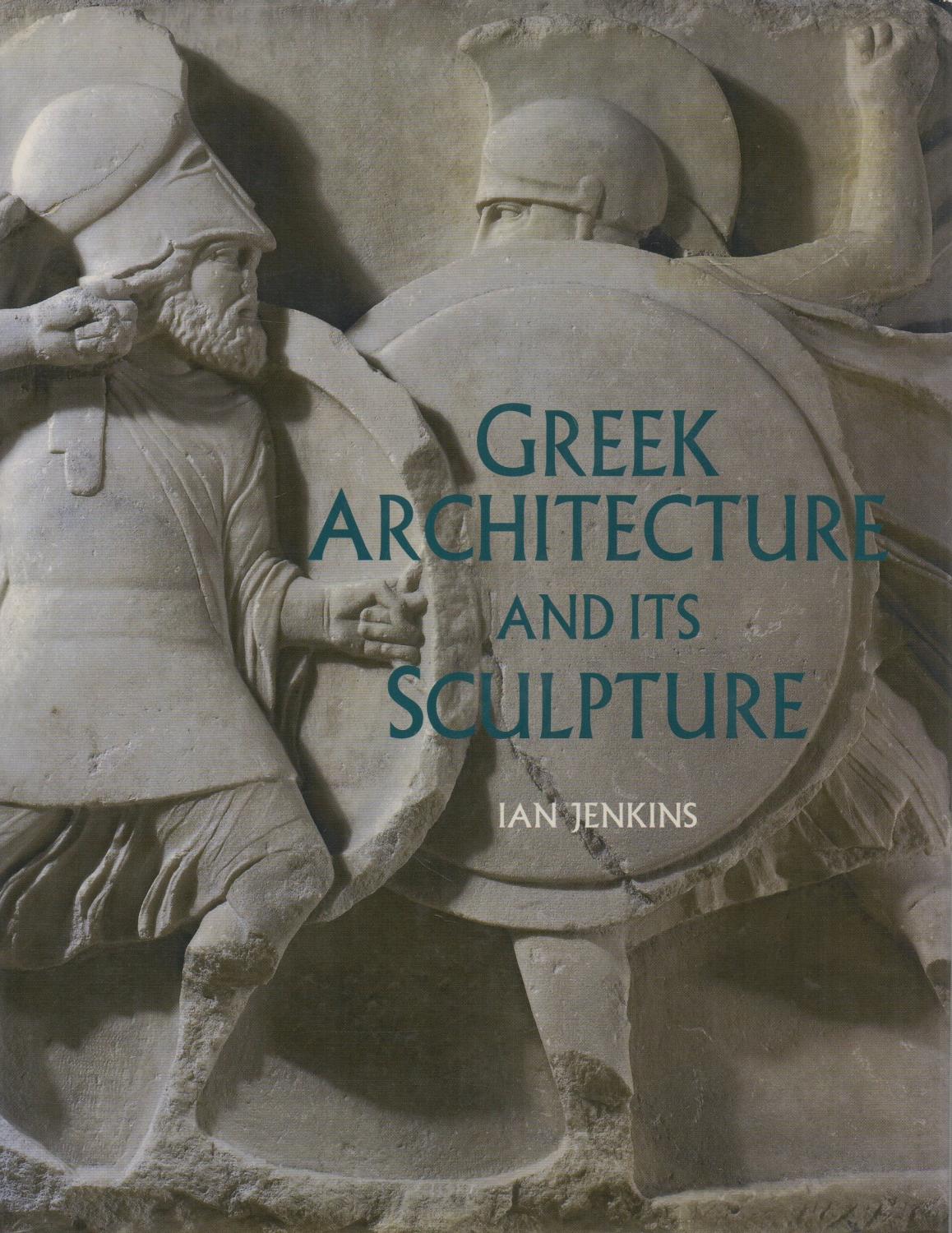
Jenkins, Ian (Kate Morton, illus.)
Greek Architecture and its Sculpture
Harvard University Press, Cambridge, 2006.
Quarto hardcover; black boards with silver gilt spine titling; 271pp., colour and monochrome illustrations. Mild rubbing to dustwrapper with slight wear to edges. Near fine and wrapper now professionally protected by superior non-adhesive polypropylene film.
Click here to order

$35
214067
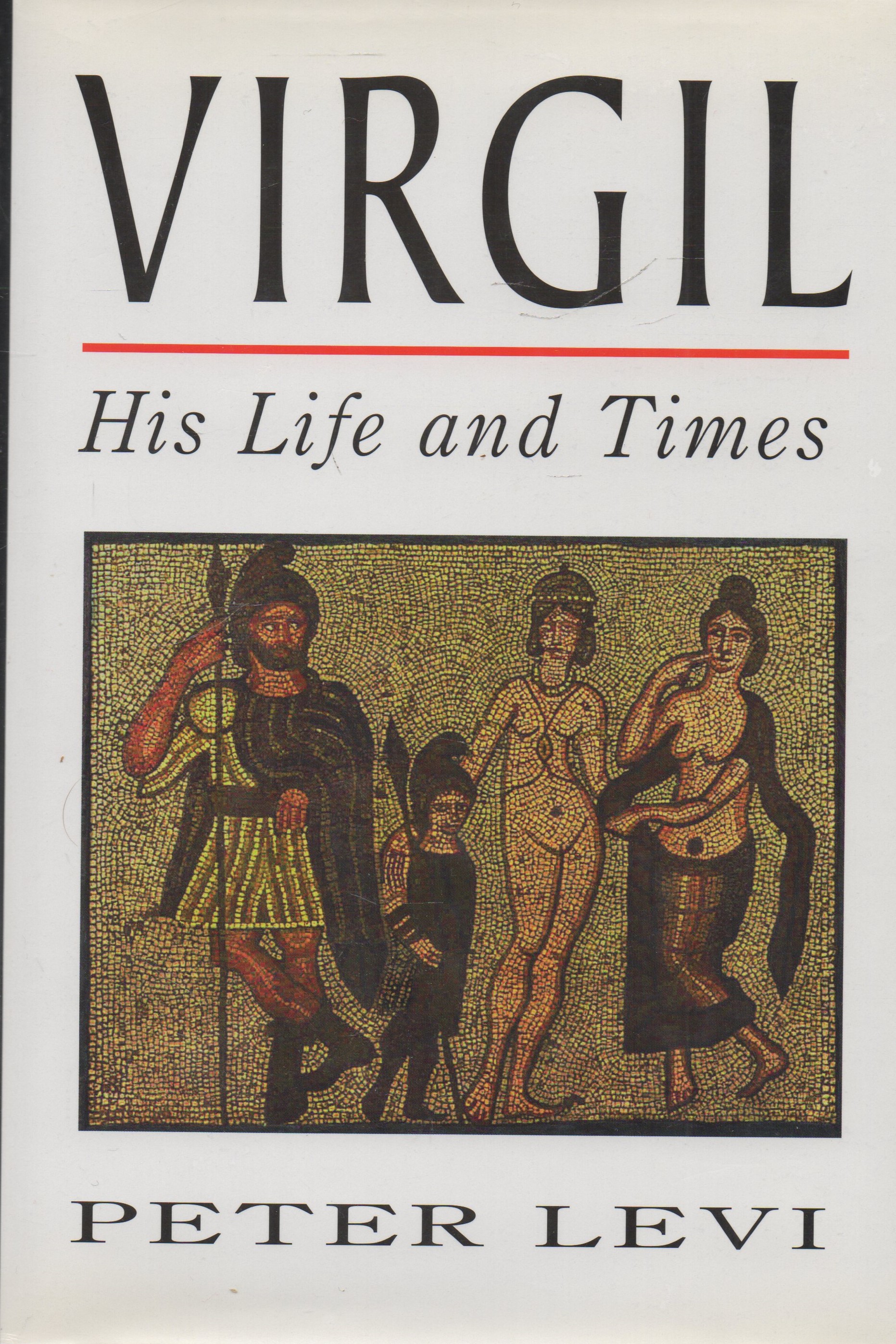
Levi, Peter
Virgil - signed by the author His Life and Times
Gerald Duckworth Ltd., London, 1998.
Octavo; hardcover, with gilt spine titling; 248pp. Minor wear; text block edges mildly spotted; inscription by the author in ink to the owner. Dustwrapper now professionally protected by superior non-adhesive polypropylene film. Very good to near fine
Click here to order

$35
217840
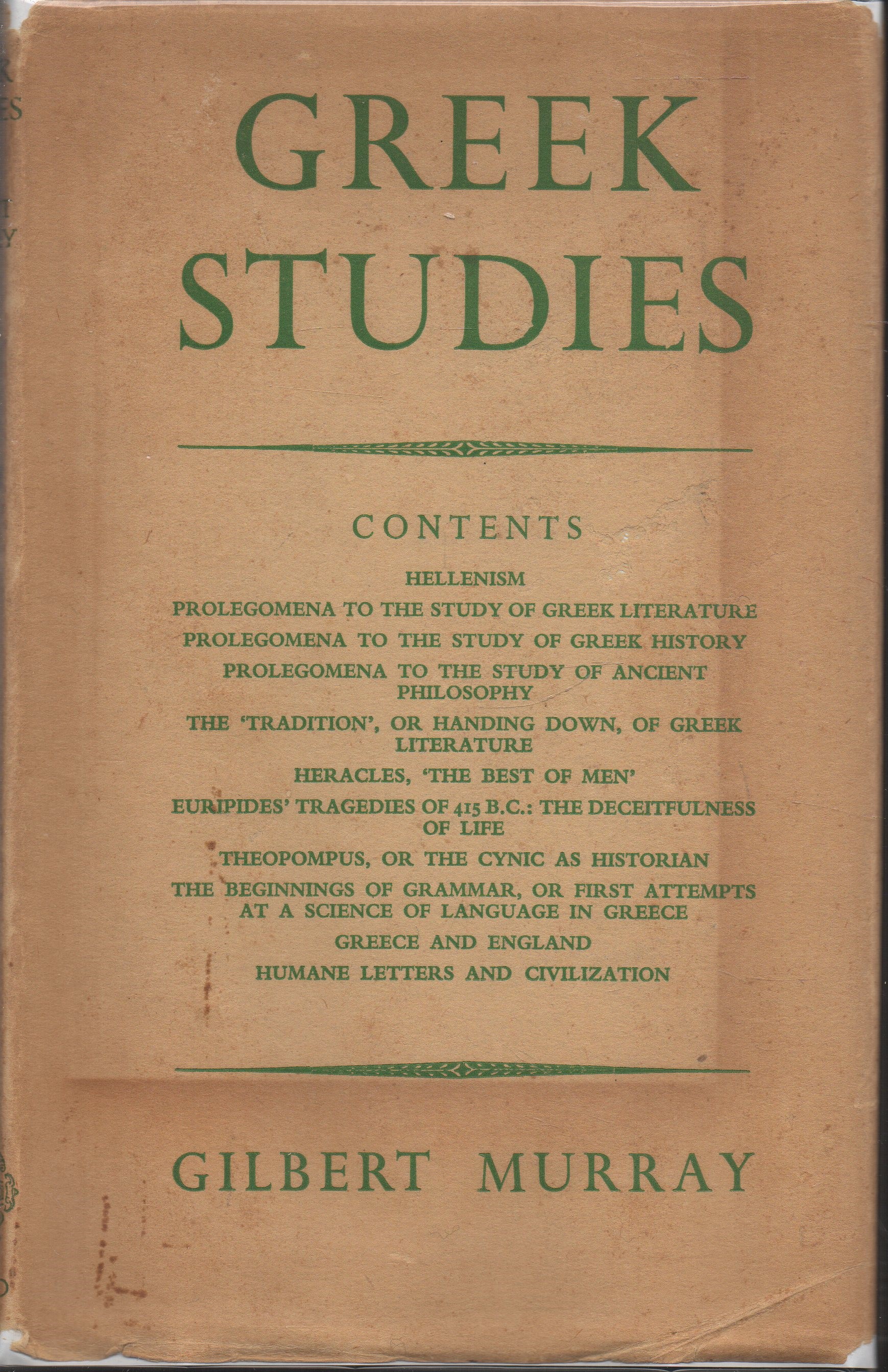
Murray, Gilbert
Greek Studies
Clarendon Press, Oxford, 1947.
Reprint. Octavo hardcover; green cloth boards with gilt spine titling on spine; 231pp.. Owner's name. Minor wear; slight wear and scraping to board edges and corners; mild offsetting to endpapers; toning with a few spots to text block edges. Card dustwrapper well-browned; wear to edges with small missing segments over spine panel extremities and corners; one or two small marks and some light creasing; now professionally protected by superior non-adhesive polypropylene film with white paper backing. Very good.
Click here to order

$30
216147
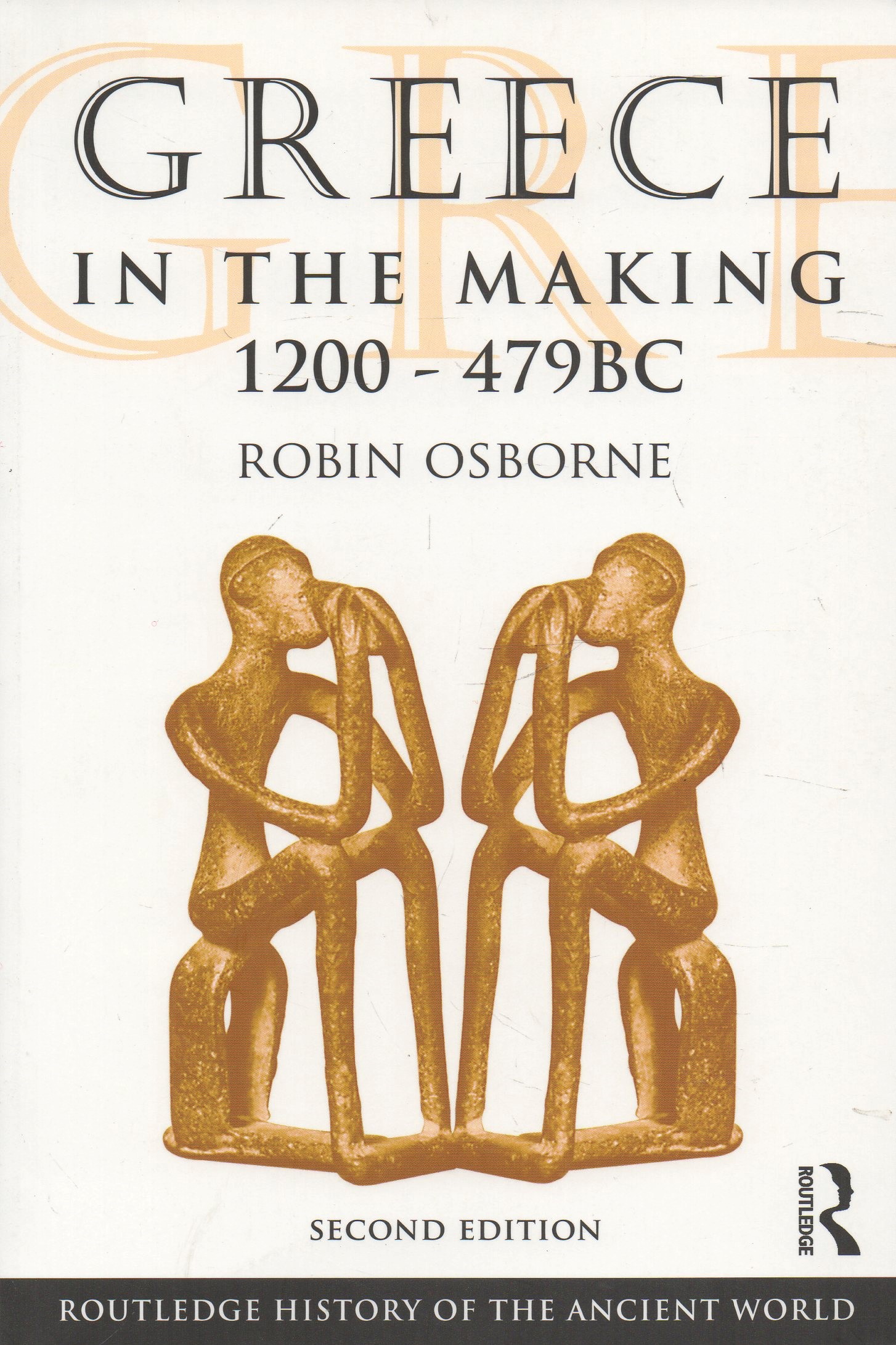
Osborne, Robin
Greece in the Making 1200-479 BC
Routledge, London, 2010.
Octavo paperback; 377pp., b&w illustrations and maps. Very minor wear only. Near fine. Barring a small number of archaic poems and inscriptions, the majority of our literary evidence for archaic Greece reported only what later writers wanted to tell, and so was subject to systematic selection and distortion. This book offers a narrative which acknowledges the later traditions, as traditions, but insists that we must primarily confront the contemporary evidence, which is in large part archaeological and art historical, and must make sense of it in its own terms.
Click here to order

$40
207723
Powell, Anton & Stephen Hodkinson (eds.)
The Shadow of Sparta
Routledge, London, 1994.
Octavo hardcover; blue boards with silver gilt spine titling; 408pp. Minor wear; a few faint spots and marks on text block edges. Near fine. No dustwrapper. In the past twenty years the study of Sparta has come of age. Images prevalent earlier in the 20th century, of Spartans as hearty good fellows or scarlet-cloaked automata, have been superseded by more complex scholarly reactions. As interest has grown in the self-images projected by this most secretive of Greek cities, increasing attention has focused on how individual Greek writers from other states reacted to information, or disinformation about Sparta. The studies in this volume provide new insights into the traditional historians' question, 'What actually happened at Sparta?'. But the implications of the work go far beyond Laconia. They concern preoccupations of some of the most studied of Greek writers, and help towards an understanding of how Athenians defined the achievement, or the failure, of their own city.
Click here to order

$120
206054
Prevas, John
Hannibal's Oath The Life and Wars of Rome's Greatest Enemy
Da Capo Press/Perseus Books/Hachette US Inc., Philadelphia PA, 2017.
Octavo; hardcover, quarter-bound in papered boards with gilt spine titles; 248pp., with a map and 16pp. of monochrome plates. Dustwrapper. Remainder. New. According to ancient sources, Hannibal was only nine years old when his father dipped the small boy's hand in blood and made him swear eternal hatred of Rome. Whether the story is true or not, it is just one of hundreds of legends that have appeared over the centuries about this enigmatic military genius who challenged Rome for mastery of the ancient world. In this new biography, historian John Prevas reveals the truth behind the myths of Hannibal's life, wars, and character- from his childhood in Carthage to his training in military camps in Spain, crossing of the Alps, spectacular victories in Italy, humiliating defeat in the North African desert, banishment from Carthage, and suicide. Hannibal's Oath is an epic account of a monumental figure in history.
Click here to order

$24
202513
Raven, Susan
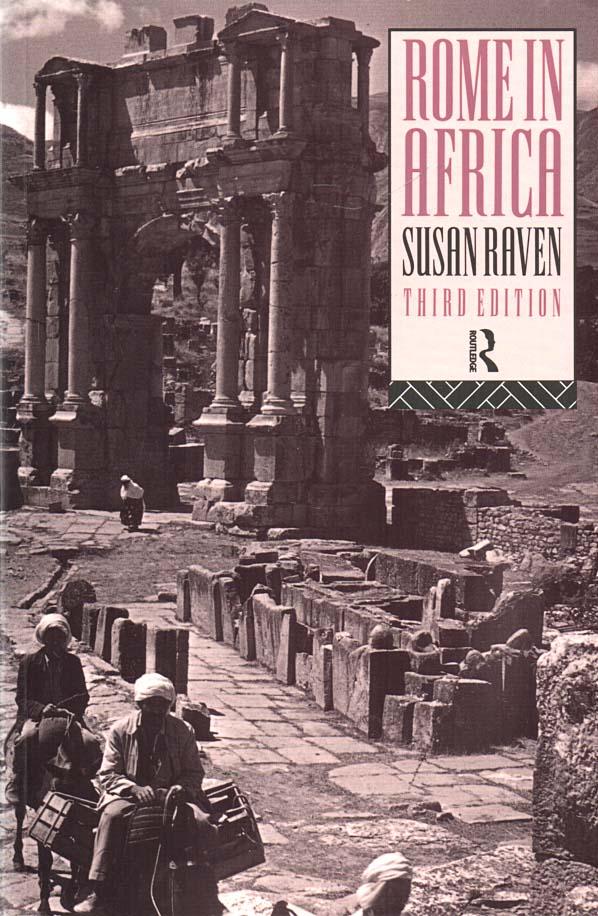
Rome in Africa - Third Edition
Routledge, London, 1998.
Reprint: octavo; paperback; 254pp., with maps and many monochrome illustrations. Mild wear. Near fine. Susan Raven recounts the story of this magnificent empire in North Africa, drawing on a wide variety of literary and archaeological evidence in addition to her own experience of the region, and revivifies the ghosts of the crumbling remains. Attractively and comprehensively illustrated, this book will prove invaluable to students of the Roman provinces and Roman history in general.
Click here to order

$40
203819
Stephenson, Paul
Constantine Roman Emperor, Christian Victor
Overlook Press, New York NY, 2010.
Octavo hardcover; 258pp., colour & monochrome plates. Dustwrapper. New. Remainder. A fascinating survey of the life and enduring legacy of perhaps the greatest and most unjustly ignored of the Roman emperors - written by a richly gifted historian. In 312 A.D., Constantine - one of four Roman emperors ruling a divided empire - marched on Rome to establish his control. On the eve of the battle, a cross appeared to him in the sky with an exhortation, "By this sign conquer." Inscribing the cross on the shields of his soldiers, Constantine drove his rivals into the Tiber and claimed the imperial capital for himself. Under Constantine, Christianity emerged from the shadows, its adherents no longer persecuted. Constantine united the western and eastern halves of the Roman Empire. He founded a new capital city, Constantinople. Thereafter the Christian Roman Empire endured in the East, while Rome itself fell to the barbarian hordes. Paul Stephenson offers a nuanced and deeply satisfying account of a man whose cultural and spiritual renewal of the Roman Empire gave birth to the idea of a unified Christian Europe underpinned by a commitment to religious tolerance.
Click here to order

$25
7447
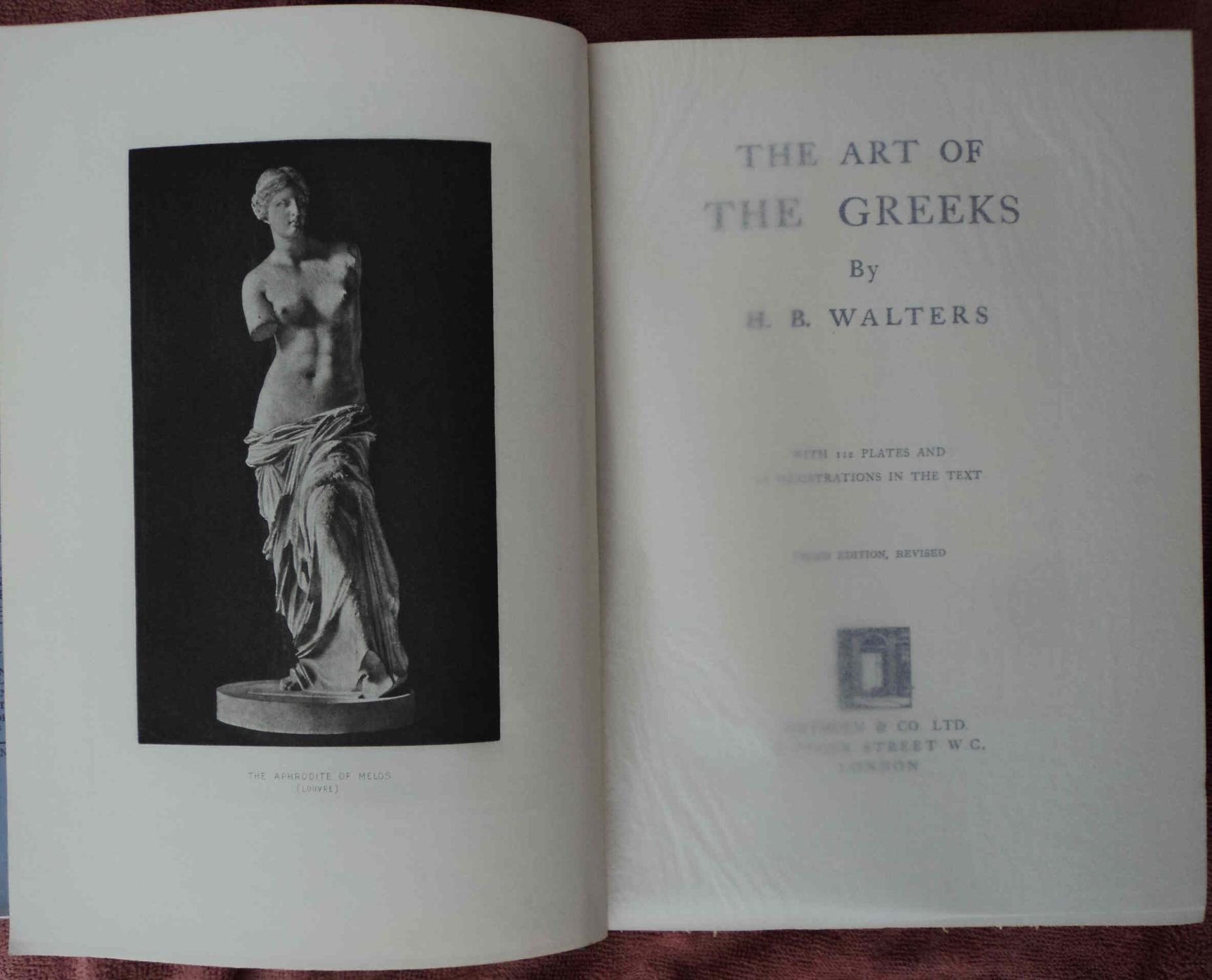
Walters, H.B.
The Art of the Greeks
Methuen, 1934.
Hardcover, large octavo, xvi + 284pp, 112 monochrome plates. Foxed preliminaries, spotted text block edges; shelf wear to board edges, corners bumped, spine sunned; dustwrapper sunned, discoloured, but clean and intact. Very good in like dustwrapper. Professionally protected by superior non-adhesive polypropylene film. Third edition, revised.
Click here to order

$60
9226
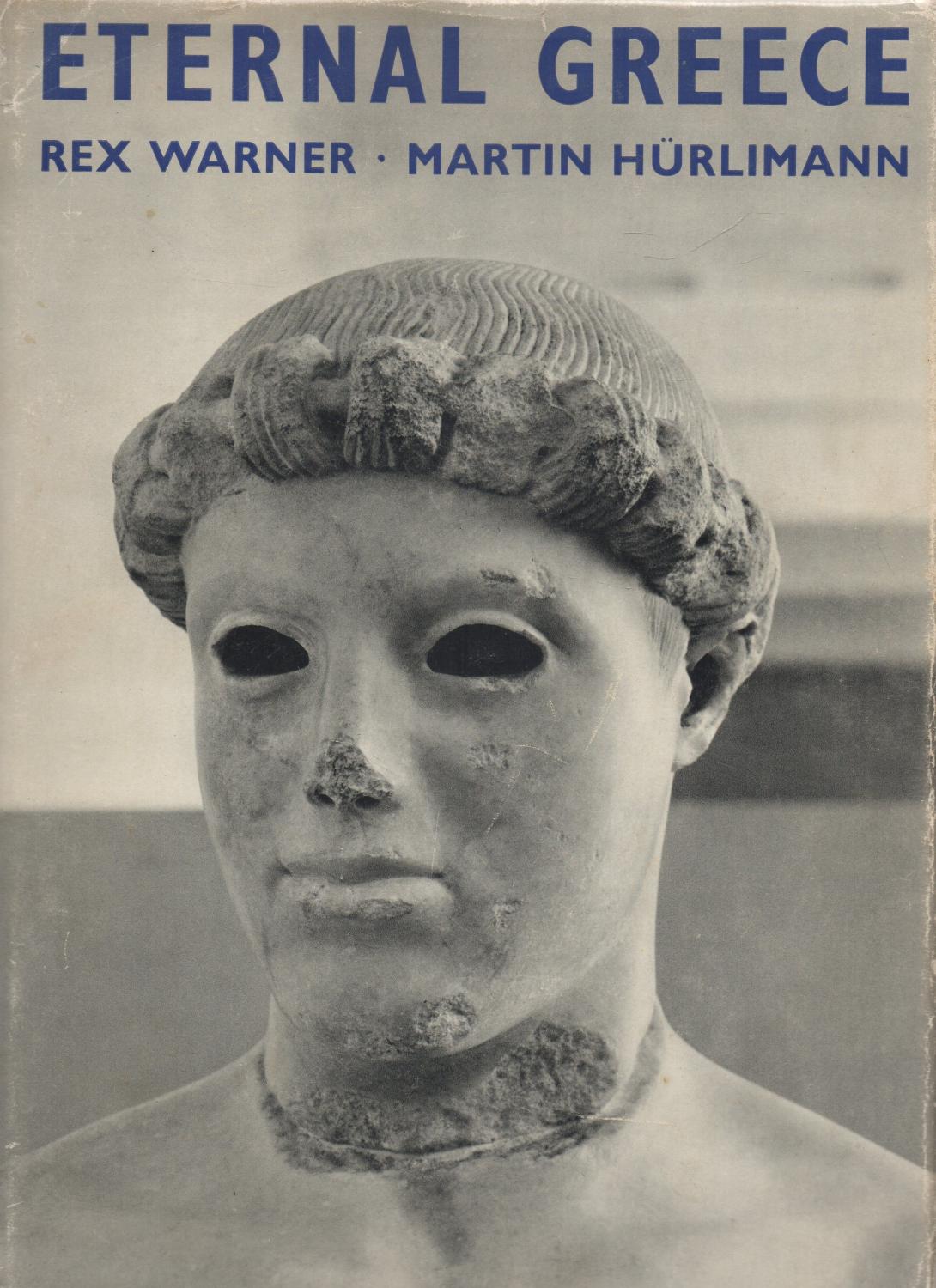
Warner, Rex (Martin Hurlimann, illus.)
Eternal Greece
Thames & Hudson Ltd., London, 1956.
Third impression: quarto; hardcover, with gilt spine titling and upper board decoration; 168pp., with a colour frontispiece and many monochrome illustrations. Mild wear; spine panel extremities and board edges lightly rubbed; foxed endpapers and preliminaries; previous owner's ink inscription; mildly spotted text block edges. Illustrated dustwrapper with two small missing segments on rear panel and tiny losses at spine panel extremities and corners; well-rubbed, browning to spine panel and some scraping along edges and fore-edges; now backed by archival-quality white paper and professionally protected by superior non-adhesive polypropylene film. Very good.
Click here to order

$25
99521
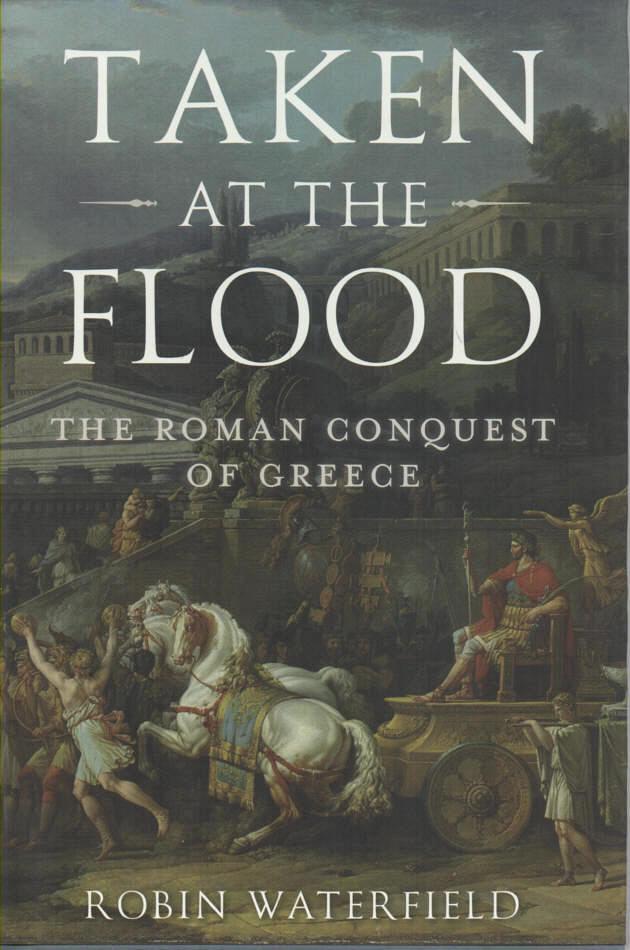
Waterfield, Robin
Taken at the Flood The Roman Conquest of Greece
Oxford University Press, 2014.
Octavo; hardcover, 287pp., monochrome illustrations. Dustwrapper. New, remainder. "In general, there are several go-to topics in Roman history that invariably prove the most popular, regardless of audience or historical moment: Rome's efficient politics, charismatic leaders, inexorable decline, and a smattering of made-for-TV battles are too good to resist. The relatively slow, borderline obscure, subjugation of the Macedonian Empire decades before the birth of Julius Caesar, however, hardly stirs the popular imagination. Yet, as independent scholar and translator Waterfield cogently and convincingly argues, perhaps no other action was more important in allowing Rome to become Rome (it's the famous defeat of Hannibal that usually gets the nod). But when Macedon finally fell, the bustling Mediterranean world was Rome's for the taking. Waterfield makes Roman imperialism central to his narrative, demonstrating again and again how exceptionally aggressive Rome was for its age, the subtle execution its policies notwithstanding. On top of producing a traditional academic history, Waterfield has composed a stimulating and provocative meditation on imperialism itself, both in antiquity and in our own society." - Publishers Weekly
Click here to order

$25
80017
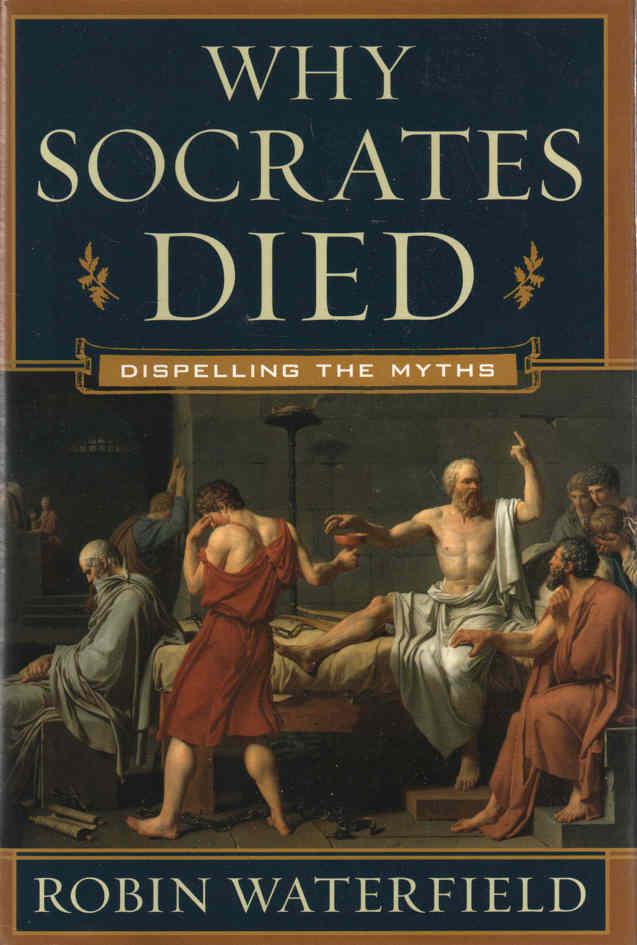
Waterfield, Robin
Why Socrates Died Dispelling the Myths
W.W. Norton & Co., New York, NY, USA, 2009.
Octavo; hardcover, quarter-bound in papered boards with gilt spine-titling; 253pp., with maps and 4pp. of monochrome plates. Dustwrapper. Remainder. New. Socrates is portrayed to us as a passionate idealist who, in the face of trumped-up charges levelled at him by a corrupt city-state, drank hemlock from the poisoned chalice to preserve his philosophic rigour. But this is an iconic tale passed almost into legend and, as time has shown, such material cannot wholly be said to portray the truth. In this re-examination of the circumstances surrounding Socrates' trial and execution, Robin Waterfield unearths a political situation and its essential players which when studied from an unemotionally-loaded perspective, paints Socrates in a somewhat less-than-perfect, and somewhat more culpable, light. Was he an atheist and the guru of a weird sect? Was he a bastion of Athenian intellectualism brought low by jealous rivals? The author presents the evidence...
Click here to order

$23