lamdha books -
Catalogue of books on the Maori

Click on the small images at right to see a larger picture

68644
Angas, George French (A.W. Reed, ed.)
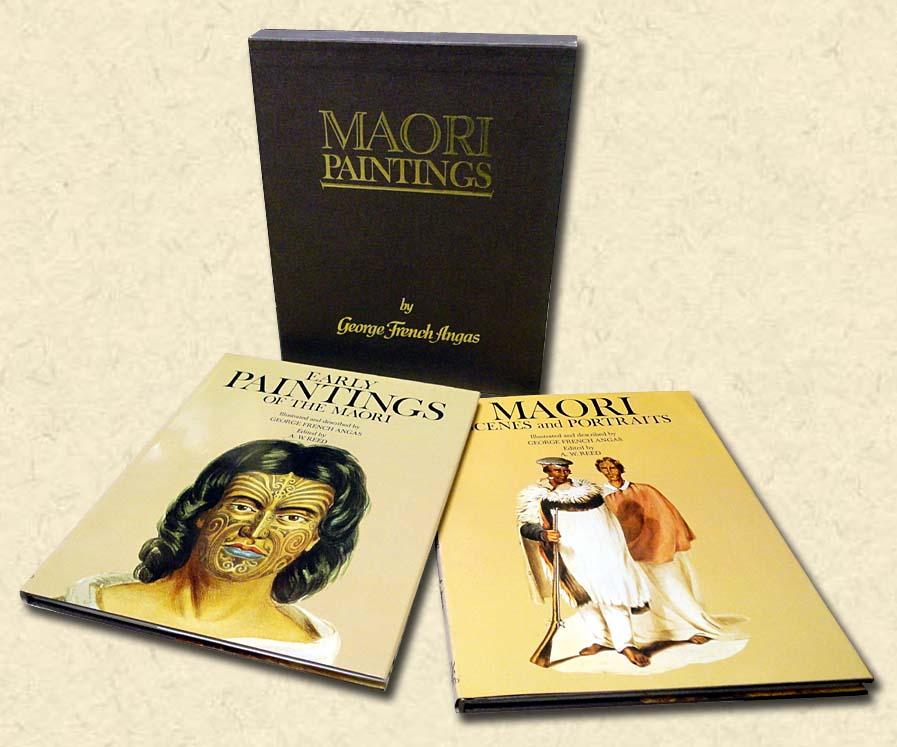
Maori Paintings - Two Volumes "Early Paintings of the Maori"; & "Maori Scenes and Portraits"
Literary Productions Ltd./A.H. & A.W. Reed, Wellington New Zealand, 1979.
Two volumes: quarto; hardcover with gilt spine titles; 184pp. [90pp. + 94pp.], with many colour illustrations. Mild wear; some minor marks and spotting to the text block edges; some mild moisture damage to the endpapers of Volume 2. Dustwrappers lightly edgeworn and sunned along the spine panels; mildly rubbed. Very good in a mildly rubbed and sunned, gilt-entitled slipcase. In 1844 George French Angas spent six months in New Zealand. He landed at Wellington, paid visits to Porirua, Mana Island and a settlement in Tory Channel, then sailed to Auckland and made a six-week trek into the interior, travelling on foot and by canoe up the Waikato, across to Kawhia and thence to lake Taupo. Very few Europeans had had contact with such remote Maori settlements, and Angas's paintings and descriptions with its scrupulous noting of details - clothing, architecture and daily life resulted in this invaluable record for posterity. On his return to England he published a selection of his paintings as The New Zealanders Illustrated and a two volume narrative of his travels entitled Savage Life and Scenes in Australia and New Zealand. This two volume edition reproduces the best of the paintings included in a late 1960's limited facsimile edition called Portraits of the New Zealand Maori. The full colour plates show studies of Maori adults and children, their costume, villages, houses, ceremonies, recreations, martial exercises, weapons, canoes, tools, ornaments, carvings and funeral rites before extensive white settlement. The book is regarded as a comprehensive and accurate picture of traditional Maori life.
Click here to order

$175
13601
Bell, Leonard
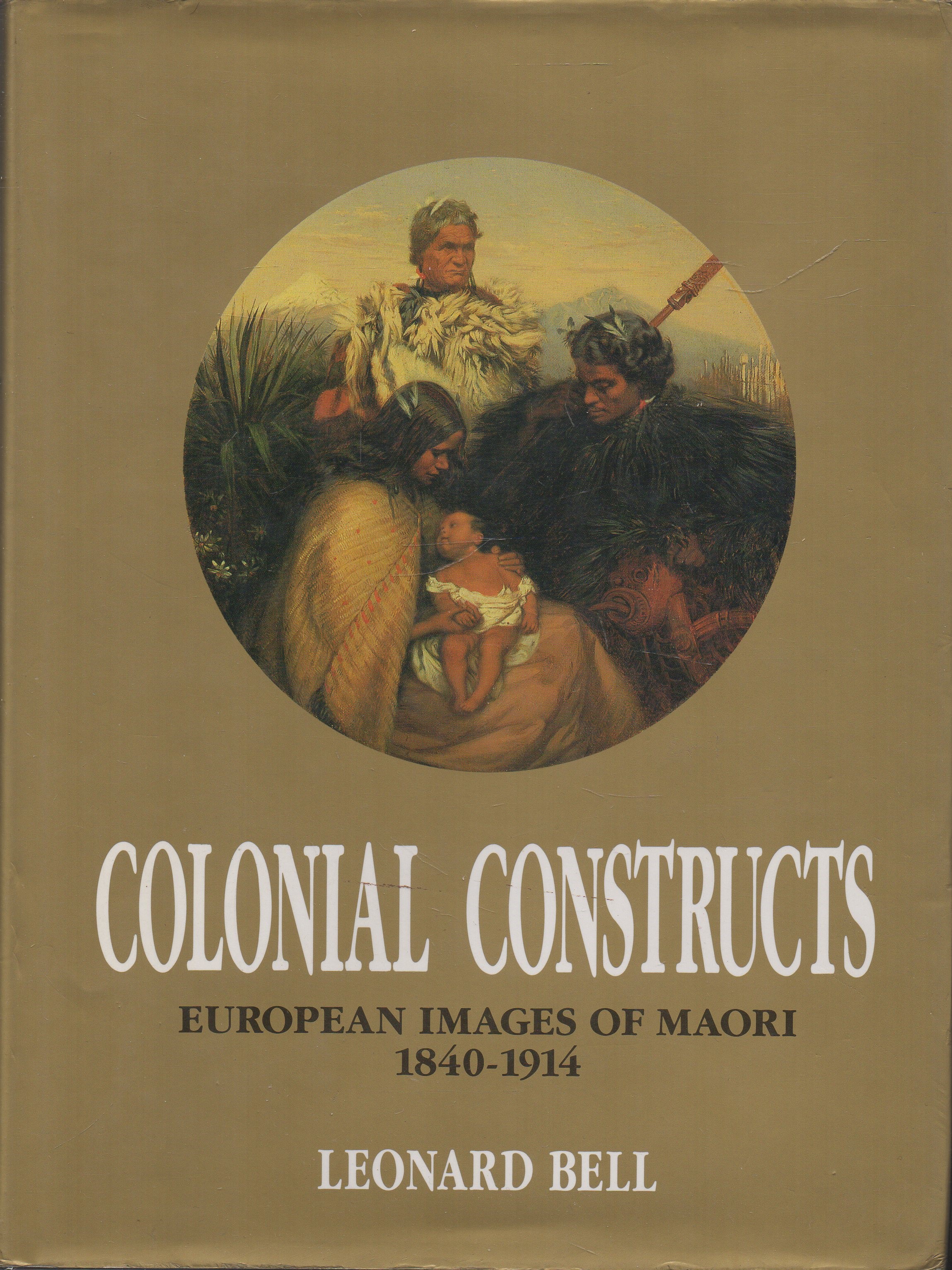
Colonial Constructs European Images of Maori 1840-1914
Melbourne University Press, 1992.
Small quarto, hardcover; umber boards with gilt spine titling; 291pp., colour & b&w illustrations. Some rubbing to lower board edges; else near fine in lightly edge-worn dustwrapper (now professionally protected by superior non-adhesive polypropylene film). Leonard Bell examines the complex and unbalanced cultural interchange between European and Maori in 19th-century New Zealand and the relationship between visual representation and the ideology of colonialism. He shows how the great range of and variety of pictures of Maori by European artists often revealed more about the artists, their society and its attitudes, than they did about the Maori themselves.
Click here to order

$35
73493
Best, Elsdon
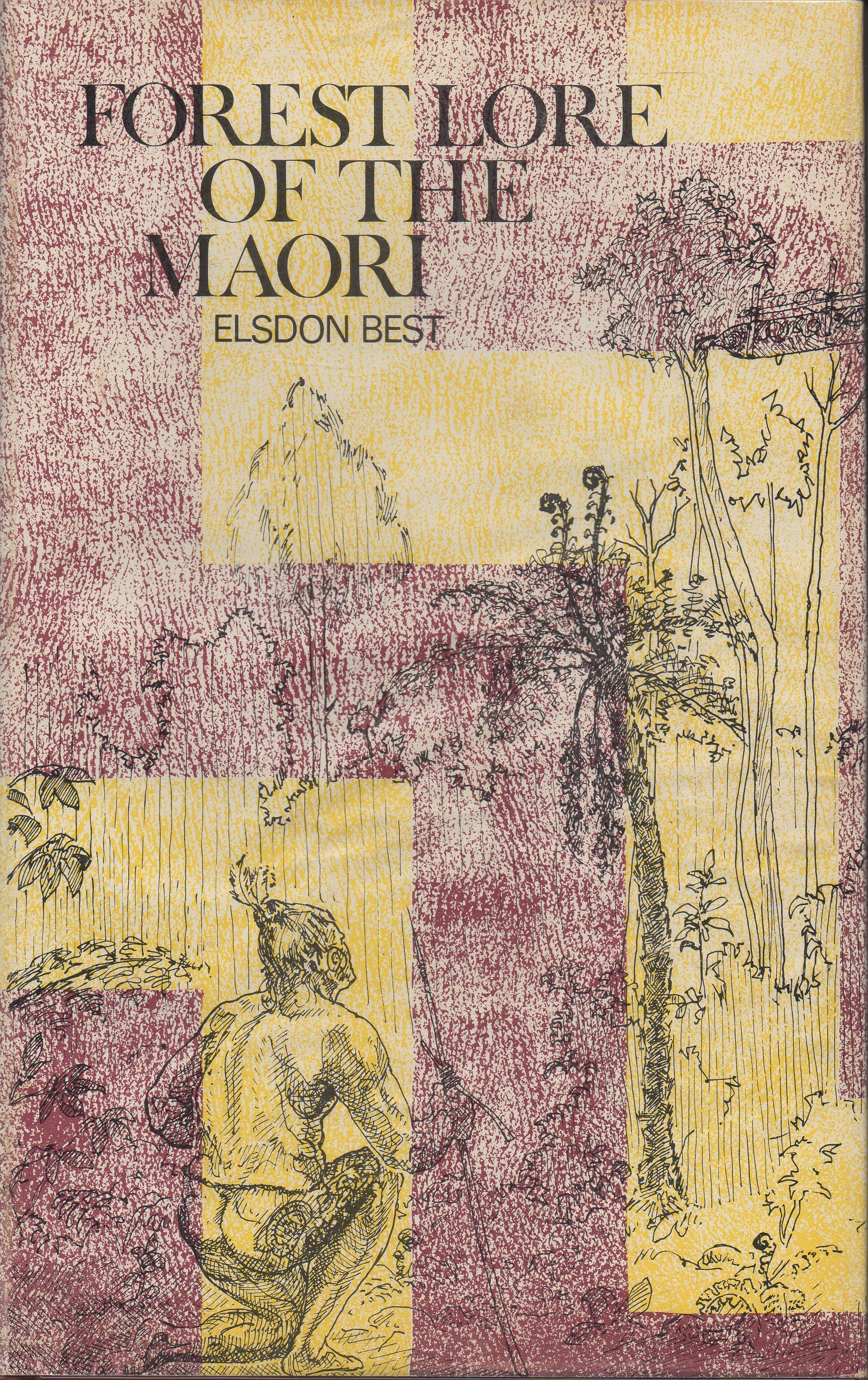
Forest Lore of the Maori
E.C. Keating, Government Printer, Wellington, 1977.
Hardcover, octavo; red boards with gilt spine titling and upper board blind-stamped decoration; 421pp., monochrome illustrations and plates. Minor wear; mild toning on upper text block edges. Near fine otherwise in like dustwrapper now professionally protected by superior non-adhesive polypropylene film. Elsdon Best spent twenty years in close contact with the Maori people especially the Tuhoe of the Urewera in an area which is still dominated by surrounding forest. The work provides an important basis for any study of old-time Maori economics and perhaps more importantly of his attitude to what was a major part of his environment. It is likely to be of even more general interest today than when it was first written, since it stresses so fully the uses made by the Maori people of their natural resources, and supplies basic material for further studies in ethno-botany and ethnozoology.
Click here to order

$120
73494
Best, Elsdon
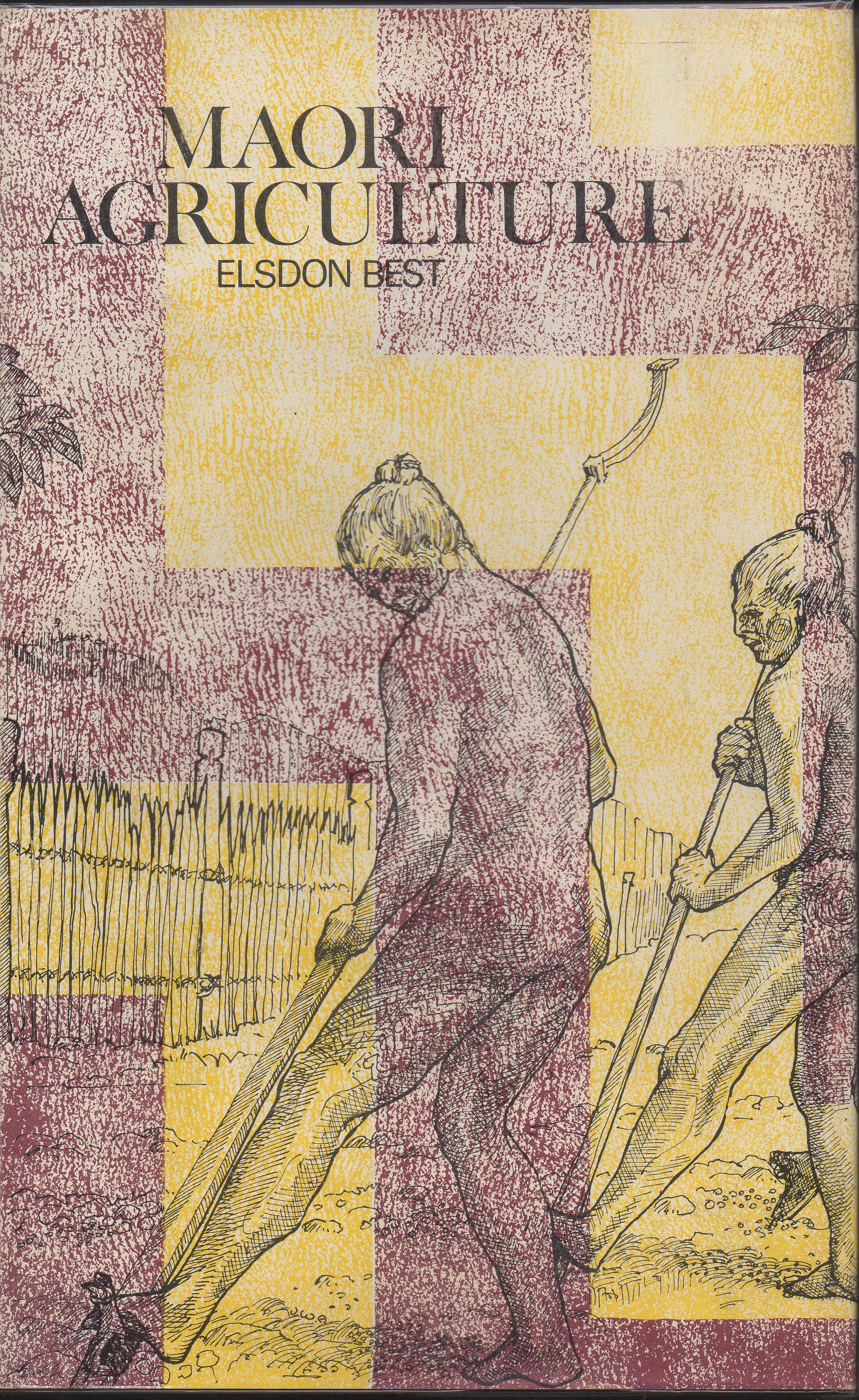
Maori Agriculture
A.R, Shearer, Government Printer, Wellington, 1976.
Hardcover, octavo; red boards with gilt spine titling and upper board blind-stamped decoration; 315pp., monochrome illustrations and plates. Minor wear; faint toning on upper text block edges and mild offsetting to endpapers. Near fine otherwise in like dustwrapper now professionally protected by superior non-adhesive polypropylene film. Elsdon Best began work at the Dominion Museum in 1910 at the age of 54 where, over a period of 21 years he created a series of works on various aspects of Maori life. He had twenty years of first-hand experience of the Maori people particularly the Tuhoe of the Urewera. The series of bulletins he produced became classic studies which time has not diminished; recent studies of prehistoric agriculture and the relative importance of agriculture and food gathering have tended to vindicate Best's conclusions and demonstrate very clearly the continuing relevance of his publications. Best tried to reconstruct a general account of the pre-European situation so there are some sections which are not in agreement with current thought especially his ideas on the probable Maori homeland. It is regretted that Best did not document more fully the changes he undoubtedly witnessed himself to Maori culture.
Click here to order

$120
217955
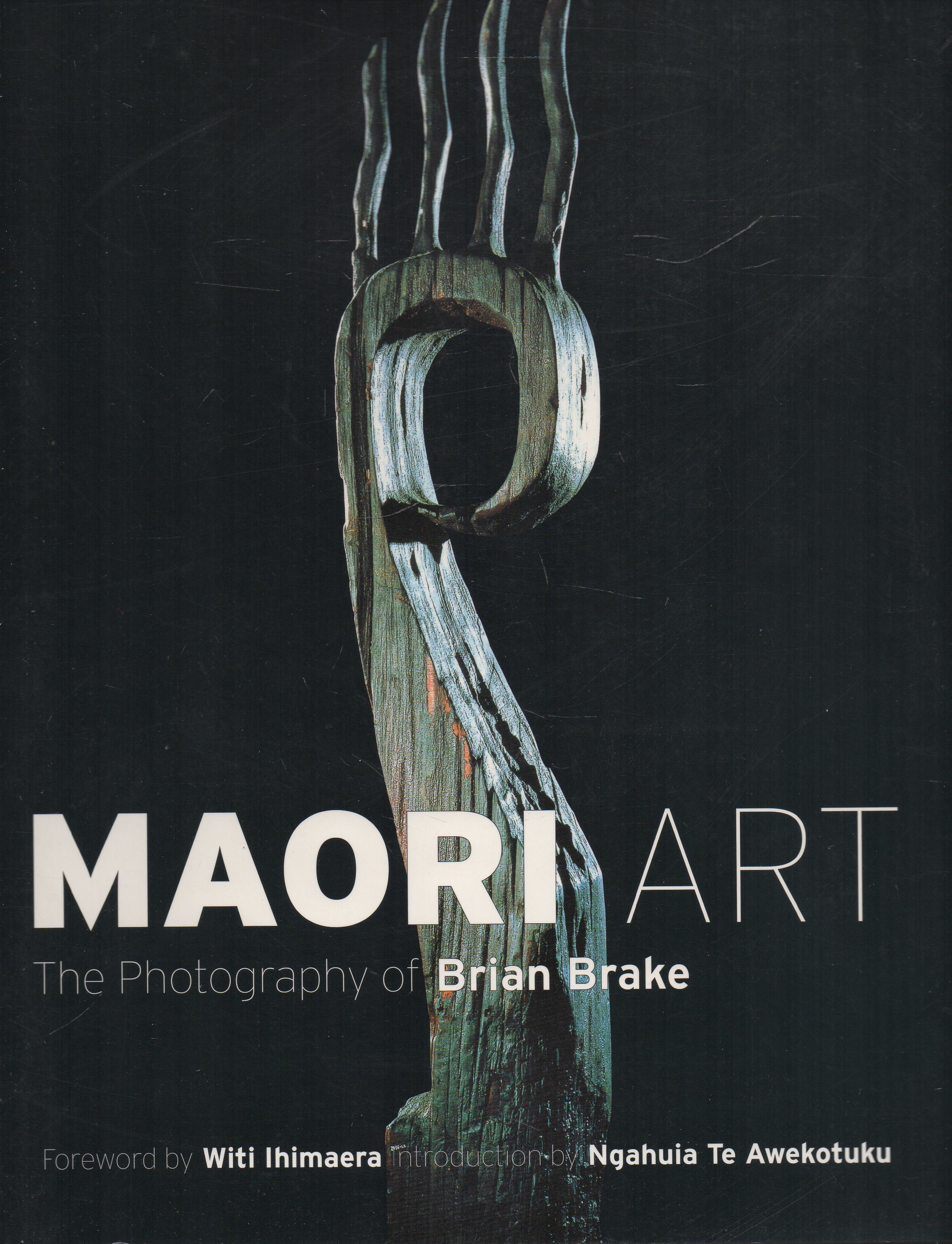
Brake, Brian (photos.) with Witi Ihimaera (foreword) & Ngahuia Te Awekotuku (intro.)
Maori Art
Penguin, Rosedale, 2011.
Quarto gatefold paperback; 148pp., colour plates. Mild rubbing and edgewear to covers. Near fine otherwise. To Maori, the governing principle of mauri brings to all objects the power and prescience of a living spirit. Objects that are hand-crafted from wood, stone, shell, bone or pounam are imbued with life by their creators. Conveying the mauri of an object through photography requires an exceptional talent, one focused on distilling the essential energy of the original piece through shades of lighting, position and perspective. This is what Brian Brake achieved. The photographic images in this collection constitute the best of Brake's photographic journey into the world of the Maori. Included are images of carved houses, woven panels, sculpture and tools, ornaments and jewellery, ritual objects and weapons.
Click here to order

$28
218037
Cowan, James
The Maoris of New Zealand
Whitcombe and Tombs Ltd., Christchurch, 1910.
The third volume in the Makers of Australasia series. Octavo hardcover; full red leather textured and padded boards with gilt upper board and spine titles; marbled endpapers; 356pp., b&w photographic portrait frontispiece and many b&w illustrations; gilt edges all round. Minor wear; some black marks on upper board and spine panel and repaired tear on upper spine edge of front board; mild rubbing to edges; foxing to prelims and endpapers. Very good. James Cowan wrote The Maoris of New Zealand before his most renowned work, The New Zealand Wars (1922-23). These and The Maoris in the Great War and The Adventures of Kimble Bent all contributed in their own unique way to an early goal of Cowan's to write a history of Maori-Pakeha interaction and reconciliation following the turmoil of the New Zealand Wars of the nineteenth century. They also reveal a progressive attempt by Cowan to write history of a suitable standard to ultimately earn him the dual status of firstly, 'oral historian' and secondly, 'public historian', that is, 'an historian writing outside academia'. The terms did not exist in Cowan's era, so his research methods must be considered advanced for the time. Cowan's major works have transcended journalism in its creation and ultimately leads to a reassessment of this historiographer; that is, he is undoubtedly a much more significant writer for his era than has been accorded him so far. (Information from Gregory Wood, 2010 - Thesis)
Click here to order

$100
217938
McCarthy, Conal
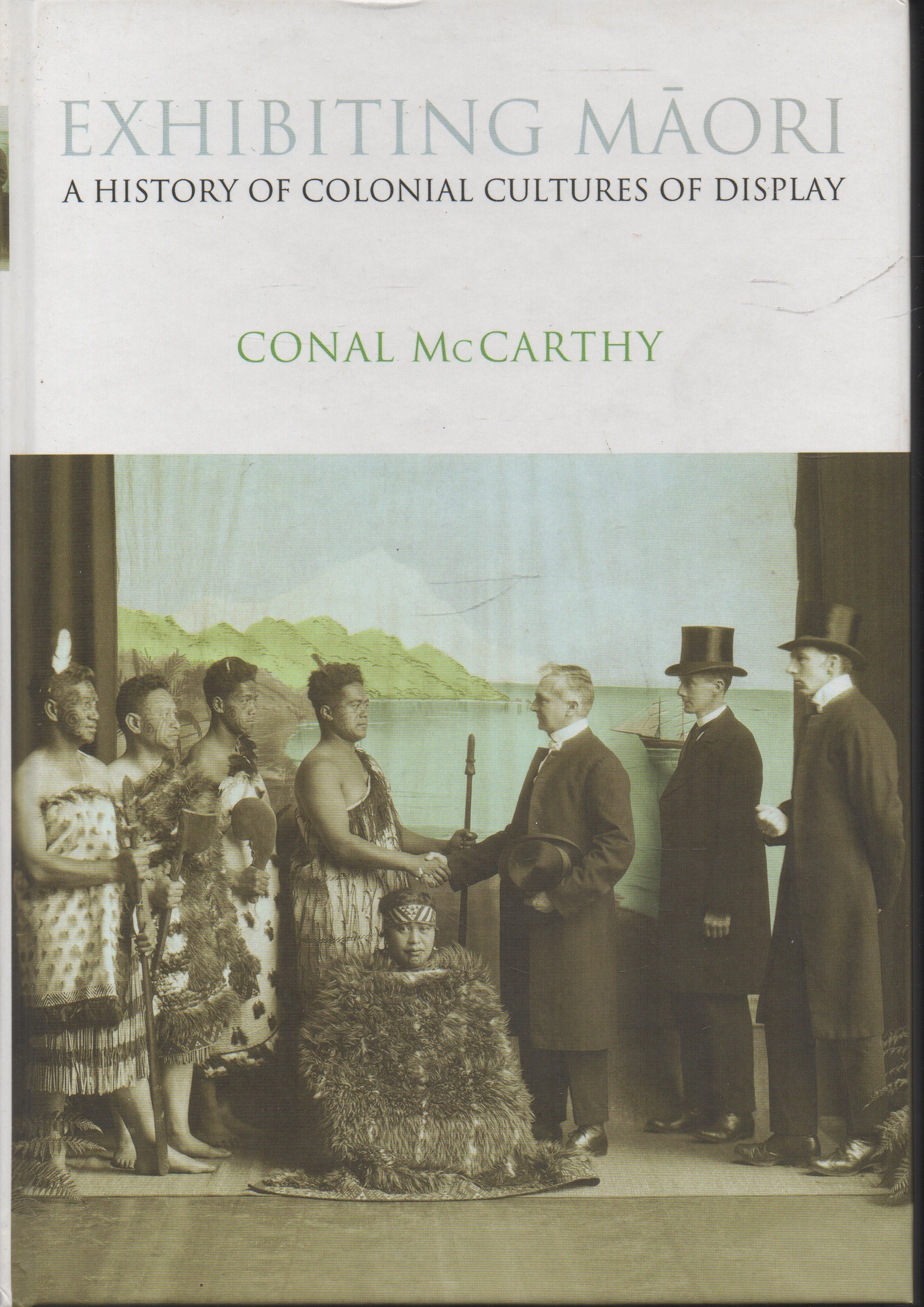
Exhibiting Maori: A History of Colonial Cultures of Display
Berg, Oxford, 2007.
Royal octavo hardcover; illustrated boards; 243pp., b&w illustrations. Minor wear only; very faint spotting to upper text block edges. Near fine. No dustwrapper as issued. This richly illustrated book presents a comprehensive assessment of the display of Maori culture from the nineteenth century to today. In doing so, Exhibiting Maori traces the long journey from curio to specimen, artefact, art and taonga (treasure). Drawing on extensive and groundbreaking research, Exhibiting Maori reveals for the first time the remarkable story of Maori resistance to, involvement in, and eventual capture of the display of their culture. Ranging across museums, world fairs, fine art and tourism, Exhibiting Maori fuses museum studies, anthropology, and visual and material culture to uncover a history of active Maori engagement with the colonial culture of display.
Click here to order

$40
84968
Mead, Sidney Moko (ed.) & Athol McCredie (photo.)
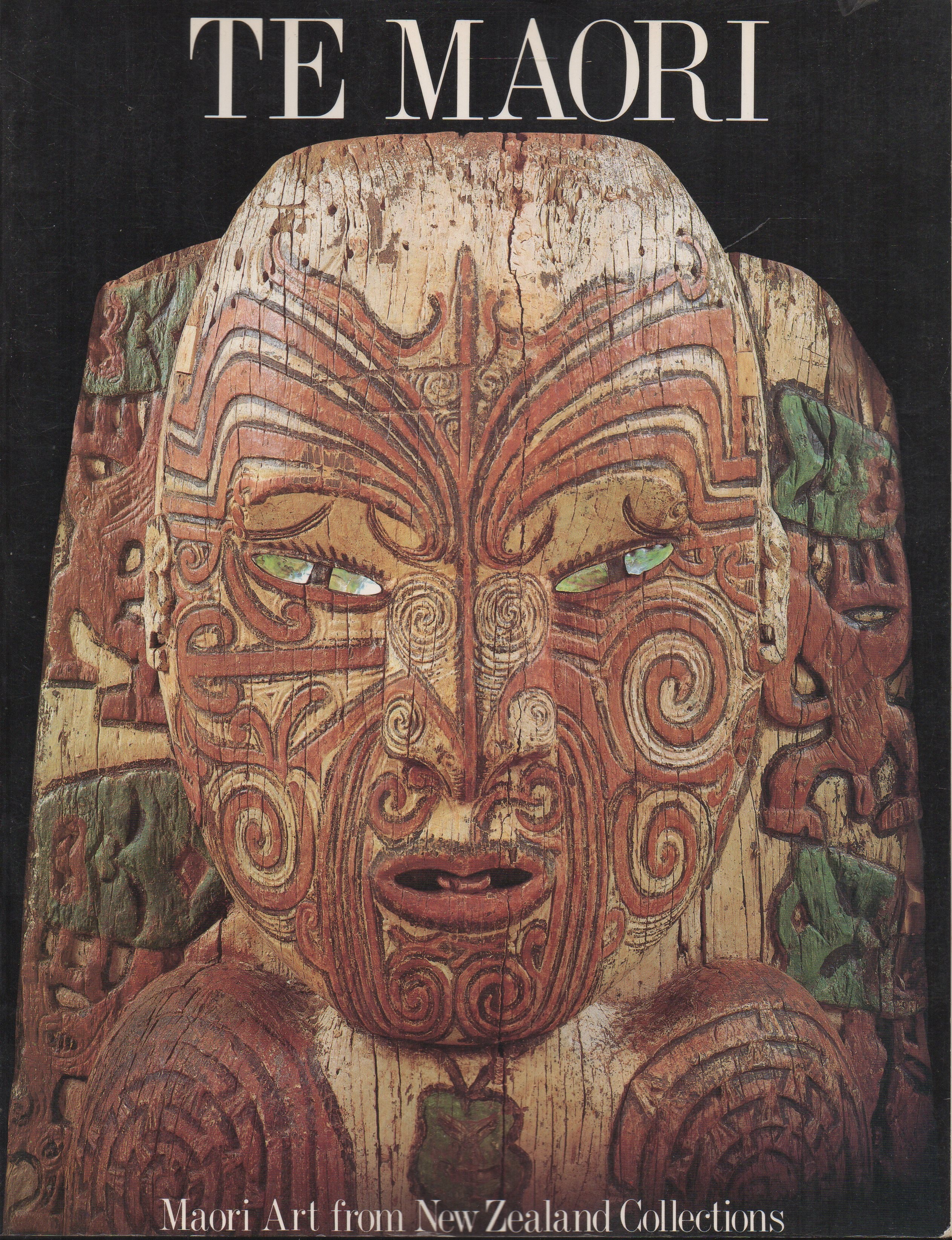
Te Maori Maori Art from New Zealand Collections
Abrams, New York, 1984.
Paperback quarto; 244pp., colour and monochrome illustrations. Minor wear; toning and spotting to text block edges; mildly rubbed illustrated black cover with light wear to edges. Very good otherwise. Exhibition catalogue.
Click here to order

$25
217962
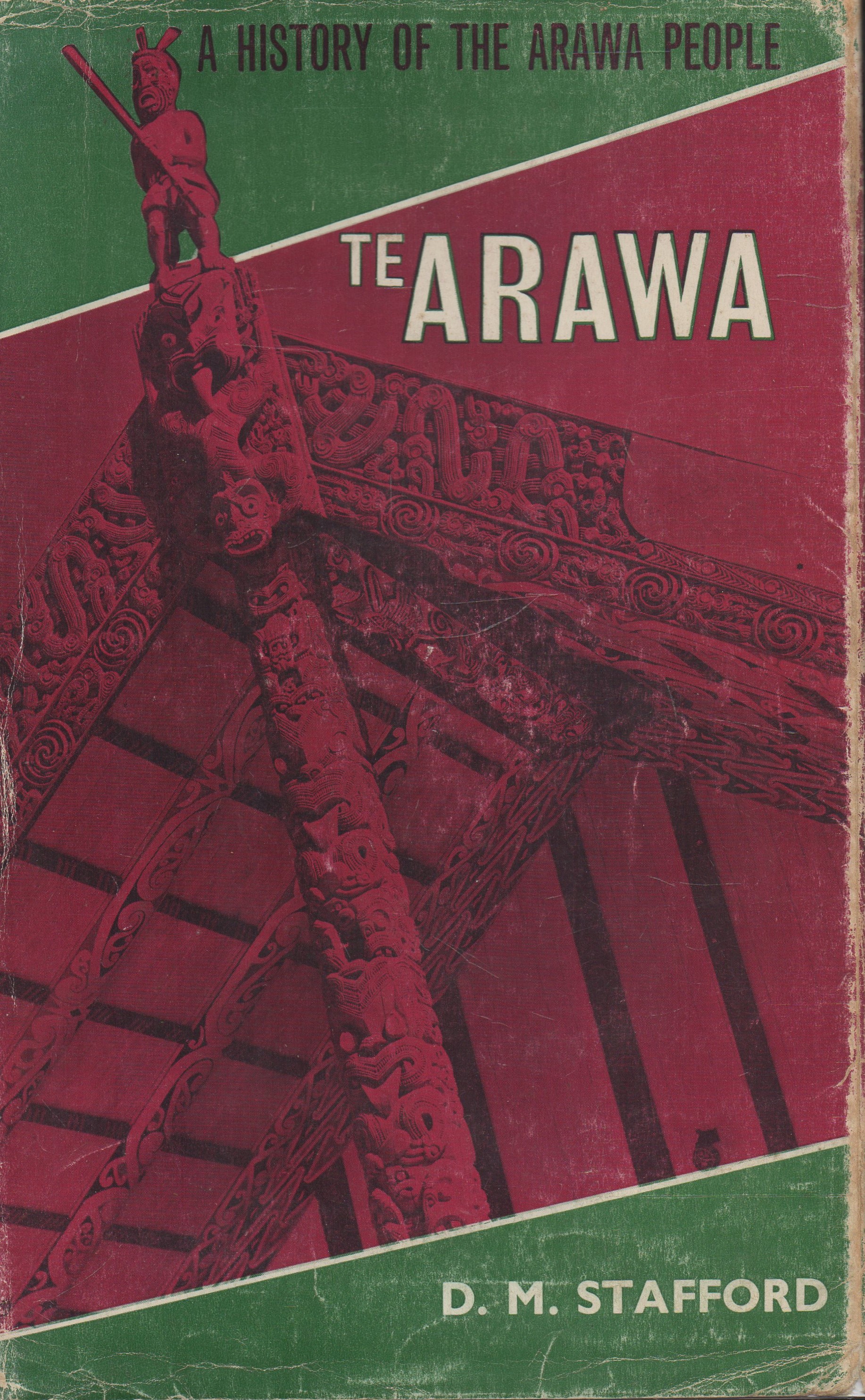
Stafford, D.M.
Te Arawa: A History of the Arawa People
A H & A W Reed, Wellington, 1967.
First edition. Hardcover, octavo; red cloth boards with gilt spine titling; map endpapers; 573pp., b&w photographic illustrations. Moderate wear; board edges rubbed; upper front edge frayed, worn and scraped corners; mild scattered spotting to endpapers; toned and spotted text block edges. Well-rubbed, unclipped dustwrapper with scraping to fore-edges, edges and corners. Very good otherwise and wrapper now professionally protected by superior non-adhesive polypropylene film with white paper backing. It is said in proverbs that the bow of Te Arawa canoe rests at Meketu and the stern at Tongariro; thus the descendants from that vessel may be found all over this area. But it was not always thus, for many, many years ago the Arawa people, then known as Ngati Ohomairangi, lived in legendary Haaiki, far to the north of New Zealand. Now, after some wars the decision was made to build a great canoe and migrate to Aotearoa. The jouney was long, and there was much anxiety; the winds rose and the seas were whipped up and the canoe was drawn into a fearsome whirlpool. But all survived, eventually landing at Maketu. Then followed a long history of exploration and settlement, with many excitements on the way, for example the story of Hatupatu and Kurangaituku, the woman who speared birds with her long sharp lips and ate them raw. She had wings on her arms and feathers on her body, and she took Hatupatu as her unwilling husband to her cave high up in the cliff. But there are stories of true love, like that between Hinemoa and Tutanekai. The lovers were forbidden to marry but one night Hinemoa swam to her beloved on the island; and when the villagers looked in on Tutanekai's sleeping place in the morning they saw four feet instead of two and thus was the beginning of a happy married life. But life was not an idyll. There were wars, often characterised by treachery, and grim vendettas involving whole tribes. Fighting continued into Pakeha times. Indeed, many early missionaries suffered raids, and even terrible deaths. This history of Te Arawa, who today occupy the Rotorua lakes district and part of the central bay of Plenty coastline, is notable for its readable scholarship. Included are genealogies, as well as chants and prayers (with translations where possible). As a boy in his father's shop in Rotorua, the author heard the stories of the old Maori world from the kuia and kaumatua who visited the store. As a fluent speaker of Te Reo Maori, Dr Stafford had 'mana' (standing) in the Maori world. His remarkable skill with the English language and the knowledge he shared as a speaker has been recognised in Rotorua, across New Zealand and worldwide. 'Te Arawa: A History of the Arawa People' is now a collector's item. Although some people disagreed with certain versions of the stories told in the book, Dr Stafford believed this was healthy as the stories were kept alive by people talking about them.
Click here to order

$150
217954
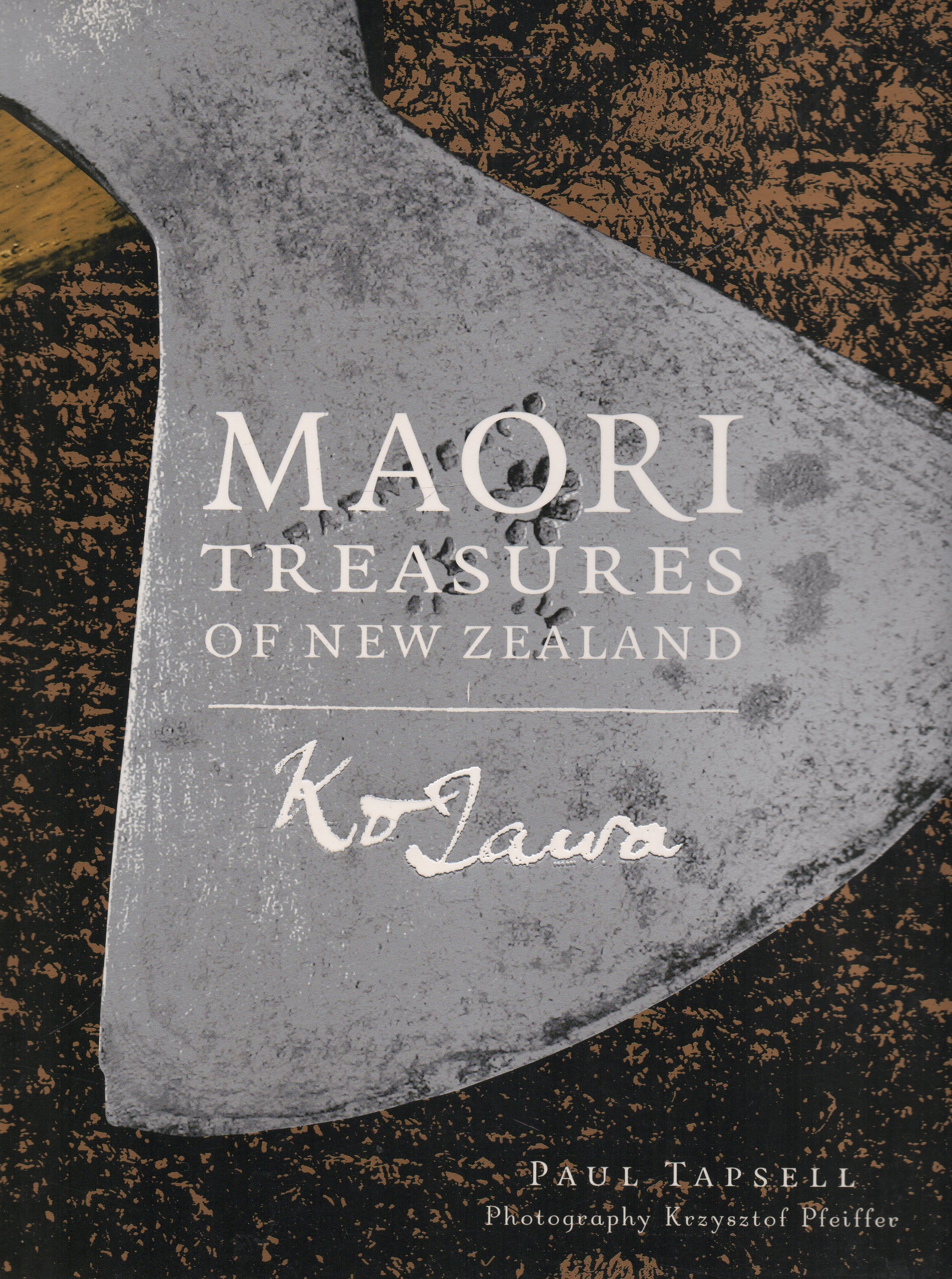
Tapsell, Paul (photos. Krzysztaof Pfeiffer) with Ron Crosby; Jade Baker; Roger Neich and Merata Kawharu
Maori Treasures of New Zealand: Ko Laura
David Bateman, Albany, 2006.
Reprint; quarto gatefold paperback; 191pp., colour illustrations. Minor wear only; very slight wear to edges and corners. Near fine. Australian museum brochure laid in. Exhibition catalogue. Maori Treasures of New Zealand honours both the man who once carried the name Ko Tawa, Captain Gilbert Mair, and the many significant Maori ancestors - taonga - that entered his remarkable life. Although Mair is virtually unknown by today's generation, his feats through oratory, weapon or pen remain a core foundation to New Zealand's nationhood. He was especially well known and respected by Maori - many either grew up with him, fought alongside him or against him. A gifted linguist, warrior and diplomat, Mair engaged with Maori in an unprecedented manner. Instead of a settled career in North Aukland he chose a life of adventure amongst strangers - the ever unpredictable Maori of the Bay of Plenty who in time buried him as their own. In recognition of the man and his wider advocacy on behalf of Maori, many of the prestigious weapons, carvings and weavings that make up this collection of taonga were presented to Mair from 1865 up to his death in 1923. Even more importantly Mair collected the narratives associated with them, and it is through the stories of these ancestors, along with images and portraits of the past and present, that Maori Treasures weaves together a tapestry of landscapes, people and history. Twenty seven taonga have been chosen from Mair's original collection of 247 to be presented here.
Click here to order

$30
65150
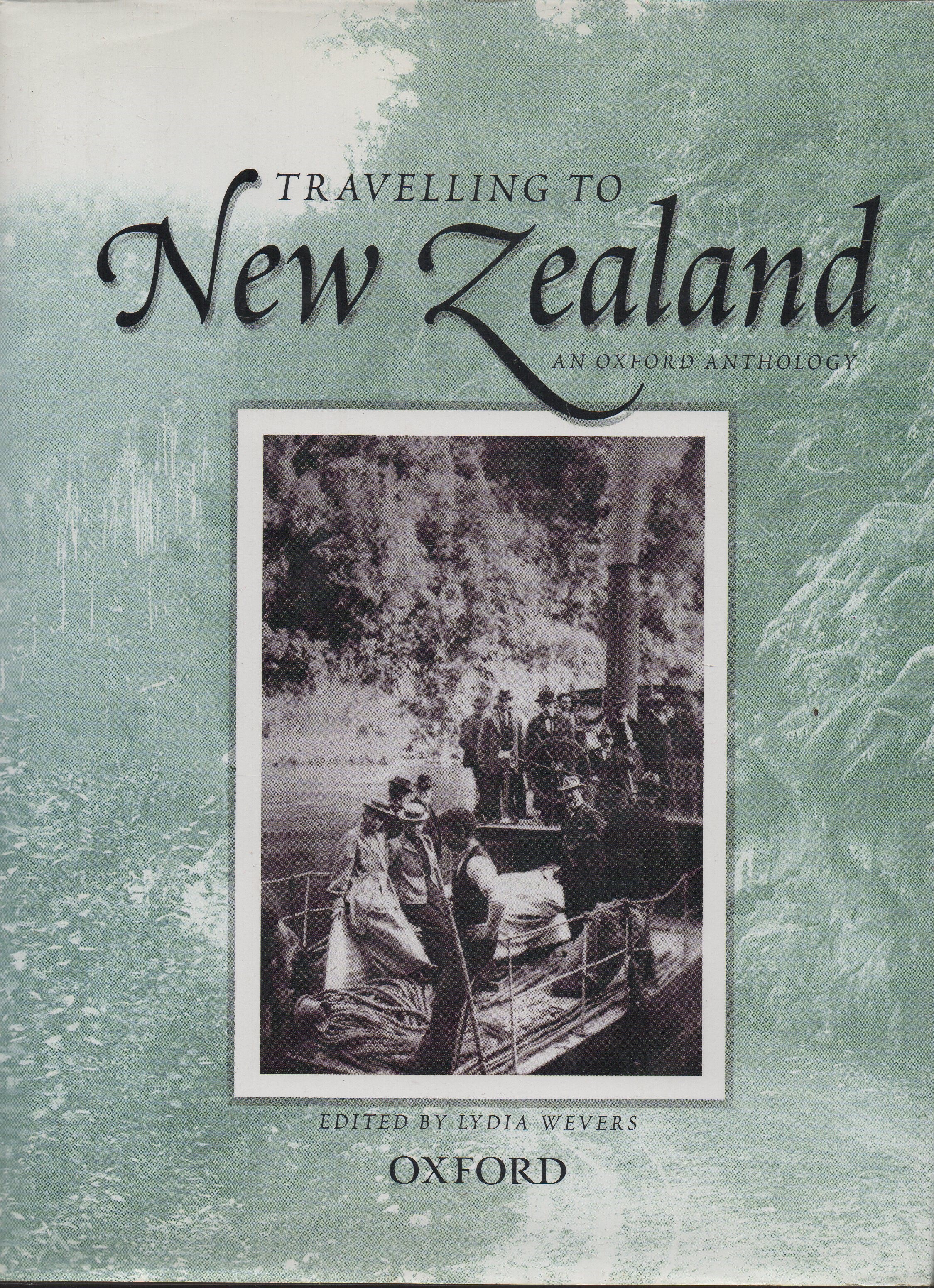
Wevers, Lydia (ed.)
Travelling to New Zealand An Oxford Anthology
Oxford, 2000.
Quarto hardcover; green boards with white spine titling, green endpapers; 281pp., monochrome illustrations. Owner's name. Minor wear only; dustwrapper with very mild edgewear. Near fine. Wrapper now professionally protected by superior non-adhesive polypropylene film. Humorous and descriptive accounts of travel on and off New Zealand roads are included, as are those of sojourns in hotels and bush inns, and travel by ship in settler ships and tourist ships from the 1880s to the 1930s. Particularly engrossing are accounts of the cultural encounter with the Maori and the Grand Tours of the 1880s taking in the astounding beauty of New Zealand scenery.
Click here to order

$25