lamdha books -
Catalogue of books on maritime history

Click on the small images at right to see a larger picture

201697
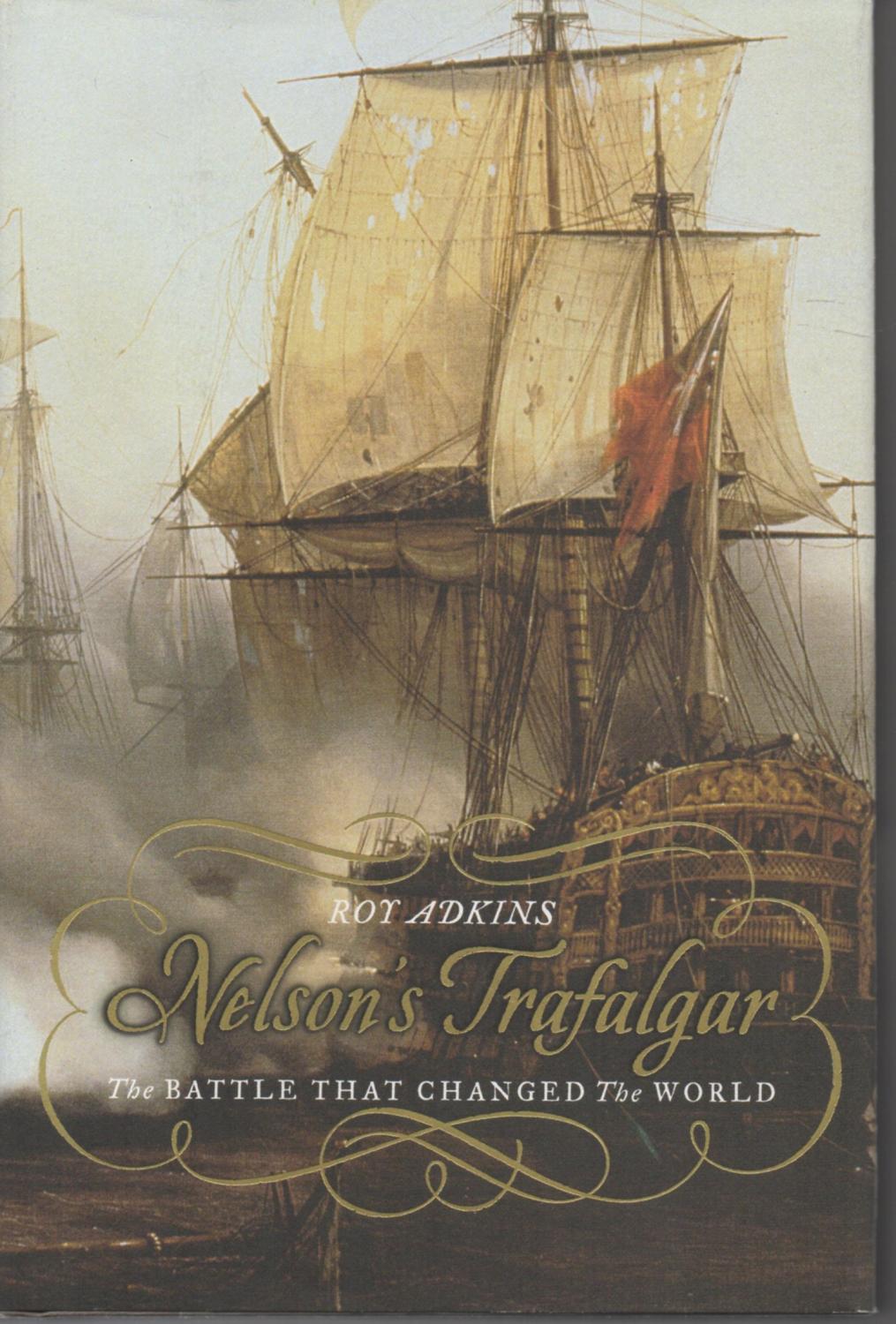
Adkins, Roy
Nelson's Trafalgar The Battle that Changed the World
Viking, New York, 2004.
First edition. Octavo hardcover; quarter bound in beige papered boards, beige spine and gilt spine titling; 392pp., monochrome plates. Remainder mark on lower edges. Mild wear to dustwrapper edges. Near fine. In the tradition of Antony Beevor's Stalingrad, Nelson's Trafalgar presents the definitive blow-by-blow account of the world's most famous naval battle, when the British Royal Navy under Lord Horatio Nelson dealt a decisive blow to the forces of Napoleon. The Battle of Trafalgar comes boldly to life in this definitive work that re-creates those five momentous, earsplitting hours with unrivalled detail and intensity.
Click here to order

$25
51671
Andrews, Kenneth (ed.)
The Last Voyage of Drake and Hawkins
Hakluyt Society, Cambridge, 1972.
Second series. Hardcover, octavo; 283pp, monochrome fold-out map. Toned and spotted text block edges; dustwrapper creased on upper front corner with small tear on the same; scrapes and edge and corner wear. Wrapper now professionally protected by superior non-adhesive polypropylene film. Very good. This is an account of the expedition of royal and private ships which left Plymouth in 1595 under the command of Drake and Hawkins with the aim of capturing the city of Panama. The expedition ended in total failure, both leaders died and attempts to capture Grand Canary, Puerto Rico and Panama, were all repulsed.
Click here to order

$26
12222
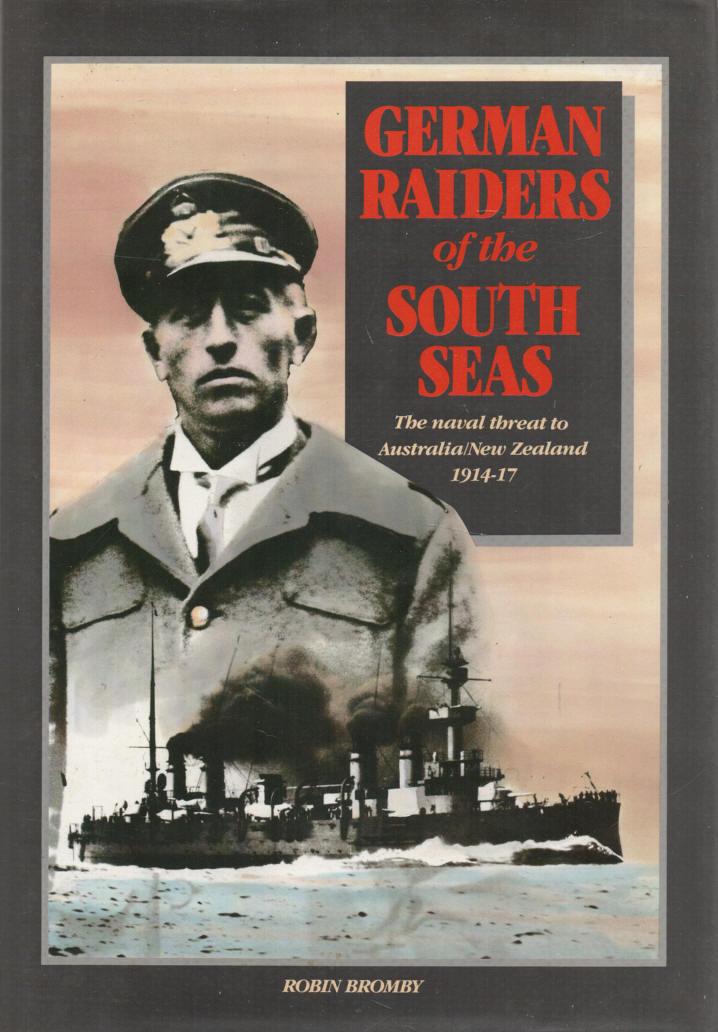
Bromby, Robin
German Raiders of the South Seas The Naval Threat to Australia/New Zealand 1914-17
Doubleday Australia Pty. Ltd., Sydney NSW, 1985.
First edition: quarto; hardcover; 208pp., with maps and many monochrome illustrations. Minor wear; cocked; spine heel softened; light spotting to the text block top edge. Dustwrapper sunned along the spine; now professionally protected by superior non-adhesive polypropylene film. Very good. In the first days of World War I a German light cruiser detached itself from the East Asiatic Squadron with the mission to raid and harass Allied shipping. The ship, "SMS Emden", not only became world famous in its two months of raiding, during which it sank sixteen ships and captured others, but demonstrated to a cunning enemy the vulnerability of Australian, New Zealand and Empire shipping links. The two dominions were left with little naval protection as Britain gathered its ships to fight the Germans in the Atlantic and Mediterranean. Then in 1916, came another raider, the "Wolf", which, undetected and unmolested, laid mines around Australia and New Zealand and preyed upon merchant ships sailing in the Tasman Sea and South Pacific. The following year the Germans made an abortive attempt to send a sailing ship to raid the South Seas, which ended when the "Seeadler" was wrecked on a small atoll. With over eighty black and white photographs, many of them previously unpublished, and detailed maps of the routes of the major ships, "German Raiders" makes fascinating reading and is an important addition to the naval history of Australia and New Zealand.
Click here to order

$28
80270
Brooks M.A., F.W.
The English Naval Forces, 1199-1272
A. Brown & Sons Ltd., London, nd. (but 1932).
Octavo; hardcover, with gilt spine titles and upper board titling; 228pp., with a monochrome frontispiece (with tissue guard) and 2 plates likewise. Boards rubbed and with some insect damage; text block edges toned; mild offset to endpapers; slight bump to the spine head. Very good. The official history of the Royal Navy began with the establishment of the Navy Royal by Henry VIII in 1546. However, for more than a thousand years before that there had been English naval forces varying in type and organisation. These consisted of a motley assortment of "King's ships" assembled only as needed and then dispersed. The period documented here include the houses of Normandy, Anjou and Plantagenet.
Click here to order

$25
89132
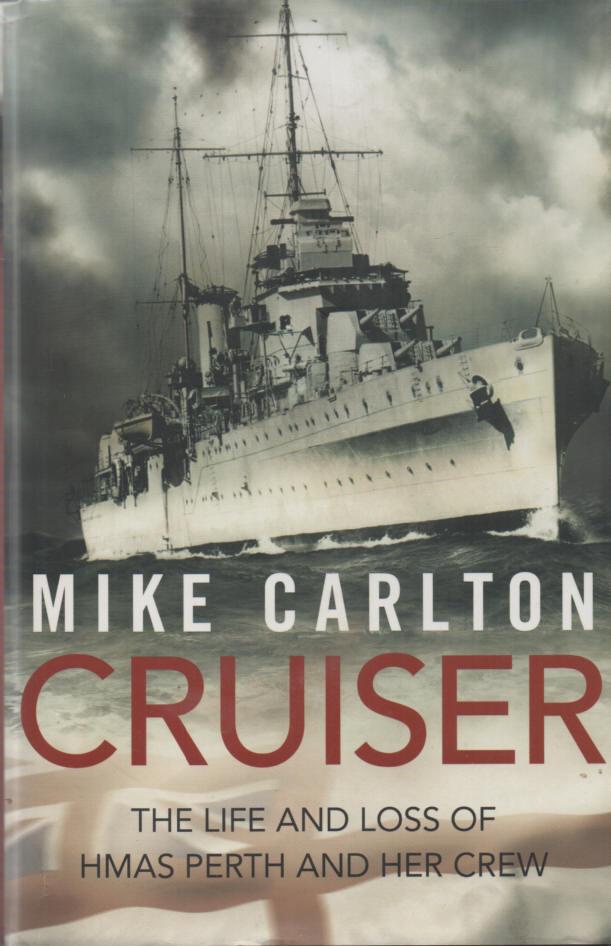
Carlton, Mike
Cruiser - signed copy The Life and Loss of HMAS Perth and Her Crew
William Heinemann Ltd., North Sydney NSW, 2010.
Signed hardcover, octavo; red boards with black spine titling, illustrated endpapers; 706pp., monochrome and colour plates, appendices, references, bibliography, index. Minor wear; lower board edges and corners slightly worn; toned text block edges. Otherwise near fine in like dustwrappers and covered in protective film with white paper backing. Of all the Australians who fought in the Second World War, none saw more action nor endured so much of its hardship and horror as the crew of the cruiser HMAS Perth. Most were young - many were still teenagers - from cities and towns, villages and farms across the nation. In three tumultuous years they did battle with the forces of Nazi Germany, Fascist Italy, the Vichy French and, finally, the Imperial Japanese Navy. They were nearly lost in a hurricane in the Atlantic. In the Mediterranean in 1941 they were bombed by the Luftwaffe and the Italian Air Force for months on end until, ultimately, during the disastrous evacuation of the Australian army from Crete, their ship took a direct hit and thirteen men were killed. After the fall of Singapore in 1942, HMAS Perth was hurled into the forlorn campaign to stem the Japanese advance towards Australia. Off the coast of Java in March that year she met an overwhelming enemy naval force. Firing until her ammunition literally ran out, she was sunk with the loss of 353 of her crew, including her much-loved captain and the Royal Australian Navy's finest fighting sailor, 'Hardover' Hec Waller. Another 328 men were taken into Japanese captivity, most to become slave labourers in the infinite hell of the Burma-Thai railway. Many died there, victims of unspeakable atrocity. Only 218 men, less than a third of her crew, survived to return home at war's end. 'Cruiser', by journalist and broadcaster Mike Carlton, is their story. And the story of those who loved them and waited for them.
Click here to order

$35
208493
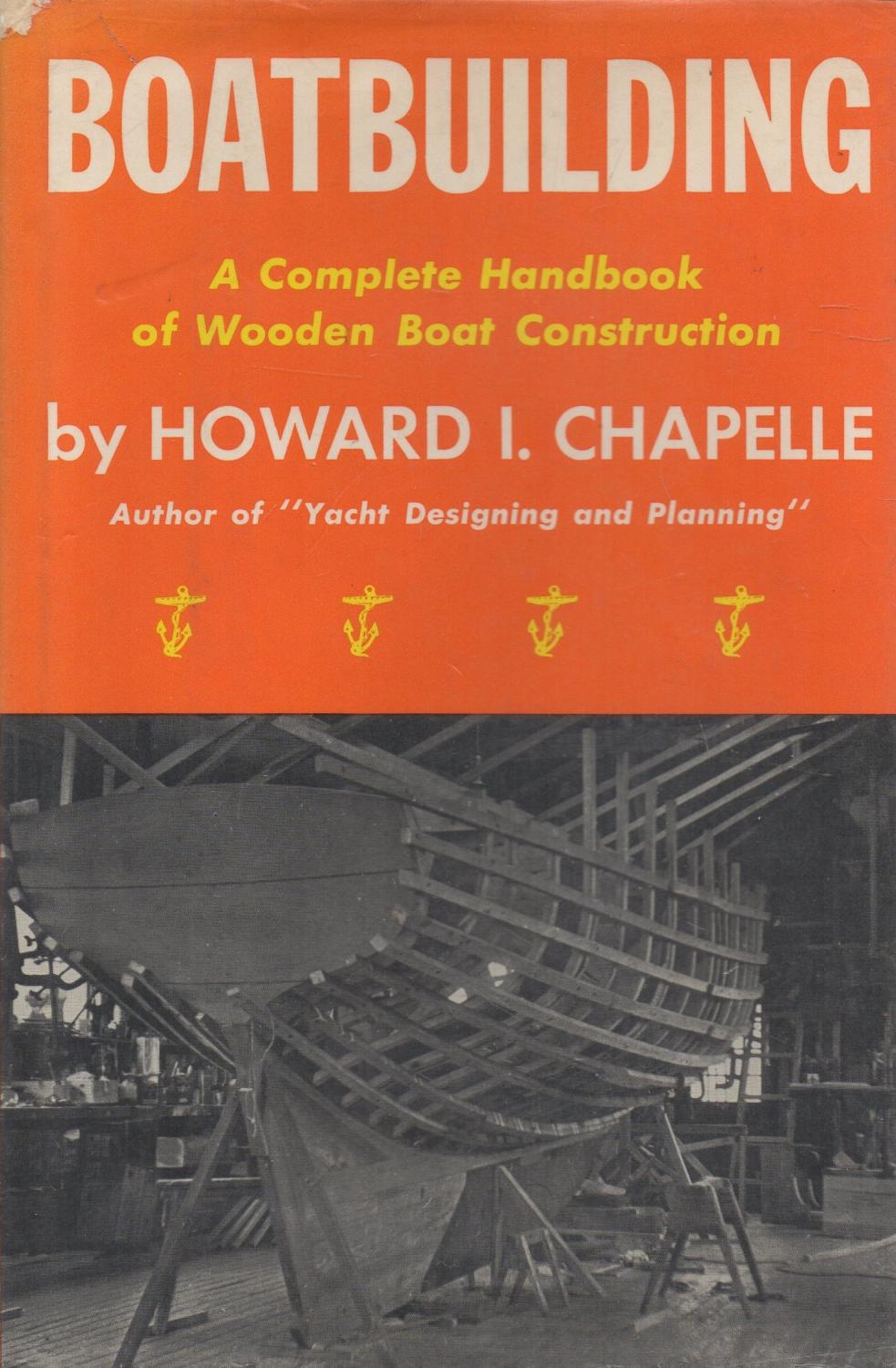
Chapelle, Howard I.
Boatbuilding: A Complete Handbook of Wooden Boat Construction
W.W. Norton, New York, 1969.
Reprint. Octavo hardcover; quarter bound brown boards with beige cloth spine, red spine label and gilt titling; 624pp., b&w diagrams and illustrations. Owner's name. Slightly rolled; mild wear to board edges and corners; a few spots on text block edges; one or two marks on endpapers. Slightly worn dustwrapper with faded spine, scraping and small tear to head of spine and rear panel well-rubbed. Very good. Wrapper now professionally protected by superior non-adhesive polypropylene film with white paper backing.
Click here to order

$45
207012
Chichester, Francis
Gipsy Moth Circles the World
Hodder & Stoughton Ltd., London, 1967.
First UK edition: octavo; hardcover, with gilt spine titling; 269pp., with colour and monochrome plates and diagrams. Mild wear; toning and spotting to text block edges. Scraping and chipping to dustwrapper edges; now professionally protected by superior non-adhesive polypropylene film. Very good.
Click here to order

$27
50663
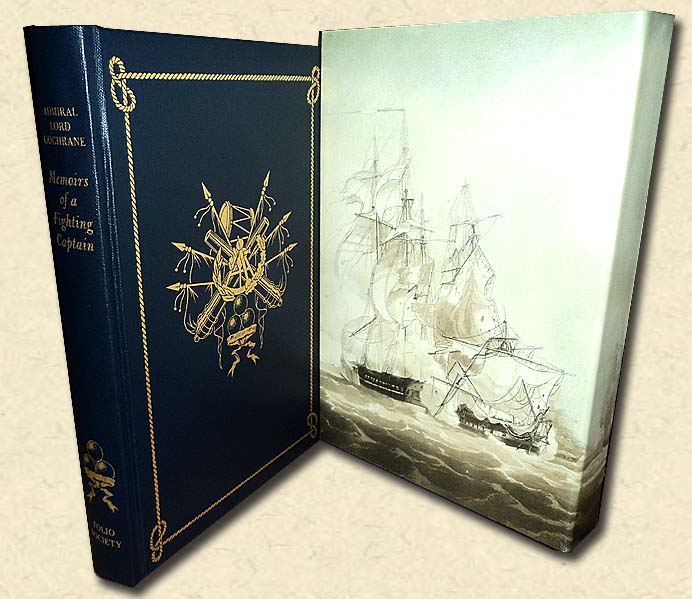
Cochrane, Admiral Lord (introduced by Brian Vale)
Memoirs of a Fighting Captain - Folio Society edition
The Folio Society, London, 2007.
Third printing. Octavo; hardcover, with blue cloth gilt decorated boards and spine-titling; 311pp. with a frontispiece and 16pp. of colour plates. A few faint scattered spots on text block edges. Otherwise, near fine in illustrated slipcase. Thomas Cochrane 1775-1860, 10th Earl of Dundonald, came from a family with a long tradition in military service. Having turned 17, he joined the Navy where he developed a brilliant career in the contest of the Napoleonic Wars, exploits such as the capture of the Spanish frigate El Gamo or the Battle of the Basque Roads made the Scottish aristocrat a real crowd pleaser. In 1807, he became MP in the House of Commons, where he supported the propositions of the Radical group. Seven years later, the admiral got involved in a financial scandal known as the Great Stock Exchange Fraud, as a result he spent a year in prison and lost his position in the Navy and as MP. That did not mean the end of Cochrane's lifework, he went to America where he took part in the process of Chilean and Brazilian independence, and he also helped the Greek army with his fight against the Turkish. In the 30's, the 10th Earl of Dundonald arrived back in the United Kingdom, where he managed to regain his position in the British Navy. He spent his last years writing his memoirs and designing engines.
Click here to order

$32
202966
Cook, Capt. James (G. Kearsley, ed.)
An Abridgement of Captain Cook's Last Voyage Performed in the Years 1776, 1777, 1778, 1779, and 1780, for making discoveries in the Northern Hemisphere by Order of His Majesty; Extracted from the Quarto Edition in Three Volumes.
G. Kearsley, London, 1787.
Octavo; hardcover, half-bound in calf with marbled boards, gilt spine titles on a red morocco label between five raised bands decorated in gilt; 488pp. [2 Blank + xxivpp. + 442pp. + 16pp. (Index) + 2pp. of adverts + 2 Blank], on laid paper with marbled edges, with a folding engraved frontispiece ("The Death of Cook"), a folding chart and five engraved plates. Moderate wear; boards, edges and joints well rubbed; crackling to the leather on the spine; text block top edges dusted; previous owner's ink inscription to the front pastedown and title page; mild offset throughout; folding plates backed with linen. Very good. The British Admiralty claimed the rights to publish any material which had been generated on its ships during its missions of exploration and were generally scrupulous about depriving the seamen on board of their journals whenever they returned to port. The publication of Cooks' narrative of his Third Voyage - notoriously cut short by his death in Hawaii - was seen as a lucrative means of recouping monies spent upon the enterprise; an eager public, keen to read of his exploits, were not about to prove them wrong. Not everybody could afford to pay the sums expected to purchase the work however, and few wanted to deal with its quarto format with accompanying maps, so the enterprising George Kearsley (publisher) saw his way clear to producing an abridged smaller format version which suited the market admirably. The Admiralty were not so keen to see funds diverted away from them like this and entered into a battle of words with the canny publisher. As a result, the Preface to the volume is both a long apology and an explanation as to Kearsley's altruistic reasons for publishing it. Possibly due to the acrimony surrounding the publication, the main bibliographer of works by and about Cook, Beddie, overlooked the second edition in his listings (this is the fourth). The book is of interest also for the fact that it reproduces the Royal Society Medal presented to Cook post-mortem - designed by Pingo and engraved here by Trotter - and goes into a fair amount of detail about this award. (See: Beddie 1547; Forbes, "Hawaiian National Bibliography", 68). This copy of the work was previously owned by Sir Joseph Palmer Abbott, the distinguished Australian politician and solicitor.
Click here to order

$1800
97672
Dalrymple, Alexander (Foreword by Kevin Fewster; Kathryn Lamberton, ed.)
An Account of the Discoveries made in the South Pacifick Ocean - Australian Maritime series, No.3 - signed First printed in 1767; reissued with a foreword by Dr. Kevin Fewster of the Australian National Maritime Museum and an essay by Dr. Andrew Cook of the British Library
Hordern House Rare Books Pty. Ltd./Australian National Maritime Museum, Potts Point NSW, 1996.
Octavo; hardcover, quarter-bound in Scottish calf with marbled boards, with gilt spine titles on a black morocco label between gilt rules; 188pp. [1-47pp. + Blank + i-ivpp. + i-xxxipp. + Blank + 1-103pp. + Blank], with a monochrome portrait frontispiece, one folding chart and 6 folding plates likewise. Mild wear; signed in ink by Andrew Cook at the start of his essay; spine heavily sunned. No dustwrapper as issued. Very good. An account of voyages to the Pacific previous to 1764 and prior to Captain James Cook's first Voyage, compiled by Alexander Dalrymple. Includes an essay on Dalrymple by Dr. Andrew S. Cook.
Click here to order

$125
63240
d'Urville, Jules S-C Dumont (Helen Rosenman, trans. & ed.)
An Account in Two Volumes of Two Voyages to the South Seas by Jules S-C Dumont D'Urville... Volume 1: "Astrolabe" 1826-1829; Volume 2: "Astrolabe" and "Zelee" 1837-1840
Melbourne University Press, Carlton Vic., 1987.
Two volumes: quarto; hardcover, with gilt spine titles on scarlet labels; 634pp. [311pp. + 323pp.] with two monochrome frontispieces, 44 monochrome and colour plates and many other illustrations. Very minor wear; previous owner's name plate to the upper corner of the front pastedowns of both volumes. No dustwrappers as issued. Owner's bookplate on front endpaper; else near fine in like slipcase. Still retains paper obi. Rear-Admiral Dumont d'Urville was a brilliant sailor who made two great scientific and exploratory voyages to the Pacific and the Antarctic. The first, 1826-29 solved the 40 year old mystery of the disappearance of La Perouse. The coup of the second voyage, 1837-40 was d'Urville's discovery, ahead of the American Wilkes and the British Ross expeditions, that Antarctica was a continent. He was twice in New Zealand. In 1840 to his chagrin, when he was in the South Island, Britain proclaimed sovereignty over both islands to thwart French plans to settle the Banks Peninsula. D'Urville possessed enormous vitality, curiosity, perseverance and scepticism. His own and his officers' shrewd observations on the many places visited present a sad and often angry commentary on the devastation being wreaked on the ancient but fragile cultures and environments of Oceania.
Click here to order

$85
99542
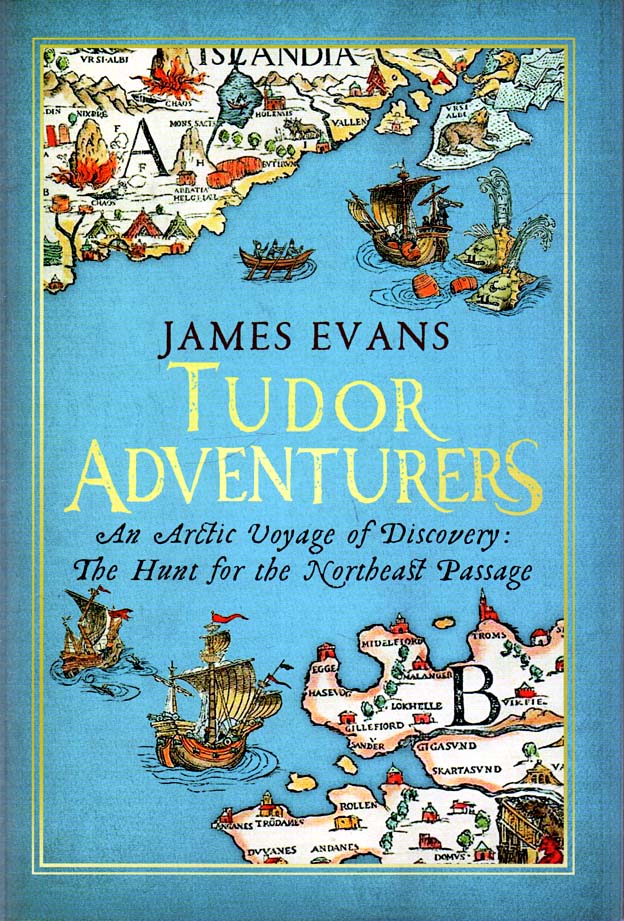
Evans, James
Tudor Adventurers An Arctic Voyage of Discovery - The Hunt for the Northeast Passage
Pegasus, New York, 2014.
Octavo hardcover, 383pp., colour plates. Dustwrapper. New, remainder. In the spring of 1553, three ships sailed north-east from London into uncharted waters. The scale of their ambition was breathtaking. Drawing on the latest navigational science and the new spirit of enterprise and discovery sweeping the Tudor capital, they sought a northern passage to Asia and its riches. The success of the expedition depended on its two leaders: Sir Hugh Willoughby, a brave gentleman soldier, and Richard Chancellor, a brilliant young scientist and practical man of the sea. When their ships became separated in a storm, each had to fend for himself. Their fates were sharply divided. One returned to England, to recount extraordinary tales of the imperial court of Tsar Ivan the Terrible. The tragic, mysterious story of the other two ships has had to be pieced together through the surviving captain's log book, after he and his crew became lost and trapped by the advancing Arctic winter. This exceptional endeavour was one of the boldest in British history, and its impact was profound. Although the 'merchant adventurers' failed to reach China as they had hoped, their achievements would lay the foundations for England's expansion on a global stage. As James Evans' vivid account shows, their voyage also makes for a moving story of daring, discovery, tragedy, and adventure.
Click here to order

$24
208488
Ferreiro, Larrie D.
Ships and Science The Birth of Naval Architecture in the Scientific Revolution 1600-1800
MIT Press, Cambridge MA, 2007.
First printing. Royal octavo hardcover; brown cloth boards with silver gilt spine titling; 441pp., b&w illustrations. Mild spotting to upper text block edge and slight wear to dustwrapper edges especially on head of spine panel. Near fine. Wrapper now professionally protected by superior non-adhesive polypropylene film. 'Naval architecture was born in the mountains of Peru, in the mind of a French astronomer named Pierre Bouguer who never built a ship in his life.' So writes Larrie Ferreiro at the beginning of this pioneering work on the science of naval architecture. Bouguer's monumental book, Treatise of the Ship, founded a discipline that defined not the rules for building a ship but the theories and tools to predict a ship's characteristics and performance before it was built. In Ships and Science, Ferreiro argues that the birth of naval architecture formed an integral part of the Scientific Revolution. Using Bouguer's work as a cornerstone, Ferreiro traces the intriguing and often unexpected development of this new discipline and describes its practical application to ship design in the seventeenth and eighteenth centuries. Drawing on previously untapped primary-source and archival information, he places the development of naval architecture in the contexts of science, navy, and society, across the major shipbuilding nations of Britain, France, Spain, the Netherlands, Sweden, Denmark, and Italy. Ferreiro describes the formulation of the three major elements of ship theory (the science of explaining the physical behaviour of a ship): manoeuvering and sail theory, ship resistance and hydrodynamics, and stability theory. He considers the era's influential books on naval architecture and describes the professionalisation of ship constructors that is the true legacy of this period. Finally, looking from the viewpoints of both the constructor and the naval administrator, he explains why the development of ship theory was encouraged, financed, and used in naval shipbuilding. A generous selection of rarely seen archival images accompanies the text.
Click here to order

$50
51680
Fisher, Raymond H. (ed.)
The Voyage of Semen Dezhnev in 1648 Bering's Precursor with Selected Documents
Hakluyt Society, Cambridge UK, 1981.
Second series. Hardcover, octavo, 326pp, monochrome illustrations. Lightly toned & dusted upper text block edges. Owner's name on endpaper. Lightly scuffed dustwrapper with edge and corner wear; professionally protected by superior non-adhesive polypropylene film. Very good. In 1736 Gerhard Muller, a member of the new Russian Academy of Sciences, while gathering historical materials in Siberia, uncovered in Yakutsk reports briefly describing a voyage in 1648 from the Arctic river, Kolyma, around a great rocky promontory to a point south of the Pacific river, Anadyr. The reports were those of Semen Dezhnev, leader of the expedition and one of its 26 survivors. They gave very few details about the voyage, but said enough to lead Muller to conclude that it demonstrated the separation of Asia and America, a matter insufficiently determined in 1728 by Vitus Bering.
Click here to order

$25
97615
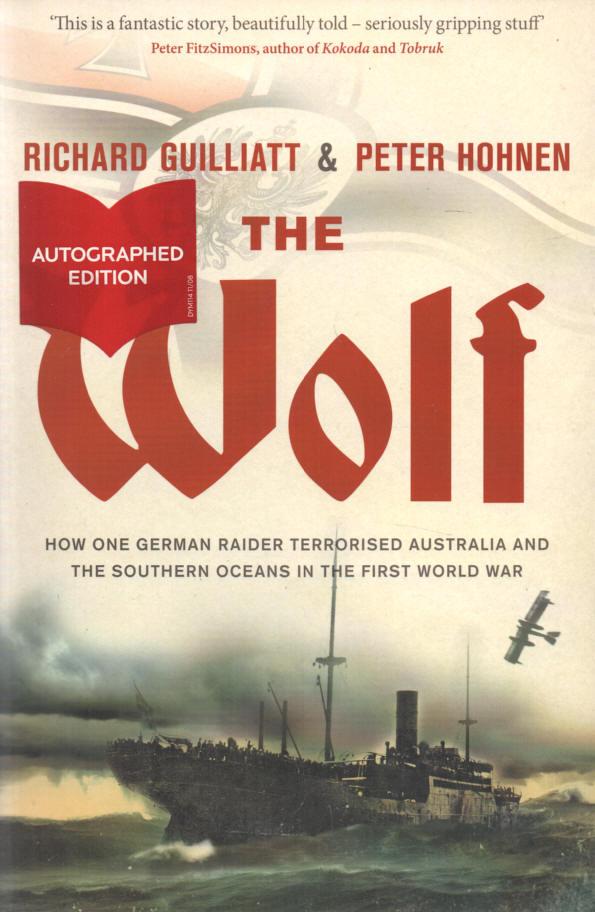
Guilliatt, Richard & Peter Hohnen
The Wolf - signed How One German Raider Terrorized the Allies in the Most Epic Voyage of WWI
William Heinemann Ltd./Random House (Aust.) Pty. Ltd., North Sydney NSW, 2009.
Octavo; paperback; 366pp., with maps and diagrams and 16pp. of monochrome plates. Minor wear; text block edges toned; signed in ink by Peter Hohnen on the title page. Very good. During World War One, the Germans sought to starve Britain into submission by interfering with her trade across the Atlantic. To this end, they launched the Wolf, a freighter sailing under no flag and obeying no nautical regulations, destined to stay away from all ports for an astonishing fifteen months, and covering a total of over 64,000 nautical miles. During its epic sojourn, the ship sank over 30 allied ships and laid many square miles of sea mines, surviving by capturing enemy ships and pillaging their supplies and cargoes, finally carrying over 400 prisoners-of-war - captured personnel and travellers from the sunken vessels. In this re-telling of its epic voyage, the authors bring to life the strange existence of the captors and captured, never knowing when they would return to land, battling scurvy and engaging in clandestine romantic liaisons. This is one of the untold narratives of the Great War, whose naval engagements are often sadly overlooked, and is essential reading for the enthusiast.
Click here to order

$22
76665
Harlow, V.T. (ed.)
Ralegh's Last Voyage Being an account drawn out of contemporary letters and relations, both Spanish and English, of which the most part are now for the first time made public, concerning the voyage of Sir Walter Ralegh, knight, to Guiana in the year 1617 and the fatal consequences of the same
N.Israel, Amsterdam & Da Capo Press, New York, 1971.
Quarto hardcover, 379pp., fold-out monochrome maps and frontispiece. Plain tan boards with red title plate and gilt lettering with top edges dyed pale blue. Minimal wear; fine. Reprint of the 1932 Argonaut Press edition. "The circumstances of Ralegh's final enterprise have been the subject of heated controversy ever since he himself produced his 'Apologie' and James I responded with the 'Declaration'... The justification of the present volume lies in the fact that it brings together for the first time all the important letters and official documents of English origin relating to the episode, a number of which were not known to previous writers, and at the same time presents entirely new evidence drawn from contemporary Spanish sources. English captains, government spies, Spanish eye-witnesses, friends and foes, combine to give their testimony. In consequence, a much fuller and greatly altered story emerges..." (from the preface).
Click here to order

$45
85091
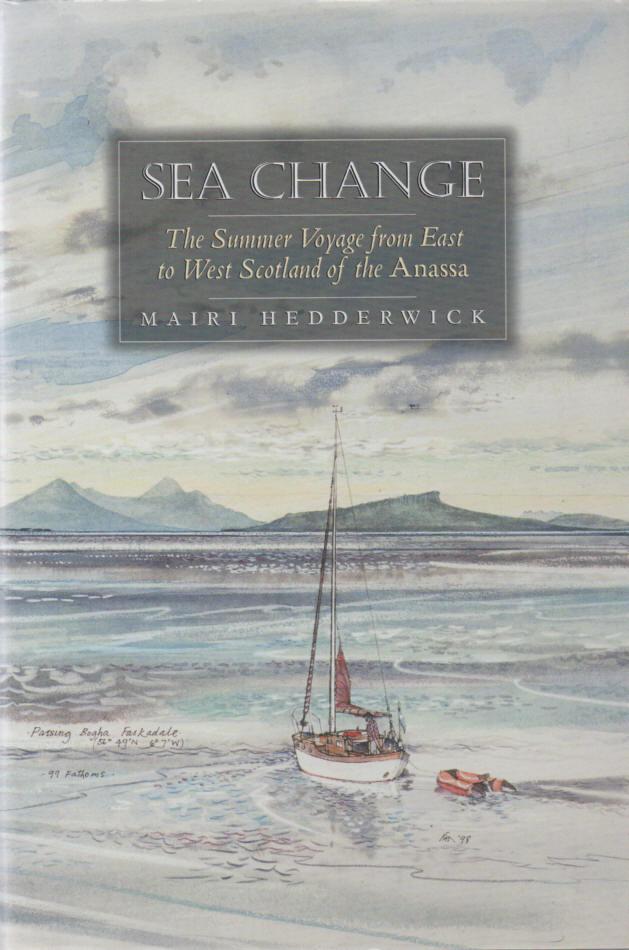
Hedderwick, Mairi
Sea Change The Summer Voyage from East to West Scotland of the Anassa
Canongate Books Ltd., Edinburgh Scotland UK, 1999.
Hardcover, octavo; blue boards with gilt spine titling, coloured map endpapers; 167pp., tri-fold fold-out watercolour illustrations. Fine in like dustwrapper. Mairi Hedderwick embarks on a six-week summer voyage from the east to the west of Scotland in the antique teak, 26-foot long cruising yacht The Anassa, sailing through the Caledonian Canal and visiting, among others, Loch Linnhe, Loch Etive, Lochs Ailort, Moidart, Nevis and Leven. Filled with frank and fresh observations on life, land and seascape and augmented with her own drawings, fold-out watercolours and observations on everything from the history of landscape painting in Scotland, the Highland issues, her own sea fears, to the shipping forecast and fish farming, this is a wonderful account of a journey around Scotland.
Click here to order

$30
33099
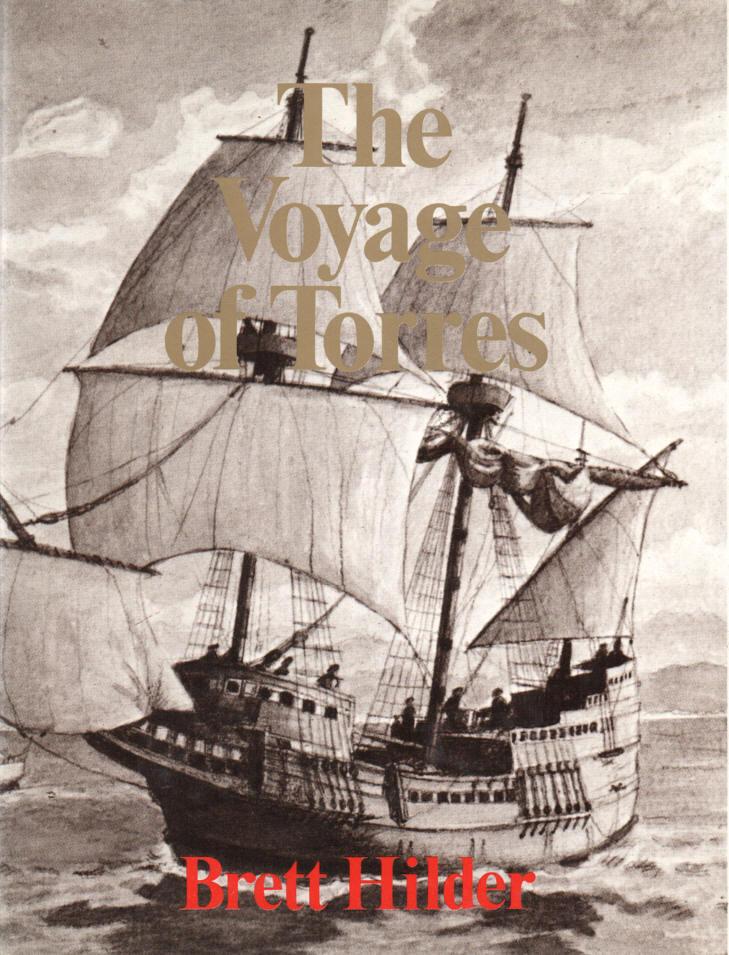
Hilder, Brett
The Voyage of Torres The Discovery of the Southern Coastline of New Guinea and Torres Strait by Capin Luis Baez de Torres in 1606
University of Queensland Press, St. Lucia Qld., 1980.
First edition. Quarto; hardcover, with gilt spine titles and endpaper maps; 194pp., with a monochrome portrait frontispiece, maps, many monochrome illustrations and 8pp. of colour maps. Mild wear; mild wear to the board edges; text block edges lightly toned. Dustwrapper lightly rubbed and sunned along the spine panel. Very good. The brief report Torres sent to the king of Spain after his two small ships reached Manila in May 1607 is tantalizingly vague and ambiguous. The narrative of Don Diego de Prado, an aristocratic adventurer who sailed with Torres, is more detailed but still has frustrating gaps and allows for differences in interpretation. Both these documents were lost to the world for hundreds of years after the voyage. Since Prado's narrative was published in 1930, other clues have come to light from old maps thought to have been based on missing charts drawn by Prado, from documents previously overlooked, and from the discovery that two important lines had been omitted from the transcription of Torres' letter to the king.
Click here to order

$30
201127
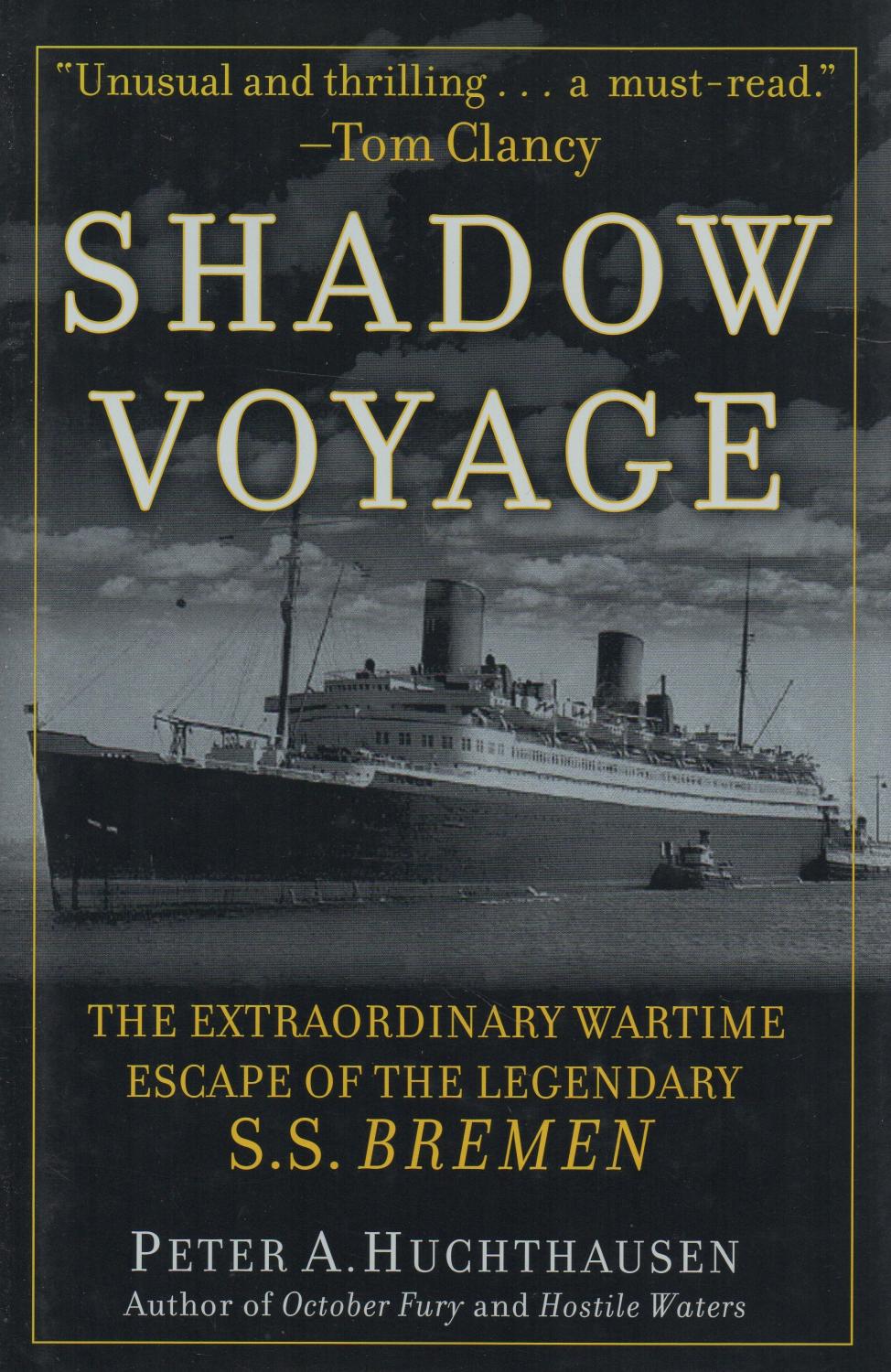
Huchthausen, Peter A
Shadow Voyage: The Extraordinary Wartime Escape of the Legendary S.S. Bremen
John Wiley & Sons, Hoboken, 2005.
Octavo hardcover; blue boards with gilt spine titling; 260pp., monochrome illustrations. Mild rubbing and edgewear to dustwrapper. Otherwise near fine. On August 30, 1939, the 52,000-ton Nazi passenger ship Bremen stole out of New York harbour, cleared Sandy Hook, shut out its lights, and veered north toward Greenland, using bad weather as a shield against what would become many pursuers. For the British to gain the Bremen would be a propaganda victory, but, more important, its seizure would also provide the Royal Navy with a much-needed troop transport ship, the eventual use the Kriegsmarine put it to. The Bremen therefore steered an elaborate evasive course that took it far into arctic waters and to Murmansk, Russia, a friendly port by virtue of the Nazi-Soviet non-aggression pact. From there it steamed to Germany, evading a British vessel that did not fire upon her, it appears, for humanitarian reasons, inasmuch as warships were not then supposed to sink passenger ships. By the time the Salmon found the Bremen, Germany was no longer observing such niceties, a fact by which Britain scored propaganda points and claimed moral victory in the engagement. Huchthausen's recounting of the Bremen's tortuous, 14-week journey has its Hunt for Red October moments in great detail. Huchthausen also shares Tom Clancy's fascination with technical arcana; along the way, for instance, he explains why the shape of the Bremen, both long and broad, and its use of the 'bulbous forefoot' (this protrusion makes a hole in the water as the ship plows ahead, forcing seawater away to both sides and downward, thereby reducing drag on the skin of the ship, increasing the mass of the water at the stern, and strengthening the bite against which the propellers can thrust) were factors in its escape. A solid bit of maritime history, ably recounting a mere footnote - but an interesting one - to the larger Battle of the Atlantic." - Kirkus
Click here to order

$23
85114
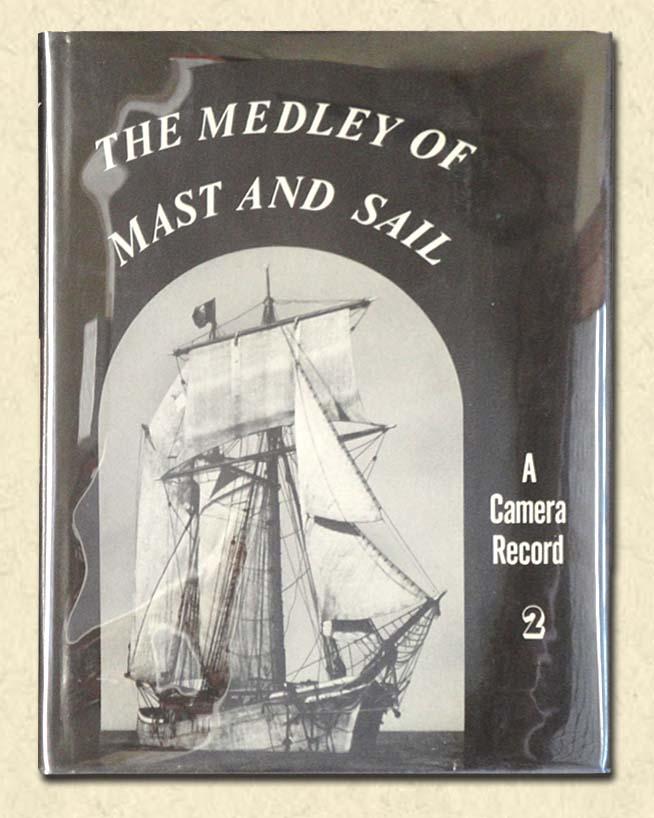
Hurst, Alex (intro.)
The Medley of Mast and Sail: Volume II - A Camera Record
Teredo Books, Brighton, 1981.
Volume II only, hardcover, large octavo; blue boards with gilt spine titling and gilt ship decoration on front board; monochrome ship illustration endpapers; 471pp., monochrome illustrations. Minor wear only; one or two spots on upper text block edges and minimal wear to dustwrapper edges. Near fine and professionally protected by superior non-adhesive polypropylene film. This is not volume two of its predecessor but the second in a series of self-sufficient books. The common theme is implicit in the title: the setting of merchant sailing craft within the perspective of each other and of other aspects of sail that exercise people's minds today - Preserving, training, aberrations of yachtsmen and even the revival of merchant sail. The well-known clippers and famous four-masters were no more important to those concerned with them, and to their local economies, than were the dhows of the Indian Ocean, or the prahu craft today within their environments. A wool clipper could no more match a collier brig at her job than the collier brig could vie with the clipper in hers. Each type was fitted for a purpose, individual vessels varying in their performance. Large and small vessels, their triumphs and disasters and some of their ports, are presented without fear or favour. They were all a part of the playing and, if the curtain rang down long ago, while they were onstage, the actors knew no class distinctions, but lay in dock or made sail together on equal terms, each demanding a common seamanship, now all but forgotten, that bred mutual respect. Historians - not the ships or their men - created the distinctions that have taken root in peoples' minds!
Click here to order

$50
71204
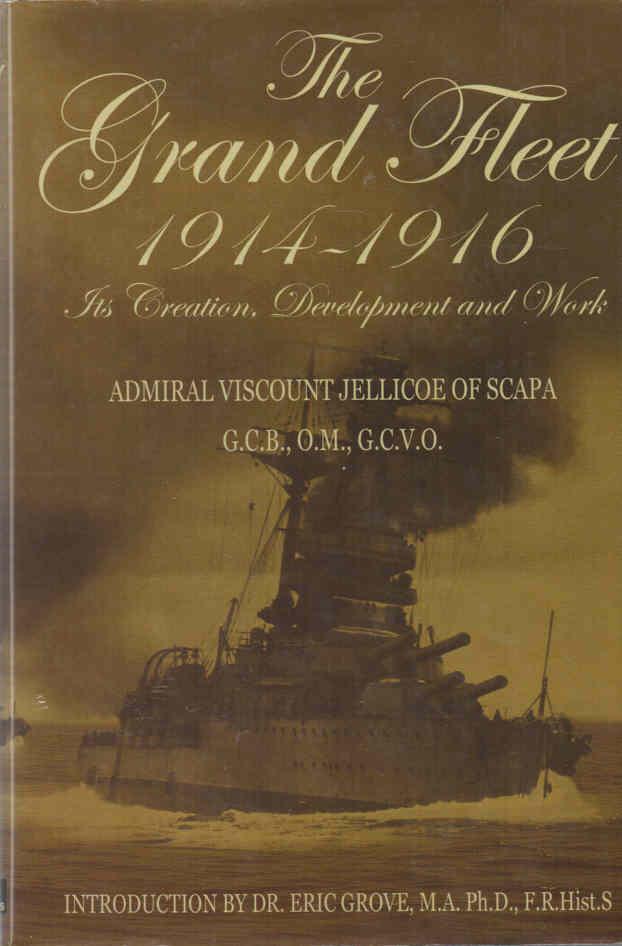
Jellicoe of Scapa, Admiral Viscount, GCB, OM, GCVO
The Grand Fleet, 1914-1916 Its Creation, Development and Work
Ad Hoc Publications. Ringshall, Suffolk UK, 2006.
Octavo; hardcover with gilt titling on spine; 320pp. with maps and line illustrations and 16pp. of photographic plates. Slightly bumped at the spine head; otherwise near fine in like dustwrapper. Admiral Viscount Jellicoe of Scapa held the position as leader of the British Fleet during the first two and a half years of the First World War; this book, first published in 1919, is his account of how he went about marshalling the resources and opportunities over which he held sway. Throughout this meticulous re-telling, there is a strong sense of the pressure which he was under to preserve lives and equipment and above all to see Britain win free of the German threat. This account has a particularly detailed section covering the Battle of Jutland - a pivotal naval conflict in the War - and is the primary source for all later accounts of that engagement. An important work of the Great War.
Click here to order

$30
72519
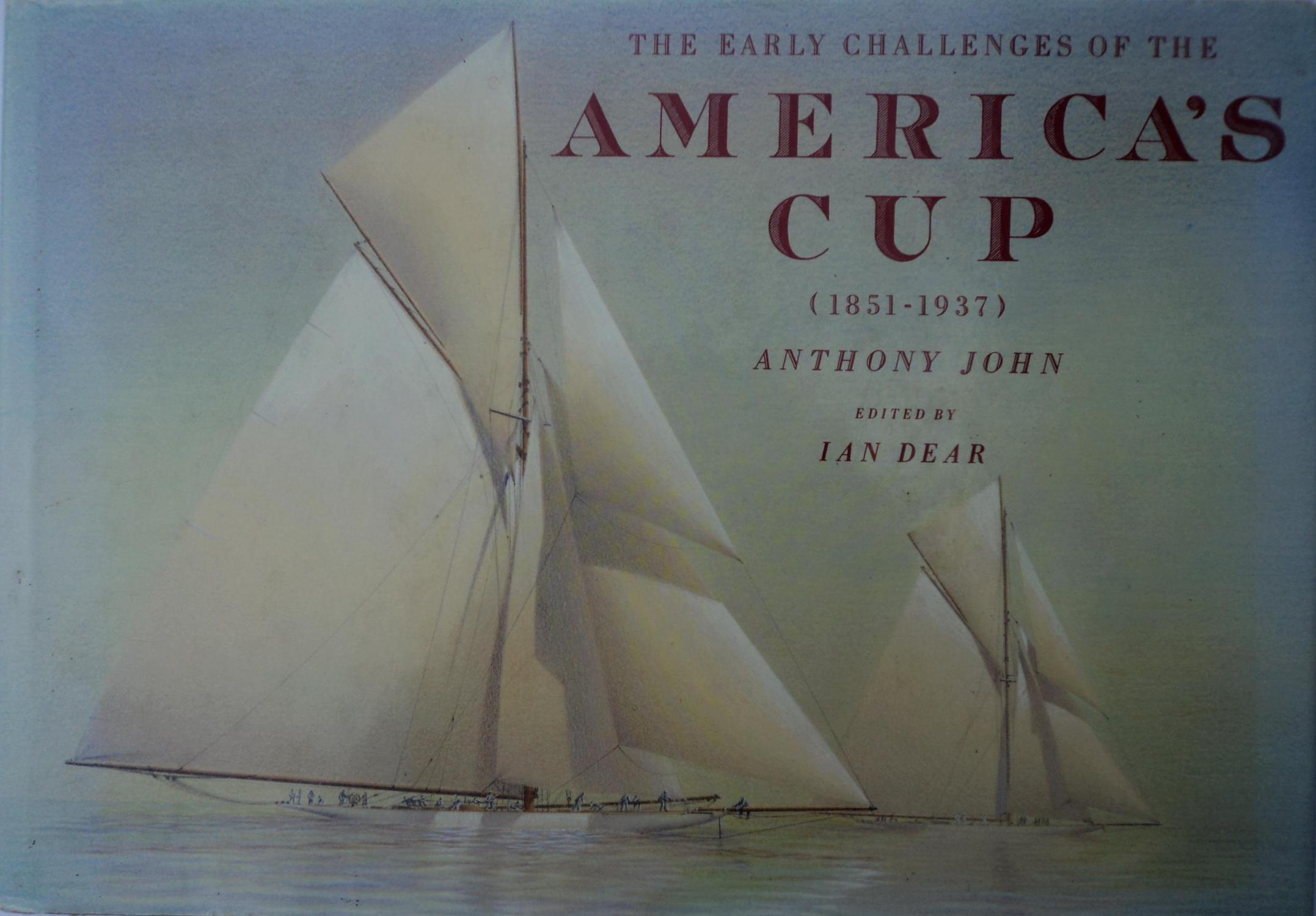
John, Anthony, & Ian Dear (eds.)
The Early Challenges of the America's Cup 1851-1937
Pierson, Sydney NSW, 1965.
Oblong quarto hardcover, 159pp., colour illustrations. Minor wear; slightly worn and chipped dustwrapper edges. Otherwise very good to near fine and professionally protected by superior non-adhesive polypropylene film. One of the greatest sporting challenges in the world, the America's Cup has a long and glamorous past, peopled with larger-than-life characters: Commodore Stevens, James Ashbury, Nat Herreshoff, Sir Thomas Lipton, Edward VII, Tommy Sopwith and Harold Vanderbilt, to name but a few. Its true fascination, however, is that from its inception until 1983 it remained in the hands of one nation, the USA. As the years passed and the Americans, against ever-stronger challengers, managed to sustain their invincibility, the contest increasingly came to resemble a quest for Yachting's Holy Grail. This book recalls the long struggles to mount those early challenges and how the competition developed in succeeding decades. In yachting's 'golden age' grandeur, size and elegance were the keynotes, and before sophisticated modern technology came into play the huge spars and acres of canvas were manhandled by crews of thirty or more professionals. For the author these old racing yachts are an art form, each model a designer's solution the problems of two powerful and unpredictable elements, water and wind.
Click here to order

$22
99018
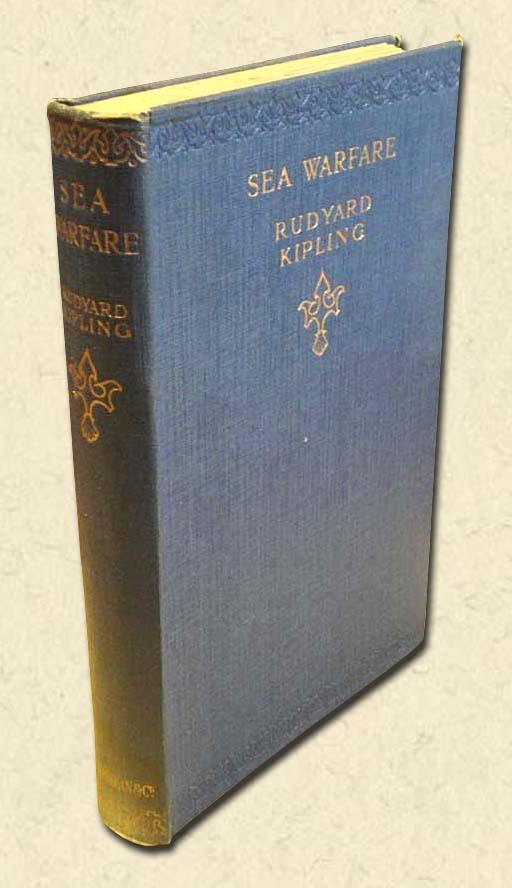
Kipling, Rudyard
Sea Warfare "The Fringes of the Fleet" (1915); "Tales of 'The Trade'" (1916); & "Destroyers at Jutland" (1916)
Macmillan, London, 1916.
First edition: Hardcover, octavo; blue cloth boards with gilt upper board and spine titling; 221pp., all unopened. Board corners frayed; offsetting and mild foxing to endpapers and prelims; browned text block edges. Very good. No dustwrapper. A compilation of later works by Kipling focussing upon the - then - current state of the imperial navy, both military and merchant. This is a handsome volume of these chatty collected works, completely unopened and unread.
Click here to order

$40
218122
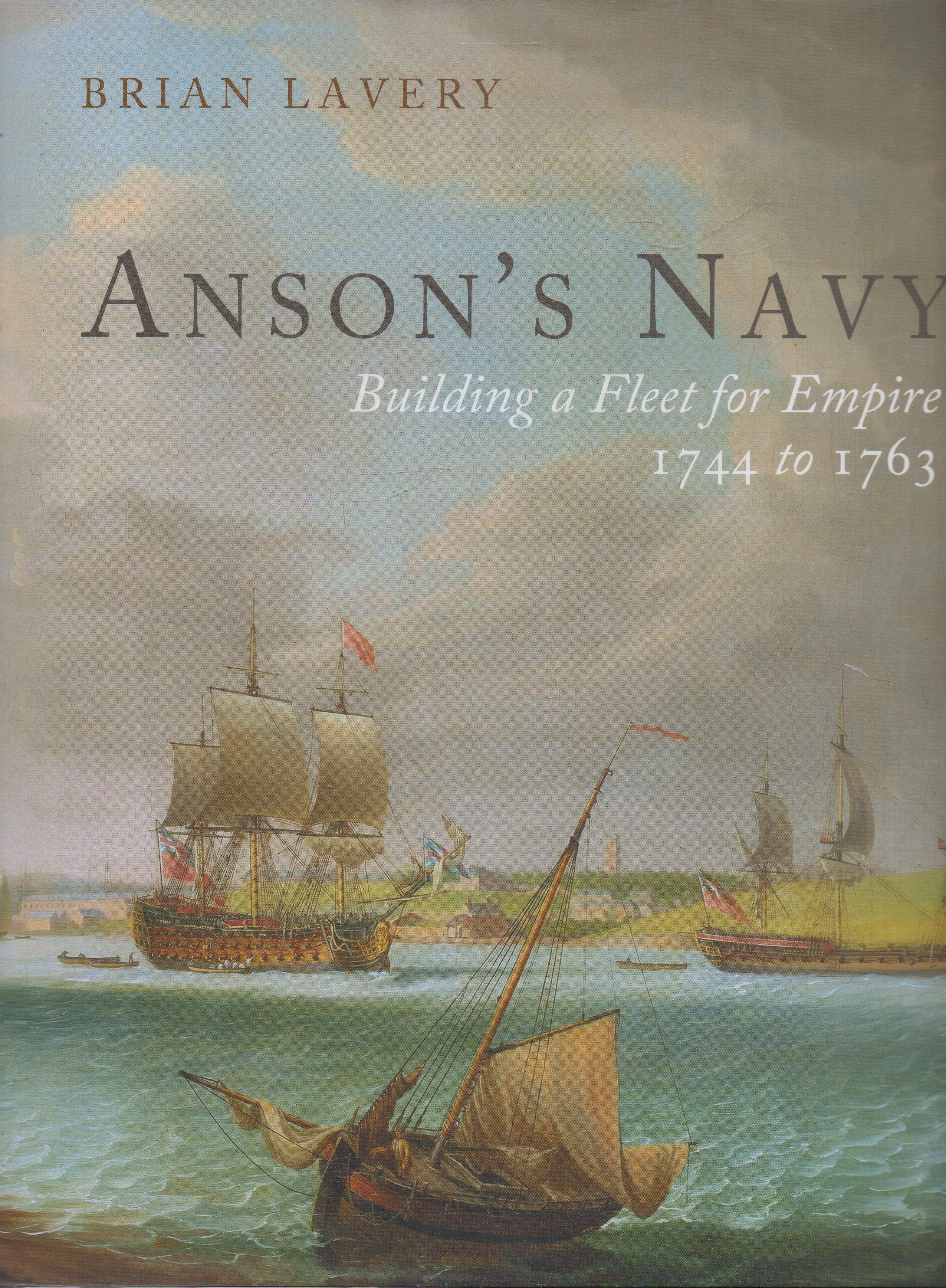
Lavery, Brian
Anson's Navy Building a Fleet for Empire 1744-1763
Seaforth Publishing, Barnsley, 2021.
Large square quarto; hardcover; brown boards with gilt spine titles; 208pp., with an illustrated colour frontispiece, decorated endpapers and many monochrome and colour illustrations. Minor wear only. Illustrated dustwrapper now professionally protected by superior non-adhesive polypropylene film. Near fine. Despite a supreme belief in itself, the Royal Navy of the early eighteenth century was becoming over-confident and outdated, and it had more than its share of disasters and miscarriages including the devastating sickness in Admiral Hosier's fleet in 1727; failure at Cartagena, and an embarrassing action off Toulon in 1744. Anson's great circumnavigation, though presented as a triumph, was achieved at huge cost in ships and lives. And in 1756 Admiral Byng was shot after failure off Minorca. In this new book, the bestselling author Brian Lavery shows how, through reforms and the determined focus of a number of personalities, that navy was transformed in the middle years of the eighteenth century.
Click here to order

$65
208549
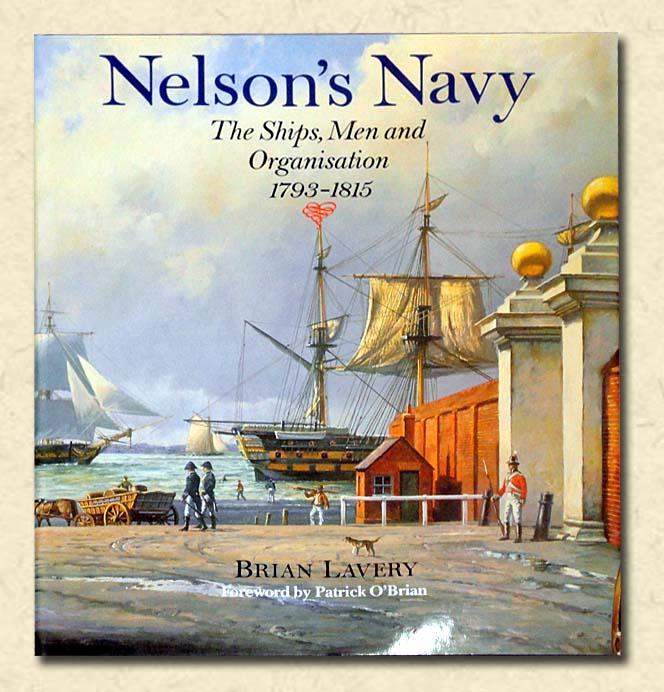
Lavery, Brian (Foreword by Patrick O'Brian)
Nelson's Navy The Ships, Men and Organisation, 1793-1815
Conway Maritime Press/Chrysalis Books Ltd., London, 2000.
Reprint. Square quarto; hardcover, with gilt spine titles; 352pp., with many monochrome maps, schematics and illustrations. Minor wear; text block top edge lightly dusted. Dustwrapper now professionally protected by superior non-adhesive polypropylene film. Near fine. Patrick O'Brien provides the forward to this edition of the most successful Conway Maritime title. The book is eminently readable and is the first single-volume work to cover in such depth this vast and complex subject. Written by one of the world's leading authorities on the sailing navy the book contains considerable original research to give a clear and authentic picture of the Senior Service as a whole.
Click here to order

$60
217366
Linford, Jenny
Lighthouses
Parragon, Bath, 2006.
Folio hardcover; illustrated boards with royal blue endpapers; 191pp., colour illustrations. Minor wear only; near fine in like dustwrapper now professionally protected by superior non-adhesive polypropylene film. From the Pharos of Alexandria, one of the Seven Wonders of the Ancient World, to Ireland's Fastnet light, lighthouses have involved formidable feats of engineering skill. many of them were built in dangerous conditions, with the construction teams battling against high tides and treacherous reefs. This book explores the extraordinary diversity of lighthouses around the world, from formidable granite towers standing guard on France's Atlantic coast to the neat, homely, white-and-red 'pepper-pot' lighthouses nestling on Prince Edward Island, Canada. Lighthouses are a fascinating reflection of the society and culture around them, ranging architecturally from France's elegant and beautiful Cordouan lighthouse, completed in 1611 and the Neo-Gothic splendour of prosperous Bremerhaven's lighthouse in Germany to the simple solidity of Iceland's Krossnes, painted orange so that it will stand out against the surrounding snowy landscape. In North America lighthouses are among the oldest buildings on the continent, and hold a special place in the nation's affections.
Click here to order

$40
85118
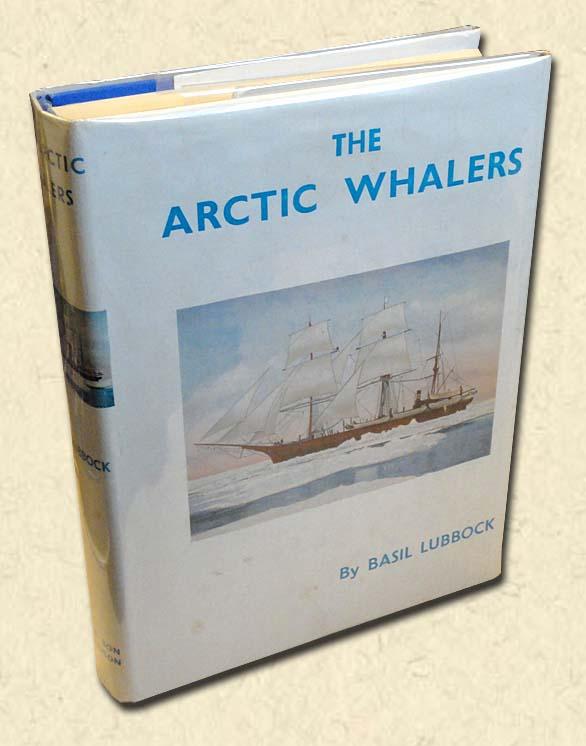
Lubbock, Basil
The Arctic Whalers
Brown, Son & Ferguson, Glasgow, 1968.
Reprint. Quarto hardcover; blue boards with gilt spine titling and upper board blind-stamped titling; blue map endpapers; 483pp., monochrome frontispiece, plates and illustrations. Minor wear; mildly toned text block edges with a few faint spots on upper edges; lightly rubbed white illustrated dustwrapper with a few tiny marks and minimal wear to edges. Near fine otherwise and professionally protected by superior non-adhesive polypropylene film. 'I had intended when planning this work to make it a complete history of all British whalers, both in the Arctic and in the South Seas, but so great has been the ground to be covered that I have been forced to leave out the South Sea side of British whaling... The day of the Arctic whaleman, known amongst seamen as the Greenlander, and considered the toughest specimen of all the men who followed the sea for a living, has long since passed, but his memory deserves to be preserved, and I feel sure that the reader of this book will find his admiration roused for as gallant a seafarer as ever trod the planks of a stout ship.' - Basil Lubbock
Click here to order

$55
208453
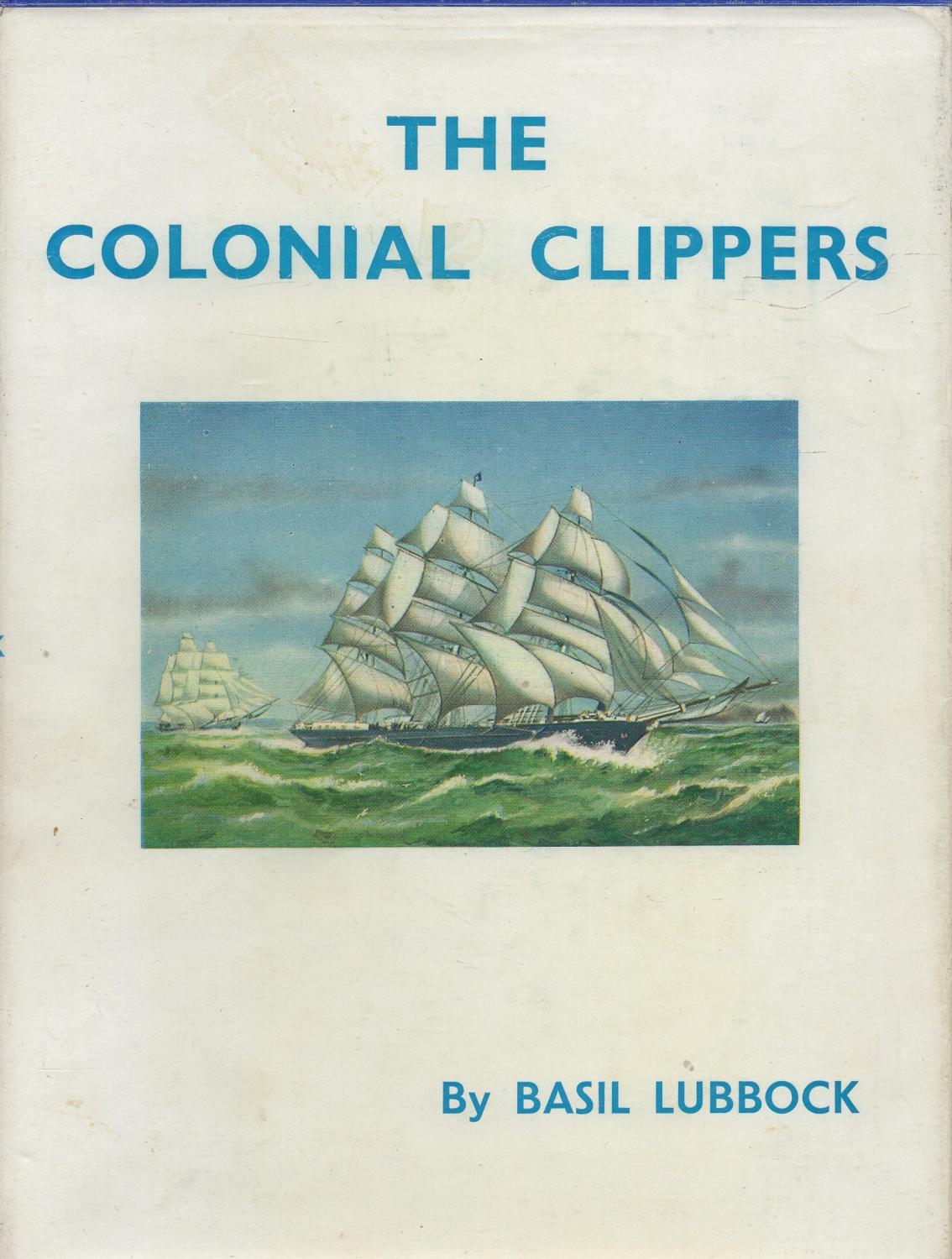
Lubbock, Basil
The Colonial Clippers
Brown, Son & Ferguson, Glasgow, 1975.
Reprint: quarto; hardcover; blue boards with gilt spine and upper board blind-stamped titling; 384pp., with a monochrome photolithographic frontispiece, and 29pp. of plates likewise, with 3pp. of diagrams. Rubbing to board edges and corners; softening to the spine extremities, bumping to the lower corners. Price-clipped dustwrapper is well-rubbed with some chipping; a tape mark to the upper panel; now professionally protected by superior non-adhesive film. Very good. "To sail and the sail-trained seaman more than to any other cause do we our nation's greatness. By sail were our homesteads kept safe from the enemy; by sail were our coasts charted; sail took adventurous pioneers to the new land, and sail brought home the products of these new lands to the Old Country and made her the Market of the World. This book is an attempt to preserve in written form what the fading memory is fast forgetting - the Glorious History of the Sailing Ship." - Basil Lubbock.
Click here to order

$55
85119
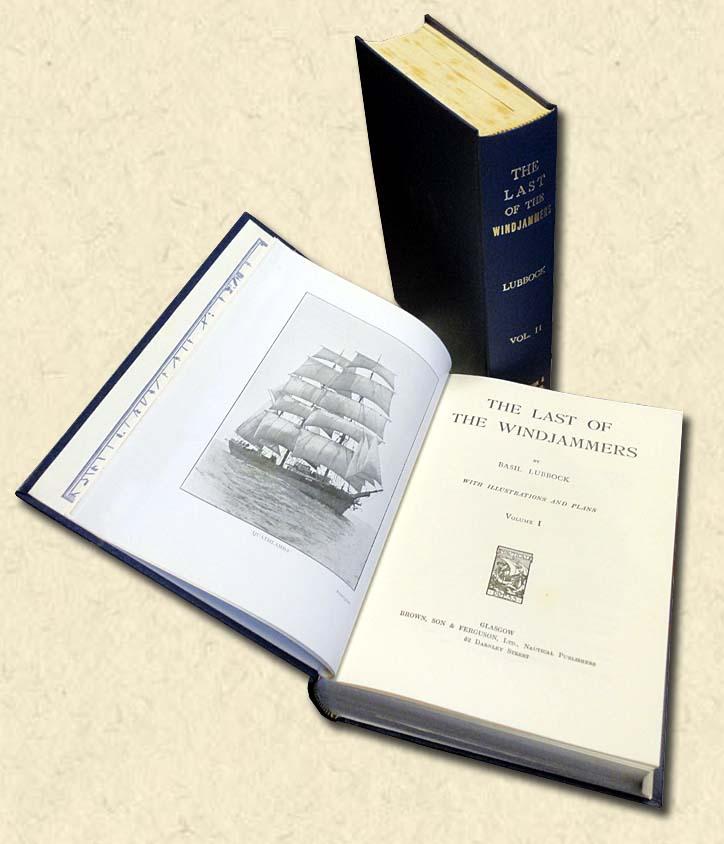
Lubbock, Basil
The Last of the Windjammers - Two Volumes With Illustrations and Plans
Brown, Son & Ferguson Nautical Publishers, Glasgow Scotland UK, 1969 and 1970.
Reprint: two volumes, quarto; hardcover, with gilt spine titling, blind-stamped upper board titles and endpaper maps; 966pp. [518pp. + 448pp.], with two monochrome frontispieces, 167 plates likewise and many monochrome schematics, many folding. Minor wear; text block edges spotted, especially the top edges; previous owner's ink inscription to the half-title page of Volume 2. No dustwrappers. Near fine. The publishers describe this book as 'a real book of the sea'; with its broad scope geographically, economically and technically. In his usual style Lubbock combines anecdotes, ships log extracts, newspaper reports, personal interviews, photographs and clear general arrangement drawings and rigging plans of the sailing ships dating from the opening of the Suez Canal in 1869 to the early 1920s. Chapters are included on the life and personnel in Sail; the History of Cape Horn, vessels in the big Sailing Ship Trades such as Jute Clippers and Grain Carriers; Small Fry - Swansea Copper-ore-men, Clipper Barques; intercolonial and South Sea Traders, Fruit Schooners and Fish Carriers. The second volume tackles the Last Boom in Sail - the Lime-juicers of 1888-9 - The Carriers of the Nineties and the Square Riggers of the Twentieth Century. Inimitably, Lubbock writes: 'Under the stimulus of steam competition sail came to its perfection. No more beautiful ships were ever launched than the iron clippers of the seventies and the medium clippers of the eighties. Probably the most perfect of composite clippers was the Adelaide passenger ship Torrens, which was not launched until 1875, whilst the American Cape Horners, which were turned out by Down East shipwrights throughout the eighties, were the very last word in wooden ship construction. ...By 1880.. steamships had passed the sailing ships' total with 408 ships built and a tonnage of 485,661 tons as against sail's 59,845. There were, of course, many other factors in this eclipse, but undoubtedly the Suez Canal was a knock-out blow for sail... When the Suez Canal was opened in the autumn of 1869, the Seven Seas were covered with sailing ships of every description, and deep water voyages to the other side of the world were being made by vessels which were no larger than the familiar coasting schooner. It was no unusual thing to see 300 sail held up in the Downs or the chops of the Channel by a long continuance of head winds and there are still many living who can remember the forest of masts and yards from ships in the docks and Pool of London showing like delicate spiders' webs against the hazy city sky... Coasting craft, brigs, snows, brigantines, schooners, ketches and cutters abounded in every port, however small. Large fleets of magnificent sailing trawlers and drifters worked the Channel and the North Sea, whilst smaller smacks, such as the Cornish luggers and Fifeshire scaiths, dotted the British seas with their tanned sails. Even the highest powered steamers were not the unsightly objects they have since become, for they had clipper lines, fiddle bows and rounded sterns, were mostly barque rigged and set their canvas at every opportunity. In those days the holiday-maker at the seaside had every variety of rig to feast his eyes upon, and the marine artist had a difficulty in choosing a subject from the mass of material presented wherever he went." - the author
Click here to order

$120
218125
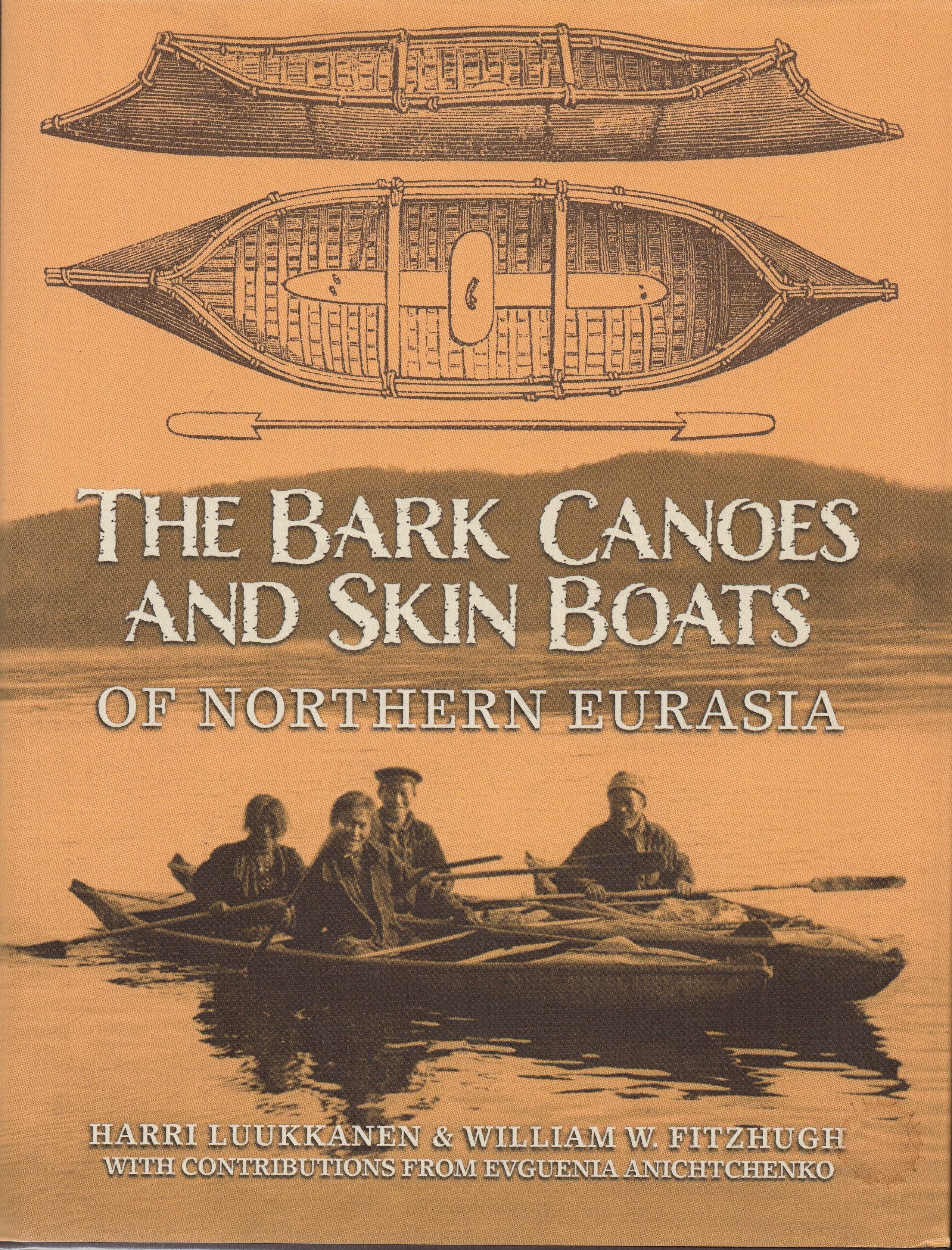
Luukkanen, Harri & William W. Fitzhugh with Evguenia Anichtchenko
The Bark Canoes and Skin Boats of Northern Eurasia
Smithsonian Books, Washington, 2020.
Quarto hardcover; brown boards with gilt spine titling, map endpapers; 276pp., mainly monochrome illustrations, maps and charts. Minor wear only; near fine in like dustwrapper (now professionally protected by superior non-adhesive polypropylene film). The Bark Canoes and Skin Boats of Northern Eurasia is a history and description of bark and skin boat traditions of the native peoples of Scandinavia and northern Russia. The history of northern peoples and cultures is inextricably linked to the technology of water transport. This is particularly true in northern Eurasia, where lakes and rivers can connect when overland summer travel is restricted by thick forests or bogs. For thousands of years, native peoples used a variety of bark and skin boats for fishing, hunting, trading, making war, and migrating. The Eurasian peoples, responding to their geography, climate, and environment, learned to construct - and perfect - small watercraft made from dug-out logs or the bark of birch, aspen, larch, and other trees, each variety crafted for its special use and environment. The text describes the design, construction, and uses of skin and bark boats for thirty-five traditional cultures ranging from northern Scandinavia to the Russian Far East, from the Bering Strait to northern China, and from South Siberia to the Arctic Ocean.
Click here to order

$45
208548
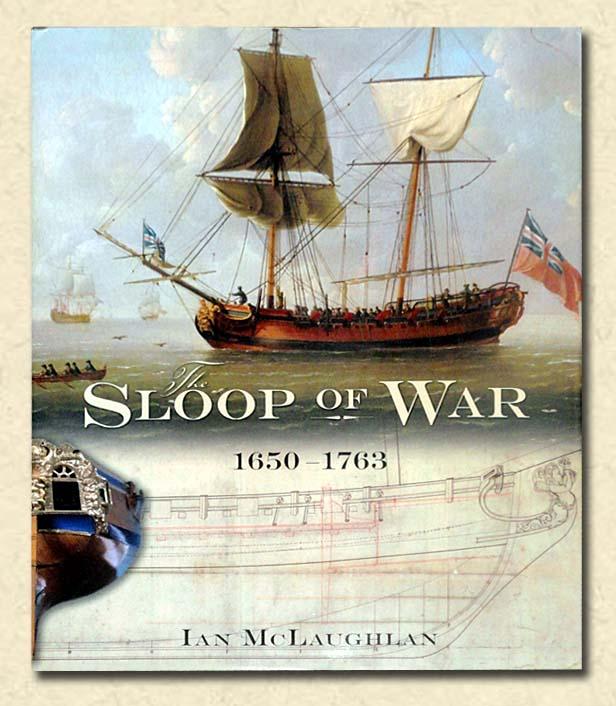
McLaughlan, Ian
The Sloop of War 1650-1763
Seaforth Publishing/Pen & Sword Books Ltd., Barnsley South Yorkshire UK, 2014.
Square quarto; hardcover, with gilt spine titles; 288pp., with many monochrome illustrations. Mild wear; a little shaken; spine extremities lightly softened. Dustwrapper a little rubbed (now professionally protected by superior non-adhesive polypropylene film). Very good. This is the first study in depth of the Royal Navy's vital, but largely ignored small craft. In the age of sail they were built in huge numbers and in far greater variety than the more regulated major warships, so they present a particular challenge to any historian attempting a coherent design history. However, this book charts the development of the ancillary types, variously described in the 17th century as sloops, ketches, brigantines, advice boats and even yachts, as they coalesce into the single 18th-century category of Sloop of War. In this era they were generally two-masted, although they set a bewildering variety of sail plans from them. The author traces their origins to open boats, like those carried by Basque whalers, shows how developments in Europe influenced English craft, and homes in on the relationship between rigs, hull-form and the duties they were designed to undertake. Visual documentation is scanty, but this book draws together a unique collection of rare images, coupled with the author's own reconstructions in line drawings and watercolour sketches to provide the most convincing depictions of the appearance of these vessels.
Click here to order

$55
92239
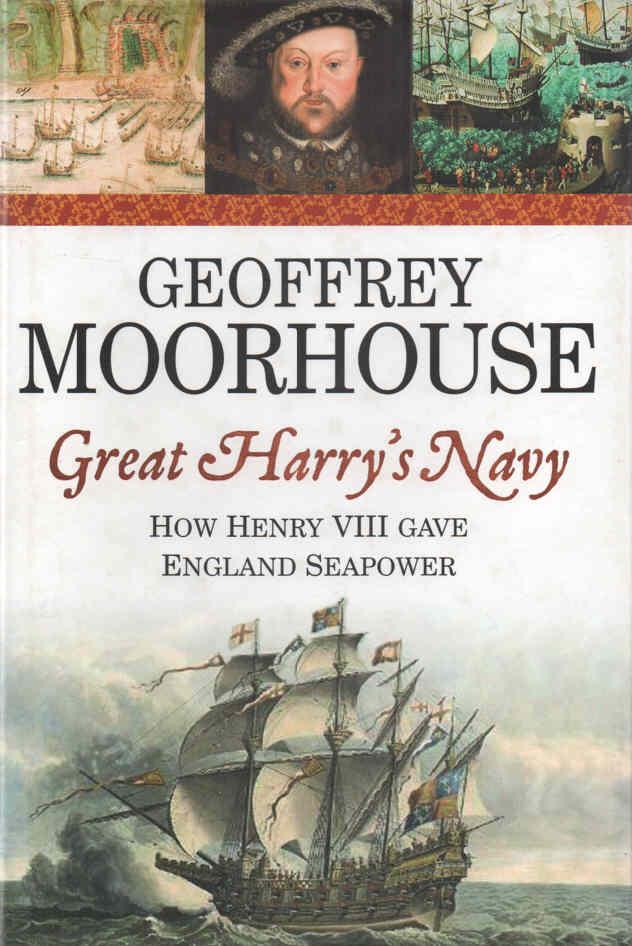
Moorhouse, Geoffrey
Great Harry 's Navy How Henry VIII Gave England Seapower
Wiedenfeld & Nicolson/The Orion Publishing Group, London, 2005.
Octavo; hardcover, with gilt spine-titles and speckled endpapers; 372pp., with maps and 16pp. of monochrome and full-colour plates. Minor wear; remainder mark on the text block lower edge; spotting to the text block top edge. Dustwrapper well rubbed. Very good to near fine. It was Henry VIII who began the process of making England a first-rate sea-power. He inherited no more than seven warships from Henry VII, yet at his own death the King's Navy had 53 seaworthy ships afloat (much the same size as the Royal Navy today) manned by almost 8,000 sailors. Henry VIII originally needed a navy to hold the English Channel and blockade the enemy while he invaded France. Later when invasion from the continent grew serious Henry's navy fought in many actions. Moorhouse doesn't only deal with seagoing exploits. Thanks to Henry VIII dockyards were built (Greenwich and Deptford), timber had to be felled in quantities previously unknown (from land seized during the dissolution of the monasteries), and hemp (for rope) was harvested; new skills were developed, not least the gun-founders and the master shipwrights.
Click here to order

$22
87217
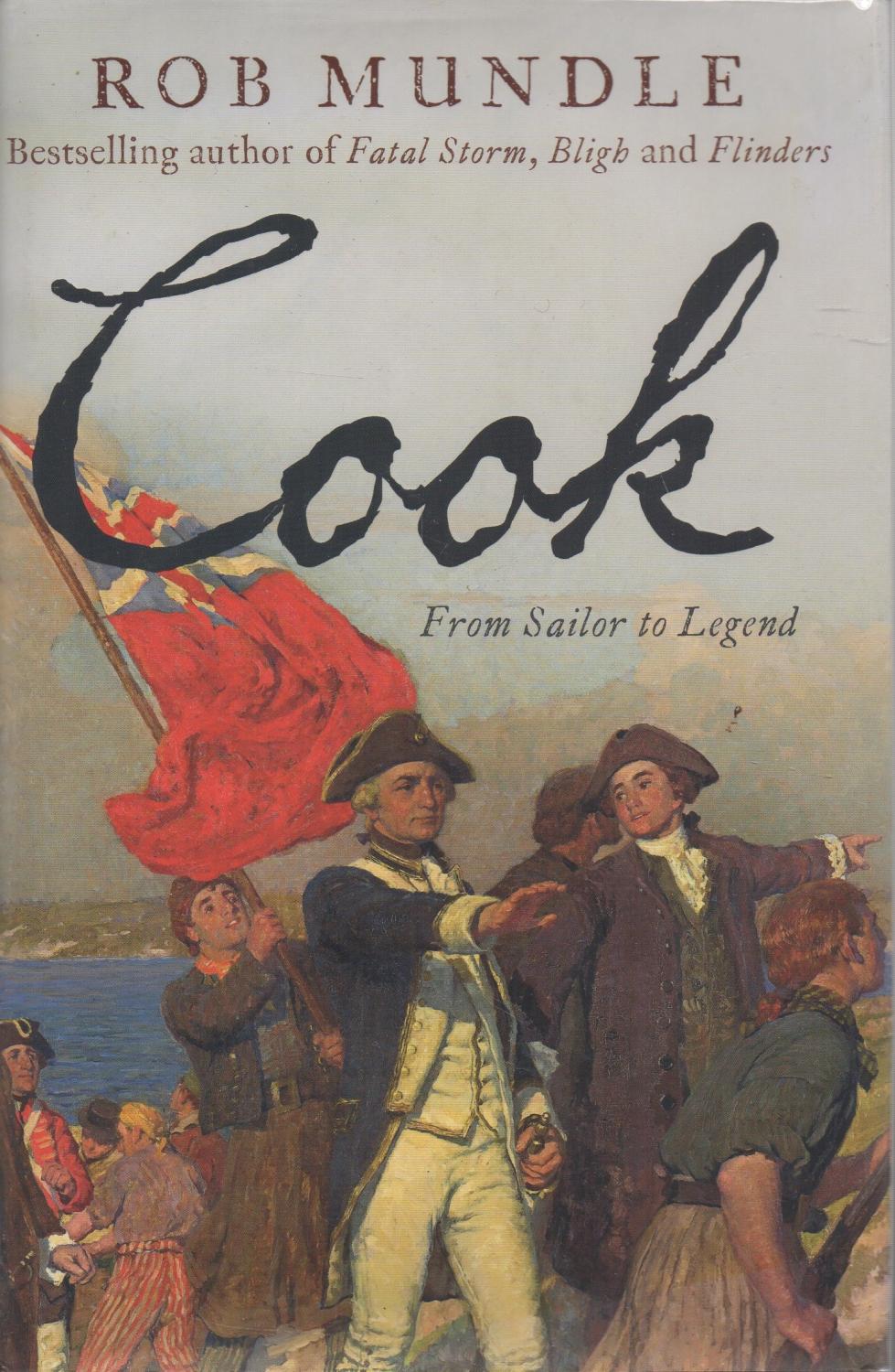
Mundle, Rob
Cook From Sailor to Legend
ABC Books/HarperCollins Publishers Aust. Pty. Ltd., Sydney NSW, 2013.
First edition. Hardcover, octavo; white decorated boards with black upper board and spine tiling, red endpapers; 469pp., colour plates; glossary, sources, acknowledgements and index. Minor wear; toned text block edges with small scrape on side edge; one or two small marks on rear dustwrapper panel. Very good with wrapper now professionally protected by superior non-adhesive polypropylene film. Captain James Cook is one of the greatest maritime explorers of all time -- only the acclaimed fifteenth-century explorers, Christopher Columbus and Vasco da Gama, can stand with him. Bestselling author of "Fatal Storm", "Bligh" and "Flinders", Rob Mundle explores the life and travels of James Cook in a major new biography for lovers of adventure and the romance of sail. Over three remarkable voyages of discovery into the Pacific in the latter part of the eighteenth century, Cook unravelled the centuries-old mystery surrounding the existence of the great south land, Terra Australis Incognita; became the first explorer to circumnavigate New Zealand and prove it comprised two main islands; discovered the Hawaiian Islands; and much more. Cook was a man who pursued a teenager's dream that evolved from a chance encounter in a small seafront village on the east coast of England. It was a dream that became a reality and transported him to legendary status among all who mapped the world, on land and sea. Through the combination of hard-won skills as a seafarer, the talents of a self-taught navigator and surveyor, and an exceptional ability to lead and care for his men, Cook contributed to changing the shape of the world map more than anyone else.
Click here to order

$25
62706
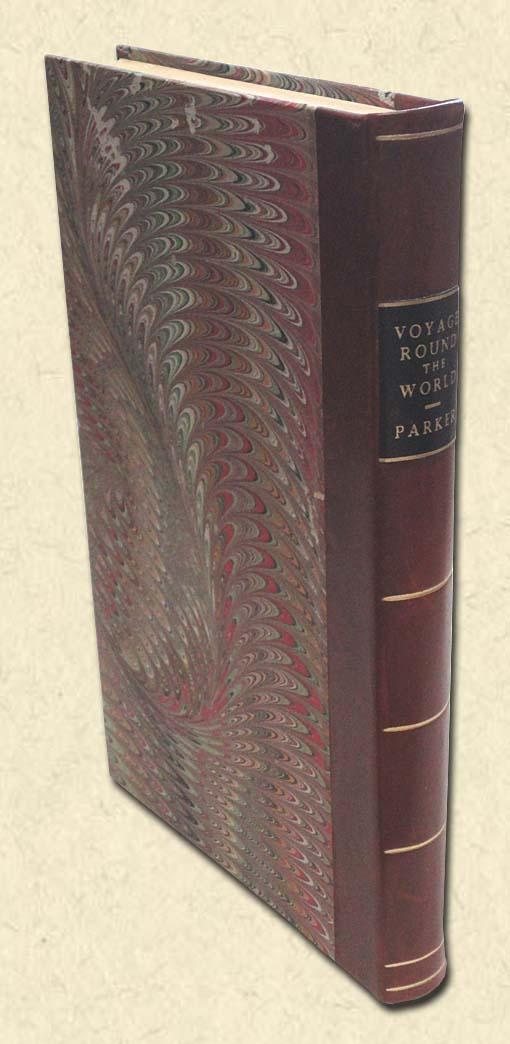
Parker, Mary Ann
A Voyage Round the World
Hordern House, Potts Point, 1991.
Hardcover facsimile of the 1795 edition. Limited edition of 750, hand bound in half maroon Scottish calf with marbled papered sides, octavo, 149pp., and dedicated to Diana, Princess of Wales; this the first of the Australian National Maritime Museum's Historical Facsimile Series. Marbled boards with insect damage along front side and top edge with less pronounced wear in small spots on rear board. Text block edges lightly toned and faintly spotted on upper edge. Printed on Ivory Kilmory Text. Very good to near fine. No slipcase. Three years after the landing of the First Fleet at Sydney Cove, Mary Ann Parker became Australia's first tourist. Her journal of the voyage out and back, 'A Voyage Around the World in the Gorgon Man of War', is the first account of the new colony to be published by a woman. Mary Ann Parker made the voyage for her own interest and her husband's company. Her account provides important insight into the life and interests of a woman undertaking what was then the longest and most dangerous voyage on earth.
Click here to order

$75
208448
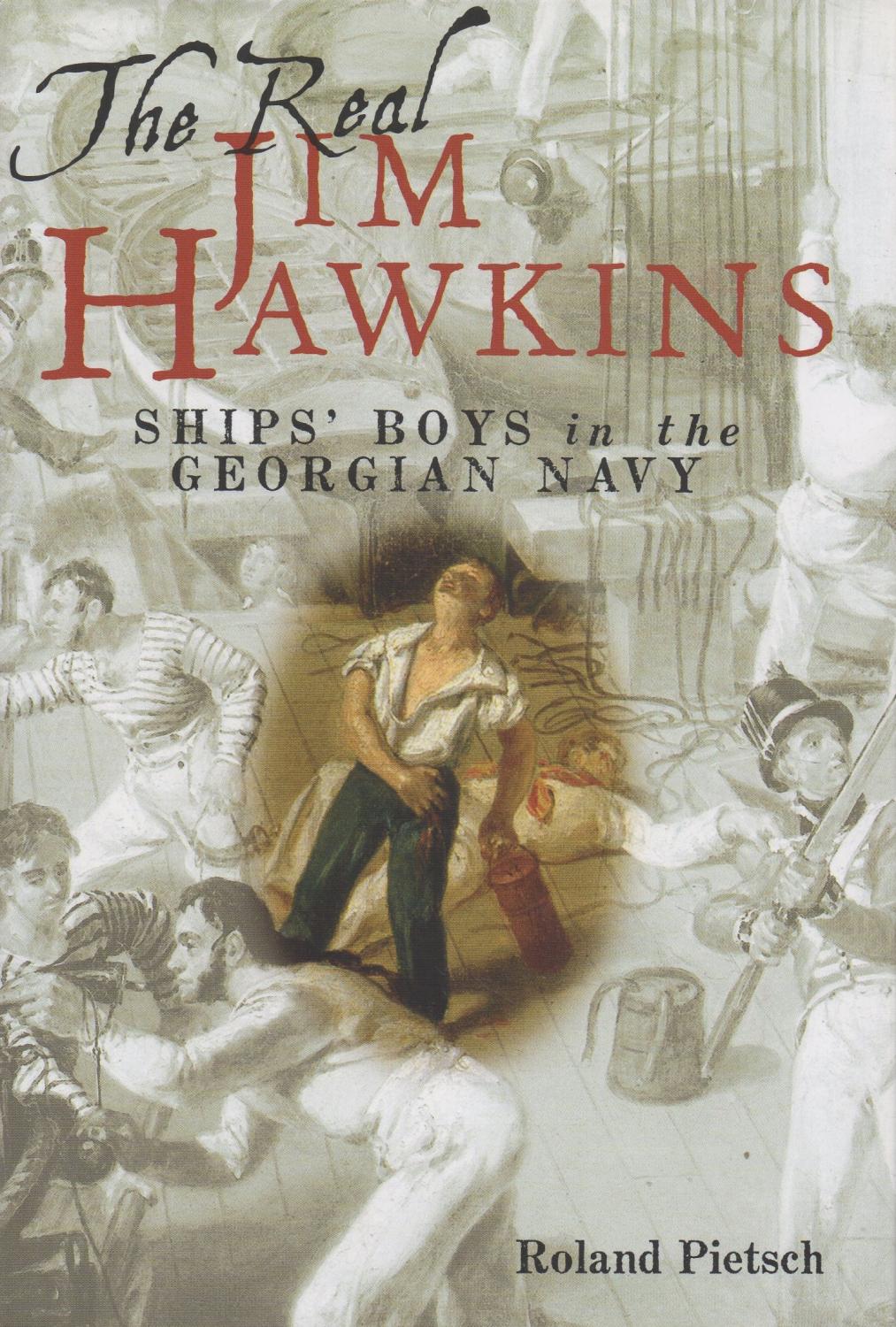
Pietsch, Roland
The Real Jim Hawkins: Ships' Boys in the Georgian Navy
Seaforth Publishing, Barnsley, 2010.
First edition. Octavo hardcover; red boards with gilt spine titling; 240pp., b&w illustrations. Very minor wear only; near fine in like dustwrapper. Generations of readers have enjoyed the adventures of Jim Hawkins, the young protagonist and narrator in Robert Louis Stevenson's Treasure Island, but little is known of the real Jim Hawkins and the thousands of poor boys who went to sea in the eighteenth century to man the ships of the Royal Navy. This work is a study of the origins, life and culture of the boys of the Georgian navy, not of the upper-class children training to become officers, but of the orphaned, delinquent or just plain adventurous youths whose prospects on land were bleak and miserable. Many had no adult at all taking care of them; others were failed apprentices; many were troublesome youths for whom communities could not provide so that the Navy represented a form of floating workhouse. Some, with restless and roving minds, like Defoe's Robinson Crusoe, saw deep sea life as one of adventure, interspersed with raucous periods ashore drinking, singing and womanizing. The author explains how they were recruited; describes the distinctive subculture of the young sailor the dress, hair, tattoos and language and their life and training as servants of captains and officers. More than 5,000 boys were recruited during the Seven Years War alone and without them the Royal Navy could not have fought its wars. This is a fascinating tribute to a forgotten band of sailors.
Click here to order

$28
71921
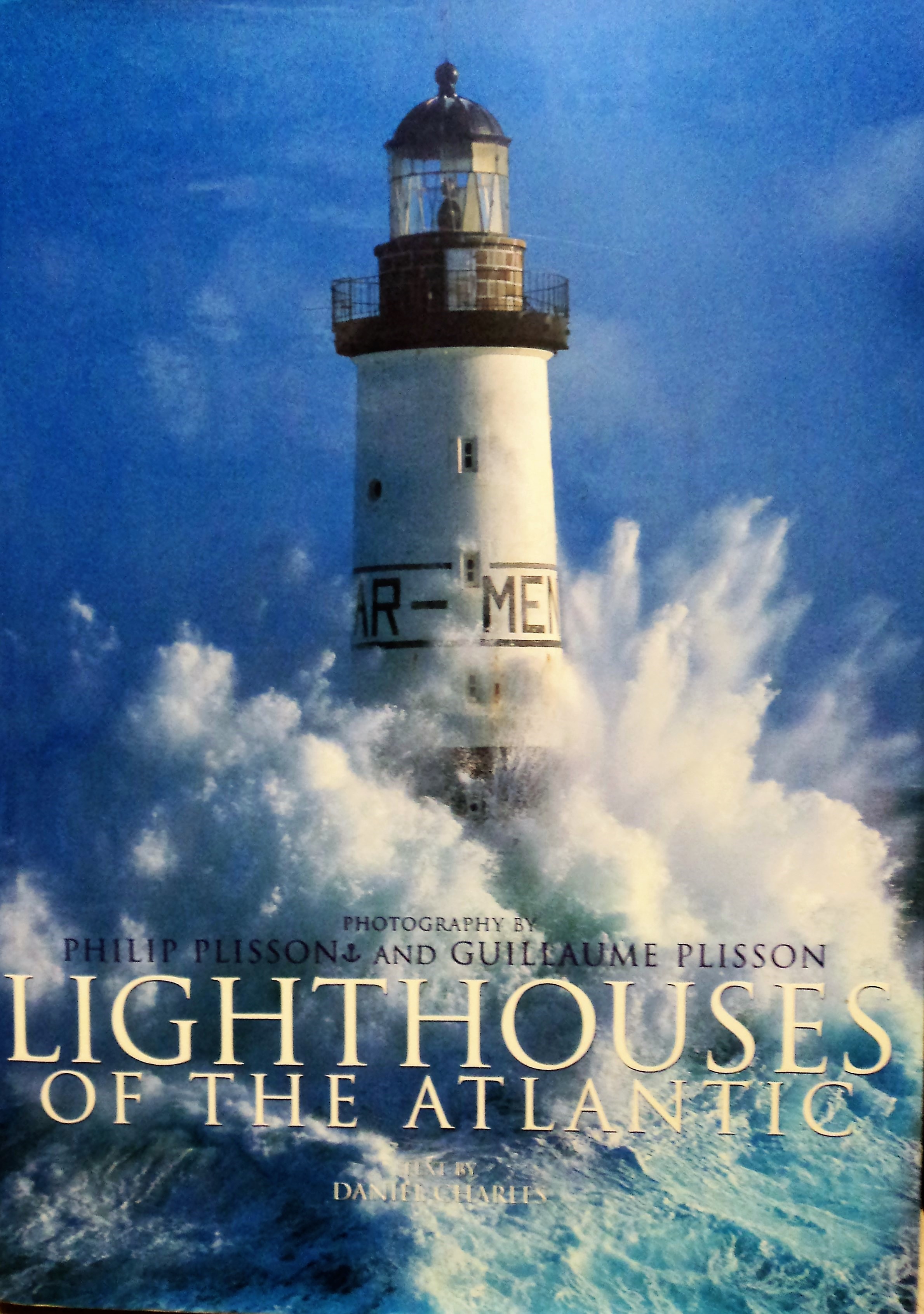
Plisson, Philip & Guillaume Plisson & Daniel Charles
Lighthouses of the Atlantic
Cassell & Co, London, 2000.
Quarto hardcover; black boards with blind-stamped spine titling, illustrated endpapers; 239pp., colour illustrations. Minor wear, mild rubbing to board edges; Illustrated dustwrapper with slight wear to edges and corners; now professionally protected by superior non-adhesive polypropylene film. Very good. Lighthouses exert a special fascination: to mariners they are a constant reminder of the perils of the sea; for the rest of us they are places of romantic isolation. This comprehensive study traces the history and development of the lighthouse from the birth in Alexandria and relates the fascinating myths and legends surrounding them. For each of the six geographical regions covered, the author recreates the history of 231 lighthouses and beacons, and explores the maritime activities of which they were the focus.
Click here to order

$60
79783
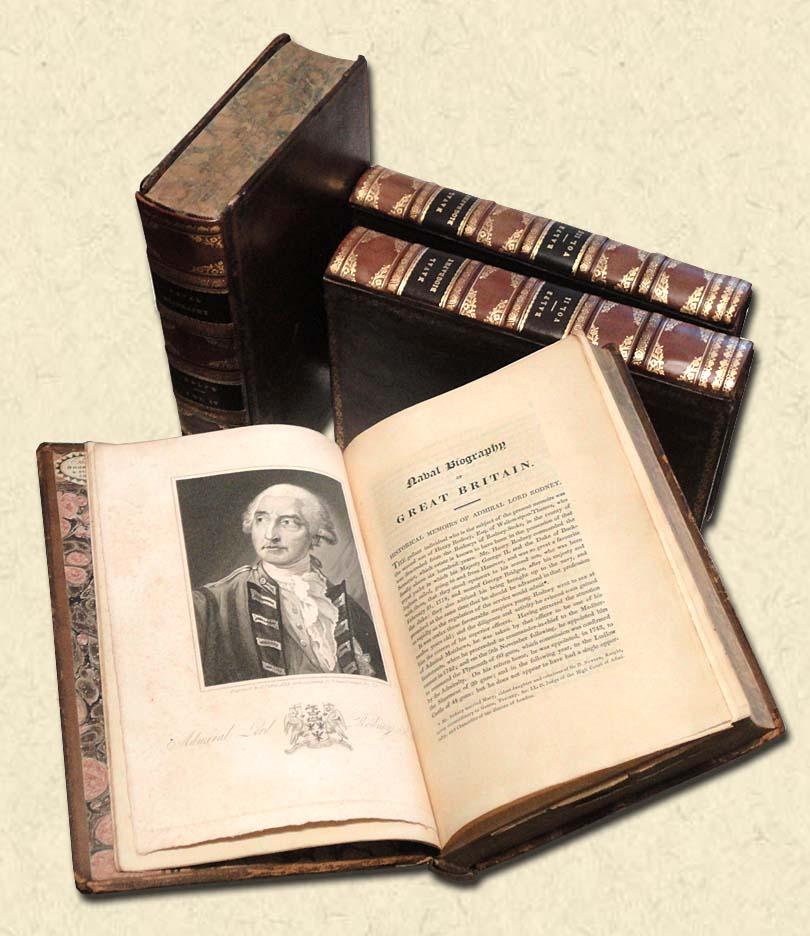
Ralfe, J.
The Naval Biography of Great Britain - in Four Volumes Consisting of Historical Memoirs of Those Officers of the British Navy Who Distinguished Themselves during the Reign of His Majesty George III
Whitmore & Fenn, London, 1828.
Four volumes quarto; full calf, with raised bands and gilt spine titles and decorations in compartments, gilt board decorations and marbled endpapers; 1,917pp. [vipp. + 428pp. + 528pp. + 400pp. + 542pp. + xiiipp.], with marbled edges and wide margins, two engraved frontispieces and 11 plates likewise, 8 folding. Rebacked: A and A2 signatures are missing; boards lightly scuffed and edges mildly cracked; text offset; mild scattered foxing throughout; previous owner's contemporary ink inscriptions on all title pages; retailer's bookplate on the front pastedown of Volume I; a small hole in the front free endpaper of Volume III. Withal, a very good set. Printed for a subscription list, as was the nature of these types of publications, this set of splendidly-bound volumes contains potted histories of all the leading ship's captains and naval officers serving under King George III and IV, with specific details of their engagements during the wars that buffeted those reigns. A wonderful feature of these books are the folding charts that outline various tactical confrontations which highlighted the careers of some of these officers. The volumes have all been sympathetically re-backed in order to restore them to their original lustre, meaning that their task as a pleasing shelf adornment for a private study - not to mention as the guardians of the information which they contain - is assured into the future.
Click here to order

$1300
208456
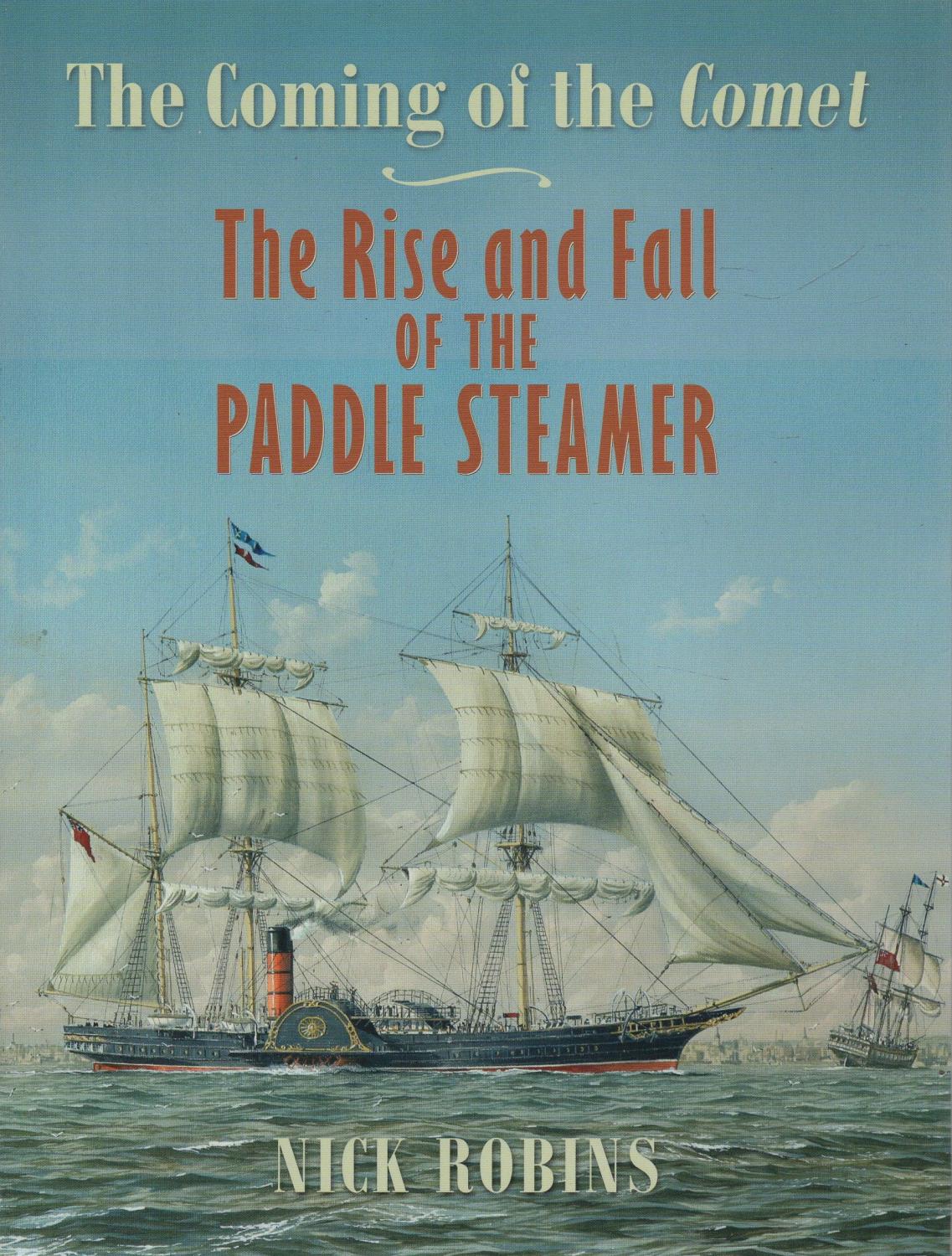
Robins, Nick
The Coming of the Comet: The Rise and Fall of the Paddle Steamer
Seaforth, Barnsley, 2012.
First edition. Quarto hardcover; red boards with gilt spine titling, illustrated endpapers; 186pp., b&w illustrations. Minor wear only; near fine in like dustwrapper. Robert Fulton commissioned his Steam Boat on the Hudson River at New York in September 1807, and Henry Bell had Comet running on the Clyde in Scotland in August 1812. More than two hundred years on the paddle steamer is a maritime curiosity with enthusiast groups keen on preserving those few steamers that remain. Fulton and Bell led the world towards steam navigation, as wooden-hulled paddle steamers soon crossed the Atlantic and in due course also the Pacific. The paddle steamer provided the opportunity for commerce and trade following the Industrial Revolution, but in those early days it was generally the merchants who took the profit, not the shipowner. Paddle steamers and sternwheel river steamers were also critical to the development of the western states of the USA and developing the cotton exports from the Mississippi and Ohio catchments. This is the story of the evolution of the paddle steamer, merchant and military, the naval architects who designed the steamers, the men who operated them, the machinery with which they had to cope, the social aspects of the paddle steamer and even the economics of its operation.
Click here to order

$30
204763
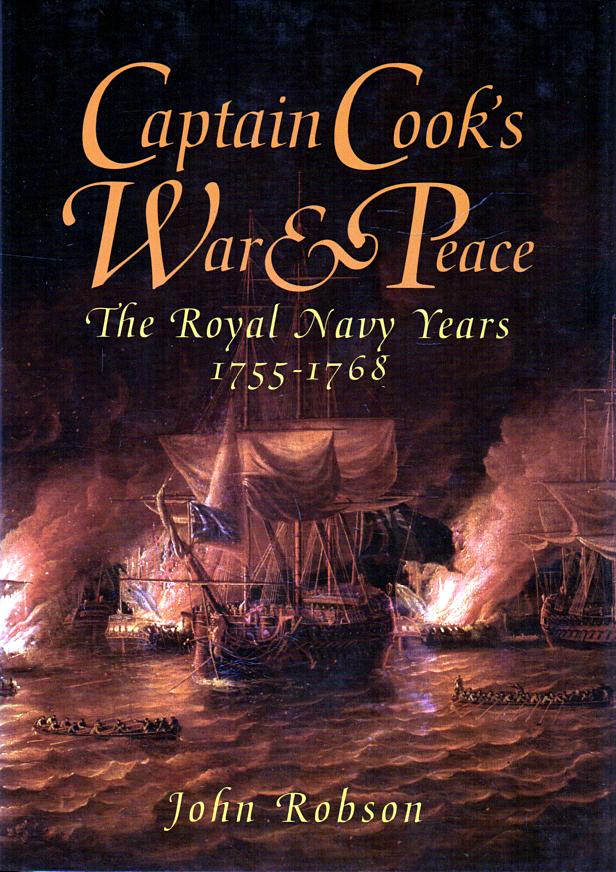
Robson, John
Captain Cook's War & Peace The Royal Navy Years, 1755-1768
Naval Institute Press, Annapolis MD, 2009.
Octavo; hardcover, with gilt spine titles; 216pp., with maps, many monochrome illustrations and 12pp. of colour and monochrome plates. Dustwrapper. Remainder. New. The author of two critically acclaimed books on Captain Cook, John Robson has now turned his attention to the decade leading up to Cook's famous 1768 expedition to the Pacific. This new book investigates why Cook was chosen to captain Endeavour and how he became uniquely qualified for the exacting tasks of exploration. Displaying much new research, it examines Cook's remarkable seamanship qualities and his surveying, astronomical, and cartographic skills, as well as his actions at the siege of Quebec.
Click here to order

$23
65145
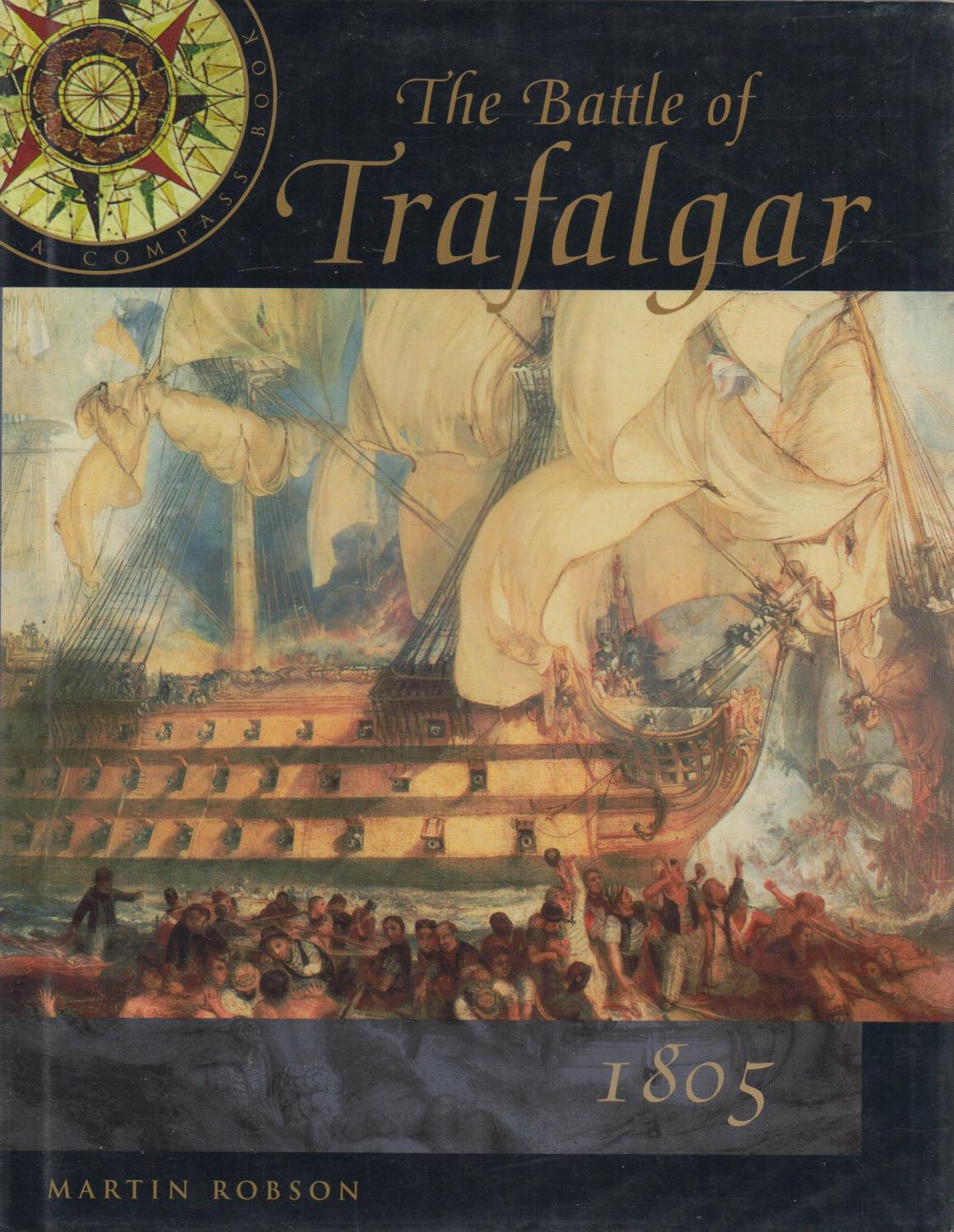
Robson, Martin
The Battle of Trafalgar 1805
Conway Maritime Press, London, 2005.
Small quarto hardcover; black boards with gilt spine titling, brown endpapers; 176pp., monochrome illustrations. Minor wear; near fine on like dustwrapper now professionally protected by superior non-adhesive polypropylene film. The battle of Trafalgar is rightly famous for being the most tactically decisive naval battle fought during the age of sail, as Nelson, on board his flagship HMS Victory, gained a crushing victory over his opponents. But it was tinged with tragedy as Nelson, 'Britainnia's Sea King' was struck down in the moment of ultimate triumph. This study examines the battle from a balanced perspective, interweaving eyewitness accounts and documentary evidence with a flowing narrative which takes the reader to the heart of the battle and the true conditions of naval warfare.
Click here to order

$22
40255
Spate, O.H.K.
The Spanish Lake - signed, limited edition The Pacific since Magellan, Volume 1
Australian National University, Canberra ACT, 1979.
Octavo; hardcover, with decorated boards and a black ribbon; 372pp., with many monochrome illustrations. Mild wear. Near fine in scuffed slipcase with worn and frayed edges. Strictly speaking, there was no such thing as the Pacific until in 1520-1 Fernao de Magalhais, better known as Magellan, traversed the huge expanse of waters, which then received its name. With these opening words, Oskar Spate launches his account of the process by which the greatest blank on the map became a focus of global relations. The Spanish Lake describes the essentially European and American achievement of turning this emptiness into a nexus of economic and military power. This work is a history of the Pacific, the ocean that became a theatre of power and conflict shaped by the politics of Europe and the economic background of Spanish America. There could only be a concept of the Pacific once the limits and lineaments of the ocean were set and this was undeniably the work of Europeans. Fifty years after the Conquista, Nueva Espana and Peru were the bases from which the ocean was turned into virtually a Spanish lake. This is number 212 of only 500 signed copies.
Click here to order

$150
87369
Vale, Brian
Cochrane in the Pacific Fortune and Freedom in Spanish America
I.B. Tauris, London, 2008.
Octavo hardcover; dustwrapper; 238pp., monochrome illustrations. Remainder. New. In 1818, the revolutionary government of Chile was poised to attack Peru, the last bastion of Spanish power on the continent. The new ruler, the half-Irish Bernardo O'Higgins, threw his energies into creating a navy. Short of local naval manpower, the Chileans looked to Britain and the United States for the sailors needed to man and command their squadrons, many of them unemployed veterans of the Royal Navy. And, to be the new navy's commander-in-chief, they recruited one of the most fearless and controversial officers of the age: Thomas, Lord Cochrane. The story of the naval war in the Pacific is an exciting one. Under Cochrane's audacious leadership, coasts were blockaded, fortresses stormed and ships seized in bloody hand-to-hand fighting. The result was that Chile and Peru gained their freedom from Spain, while Cochrane enhanced his reputation and made a fortune in pay and prize money. For one hundred and fifty years, the accepted story of the war has been based on Cochrane's own version of events. But how accurate is Cochrane's account? To find out, Brian Vale goes back to the original documents, despatches, diaries and newspapers. The result is a new and vivid account of the war in the Pacific and a reassessment of one of Britain's legendary naval heroes seen at the peak of his career.
Click here to order

$25
96313
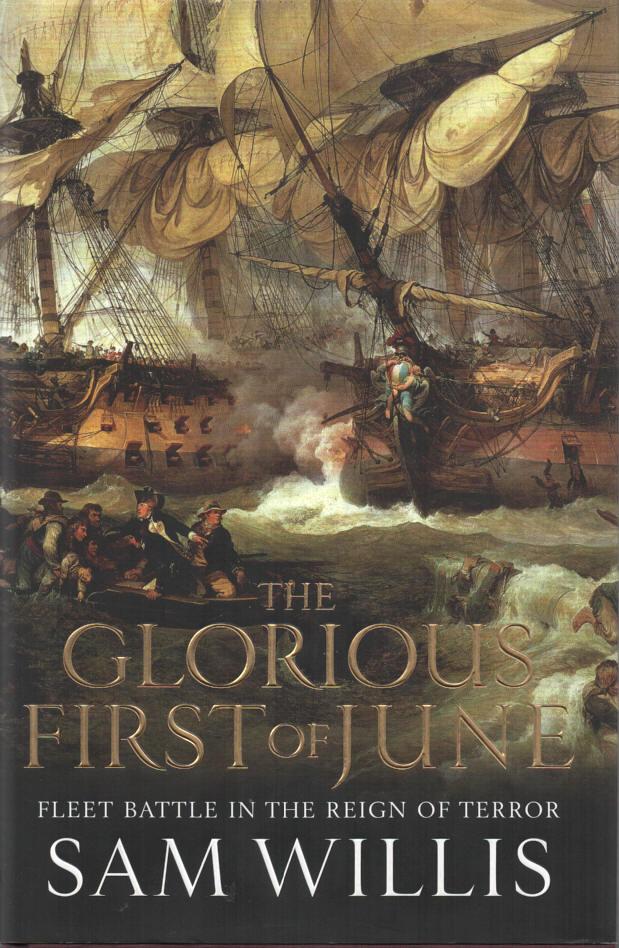
Willis, Sam
The Glorious First of June Fleet Battle in the Reign of Terror
Quercus, London, 2011.
Octavo; hardcover, with gilt spine titles; 434pp., with many monochrome illustrations and 16pp. of full-colour plates. Minor wear; text block top edge lightly toned. Dustwrapper lightly edgeworn. Very good to near fine. France, early summer, 1794. The French Revolution is in the grip of the Terror. While the guillotine relentlessly takes the heads of innocents, two vast French and British fleets meet in the mid-Atlantic. The French, in ships painted blood-red and bearing banners proclaiming 'La Republique ou la Mort!' are escorting an American grain convoy to Brest to feed their starving countrymen; the British, under the command of Lord Howe, a radical innovator and tactical genius, are bent on destroying it. The ensuing clash would swiftly become known as the hardest fought battle of its era.
Click here to order

$28
82794
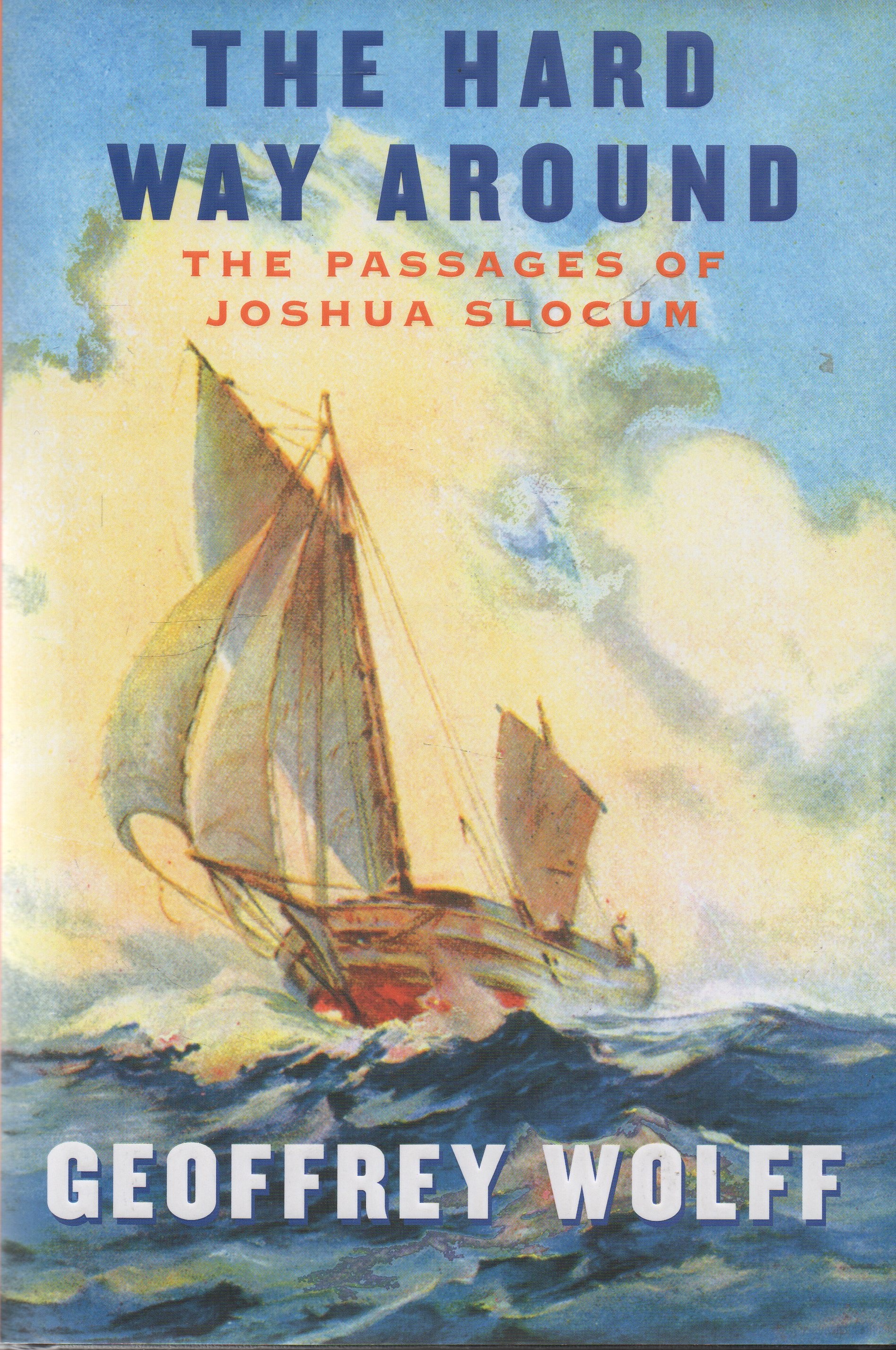
Wolff, Geoffrey
The Hard Way Around: signed copy The Passages of Joshua Slocum
Alfred Knopf, New York, 2010.
First edition. Hardcover, octavo, 218pp. Dustwrapper. Remainder. New. Small stain on front endpaper. Signed in ink on title page. Born in 1860, Joshua Slocum signed aboard a boat headed from his Nova Scotia home to Dublin and became dedicated to the sea for the rest of his life. Rising from the lowest of the low on board ship, he eventually commanded eight vessels, owning four of them outright, and travelled the world with his wife, whom he met and married in Australia, along with the children they raised at sea. But all was not bliss in this maritime idyll: cyclones, pirates, cholera and shipwrecks took their toll and, in 1895, bereft of nearly all that he had attained, he set off solo around the world, becoming the first person to do so, a feat not matched until 1925. After publishing his memoirs and rubbing elbows with President Theodore Roosevelt, scandal overcame him and, facing financial ruin, he set off into the wild blue, never to be heard of again. This full-speed-ahead biography is outlined in masterful fashion by Geoffrey Wolff, who absolutely captures the derring-do of this intrepid, uncompromising mariner.
Click here to order

$25