lamdha books -
Catalogue of books on photography

Click on the small images at right to see a larger picture

88248
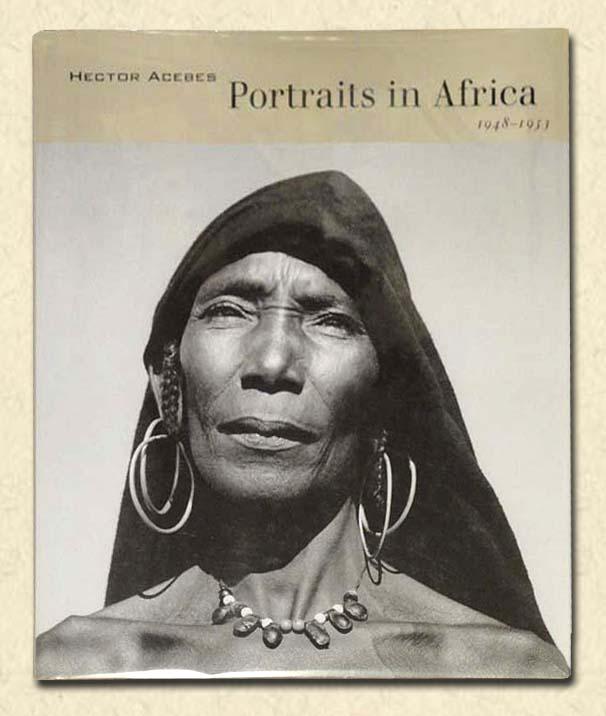
Acebes, Hector & Isolde Brielmaier and Ed Marquand
Hector Acebes: Portraits in Africa 1948-1953
Sunbird Publishing, Cape Town South Africa, 2004.
Quarto hardcover; beige cloth boards with black upper board and spine titling, illustrated endpapers; 23pp., and 73 monochrome plates at rear. Mild wear to dustwrapper edges with small chip on head of spine. Near fine and professionally protected by superior non-adhesive polypropylene film. Photographing with the box camera his father had given him, Hector Acebes noticed as a teenager in the 1930s that his pictures of friends and family were consistently sharper and more carefully composed than those taken by his schoolmates. This innate talent, combined with solid training in engineering and an attraction to adventure, eventually grew into a long and productive career as a documentary and industrial filmmaker. It is Acebes's still photographs from his travels in the late 1940s and early 1950s throughout Africa and South American, however, that may become his most important legacy. With the respect they command for the individuals who appeared before his lens., these recently rediscovered images attest to Acebes's photographic gift. They offer a valuable resource for scholars and students of local societies and cultures in Africa and South America, yet their importance reverberates far beyond the classroom. Today, Acebes's images are recognized as fine art - works of beauty and grace that showcase the photographer's technical ability and masterful compositional skills. Even more evident are the confidence and respect he established with his subjects - qualities that shine through to elevate his work beyond the documentary. Acebes's portraits offer our jaded imaginations a fresh look at people, cultures, and experiences that have changed dramatically over the past fifty years. We see individuals, families, and communities set among monumental architecture, busy markets, and broad landscapes, all viewed from the passionate perspective of a young man, curious and captivated by the vigorous energy and beauty of what he saw. This book presents the exquisite work of Hector Acebes for the first time in monograph form. Over ninety striking images are richly reproduced in duotone. Ed Marquand, director of the Hector Acebes Archive, introduces Acebes in a brief biography. Isolde Brielmaier, a noted art historian of African photography, places Acebes's African work in the context of other photographers shooting in Africa at the time. She also discusses the qualities of Acebes's work that distinguish his photographs today.
Click here to order

$55
91585
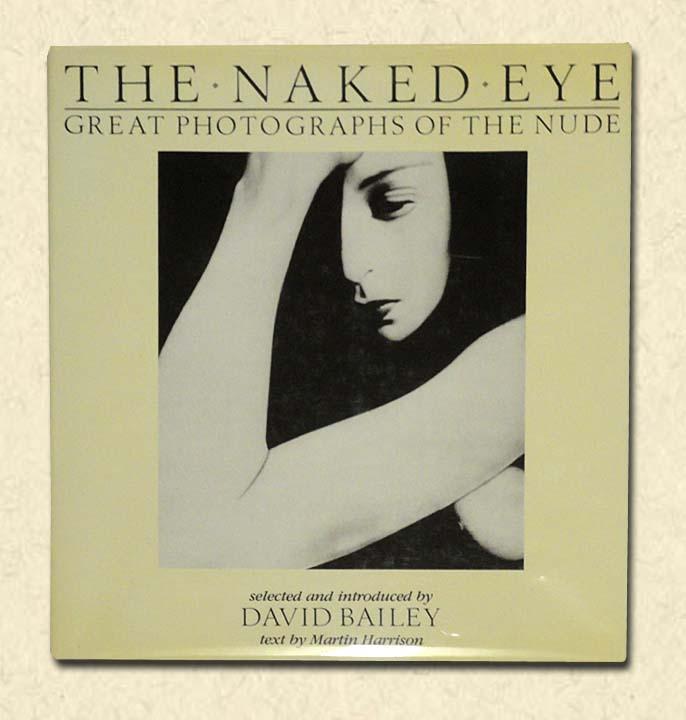
Bailey, David (ed.) & Martin Harrison
The Naked Eye: Great Photographs of the Nude
Amphoto, New York NY, 1987.
Quarto hardcover; black boards with silver gilt spine titling and black endpapers; 192pp., colour and monochrome illustrations. Owner's name. Faint spotting to upper text block edges. Near fine otherwise in like dustwrapper. Profusely illustrated with photographs of male and female nudes by a wide range of photographers including Helmut Newton, Man Ray, Alfred Stieglitz, Bruce Weber, Bill Brandt, and Edward Weston, as well as those of photographers whose work is completely unknown or rarely seen. The book is divided into four sections entitled Early Nudes, Modern Nudes, Eroticism & Glamour, and Nude Narratives.
Click here to order

$40
218009
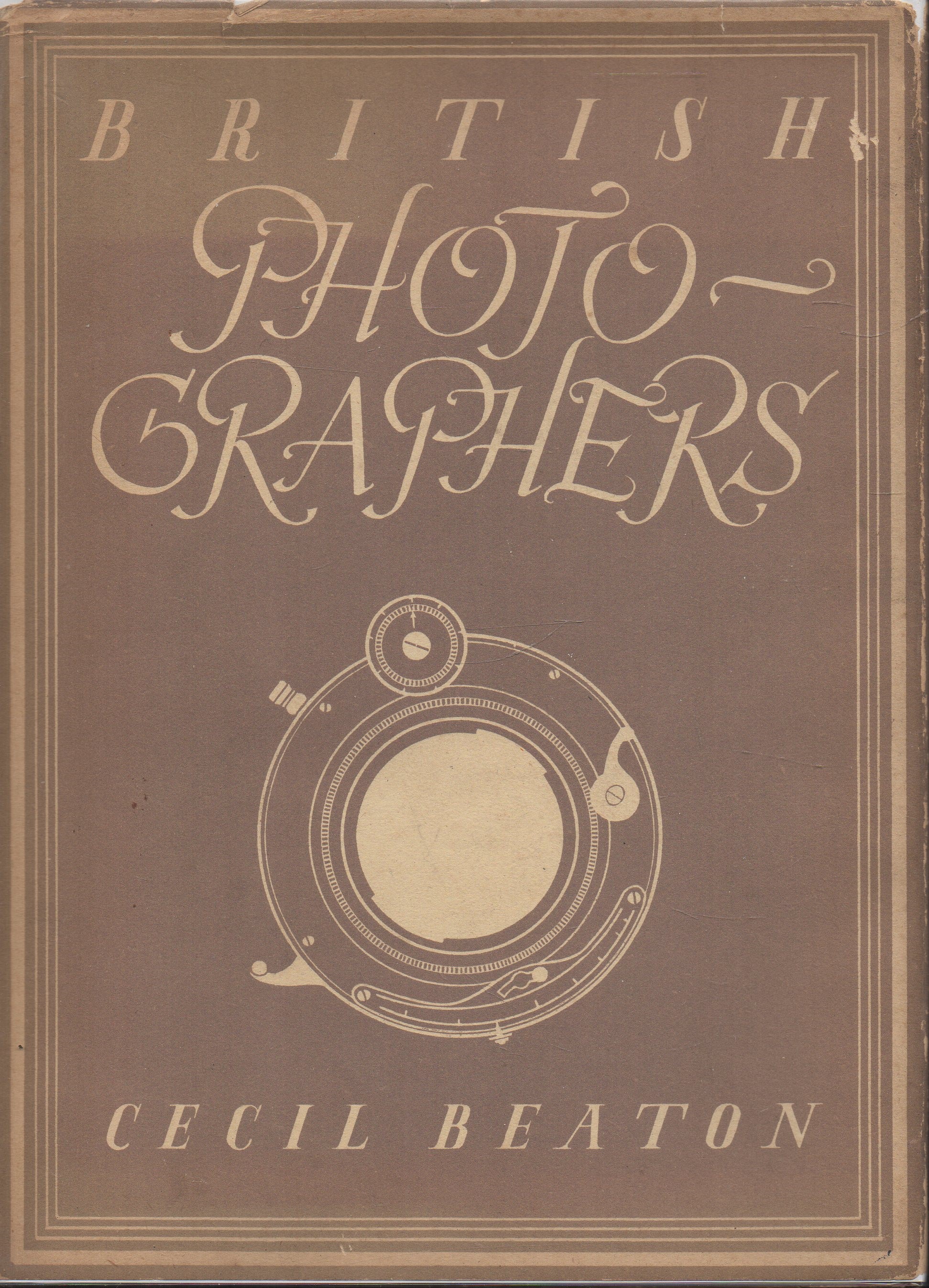
Beaton, Cecil
British Photographers
William Collins, London, 1944.
First edition. Octavo hardcover; brown boards with cream upper board and spine titling, upper board border rules and centre decoration; 47pp., 4 colour, 8 sepia and 20 b&w plates and illustrations. Slightly worn and scraped board edges; browned text block and page edges and one or two spots on endpapers. Rubbed brown dustwrapper with tiny missing segments on spine panel extremities and corners; scraping and tiny tears to edges. Otherwise good to very good. Wrapper now professionally protected by superior non-adhesive polypropylene film.
Click here to order

$22
88636
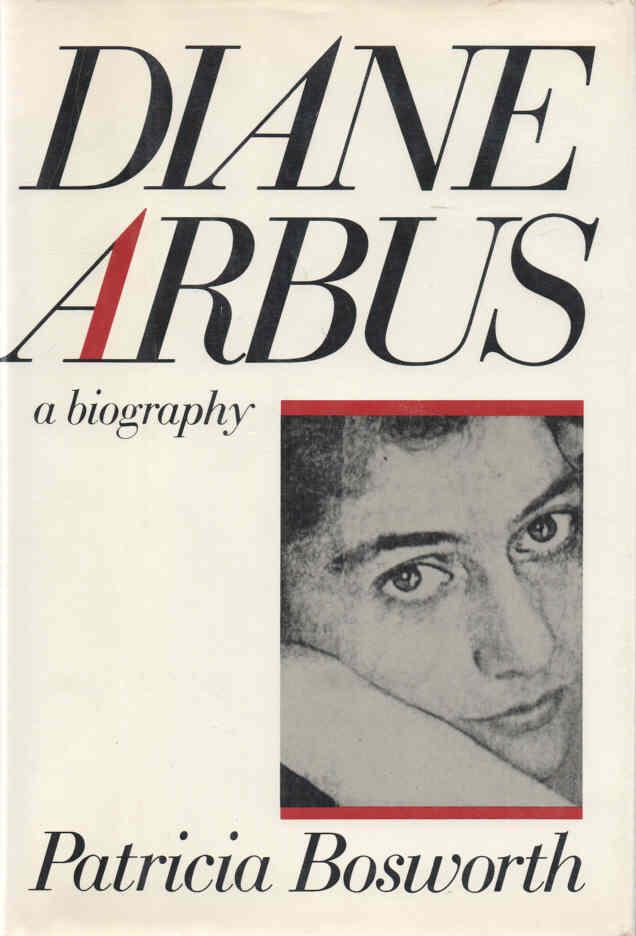
Bosworth, Patricia
Diane Arbus A Biography
Alfred A. Knopf, New York NY, 1984.
First edition: octavo; hardcover, quarter-bound in papered boards, with gilt spine-titling and upper board decoration; 369pp., with 16pp. of monochrome photographic plates. Mild wear; somewhat shaken; some marks to the text block edges. Dustwrapper is well-rubbed with a small chip to the bottom edge of the lower panel; now professionally protected by superior non-adhesive polypropylene film. Very good. Like Frida Kahlo and Georgia O'Keefe, Diane Arbus exerts a fascination rooted in both her art and her life. Her startling photographic images of dwarfs, twins, transvestites, and freaks seemed from the first to redefine both the normal and the abnormal in our lives and they were already becoming part of the iconography of the age when Arbus committed suicide in 1971. Arbus herself remained an enigma until the publication of this first full biography. Patricia Bosworth examines the life behind the eerie, mesmerizing photographs: Diane's pampered childhood; her passionate marriage to Allan Arbus and their work together as fashion photographers during the fifties; the emotional upheaval surrounding the end of that marriage; and the radically dark, liberating, and ultimately tragic turn Diane's art took during the sixties. Bosworth's engrossing book is a compassionate portrait of the woman behind some of the most powerful photographs of our time.
Click here to order

$28
67177
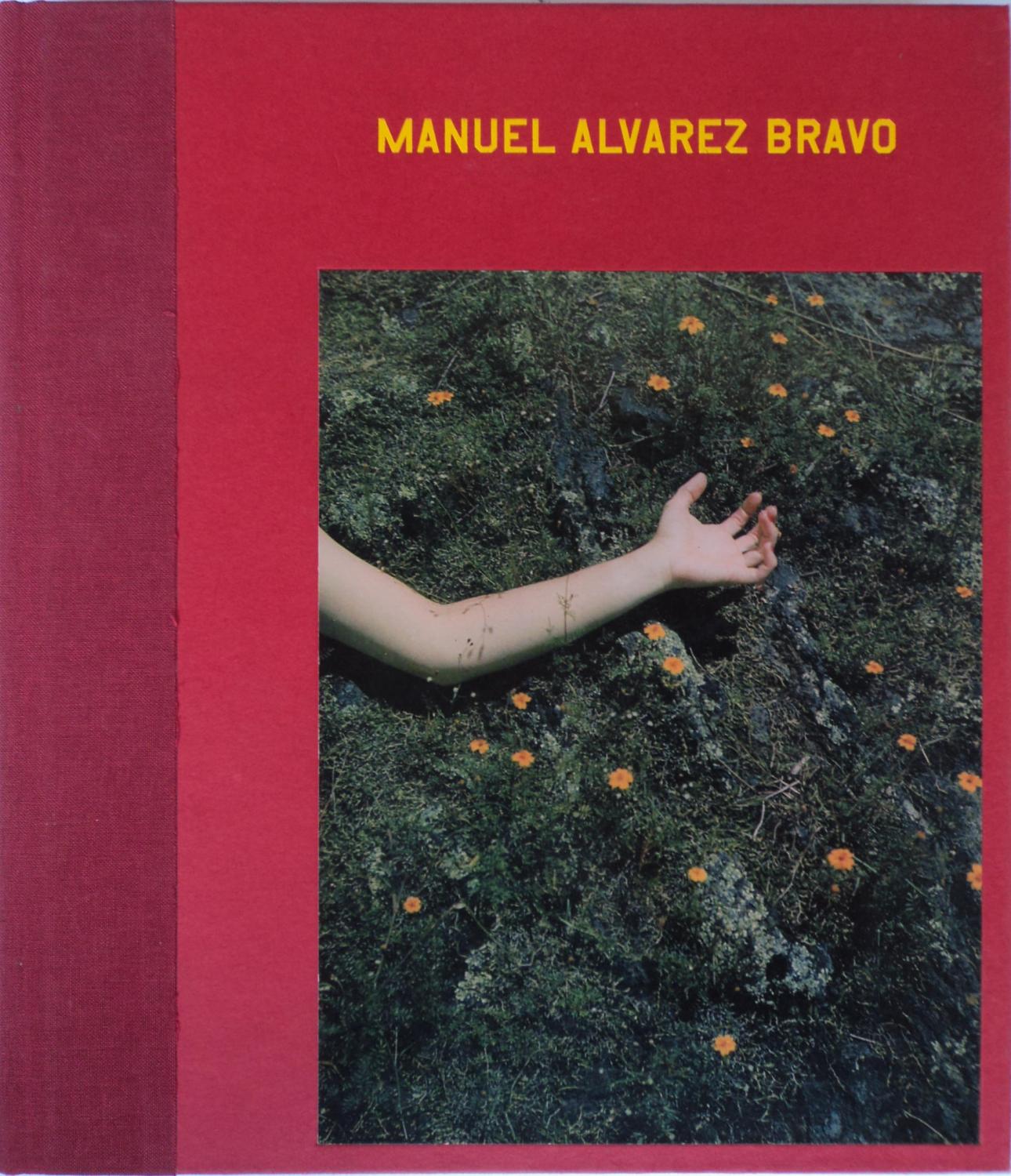
Bravo, Manuel Alvarez
The Eyes in his Eyes
Rose Gallery, New York, 2007.
Quarto; hardcover; illustrated boards; unpaginated (196pp.), with photographic illustrations, colour and monochrome. Remainder. New. Frida Kahlo leans against a concrete wall, looking sombrely down while an ankle-length skirt flutters around her. Elsewhere, the tight screws of plough blades stack interlocked on a warehouse floor, utilitarian subjects coalescing into a heady abstract pattern. From his first days as a photographer - with the backing of such greats as Tina Modotti, Edward Weston, Paul Strand and Henri Cartier-Bresson - Manuel Alvarez Bravo worked over a wide range of styles and subject matter - formalist abstraction, architecture, interiors, landscapes, still lifes, and portraits - with a consistent focus on the landscape and social geography of Mexico. In his concise vision of his homeland, it was both a real and symbolic landscape populated with subjects detained in dream world tableaux of desire, solitude, candour and foreboding. Eyes in His Eyes reintroduces some of the artist's overlooked masterpieces, and reveals, for the first time, a broad selection of never-before-seen images from his private archives. In his 80-year career, Alvarez Bravo printed, published and exhibited only a thousand images. This portfolio, culled with the help of the artist himself, and completed after his death, is full of unfamiliar abstractions, portraits, landscapes and street photography. It provides an invaluable re-entry into the visual poetry of one of Mexico's most gifted artists and a modern master of photography.
Click here to order

$35
97320
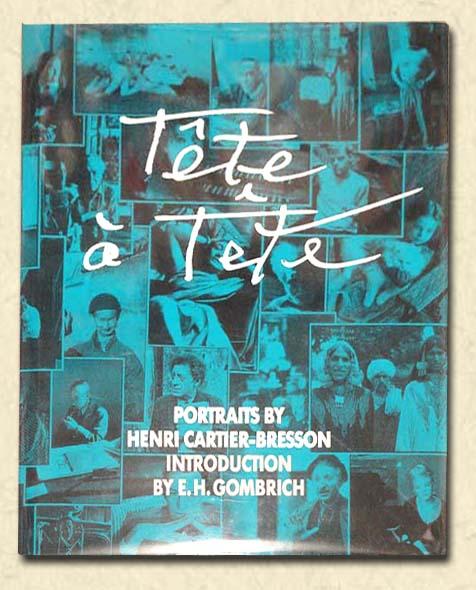
Cartier-Bresson, Henri (Introduction by E.H. Gombrich)
Tete a Tete Portraits by Henri Cartier-Bresson
Little Brown & Co., Boston MA, 1998.
First US edition: hardcover, quarto; blue boards with gray spine titling and gray endpapers; 134 monochrome plates. Minor wear; faint spotting to upper text block edges and small black spot on lower edges. Near fine in like dustwrapper now professionally protected by superior non-adhesive polypropylene film. Over the last seven decades, Henri Cartier-Bresson has photographed both many unnamed, ordinary people and some of the most famous icons of the Twentieth Century. "Tete-a-Tete" is a remarkable selection of Cartier-Bresson's most memorable portraits, juxtaposing his anonymous subjects with such diverse personalities as Robert Kennedy, Marilyn Monroe, Truman Capote, Pablo Picasso, Lucian Freud, William Faulkner, Coco Chanel, Martin Luther King Jr., Che Guevara and the Dalai Lama. A selection of pencil drawings, a self-portrait among them, is also included.
Click here to order

$35
214138
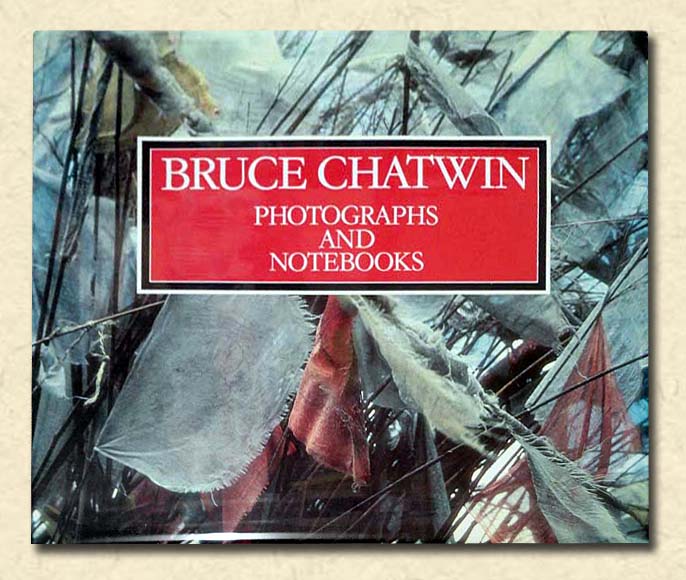
Chatwin, Bruce
Photographs and Notebooks
Jonathan Cape Ltd./Random House, Milson's Point NSW 1993.
First edition. Landscape quarto; hardcover, full cloth with gilt spine-titling and decorated endpapers; 160pp., with maps and many full-colour and monochrome illustrations. Minor wear; some mild rubbing to the boards. Dustwrapper a little rubbed and edgeworn; now professionally protected by superior non-adhesive polypropylene film. Very good to near fine. "The pictures, many in colour, are surprisingly good - simple, direct and graphically striking - and together with the extracts from his travel notebooks, provide, in the words of Francis Wyndham, the book's editor, 'a luminous glimpse of how he saw the world'. Tempting though it is to see this latest Chatwin discovery as yet another media hype (are these really any better than the average holiday snap?) Chatwin had, in fact, acquired a reputation for his 'infallible eye' whilst working as Head of Antiquities and then Impressionist Paintings at Sotheby's in the 1960s. When he gave it all up to travel, he put his 'eye' to good use, firing not only delightfully eccentric descriptive prose, but an undoubtedly imaginative (if not technically brilliant) use of photography. The least interesting images, if informative, are the standard panoramas - an abandoned fort in the Sahel, dwellings in West Africa - but they are also the least characteristic. He naturally leant towards an abstract form of expression, much in the style of his prose, his eye effortlessly drawn to strong colours and natural formations - particularly wood, rock and iron. And he had a particular talent for spotting picture potential in the most unlikely situations - the side of a boat becomes an abstract study in colour, a window a proscenium arch, an array of Nepalese prayer flags could pass for a delicate watercolour, and the cracks and mould that overlay a 19th-century fresco add to its charm. And who would have thought that a pile of painted planks or a mass of corrugated iron had such artistic potential?" (Jane Richards in The Independent).
Click here to order

$35
74921
Claxton, William
Photographic Memory
Powerhouse Books, New York NY, 2002.
Folio hardcover, 153pp., monochrome illustrations. Black boards, no dustwrapper. Minor wear; near fine. 'In the early 1950s, while still in school at UCLA, Claxton began photographing musicians on the flourishing Los Angeles jazz scene. His subsequent history in jazz is well known. While still a student, he founded the record company Pacific Jazz with producer Richard Bock and went on to photograph (and often design) hundreds of album covers. His quintessential images of jazz musicians appeared in scores of magazines and have been shown in galleries and museums around the world. The body of work he created chronicles a whole trajectory of postwar American jazz, from its early years to bebop, West Coast Cool, and the flowering of free-form improvisation. When shooting in Los Angeles and San Francisco, he often photographed his subjects outside, bringing an intimacy to his images that said as much about his friendships with these artists as it did about the California light. He brought this same fresh approach to his photographs of musicians in New York, Chicago, New Orleans, and other cities around the country. Less well known is the fact that throughout his career Claxton has just as assiduously photographed people from all walks of life, both the famous - writers, actors, directors, composers, artists, and fashion designers - and the family and friends to whom he has been closest. Often there has been little distinction between the two. In a sense, he has always been a kind of neighborhood photographer, though later his neighborhood became the world. Many of the photographs shown in the gathering of pictures featured here - whether shot in a recording studio, on a Hollywood sound stage, or in the living rooms of his subjects - were taken within a few miles of Claxton's home at the top of Benedict Canyon above Beverly Hills. A Pasadena kid who went to high school in Glendale, Claxton has been an insider in the world of L.A. art and entertainment for most of his adult life. He has always moved easily between jazz clubs, recording studios, the art scene, film sets, and the homes of the artists who became his friends. Above all, this work is about friendship. ...Style? It's all they've got. And if this book is first and foremost about friendship, it is next about style. Although genuinely too modest to admit it, Claxton is universally considered as gracious, funny, elegant, and stylish a man as you are likely to meet, and with enough charm and wit to have been at home in any Noel Coward play. He has always admired these qualities in others, especially in those who seem to have them effortlessly and in abundance, and it shows in the photographs - in the beauty of Gloria Swanson shopping with Claxton in an antique store, on the set with the eternally hip Steve McQueen, or in the image of a dapper Vincent Price at home with his renowned collection of art' (Garrett White).
Click here to order

$35
89693
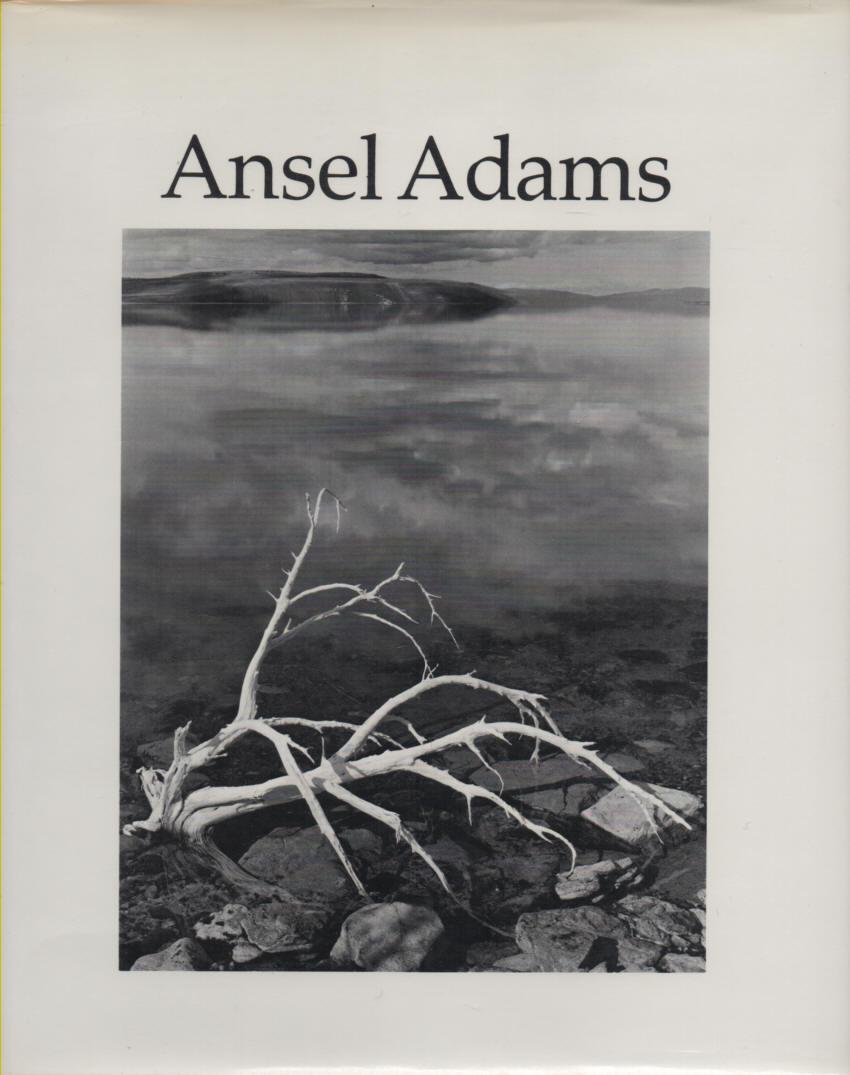
Cock, Liliane de (Foreword by Minor White)
Ansel Adams
New York Graphic Society, Boston MA, 1981.
Square quarto hardcover, unpaginated, 117 duotone plates. Very minor wear only; near fine in slightly yellowed dustwrapper (now professionally protected by superior non-adhesive polypropylene film). "Ansel Adams" edited by Liliane De Cock shows the growth and range of Adams' career across the decades since 1920. Here, little-known images are brought together with many of Adam's most famous pictures to provide a treasure for photographers, collectors, and those who cherish the American scene. Contains 117 of Ansel Adams photos plus chronology and selected bibliography.
Click here to order

$35
93621
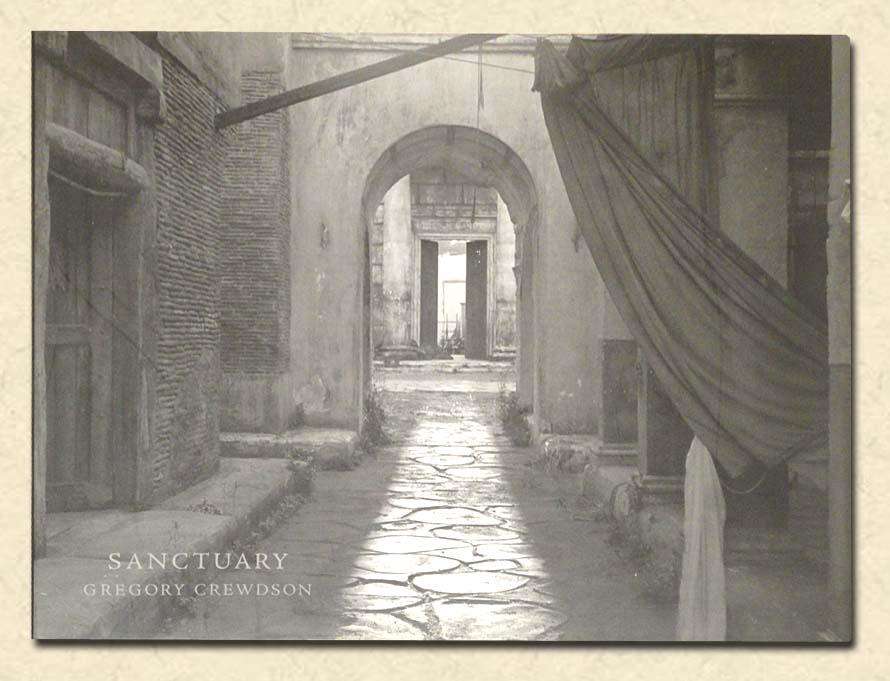
Crewdson, Gregory (Deborah Aaronson, ed.; Essay by A.O. Scott)
Sanctuary
Abrams/Harry N. Abrams Group Inc., New York, 2010.
Landscape folio; hardcover, with blind-stamped spine and upper board title and black endpapers; 96pp. with many monochrome photographic illustrations. Very minor wear. Dustwrapper very lightly rubbed. Near fine. "Known for capturing the alienation and anxiety of small-town America in series such as 'Beneath the Roses', Crewdson photographed 'Sanctuary' at the Cinecitta studios, Rome, producing a body of work outside of the US for the first time. When Crewdson first visited Cinecitta he found the labyrinthine lots of the legendary studio devoid of human presence, in a state suspended between grandeur and ruin. The site was haunted by the architectural ghosts of ancient Rome, historical New York, and medieval Italy, among other settings and places, all remnants of past productions. Abandoned by the actors and crews that brought the sets to life, each building and street was eerily quiet, a network of ephemeral facades and dead ends that was so evocative it scarcely needed the artist's intervention. 'In these pictures', comments Crewdson, 'I draw upon the inherent quietness and uncanny aspects of the empty sets.' Crewdson has in previous series used locations and characters in order to create pictures charged with narrative portent, but for 'Sanctuary' Crewdson decided to make the film sets themselves the subject of the photographs. Despite this change of direction, the artist's vision persists: 'As with much of my work', suggests Crewdson, 'I looked at the blurred lines between reality and fiction, nature and artifice, and beauty and decay.' A photograph might depict what appears to be the corner of a Roman structure, topped by the statue of a proud emperor, and yet a network of scaffolding supports this supposedly timeless ruin. In another picture, a series of large wooden buildings stretches across the horizon like the background to a cartoon western, yet they are all marked by gaping holes, as if an entire townscape were about to collapse. Nature seems to overcome the sets in some pictures, with trees, vines and weeds engulfing the majestic vistas and brittle buildings. The cool monochrome and intimate scale of the prints lend the pictures an ageless and elegiac intensity, and yet in these empty studio lots Crewdson has found a poignant symbol of our persistent longing for permanence." - White Cube
Click here to order

$40
87631
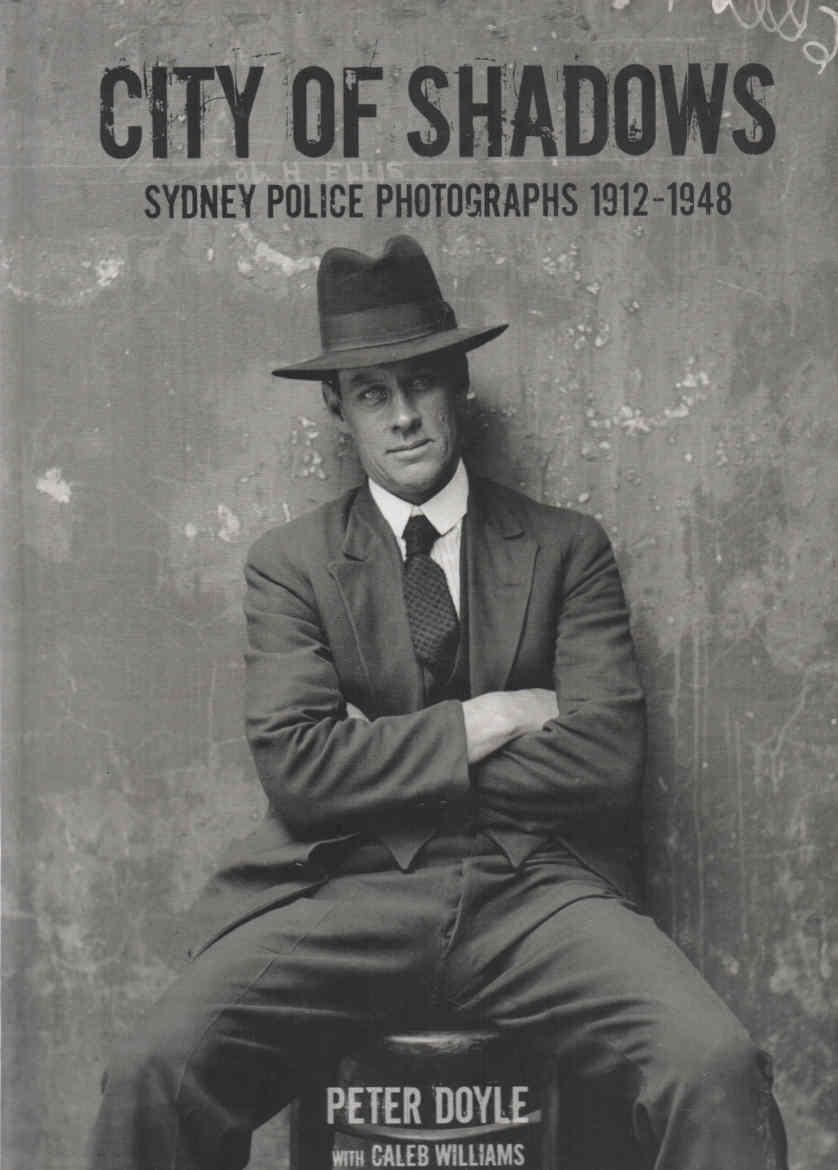
Doyle, Peter, with Caleb Williams
City of Shadows: Sydney Police Photographs 1912-1948: signed copy (Doyle)
Historic Houses Trust, Sydney NSW, 2006.
Reprint. Quarto hardcover, illustrated boards and endpapers; 239pp., monochrome illustrations. Minor wear; signed in ink by Peter Doyle. No dustwrapper as issued. Near fine. In the late 1980s, a vast collection of forensic crime photography, created by the New South Wales Police between 1912 and 1960, was rescued by the Historic Houses Trust from a flooded warehouse. This book draws on Peter Doyle's extensive research into these fascinating and often eerily beautiful images of everyday misadventure in Sydney between 1912 and 1948. Reproduced here to stunning effect, the reader is struck by the power of the photographs to transcend their provenance in police investigation and crime scene recording, to offer breathtaking historical revelation, and to come alive in their own right.
Click here to order

$100
89453
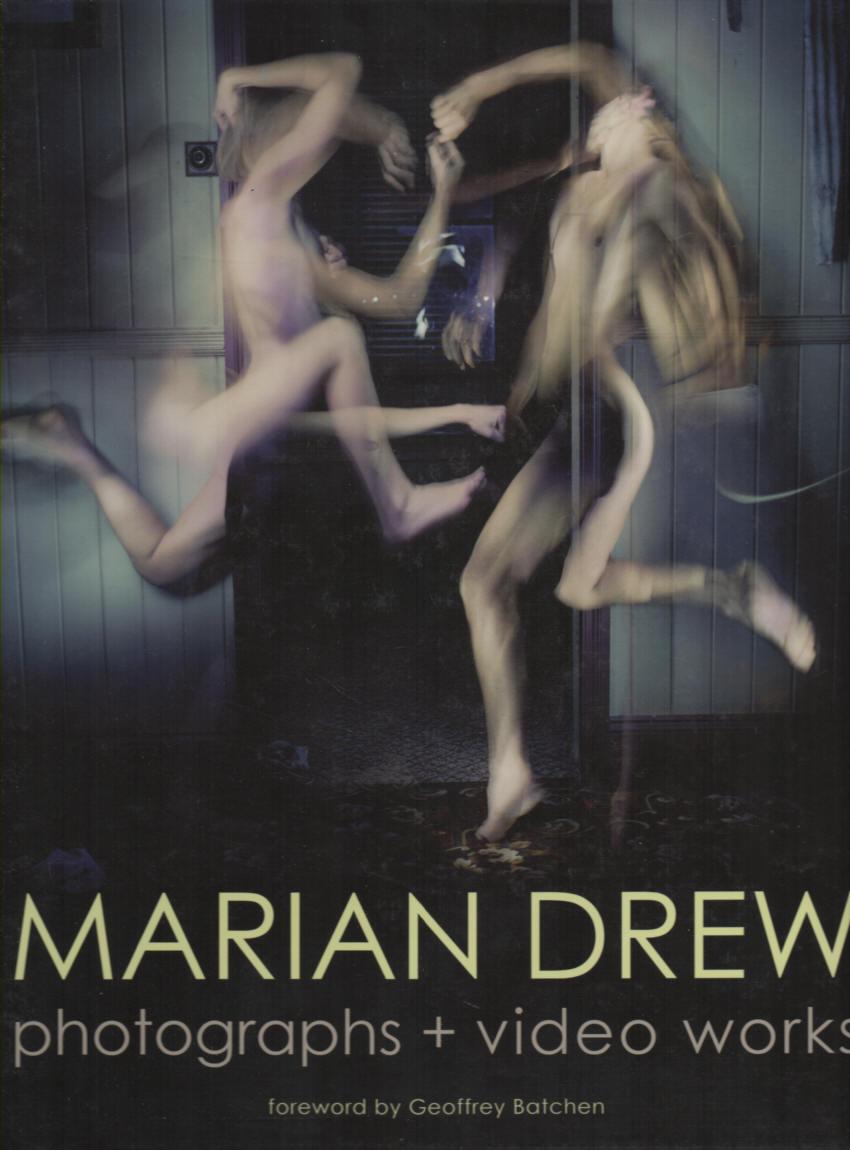
Drew, Marian & Geoffrey Batchen (fore.)
Marian Drew: Photographs + Video Works
Queensland Centre for Photography, Bulimba, 2006.
Quarto hardcover; illustrated boards and endpapers; 100pp., colour and monochrome plates and CD in rear pocket featuring video works and documentaries. Minor wear only; near fine. No dustwrapper. "This book presents my research over a twenty year period publishing yet unseen works and video as an accompanied DVD. Four writers as well as myself contributed in responding to the developments of my practice with key contextual references to relevant theory and the practice of other historical and contemporary artists. Documentations of the production of work takes the form of 2 video documentaries. This 100 page hard cover book has 80 colour illustrations, five essays, 2 documentaries, 5 art video works and a curriculum vitae. This book involved five internationally recognized writers researching 25 years of my research practice. The book was published by the Queensland Centre for Photography and funded both by Arts Queensland ($40,000) and the Queensland Centre for Photography ($30,000). In conjunction with this book I presented a solo exhibition of over forty large scale photographs curated and reinterpreted through new technologies in printing to reveal and clarify research interests. The exhibition titled 'Marian Drew' at the Queensland Centre for Photography was opened by the former State Minister for the Arts, Matt Foley. The monograph recognized twenty-five years of research and linked bodies of work that examine ideas of the local in terms of landscape, the domestic and family, assertively hybridizing the theories and practices of drawing and photography. The cross-disciplinary approach of my research through images that are an amalgam of drawing and photography have made a unique contribution to this discipline. The cross-disciplinary, highly inventive nature of my research has also resulted in a DVD-Rom of selected video art works, documentaries and a video interview. This research publication provides a valuable visual, theoretical, historical context for past and future work. This has increased the number of national and international publications and invitations to exhibit my research, for example in Art and Australia, Art Monthly, Photofile, Luminous Lindt (a specialist web site on fine art photographic practice published in the UK), Large Format magazine (published in the United States) several curated shows in Australia, LA Photo, and further gallery representation of my work in Adelaide, New Zealand, Los Angeles and New York." - Marion Drew
Click here to order

$30
74915
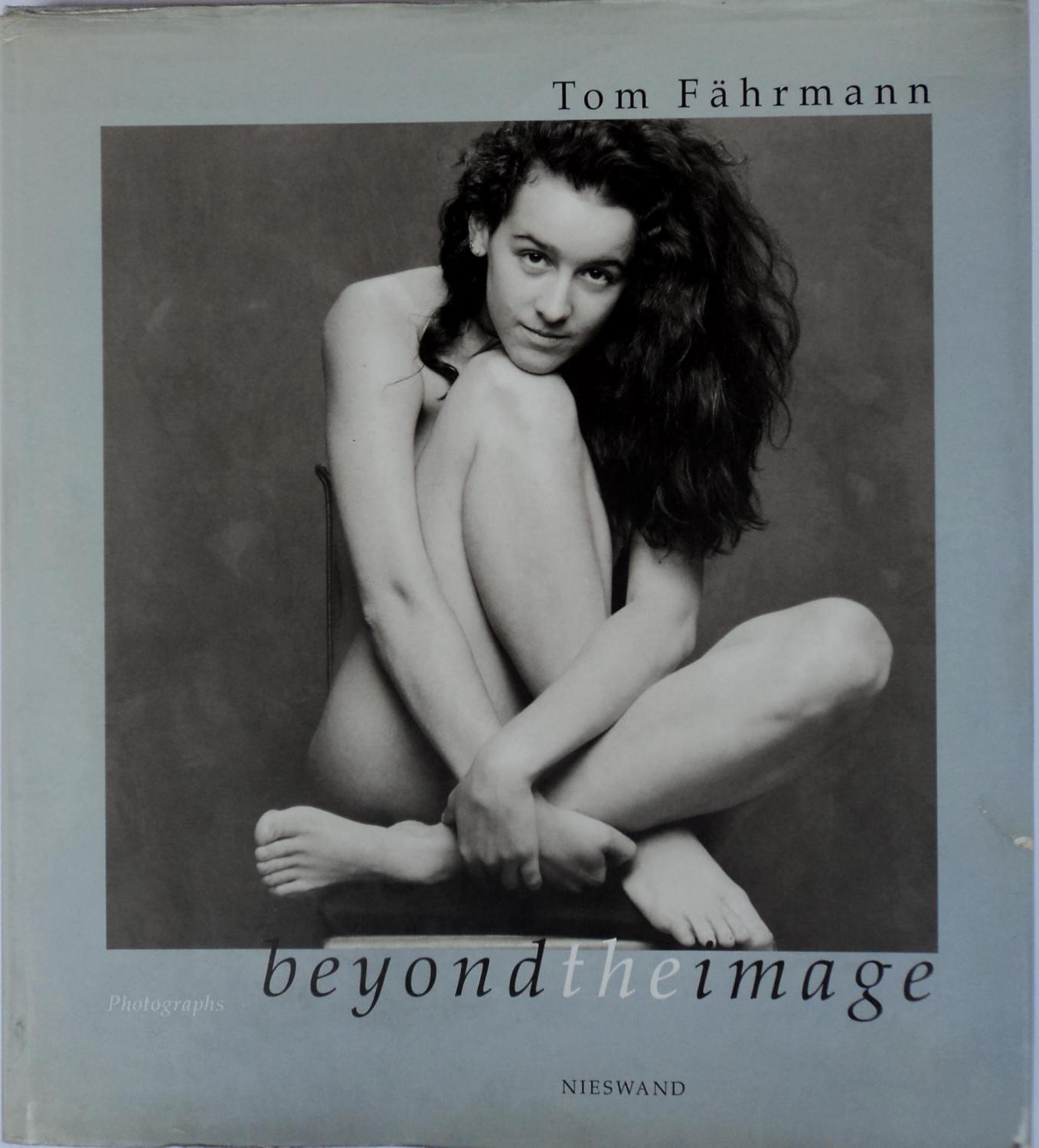
Fahrmann, Tom
Beyond the Image
Nieswand, 1997.
Quarto hardcover, unpaginated, monochrome illustrations. Board edges and corners worn; faint spotting to upper text block edge; edgewear and chipping to dustwrapper. Very good and professionally protected by superior non-adhesive polypropylene film. For this project, noted photographer Tom Fahrmann sought to get beyond the usual approach to the traditional nude. His subjects were almost a hundred ordinary people of different ages and various backgrounds, whom he pictured individually or in pairs. No clothes, no make-up, and only a chair were the qualifications. The result is a simple yet intense study which authenticity prevails over society's camouflage.
Click here to order

$35
87323
Forel, Oscar
Hidden Art in Nature Synchromies
Harper & Row Publishers Inc., New York NY, 1972.
Quarto; hardcover, brown cloth boards with upper board turquoise title, brown endpapers; 128pp., on laid paper, with many full-colour tipped-in plates. Mild wear; remains of old sticker to flyleaf. Lacks dustwrapper. Very good. Oscar Forel was a Swiss psychiatrist and naturalist. He created these 'synchromies', intimate photographs of tree bark and wood, in which we are introduced to 'the most secret works of life. We can see that life as its exists, expands, exercises its strange talents and displays its inimitable artistry, is composed of regularity and disorder, of exactitude and fantasy. We see life inventing, composing, organising, restoring, adapting itself and invading. Each of these manifestations betrays the subtle and sweet power of life's mystery' (Jean Rostand).
Click here to order

$40
65725
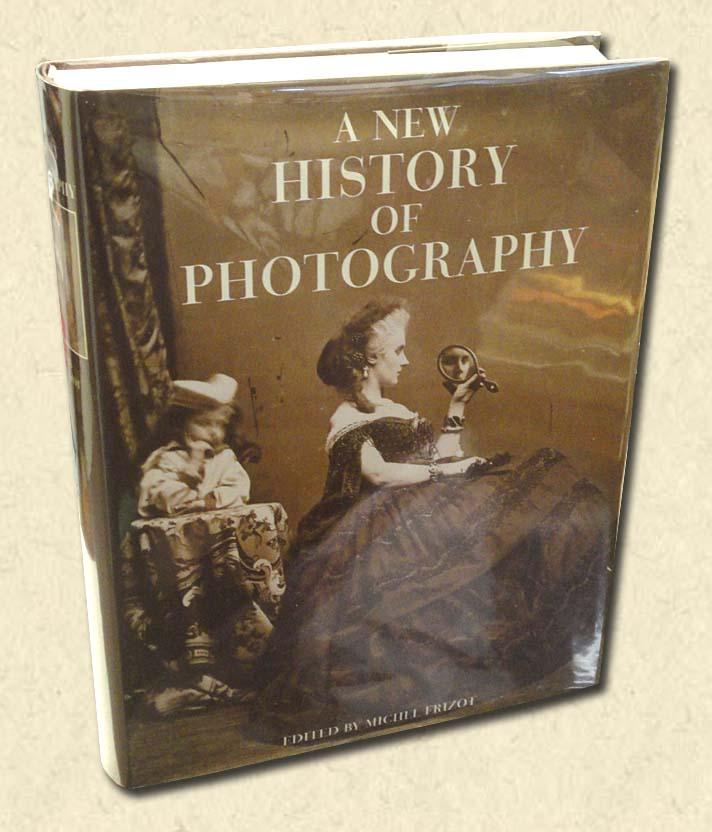
Frizot, Michel (ed.)
A New History of Photography
Konemann, Koln Germany, 1998.
Quarto; hardcover, with silver-gilt upper board and spine titling; 775pp., with many monochrome illustrations. Minor wear; faint spotting and one or two marks to the text block edges; a few faint scattered spots on half-title page. Dustwrapper mildly rubbed; now professionally protected by superior non-adhesive polypropylene film. Very good. 'This book is not an anthology of the lives of the great photographers, nor a collection of the best contemporary photographs, nor a sounding-board for recognized celebrities. It is a book conceived as such - both in its images and its text and readable at two levels: a collection of images chosen to illustrate visual continuity and changes while demonstrating the relevance of the author's viewpoint, combined with texts providing historical and analytical information with which the reader may confront their own knowledge for greater understanding. ' - from the Foreword.
Click here to order

$70
95279
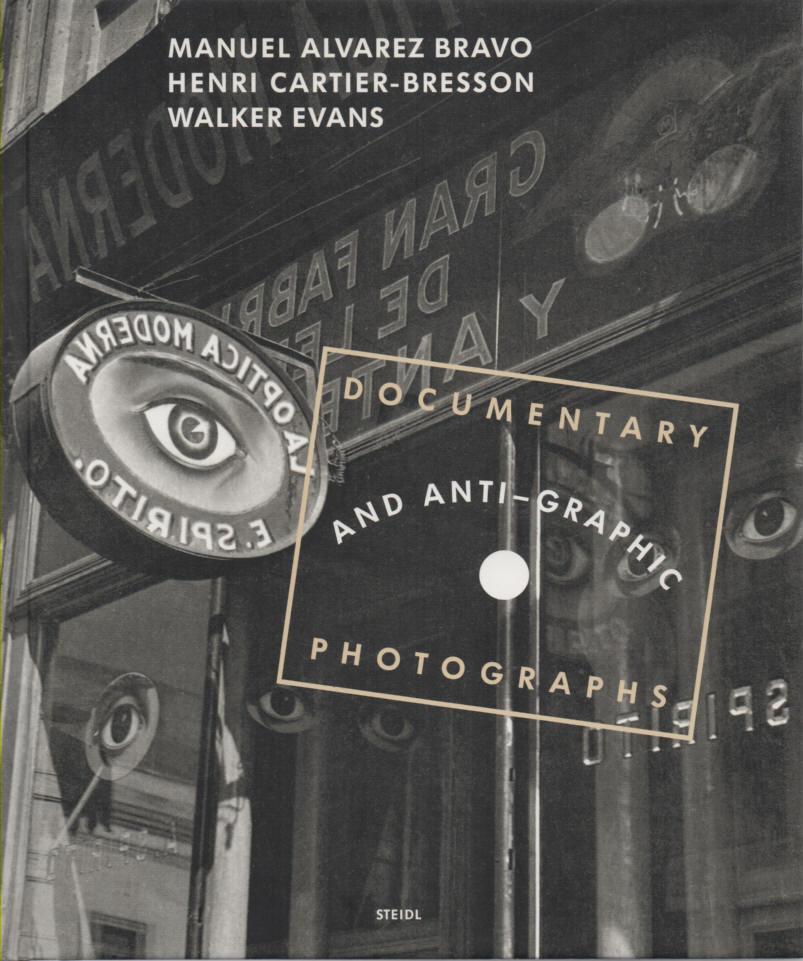
Galassi, Peter (Henri Cartier-Bresson, Walker Evans & Manuel Alvarez Bravo, illus.)
Documentary and Anti-Graphic Photographs
Steidl, Gottingen, nd.
Quarto hardcover; illustrated boards; 191pp., monochrome illustrations. Very minor wear only; fine. No dustwrapper, as issued. "It was in the process of sorting through Henri Cartier-Bresson's archives, brought together for the creation of the Foundation, that we came upon a modest white announcement card bearing a strange pair of eyes and a no less obscure title: 'Documentary and Anti-Graphic Photographs'. Everything about it was enticing: the names of three artists of no small renown which formed the eyes - Manuel Alvarez Bravo, Walker Evans, Henri Cartier-Bresson - , the date, April 1935, and the name of the dealer, Julien Levy. As for the significance of the 'anti-graphic photography', it was open to a variety of interpretations which anyone curious about photographs would feel duty-bound to explore. Julien Levy was one of the most influential collectors of the 20th Century. His gallery, which opened in 1931 in New York, played an essential role in avant-garde cultural exchanges between France and the United States of America, and especially, it was the first in the United States to promote Surrealism. Gathered together again for the first time since, these period prints represent an exceptional set of essential and sometimes unknown images. This historical exhibition assembles the original early works of three masters of photography. Julien Levy did not live to see photography arrive on the art market as he had sought, and when people spoke to him about his talent as an exceptional discoverer, he claimed a 'state of grace'. But the freedom of his choices and the quality of his eye have marked the evolution of photography with incontestable milestones. This selection places us face to face with the history of the medium in the making." - from the Introduction. Exhibition catalogue.
Click here to order

$30
93076
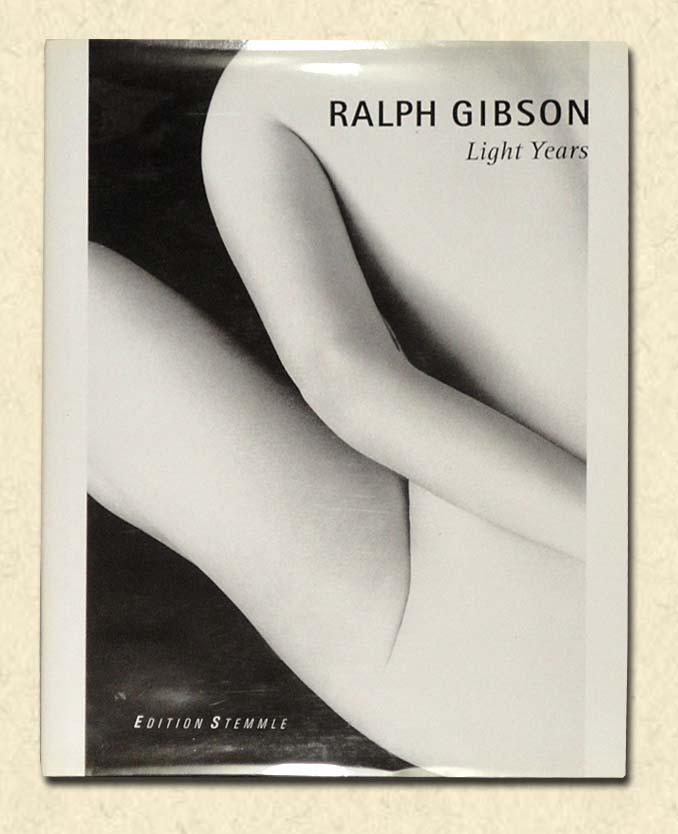
Gibson, Ralph (Peter Weiermair, ed.)
Light Years
Edition Stemmle, Zurich Switzerland, 1996.
Quarto hardcover; black boards with white spine titling, black endpapers; 199pp., monochrome illustrations. Very mild spotting to upper text block edges. Near fine otherwise in like black and white dustwrapper now professionally protected by superior non-adhesive polypropylene film. This volume presents the 92 most significant pictorial compositions of Ralph Gibson. His raw materials are the lines and shapes of seemingly mundane objects - a streetlamp, the back of a chair, a wine bottle, a human silhouette against the light. Based upon an unusual black-and-white technique, his photography is metaphorical rather than documentary. The contents of Gibson's pictures are difficult to grasp, often even mysterious. Some compositions seem characterized by unusual control, structure and clarity, while others are opulent, seductive and full of hidden meaning. Gibson celebrates what he sees. The human form is generalized far beyond the concrete-associative representational approach of portraiture. In deliberately overlooking the signs and props of specific locale, Gibson raises individual figures to an abstract level of human existence. His often fragmentary figures draw the viewer's attention to the design and composition of the pictorial details. The organic structure of such pictures clearly suggests that their origins are by no means random. With great precision and without sentimentality he succeeds in making his message comprehensible.
Click here to order

$70
89641
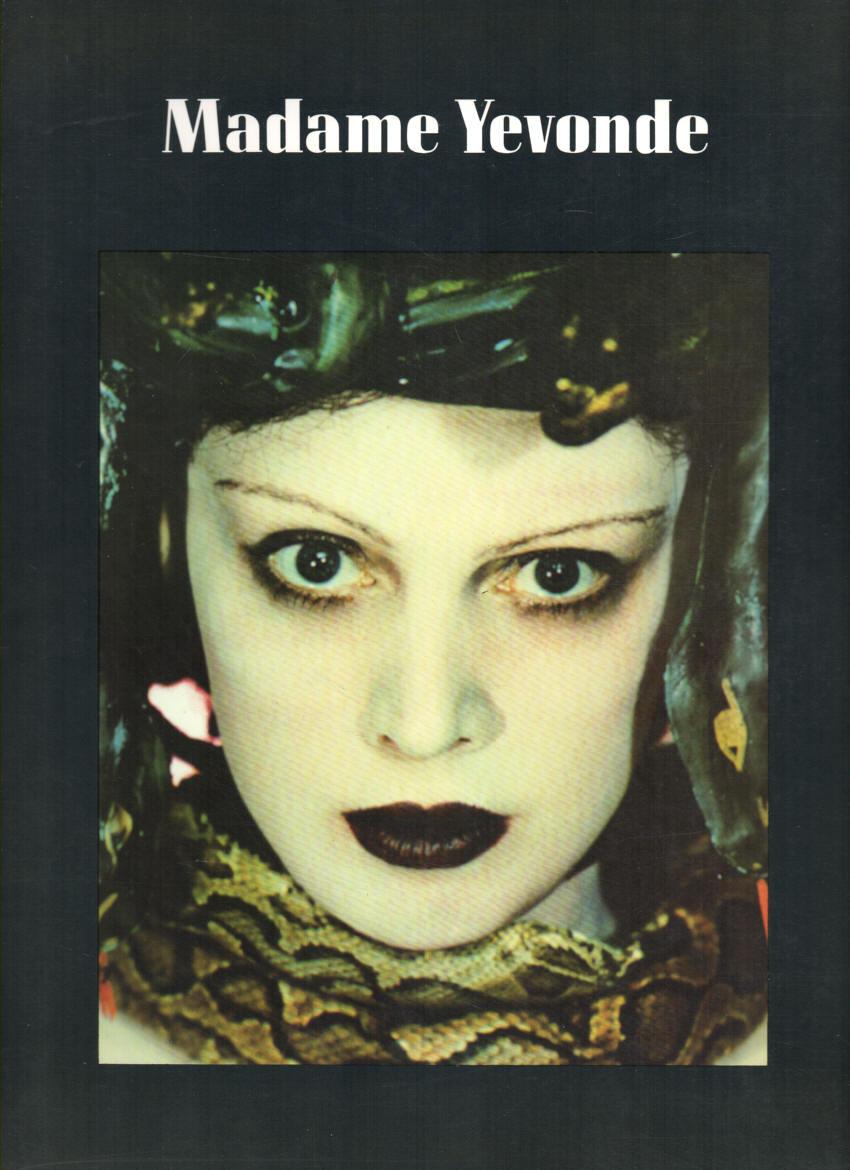
Gibson, Robin & Pam Roberts
Madame Yevonde: Colour Fantasy and Myth
National Portrait Gallery, London, 1990.
Quarto paperback; 119pp., colour and monochrome illustrations. Mild scuffing and wear to cover edges and corners. Very good to near fine otherwise. Born in 1893, Yevonde set up her first studio in London in 1914. She was one of the first photographers to make a successful use of colour technology in Britain and her work, particularly some of her magazine and publicity shots, could be seen to have been influenced by her childhood visits to the theatre and costume parties, in their use of lighting, colour and the models' poses. Her society portraiture included theatrical and literary names as well as eminent figures from the aristocracy. In 1935 Madame Yevonde invited a number of leading society ladies to be involved in a project on the theme of Goddesses, some of which are included in this work. Her baroque approach to the treatment of her subjects combined with her interest in the issue of female identity and gender roles created a new contemporary audience of her work.
Click here to order

$35
91074
Guillemin, Laetitia
Thomas Jorion - silencio Deluxe Version
Editions de la Martiniere/La Martiniere Group, Paris, 2013.
Landscape quarto; hardcover, with tipped-on upper board decoration; unpaginated, with many full-colour photographic plates. Fine, in a silver-gilt titled slipcase. Laid in: a limited edition numbered photographic print. Thomas Jorion's collection of images taken of abandoned and deserted buildings across the planet is a striking compendium of stark photography, demonstrating that the silent places of the world have a hidden power and a forlorn charm.
Click here to order

$280
70931
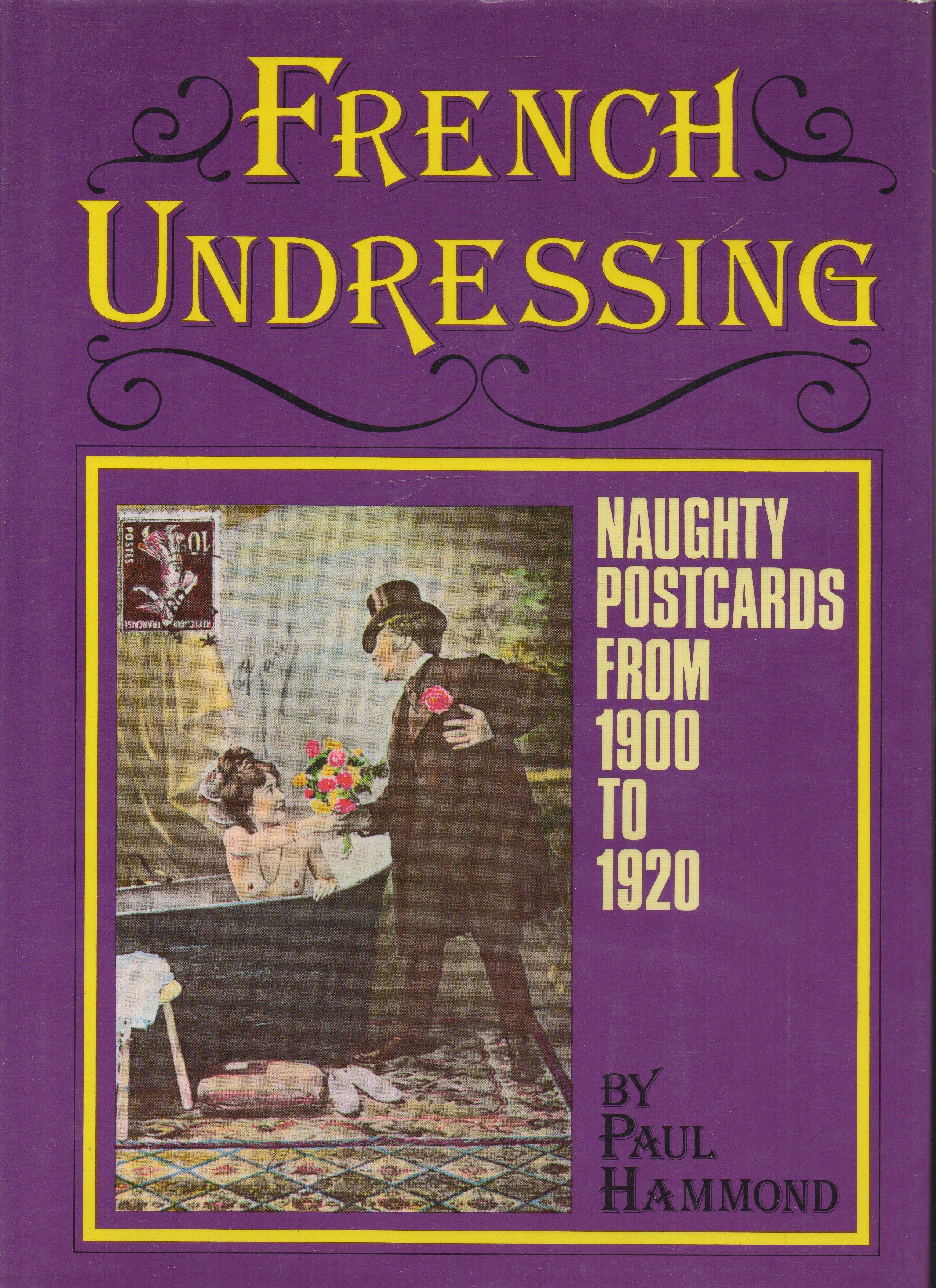
Hammond, Paul
French Undressing Naughty Postcards from 1900 to 1920
Bloomsbury Books/Godfrey Cave Associates Ltd., London, 1988.
Quarto; hardcover with with cream boards and gilt spine title; 136pp. with many monochrome and colour photographic illustrations. Some spotting along the board edges; one or two scattered spots on endpapers. Very good to near fine in like dustwrapper now professionally protected by superior non-adhesive polypropylene film. The years between 1900 and 1920 saw the golden age of the picture postcard come and go. From the Paris of this era came some of the naughtier cards, known, of course, as "French cards" or "French postcards," and it is from a fine collection of these that this book has drawn its material. In his subtle and witty discussion of more than 200 such cards, the author describes how they were produced, who made them, and why they look as they do. He uncovers the relationship between postcard eroticism and the eroticism of salon painting of the period, popular magazine illustration, and the primitive cinema. Particular attention is paid to the conscious use of sexual symbolism in many of the postcards. Hammond is a long-standing exponent of surrealism, expecially in cinema.
Click here to order

$30
88484
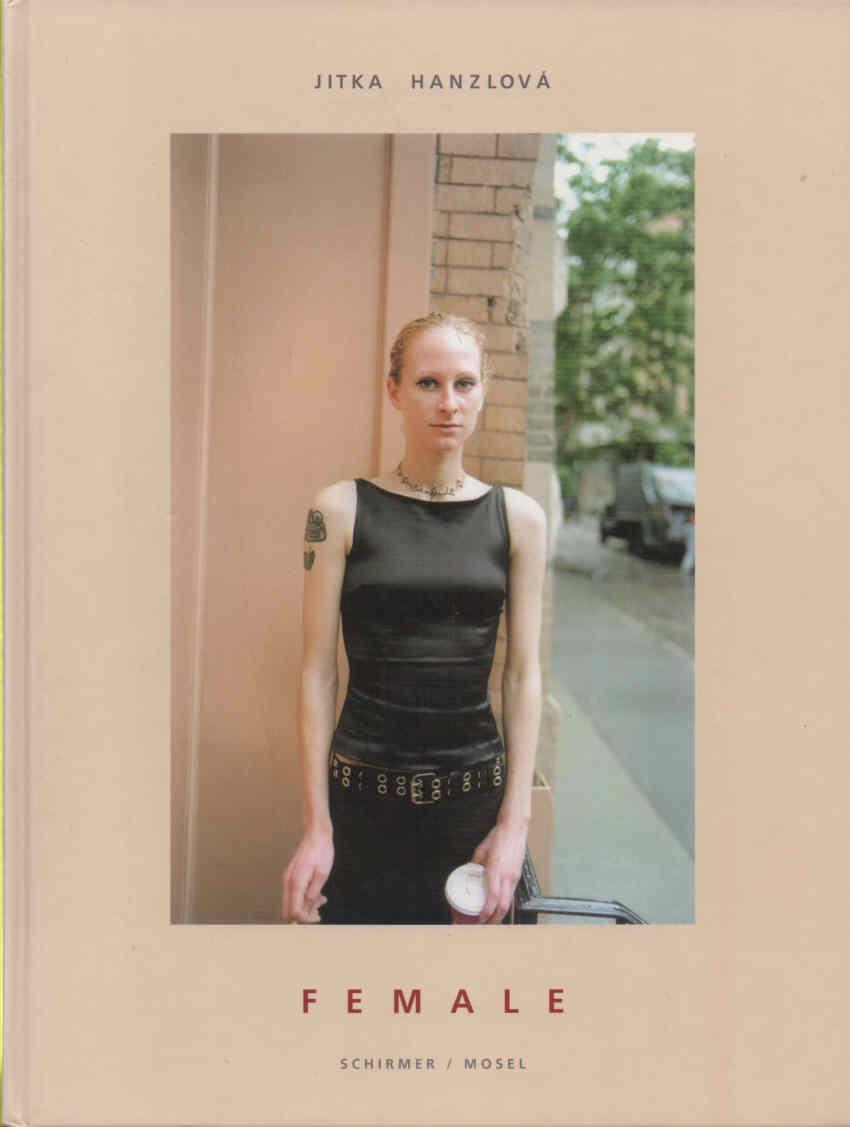
Hanzlova, Jitka
Female
Diechtorhallen, Hamburg, 2000.
Quarto hardcover; illustrated boards and green endpapers; 128pp., colour illustrations. Introductory text in German. No dustwrapper. Mild rubbing to boards. Near fine otherwise. In her photographs Jitka Hanzlova perceives everyday and incidental events. For this series she photographed women she met on her various travels to European and American cities. The images often arose spontaneously at the place of the meeting, or by appointment the next day. The women are portrayed as individuals with specific irregularities and facial features, which do not allow for stereotypical classification. The people we meet in these portraits are anonymous. In most cases the title only mentions their first name, in some instances even this has been left out. The identity, the profession and the living conditions of these models remain unknown to us. Even when Hanzlova seemingly reveals some biographical details about the subjects she observes, her images never become voyeuristic. On the contrary, as an artist she has the utmost respect for the women she portrays and cautiously tries to capture their self-assertion on film. Though the emphasis is on the women, they are always related to mostly urban surroundings, its colours and atmospheres. Subject and background interact directly. This synthesis gives each of Hanzlova's photographs a unique expression.
Click here to order

$90
217923
Hart, Bruce
Two Portraits of Bernie McGann
Bruce Hart.
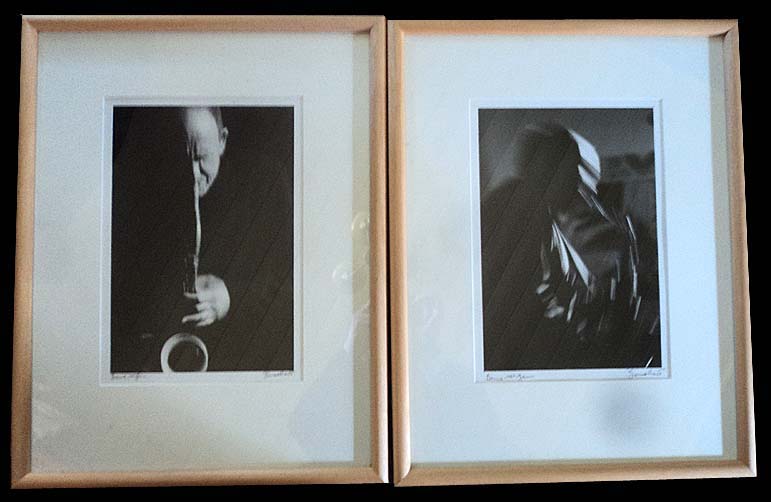
Two framed and signed portraits of one of the greats of Australian jazz. John Clare reviewed Hart's exhibition of his photographs, 'Ladies and Gentlemen... Mr Bernie McGann', held at the Stills Gallery, Paddington, from May 3 to June 3, 2000: "The title is rather Las Vegas (I have never heard Bernie introduced as Mr Bernie McGann), but it is the only mis-pitch (no pun intended of course) in this very important exhibition and record. Above the entrance stairs are two large pictures which sound two of the exhibition's dominant tones. The first is more compositional and introspective: a chiaroscuro inclined head, one hand and part of his alto saxophone stand out of darkness. The saxophone is reduced to a thread of light running down to the hand - with a few streaks in the darkness revealing the mechanism that moves the keys - then a lit fluid circle representing the bell. The thread could have been extruded from his mouth like a spider's web. The second picture does not invite comparisons to spider webs or anything else. It is McGann, representational as life, furrowed visage anointed with shining sweat, eyes screwed shut, mouth open at the instant of clamping back on the reed. The energy that comes off this photo is phenomenal. Damn nice suit too! James Greening told me he started laughing in recognition as soon as he saw it. Some of us have been lucky enough to be sitting or standing so close to this great artist in his ecstasy of creation. These two tones expand and are at times reversed throughout the exhibition. The artist is also the ordinary battler seen in the grainy realism of the high-energy shot described above. In three of the large pictures dominating the wall that faces you after leaving the stairs, the improviser in full cry is moved into an even greater abstraction. These are the most striking images. They show McGann in that characteristic pitch in that characteristic pitching, rocking motion that, when it happens, signals a flood of ideas. In each of these the head is pretty much a flat black silhouette, like a solar eclipse. The place where it was an instant before is now an aureole made of thick rods of light. Light flies off another in angled parallel needles, all ending along an even line so that the silhouette is now given a third dimension again, as if it has been fret-sawed from a piece of wood. Light splinters also fly off the saxophone, which in one shot is distorted by motion into a single glittering curve, like an Eastern sword. I found these three such a technical and expressive tour de force that I bounced off them until later. The theme that surrounds these high-energy images is art at work. The beautiful old Selmer alto sits in close-up in its case, looking like some antique engine. It also seems be encrusted, like something you might see on a sunken ship. It was Shane Nichols who brought this particular quality to my attention. By the by Roger Frampton also left McGann his King alto, and at the beginning of the exhibition is a small picture of Roger entering the Side On Cafe. Never again. Here is McGann making tea in a tiny old globular tin pot. The electric jug has no lid. Nice picture on the kitchen wall but also a plate with a clock's hands. Here McGann practices in a kind of acoustic tent he has made of some thick material. The light comes down the hall from a glass panel in the front door on one side, and it comes in through a window on the other, across a bed on which lies the reed protector. McGann is sitting in the gloom of his tent, in shorts, with instrument. Light seems to be leaking in there from somewhere else. In the back room at The Basement, McGann waits to go on in that moment when we all look like tired gladiators. But in the next shot, same place, there is that antic tilt to the McGann head as he sings a tune to himself out the corner of his mouth. All of these have been shot in available light, often very poor, even dingy. This has been done with a grainy stock, which enlivens everything. Finally, here is the McGann smile. American pianist Kirk Lightsey is pointing across the piano at him at Strawberry Hills, laughing ecstatically. He's the man! Then they shake hands. Lightsey had rung someone in Melbourne to say he had just heard a seriously bad alto player. Then they played together to a packed house. Barry Humphries managed to get up close to the action. Hart has in fact shot McGann, somewhat obsessively, over ten years. McGann has just been himself, completely unmoved by the peering camera. In the film Beyond El Rocco we got him to act out a sequence. It was the best acting. It wasn't acting at all. Many musicians are also shown, playing and in repose. On one level it is a celebration of a community from which McGann stands at a remove, like an Indian scout. All of these faces and shapes - Sandy Evans, Jonathan Zwartz, Ken James, Pochee, Swanton, etc etc - are absolutely realistic and candid, but the fine textural and compositional values have put them somehow in a kind of mythical time. Much of itis pretty much right now. Many in the curious world of arts have no idea that this is happening, have no idea what sounds actually issue from these instruments. Can you believe this? Some jazz critics have come nowhere near it! Impossible, you say? One of several lines of text on the walls has a bash at certain well-heeled types who haggle over an eight dollar door charge. Surely not! Keen photographer Don Burrows seemed near tears as he looked around on opening night. He said you could hear the music when you looked at these pictures. He graciously declared McGann a great musician. Formally, Hart has held together the candid and realistic and the abstract and compositional with impressive integrity. He has also created a very moving document for us all.
Click here to order

$800
93304
Herzog, Fred (texts. Felix Hoffmann; Claudia Gochmann & Stephen Waddell)
Fred Herzog
Hatje Cantz, Ostfildern, 2011.
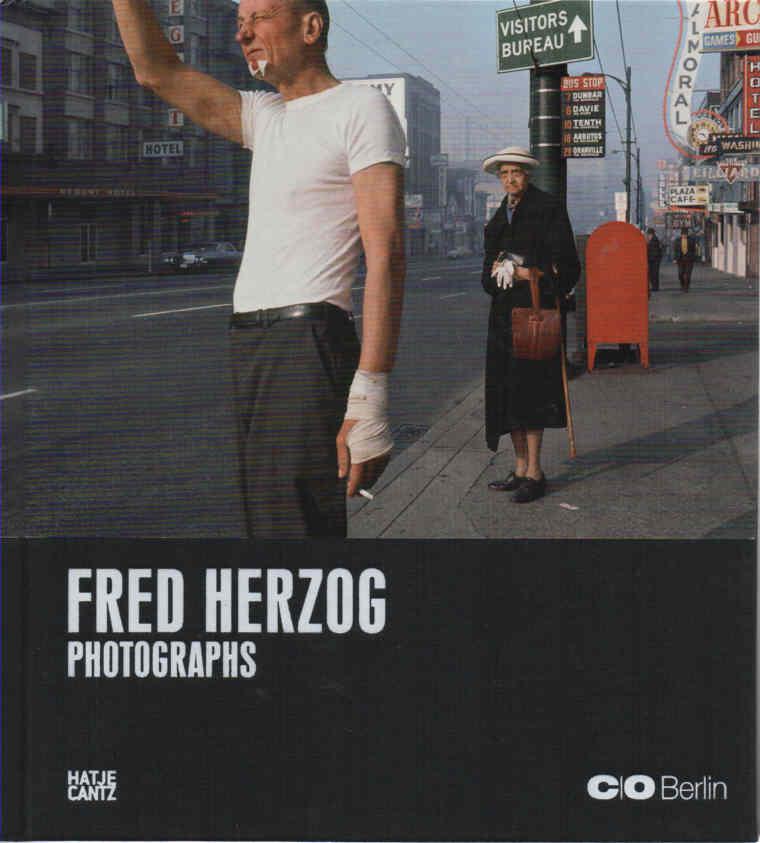
Quarto hardcover; black cloth boards with upper and lower board illustrations and white titles, black endpapers; 191pp., colour and monochrome illustrations. Very minor wear only; near fine. No dustwrapper, as issued. In 1952, Fred Herzog (born 1930) emigrated from Germany to Canada, and quickly found work as a medical photographer in Vancouver. But outside the lab, Herzog also devoted himself to what was, at the time, an unusual and even frowned-upon medium, at least artistically: colour photography. Labouring away as a virtually anonymous pioneer in this field, some 20 years before William Eggleston's watershed show at the Museum of Modern Art, Herzog was quietly documenting in rich Kodachrome the streets of Vancouver: its supermarkets, gas stations, bars, urban scenery and above all its working class culture. Herzog used slide film to make his photographs, which limited his ability to exhibit them and further marginalized his work; but in recent decades, happily, this colour pioneer has drawn great acclaim, and this volume, the largest Herzog monograph yet published, does marvellous justice to his rich oeuvre.
Click here to order

$175
92471
Holborn, Mark
Beaton Photographs
Jonathan Cape Ltd., London, 2015.
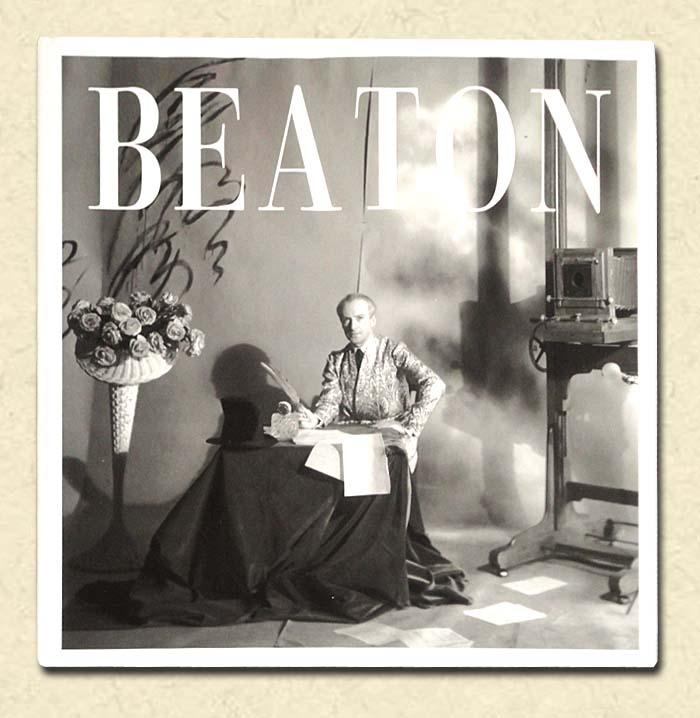
First edition. Large quarto hardcover; grey cloth boards with embossed pink spine titling and embossed grey upper board titles, grey endpapers; 354pp., monochrome plates. Minimal wear; fine in like illustrated dustwrapper now professionally protected by superior non-adhesive polypropylene film. Accomplished illustrator, painter, writer and diarist, set designer and one of the most distinguished photographers of the twentieth century, Cecil Beaton is renowned for his portraits of well known faces from the worlds of fashion, literature, and film. His long and varied career and his ability to attune himself to changing fashions enabled him to capture a diverse range of subjects on camera, from the Sitwells to the Rolling Stones, from Salvador Dali to Francis Bacon, from Audrey Hepburn to Marilyn Monroe. This book includes portraits of Beaton - self portraits and portraits by other artists - and provides a comprehensive look at both the photographer and his work.
Click here to order

$70
94989
Hsieh, Pei-ni Beatrice (ed.)
John Thomson - Window to the East The Journey to Formosa, China and Southeast Asia, 1865-1871
Kaohsiung Museum of Fine Arts, Kaohsiung Taiwan, 2012.
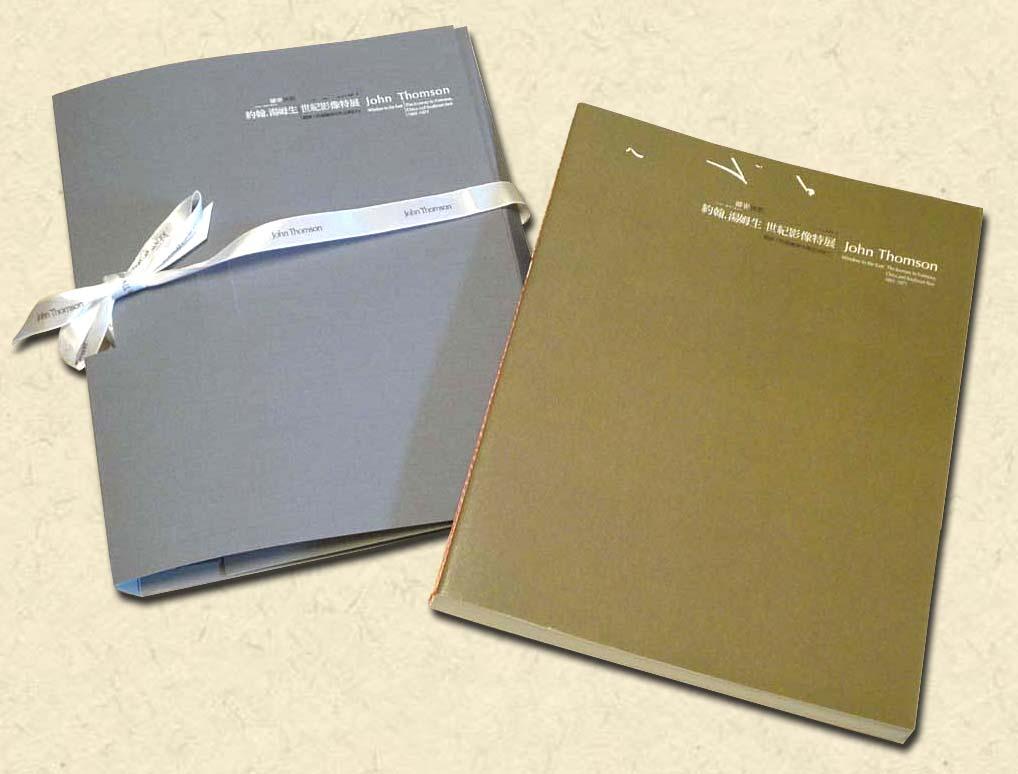
Quarto; paperback, six stitched signatures without a wrapper, with a DVD on a spindle mounted on the last page; unpaginated (230pp.), bilingual text (Chinese and English), with many monochrome illustrations. Minimal wear. Fine in a printed folding slipcase with a printed ribbon tie. One of only 1200 copies printed John Thomson (1837-1921) was born in Edinburgh, Scotland. He was one of the most important photographers in the 19th century and also a topographer, explorer and writer. As one of the earliest Western photographers travelling to the Far East, Thomson faithfully recorded what he saw of the Eastern world in the 19th century through his lens. His photographic works have become the most important social and cultural records and made Thomson one of the pioneers of documentary photography. The 19th century is a period of history marked with frequent exchanges and interactions between West and East. It is also a period full of surprises, excitement and shocks amidst cultural collisions. Each photograph taken by Thomson illustrates how a Westerner back then perceived and interpreted the mysterious Oriental world. Demonstrating his keen observations and unique interpretations of social and geographic characteristics of a place, Thomson's photographs mix the different aesthetics of Western and Eastern portraits, while combining the perspective and composition in Eastern landscape paintings. On his glass plate negatives, Thomson captured micro specimens of the tranquillity and profoundness of the Oriental world cultivated over thousands of years.
Click here to order

$180
217370
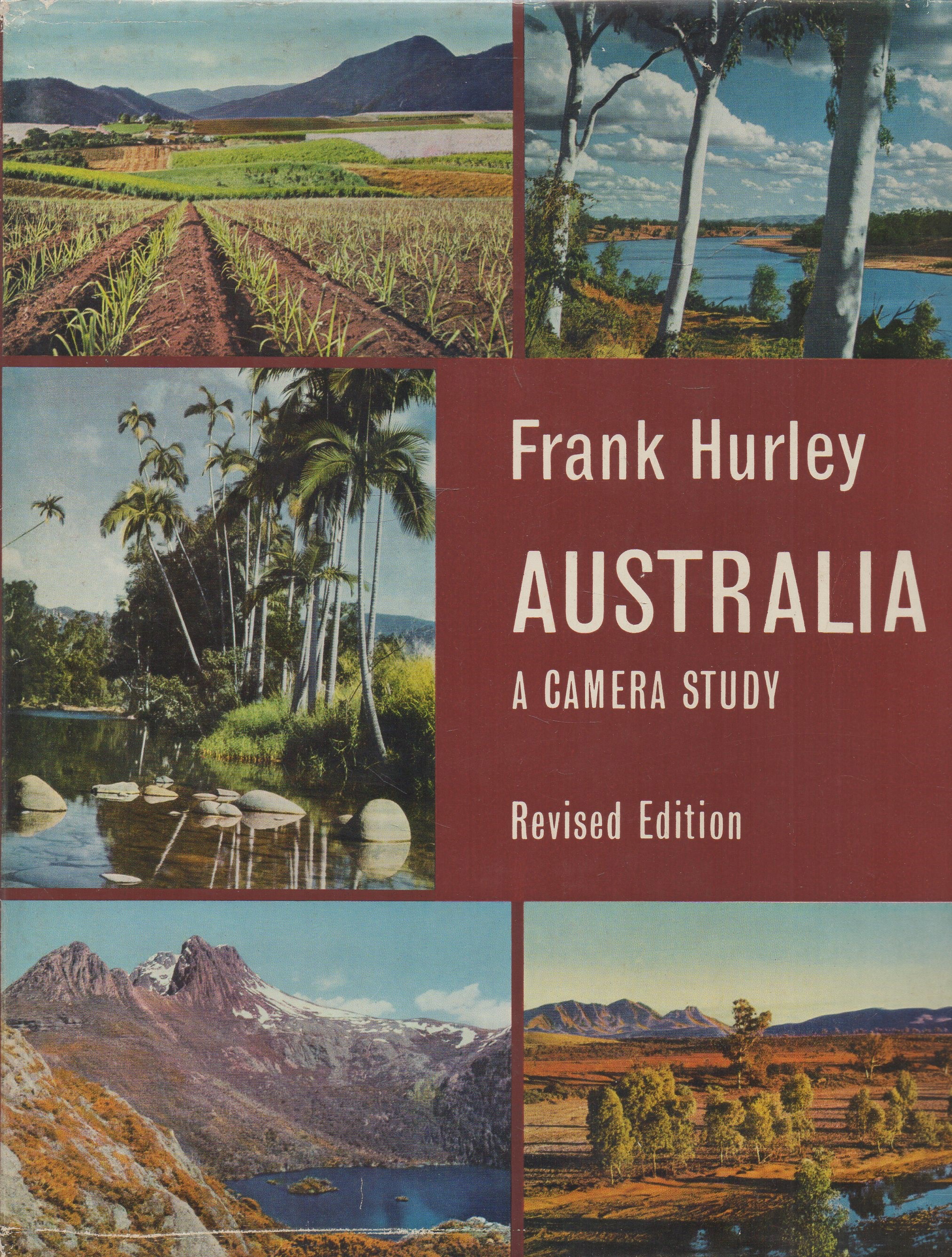
Hurley, Frank
Australia: A Camera Study
Angus & Robertson, Sydney, 1966.
Revised edition. Quarto hardcover; blue boards with gilt upper board and spine titles, blue endpaper maps; 224pp., colour & b&w plates. Mild rubbing to board edges and corners; faint spotting to upper text block edge; light foxing to prelims. Illustrated dustwrapper with scraping along edges and front fore-edge, now professionally protected by superior non-adhesive polypropylene film. Very good.
Click here to order

$45
94698
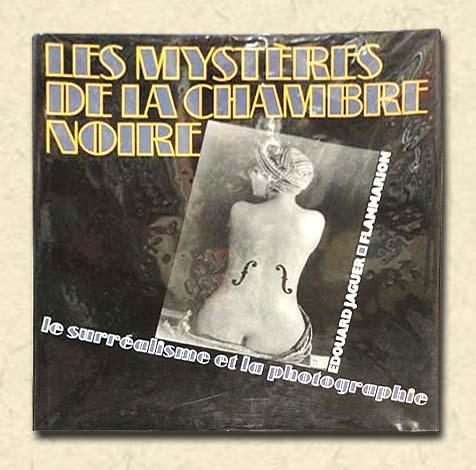
Jaguer, Edouard
Les Mysteres de la Chambre Noire Le Surrealisme et la Photographie
Flammarion, Paris, 1982.
Square quarto hardcover; black cloth boards with gilt spine titling; 223pp., monochrome illustrations. Text in French. Upper board very slightly bowed; very mild spotting to text block edges; lower corner of one page creased due to binding error. Else very good to near fine and wrapper now professionally protected by superior non-adhesive polypropylene film. Poet and art critic principally associated with surrealism. Photographers include many of the active participants in the movement to recent times as well as occasional photographs by contemporaries which present surrealist interest.
Click here to order

$60
87380
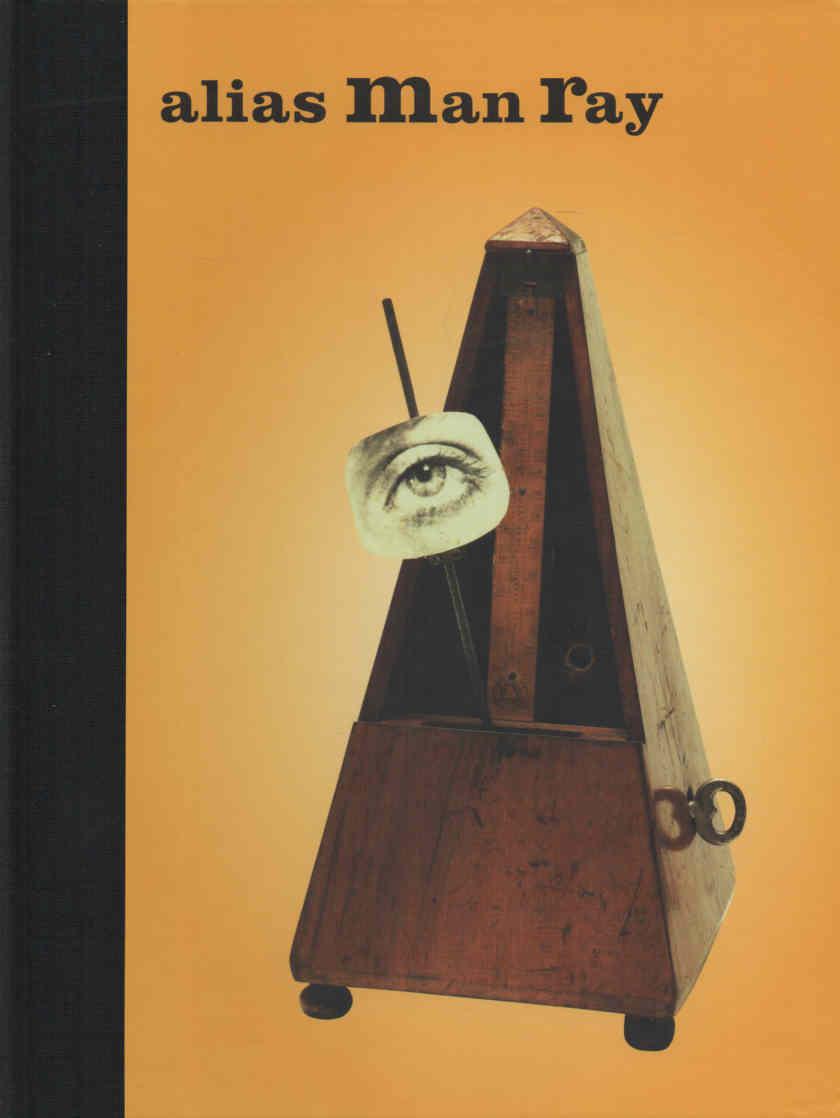
Klein, Mason
Alias Man Ray: The Art of Reinvention Contributions by George Baker, Lauren Schell Dickens and Merry A. Foresta
Yale University Press, 2009.
Quarto hardcover; illustrated boards, no dustwrapper; 240pp., colour and monochrome illustrations. Remainder. New.
Click here to order

$34
202886
Kurtz, Ron, & Hank O'Neal
Berenice Abbott - Paris Portraits 1925-1930
Steidl/Commerce Graphics, Gottingen Germany, 2016.
Quarto; hardcover, quarter-bound in cloth with upper board titles and tipped-on upper board decoration, with a grey ribbon; unpaginated (368pp.), one page keyhole cut, with many monochrome plates. Very minor wear; boards mildly rubbed and edgeworn. No dustwrapper as issued. Very good to near fine. This is one in a series of books to be published by Steidl that will explore Berenice Abbott's oeuvre. Abbott began her photographic career in Paris in 1925, taking portraits of some the most celebrated artists and writers of the day, including Marie Laurencin, Jean Cocteau, Peggy Guggenheim, Coco Chanel, Max Ernst, Andre Gide, Philippe Soupault and James Joyce. Within a year her work was exhibited and acclaimed. Paris Portraits 1925-1930 features the results of Abbott's earliest photographic project and illustrates the philosophy of all her subsequent work. For this landmark book, 115 portraits of 83 subjects have been scanned from the original glass negatives, which have been printed in full.
Click here to order

$85
88280
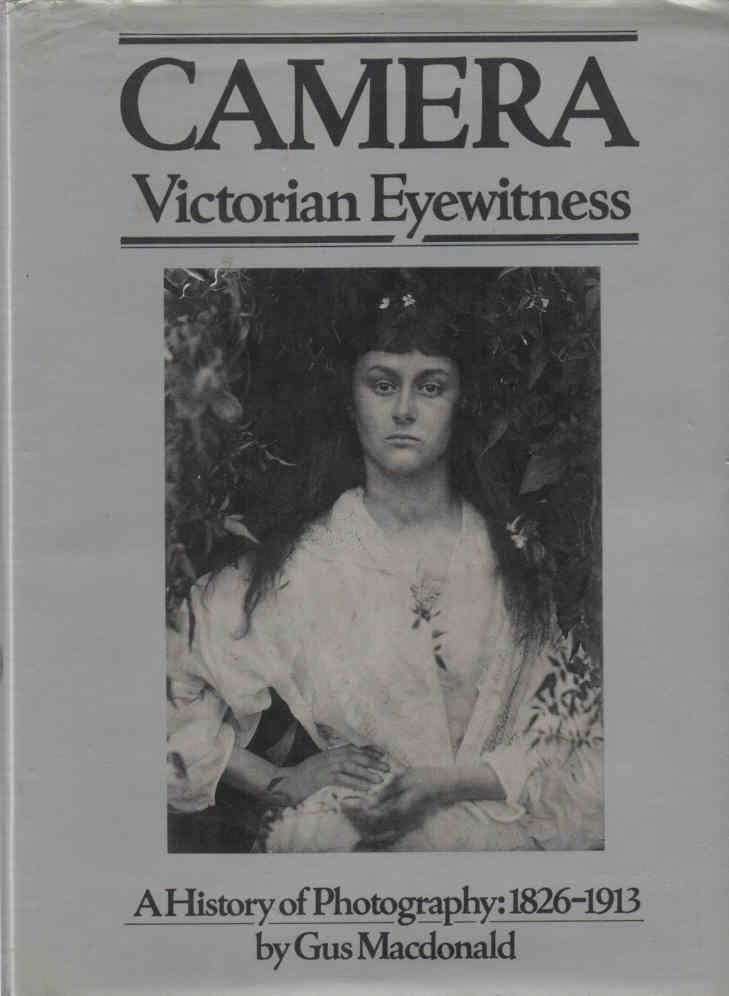
Macdonald, Gus
Camera Victorian Eyewitness: A History of Photography - 1826-1913
Viking Press, New York, 1979.
Small quarto hardcover; black boards with gilt spine titling; 192pp., colour and monochrome illustrations. Offsetting to endpapers and toned text block and page edges. Dustwrapper slightly worn along edges. Very good and professionally protected by superior non-adhesive polypropylene film.
Click here to order

$18
201348
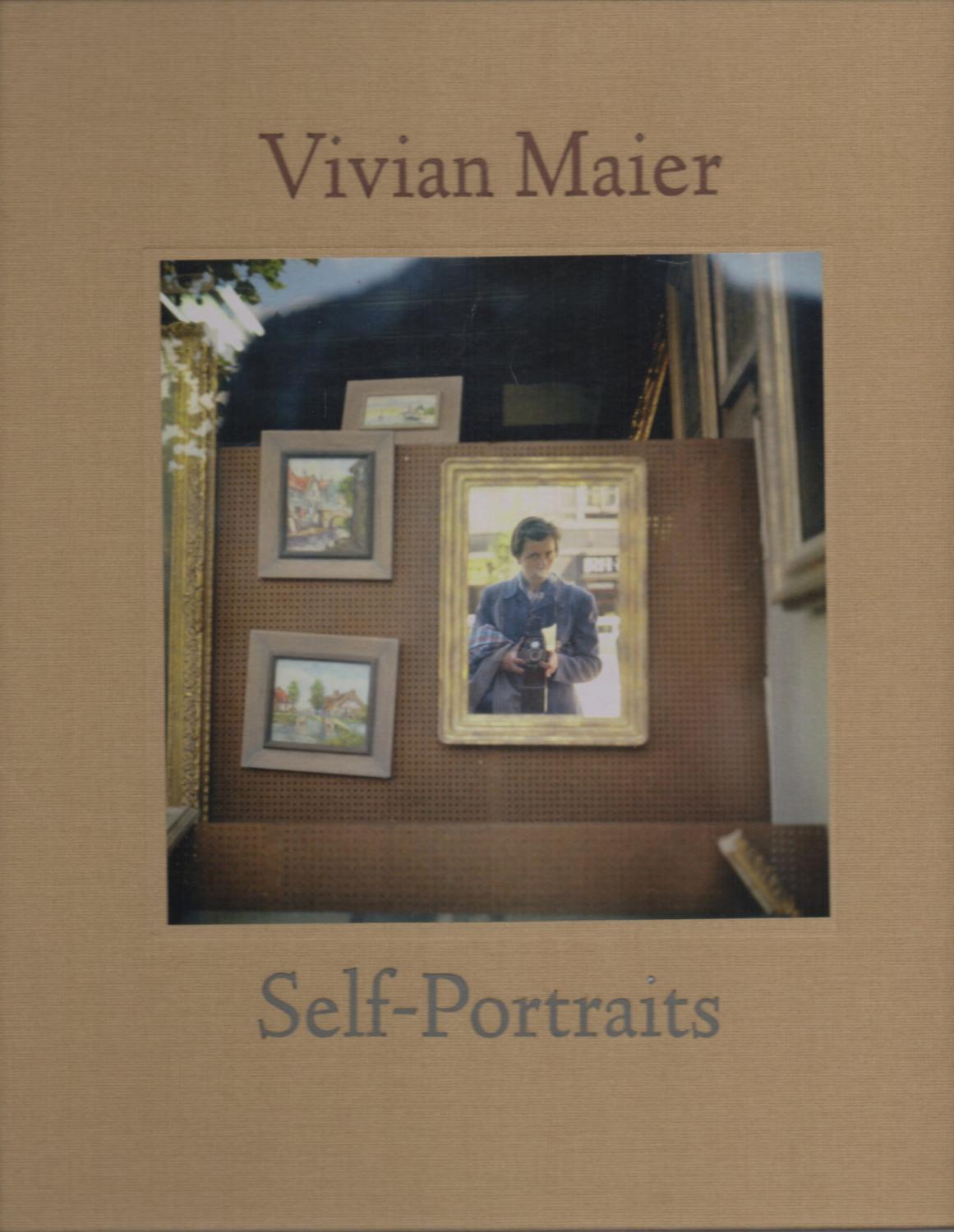
Maier, Vivian (ed. John Maloof & essay by Elizabeth Avedon)
Self-Portraits
PowerHouse Books, Brooklyn, 2013.
Quarto hardcover; brown cloth boards with central, upper board image pasted on, dark red and gray titling, blue endpapers; 119pp., mainly monochrome illustrations. Minor wear only, near fine. No dustwrapper, as issued.
Click here to order

$50
83448
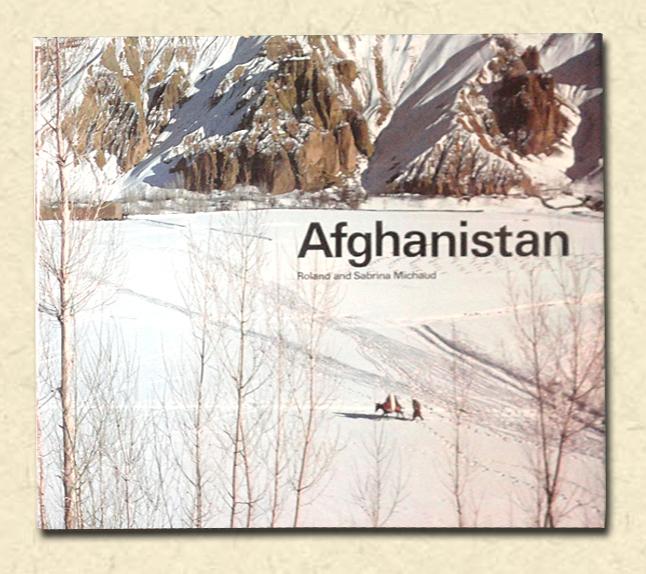
Michaud, Roland and Sabrina
Afghanistan
Thames & Hudson, London, 1980.
Oblong quarto hardcover; light brown cloth boards with black spine titling and publishers upper board insignia; 98pp., colour illustrations. Minor wear; light offsetting to endpapers and spotting to preliminaries with toned and faintly spotted upper text block edges. Very good to near fine in like dustwrapper now professionally protected by superior non-adhesive polypropylene film.
Click here to order

$45
83449
Michaud, Roland and Sabrina
Caravans to Tartary
Viking Press, New York, 1978.
Oblong quarto hardcover; light brown cloth boards with gilt spine titling; 77pp., mainly colour illustrations. Minor wear; light offsetting to endpapers and spotting to preliminaries with mildly toned and faintly spotted upper text block edges. Very good to near fine in like dustwrapper now professionally protected by superior non-adhesive polypropylene film.
Click here to order

$45
83447
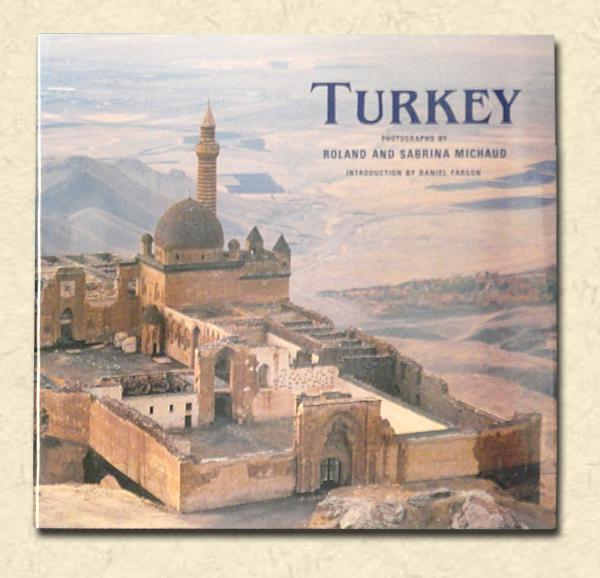
Michaud, Roland and Sabrina (intro. Daniel Farson)
Turkey
Thames & Hudson, London, 1986.
Oblong quarto hardcover; dark red cloth boards with gilt spine titling and publishers upper board gilt insignia; 83pp., colour illustrations. Minor wear; fine in like dustwrapper now professionally protected by superior non-adhesive polypropylene film.
Click here to order

$35
30617
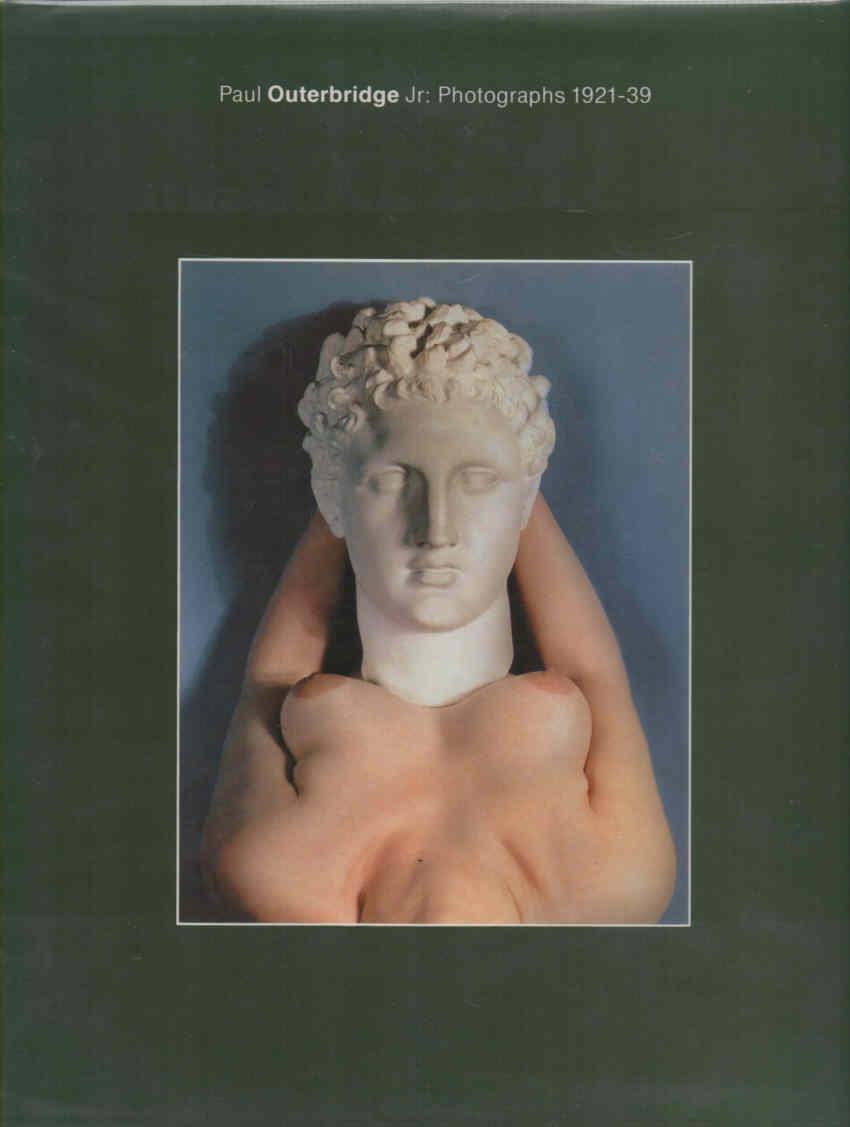
Outerbridge, Paul
Paul Outerbridge Jr: Photographs 1921-39
Thames & Hudson, London, 1980.
Hardcover, square quarto; brown cloth boards with gilt spine titling and upper board publisher's insignia, blue endpapers; 159pp., 59 colour and 81 duotone illustrations. Minor wear; faint spotting to upper text block edges and dustwrapper spine very slightly faded. Very good to near fine otherwise and now professionally protected by superior non-adhesive polypropylene film. Legendary American photographer Paul Outerbridge is perhaps best known for his pioneering work in colour photography and his avant-garde use of compositional space. Outerbridge was a fashion and commercial photographer whose style of formal arrangement drew from Cubism and Modern abstract painting. His photographic still-lifes of objects and various commercial products defined the twentieth-century's advertising aesthetic. Outerbridge also created a series of erotic nude photographs that were unable to be shown publically during his lifetime due to censorship laws. Born in New York City in 1896 Outerbridge spent his life between New York City, and Los Angeles. Against the wishes of his father, an influential surgeon in New York City, Outerbridge turned from a university education and began classes at the Art Students' League in New York. It was here that he met and assisted theatrical stage designer Rollo Peters. This experience, as Outerbridge suggests, was formative to his photography, writing 'I worked out a theory of my own for the painting of scenes with light alone'. - Bruce Silverstein
Click here to order

$40
95255
Parmiggiani, Sandro & Robert Pledge (eds.)
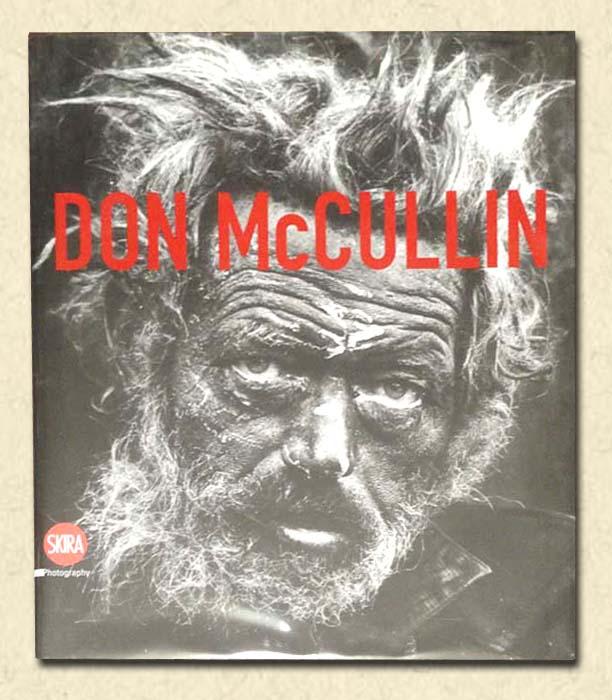
Don McCullin: The Impossible Peace: From War Photographs to Landscapes, 1958-2011
Skira, Milan, 2012.
Quarto hardcover; red boards with white spine titling and black endpapers; 250pp., monochrome plates. Minimal wear; fine in like illustrated dustwrapper now professionally protected by superior non-adhesive polypropylene film. An exhibition catalogue that features an impressive retrospective, covering the last fifty years in chronological order. Don McCullin (born 1935, London) is one of the most important photographers of our time. For more than fifty years, his uncompromising black-and-white photographs have shaped our awareness and understanding of modern conflict and its consequences. His images tell the remarkable story of his life and work, including his most famous assignments in Berlin, Vietnam, Cambodia, Biafra, Bangladesh, and the Middle East. Key periods in McCullin's life, including his early experiences of evacuation and the Blitz, his commissions from Berlin in 1961 and Cyprus in 1964, and his most famous work for the Sunday Times are here explored alongside more recent projects with Christian Aid, his photographs of last tribes in the Omo River Valley, South Kenya, and Irian Jaya, New Guinea, and, in the last few years, those of still-life and English landscapes at his home in Somerset. A photographic journey across the ruins and landscapes of the boundaries of the Roman Empire completes the volume.
Click here to order

$85
71319
Pillsbury, Matthew
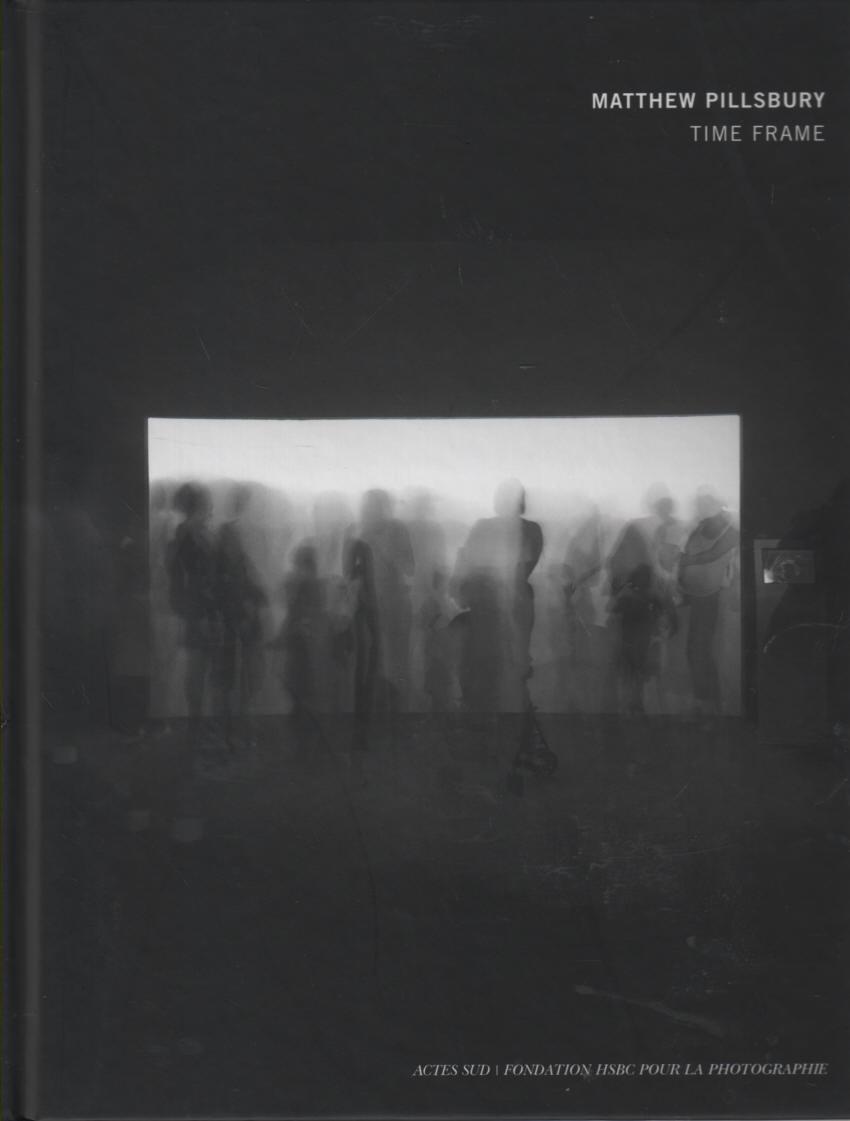
Time Frame
Actes Sud/ Fondation HSBC Pour La Photographie, 2007.
Quarto hardcover, 99pp., monochrome illustrations. Text in English and French. Slightly scuffed black boards, no dustwrapper. Minor wear only; very good to near fine. 'Matthew Pillsbury is fascinated by the spaces in which his compatriots live today, inhabited solely by television or computer screens, small growing rectangles in an often grandiose urban space perceived through windows. Human presence is barely perceptible, diminished by the long exposure time to the status of uncertain shadows.' - Alain Sayag.
Click here to order

$30
94712
Polidori, Robert
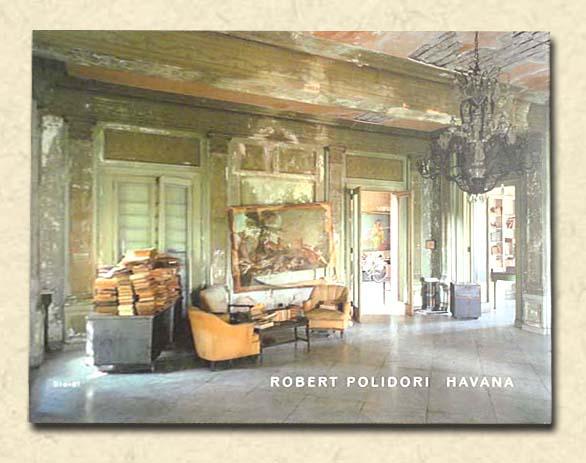
Havana
Steidl, Gottingen, 2001.
Oblong folio hardcover; green cloth boards with embossed spine titling, decorated endpapers; 123pp., colour illustrations. Very minor wear; lower board corners slightly frayed. Otherwise near fine in like dustwrapper. In the January 26, 1998 issue of the magazine, Paul Goldberger reported on the declining state of Havana's architectural heritage, as well as on the Cuban preservationists who were attempting to salvage it. Robert Polidori, The New Yorker's staff photographer at the time, accompanied Goldberger to Cuba. The two men travelled around Havana in a red-and-white 1953 Chevrolet and knocked on the doors of the city's crumbling mansions. Polidori's photographs of the buildings' interiors, which he shot with a large-format camera, are vivid depictions of Goldberger's observation that decay had not yet destroyed the 'majestic presence' of Havana's grand villas. He began exploring the city's dynamic architecture - from the elegant colonial to the exuberant Modern, which appeared arrested in time, reflecting years of economic and political turmoil. He returned four more times, continuing his study of the astonishing range and scale of Havana's buildings. The results are a remarkable interpretation of the city's magnificent architectural legacy. Polidori refers to himself as a 'habitat photographer' rather than an architectural photographer. His images of Havana's buildings reveal a complex history of a sophisticated, vibrant culture and its expression through art. The fragile state of the city's architecture is brought to light, as is the enduring spirit of its residents. Polidori boldly presents his subjects without apology for their condition, a departure from most commissioned architectural photography, which aims to present buildings as beautiful, even glamorous, objects. These powerful, highly personalized images invite us to look beyond the formal surfaces of great buildings to the inhabitants who invest them with life and meaning. This stunning book, the large format and fine printing of which, gives proper due to the photographer's work, the details and rich complexity.
Click here to order

$220
74917
Prince, Len (Introduction by Dominick Dunne)
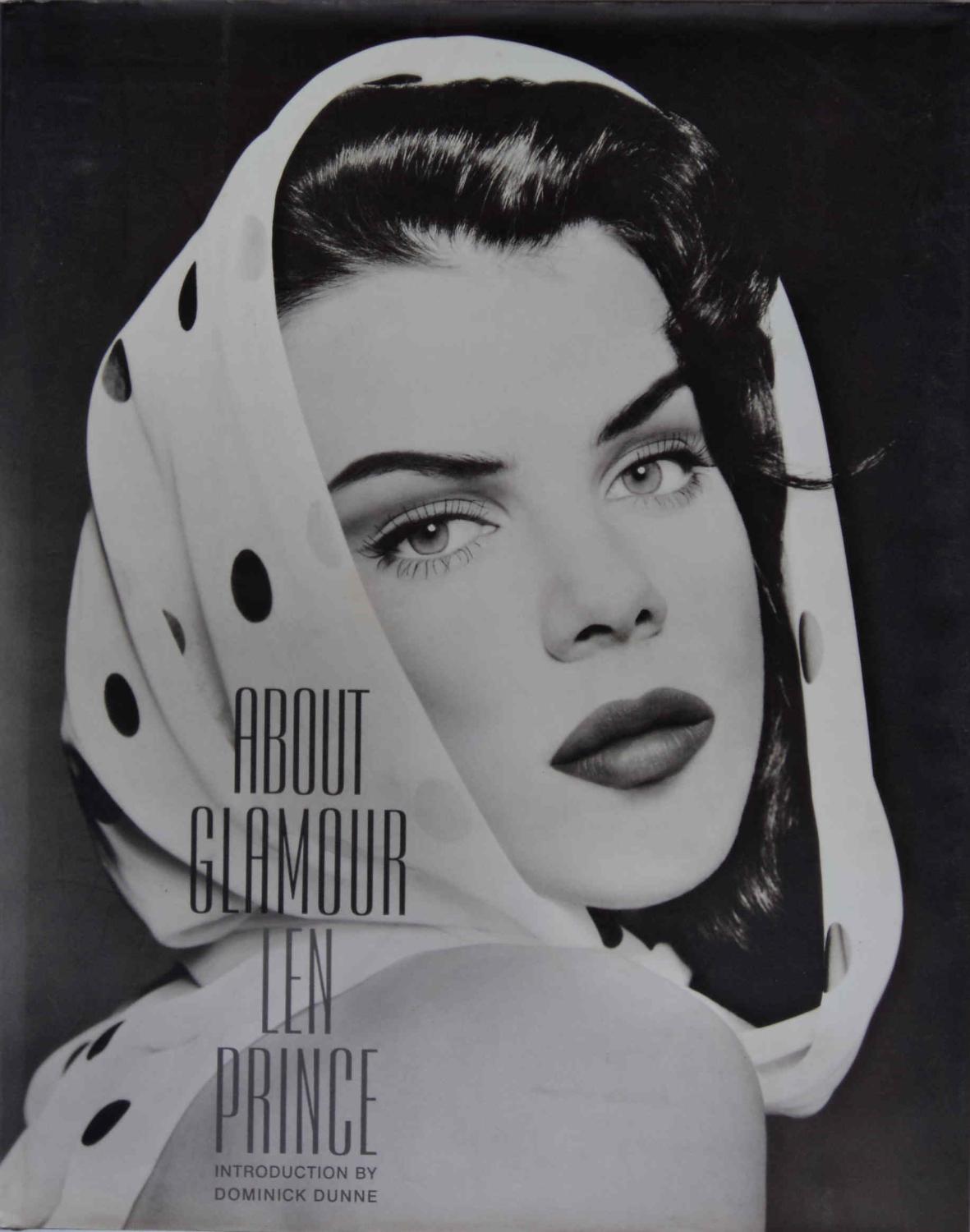
About Glamour
Simon & Schuster Inc., New York NY, 1997.
Folio hardcover, unpaginated, monochrome illustrations. Minor edgewear to dustwrapper. Otherwise near fine and professionally protected by superior non-adhesive polypropylene film. In these smouldering black-and-white virtuoso portraits, Len Prince has created a modern day golden era and a startling photographic tour de force. Introducing readers to Len Prince's ninety hypnotic, quadratone photographs is writer Dominick Dunne. Evoking the allure of this retro glamour era of Prince's photographs, Dunne recounts his early fascination with movie stars like Paulette Goddard and Jean Harlow; his firsthand account of Hollywood parties with Marilyn Monroe, Judy Garland, and Spencer Tracy; the end of the studio system and the decline of Hollywood royalty; and his 1996 photo shoot for Vanity Fair in Len Prince's studio.
Click here to order

$30
72299
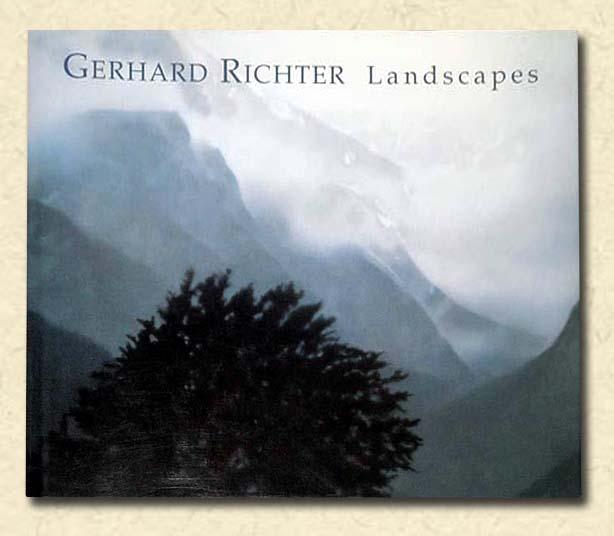
Richter, Gerhard (Dietmar Elgar, ed.)
Landscapes
Hatje Cantz Verlag, Ostfildern-Ruit Germany, 1998.
Landscape quarto; hardcover, with upper board title; 127pp., with many monochrome and full-colour illustrations. Mild wear; light scraping to the spine heel; text block top edge spotted lightly. Some mild rippling to upper page margins. Dustwrapper is mildly rubbed and edgeworn (now professionally protected by superior non-adhesive polypropylene film).. "I see countless landscapes, photograph barely 1 in a 100,000, and paint barely 1 in 100 that I photograph. I am seeking something quite specific." - Gerhard Richter. This volume presents landscapes by Gerhard Richter spanning 35 years: outstanding, large format reproductions and two major essays elucidate the artist's working methods and his 'philosophy' - at the same time demonstrating that Richter's landscapes and abstract works, far from being artistic opposites, are closely related aspects of the painter's unique appropriation of reality.
Click here to order

$35
88357
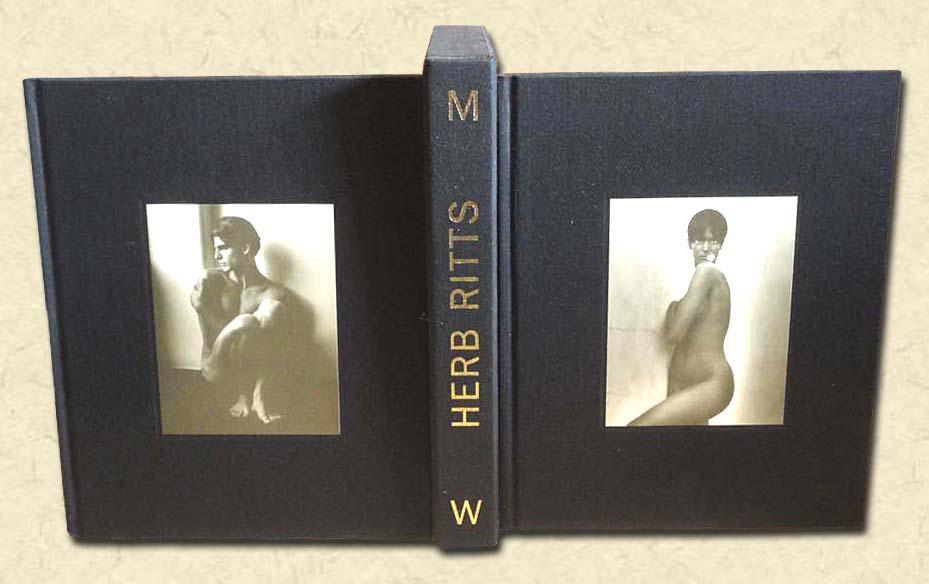
Ritts, Herb
Men / Women
Twin Palms Publishers, San Francisco CA, 1989.
Fourth limited edition: two volumes quarto; hardcover, with gilt spine titles, tipped-on upper board decorations and black endpapers; unpaginated (192pp. [96pp. + 96pp.]), with many monochrome photographic plates. Spines lightly sunned and gilt tarnished. Near fine in like, gilt-titled, slipcase. This boxed set of two books contains images selected by Herb Ritts from the first decade of his work in photography. Taken for his own pleasure, many of these pictures were rejected for publication in popular magazines which judged them either too eccentric or erotic for their readers. The pleasure of the artist at work is felt in these photographs, which do not compromise the artist's individual vision for the sake of popular acceptance. The beautiful men and women who populate these pages are familiar for their work in commercial modelling, but Herb Ritts' camera shows them in a new and unfamiliar light. 1 of only 5,000 copies issued.
Click here to order

$160
87490
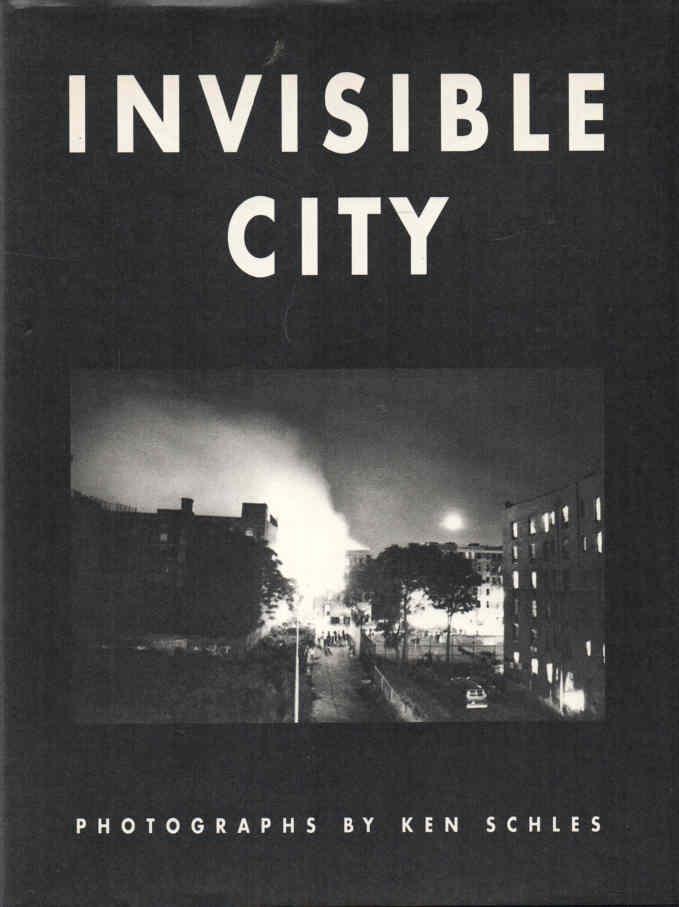
Schles, Ken
Invisible City
Twelvetrees Press, Pasadena CA, 1988.
First edition. Octavo; hardcover, with blind-stamped spine and upper board titles and illustrated endpapers; unpaginated (80pp.) with many monochrome illustrations. Near fine in like dustwrapper, now professionally protected by superior non-adhesive polypropylene film. For a decade, Ken Schles watched the passing of time from his Lower East Side neighbourhood. His camera fixed the instances of his observations, and these moments became the foundation of his invisible city. Friends and architecture come under the scrutiny of his lens and, when sorted and viewed in the pages of this book, a remarkable achievement of personal vision emerges. A penetrating and intimate portrayal of a world few had entrance to - or means of egress from - Invisible City stands alongside Brassai's "Paris de Nuit" and van der Elsken's "Love On The Left Bank" as one of the 20th century's great depictions of nocturnal bohemian experience. Documenting his life in New York City's East Village during its heyday in the tumultuous 1980s, Schles captured its look and attitude in delirious and dark style.
Click here to order

$400
207731
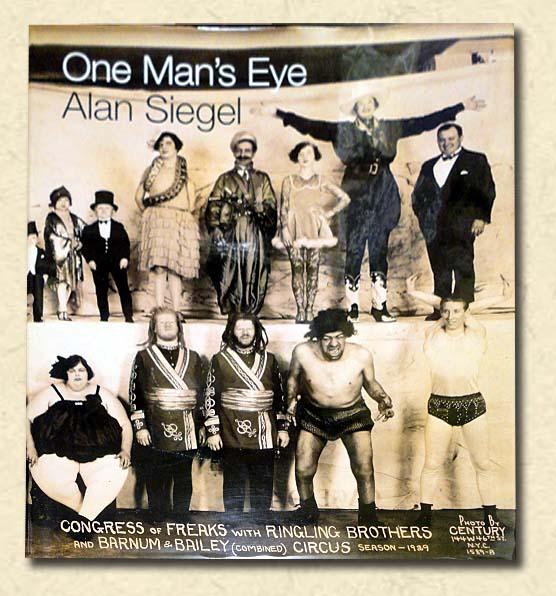
Siegel, Alan
One Man's Eye Photographs from the Alan Siegel Collection
Word Wise Press, New York NY, 2000.
Folio; hardcover, with blind-stamped upper board and spine titling and black endpapers; 176pp., with many colour and monochrome illustrations. Minor wear. Dustwrapper now professionally protected by superior non-adhesive polypropylene film. Near fine This large, elegantly produced volume reflects the eclectic tastes and ardent enthusiasms of one man, Alan Siegel, whose illustrious private collection of photographs rivals that of many museums. Truly one of the stunning volumes of photography to appear in recent years, One Man's Eye features 120 masterworks by Diane Arbus, Henri Cartier-Bresson, Man Ray, Robert Mapplethorpe, Robert Adams, Ezra Stoller, Robert Frank, Irving Penn, Walker Evans, Erwin Blumenfeld, Edward Weston, and many important contemporary photographers, including Jan Groover, Tina Barney, Zeke Berman, Tom Baril, Lynn Davis, and Michael Spano. Many of the images shown here have never been published before. The texts include an introduction to the collection by noted photography historian Robert A. Sobieszek, a discussion of how the Siegel collection was formed over the past 25 years, and commentaries on the individual works by the man whose singular eye gives this work its focus.
Click here to order

$55
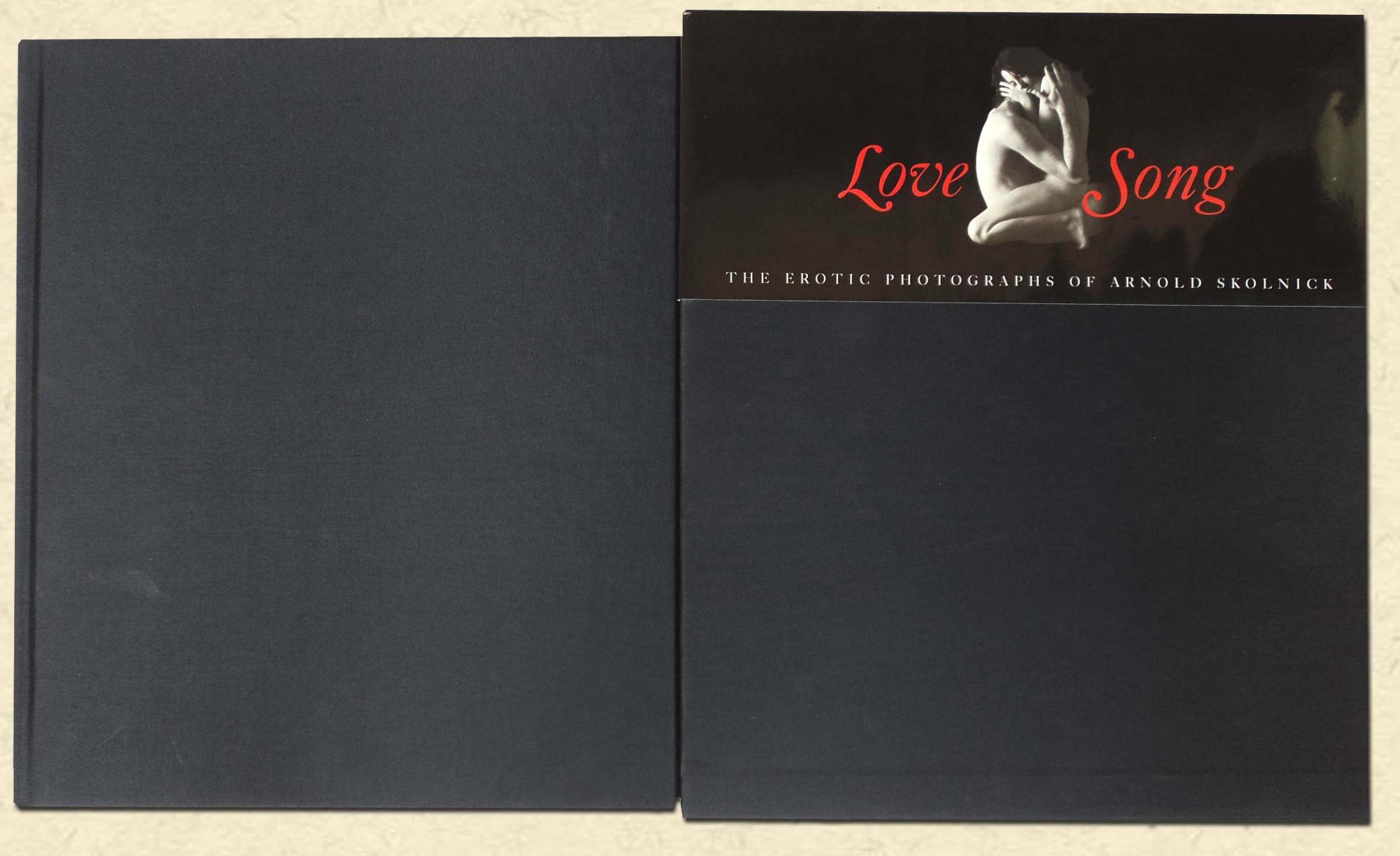
65817
Skolnick, Arnold
Love Song The Erotic Photographs of Arnold Skolnick
Quantuck lane Press, New York, 2008.
Quarto hardcover; 128pp., 85 monochrome illustrations. Dark blue cloth boards in slip-case. Remainder. New. Limited edition of 3,000 copies. Commissioned in the early 1970s for a book on sexual love these photographs were deemed "too sophisticated to be included in the book for which they were taken". One critic writes that these photos "give the forms of two people making love the grandeur and power of sculpture (one is, of course, reminded of Rodin)."
Click here to order

$45
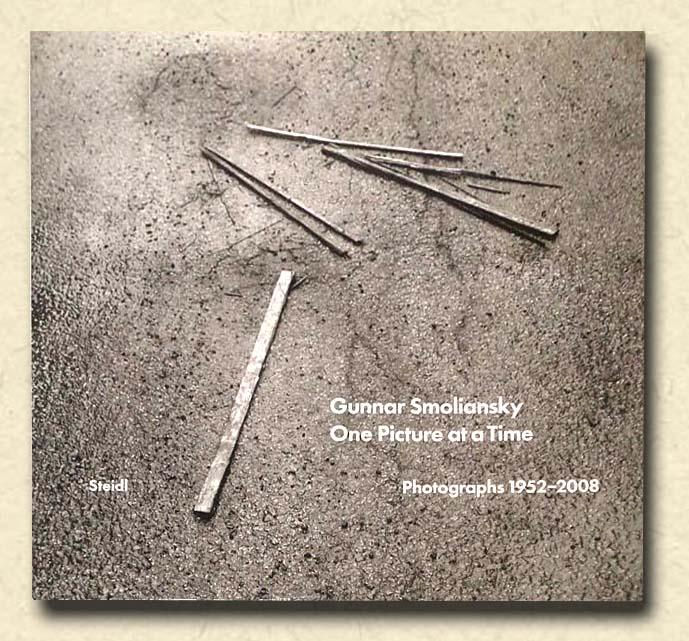
96193
Smoliansky, Gunnar (Marie Lundquist & Gerry Badger, eds.)
One Picture at a Time Photographs, 1952-2008
Steidl Publishers, Gottingen Germany, 2008.
Quarto; hardcover, with silver-gilt spine titles; 315pp., with many monochrome illustrations. Very minor wear. Near fine in like dustwrapper professionally protected by superior non-adhesive polypropylene film. "Born on the Swedish island of Gotsby, Smoliansky was obsessed with the camera from the age of eighteen when he bought his own Rolleiflex. Inspired by his homeland, his location was exclusively the subject of his work. Shooting images of everyday objects, gloves suspended from a window, a cloud passing over water, the silhouette of a tree like an ink spill on a white page; his works carry an aesthetic beauty and cinematic suspense. Although Smoliansky's work demonstrates a Swedish melancholy, it is also part of a broader European photojournalistic tradition. Very much like the practice of Andre Kertesz, his eye distils its subject. Form and line are used economically while unorthodox camera angles and aerial views render the subject abstract. In an age of destination photography where the exoticism of the subject often defines the photographer, Smoliansky seeks to find the extraordinary within the everyday."- Saltsjo-Boo
Click here to order

$175
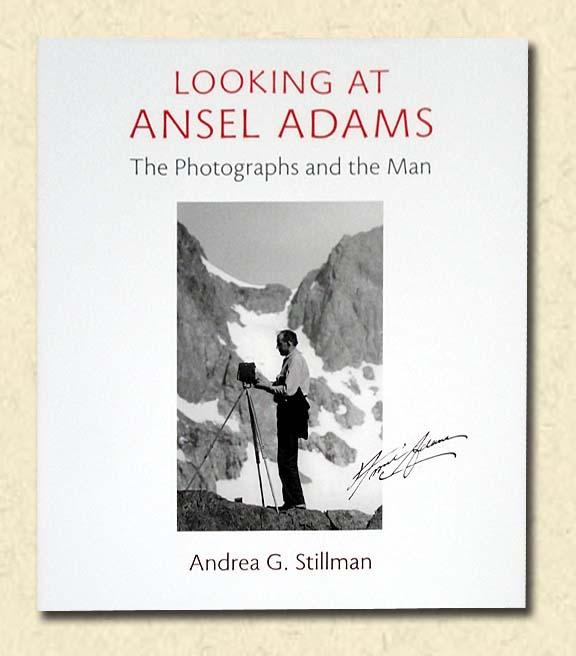
201784
Stillman, Andrea G.
Looking at Ansel Adams The Photographs and the Man
Little Brown & Co., New York NY, 2012.
Quarto hardcover; white illustrated boards with gray endpapers; 254pp., monochrome illustrations. Minor wear only; near fine in like dustwrapper.
Click here to order

$45
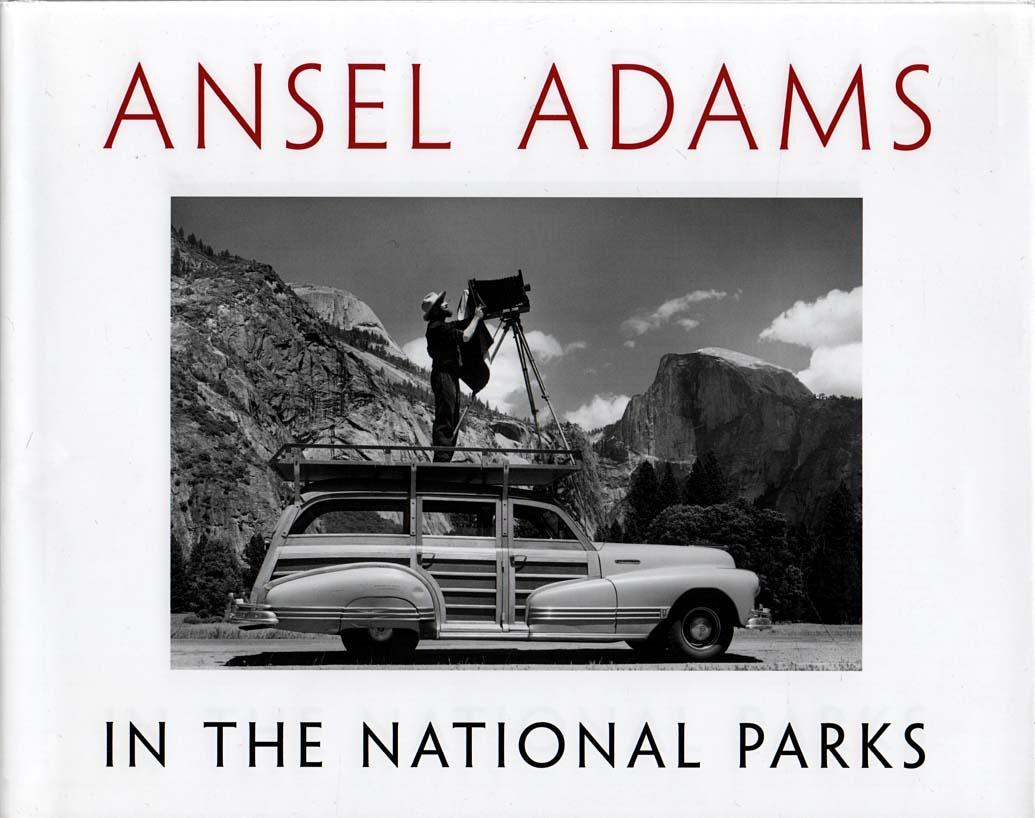
201783
Stillman, Andrea G. (ed.)
Ansel Adams in the National Parks Photographs from America's Wild Places
Little Brown & Co., New York NY, 2010.
Oblong quarto hardcover; white illustrated boards with gray endpapers; 344pp., monochrome illustrations. Minor wear only; near fine in like dustwrapper.
Click here to order

$45
86243
Szarkowski, John
Ansel Adams at 100
The Ansel Adams Publishing Rights Trust/Little Brown and Co., London, 2001.
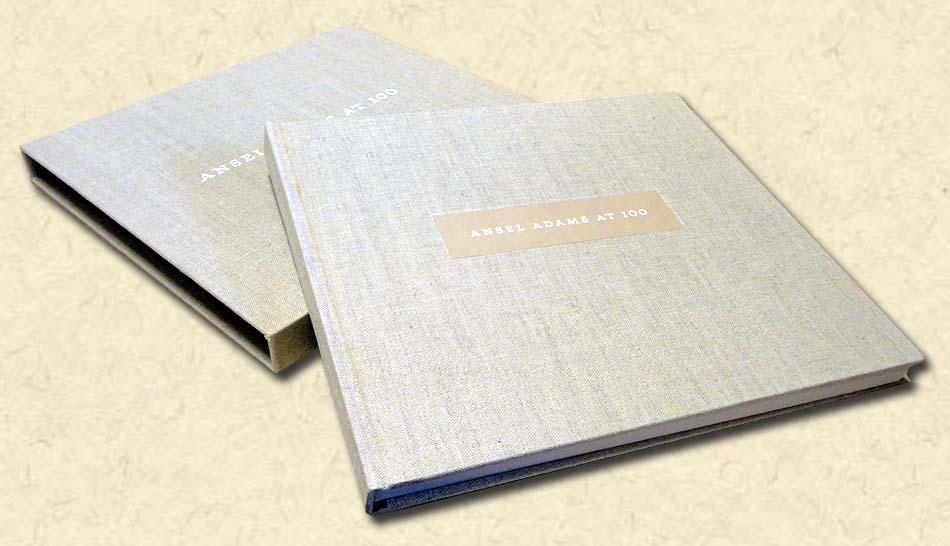
Landscape quarto; hardcover, full-cloth, with tipped-on upper board title; 192pp., with many monochrome illustrations. Minor wear. Near fine in a like slipcase. In commemoration of the one-hundredth anniversary of his birth, Ansel Adams at 100 presents an intriguing new look at this distinguished photographer's work. The legendary curator John Szarkowski, director emeritus of the Department of Photography at New York's Museum of Modern Art, has painstakingly selected what he considers Adams' finest work and has attempted to find the single best photographic print of each. Szarkowski writes that "Ansel Adams at 100 is the product of a thorough review of work that Adams, at various times in his career, considered important. It includes many photographs that will be unfamiliar to lovers of Adams' work, and a substantial number that will be new to Adams scholars. The book is an attempt to identify that work on which Adams' claim as an important modern artist must rest."
Click here to order

$85
74909
Tenneson, Joyce & Vicki Goldberg (intro.)
A Life in Photography 1968 - 2008
Bulfinch Press, New York, 2008.
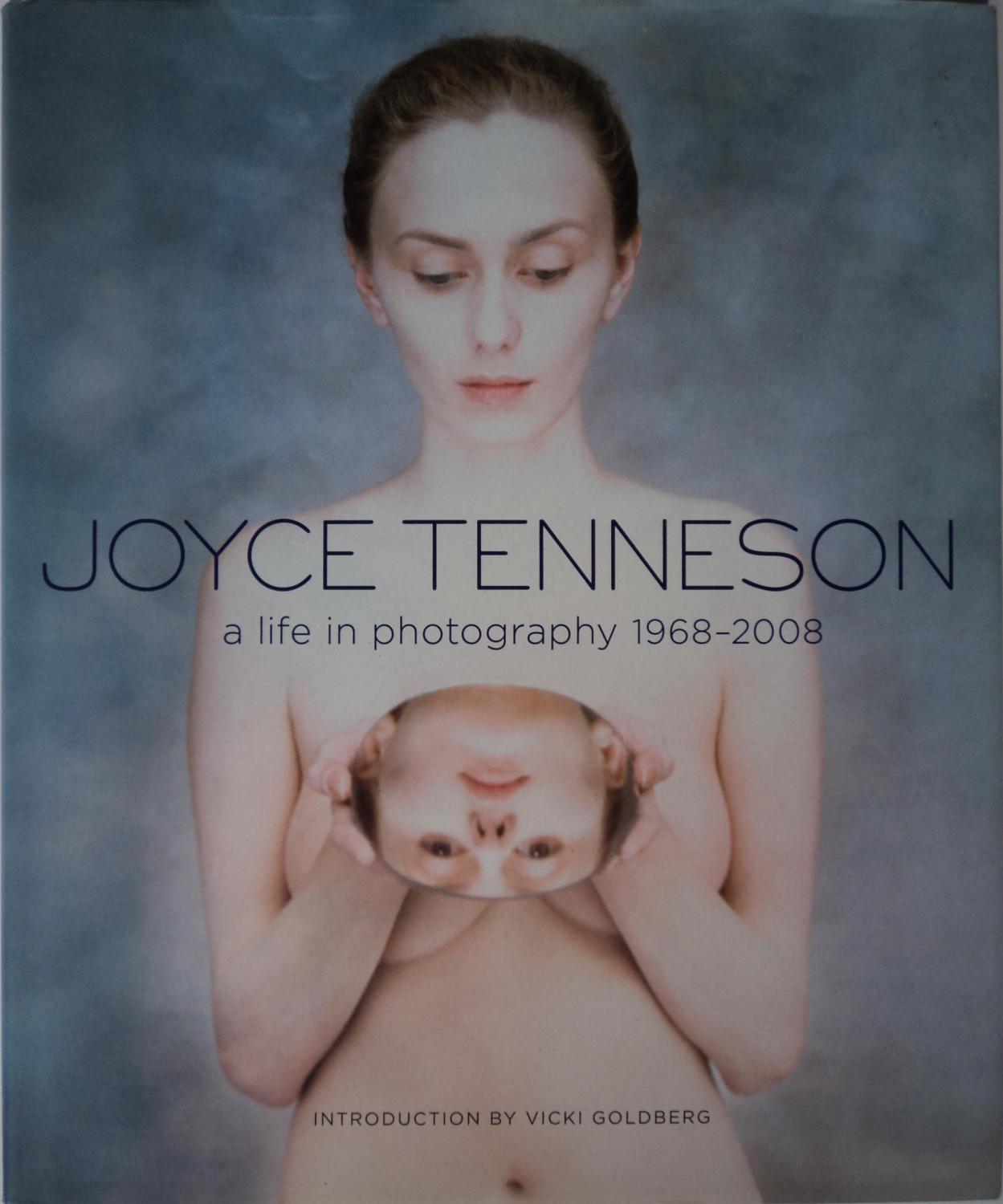
Quarto hardcover, 159pp., Black mark on upper text block edge; minor edgewear to dustwrapper. Very good to near fine and professionally protected by superior non-adhesive polypropylene film. Tenneson's portraits go beyond a surface recording of her subject's likeness. Her signature - style images attempt to show the inner person who hovers behind the facade. Says Tenneson: 'I want to allow others to reveal and celebrate aspects of themselves that are usually hidden. My camera is a witness. It holds a light up for my subjects to help them feel their own essence, and gives them the courage to collaborate in the recording of these revelations."
Click here to order

$35
201161
Various
Gerhard Richter - Katalog der Ausstellung. Exhibition Catalogue/ Texte / Werkubersicht. Catalogue raisonne 1962-1993: three volumes in slipcase
Hatje Cantz Verlag, 1993.
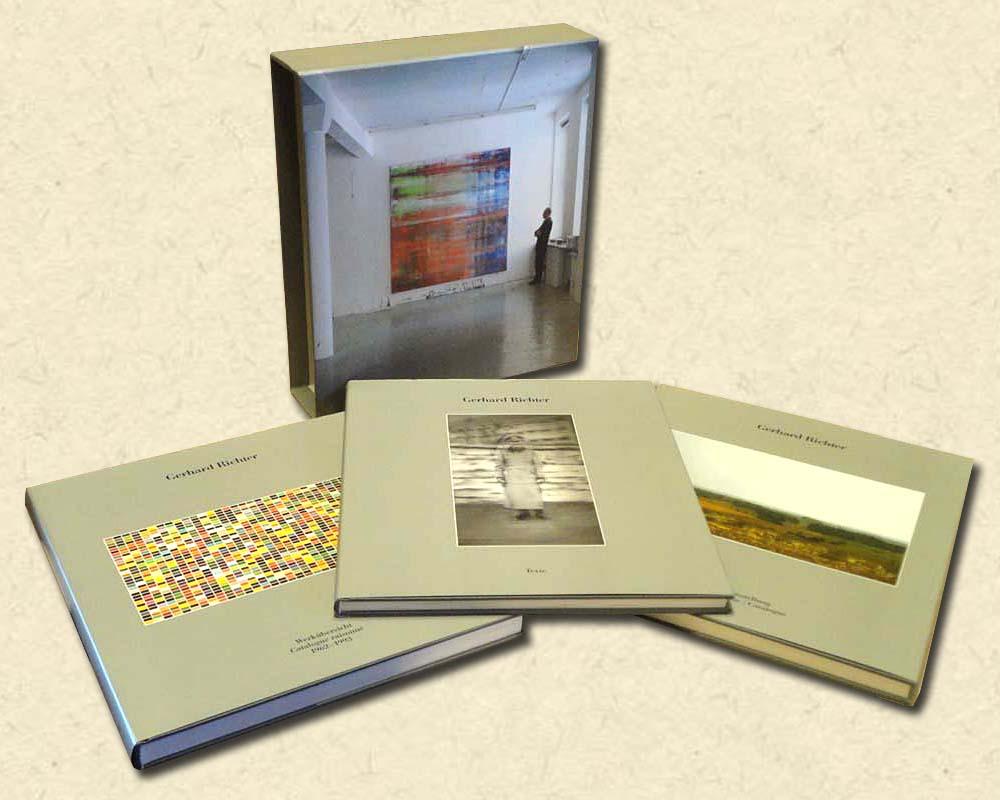
Three quarto hardcovers; grey cloth boards with black upper board and spine titling; 195 + 112 + 234pp., colour and monochrome illustrations. Some scattered spotting to pastedowns and a few spots on text block edges. Mild wear to dustwrapper edges. Very good to near fine. Text in German and English. Encased in matching gray slipcase.
Click here to order

$300
207730
Ventura, Paolo, & Eugenia Parry
Winter Stories
Aperture, New York NY, 2009.
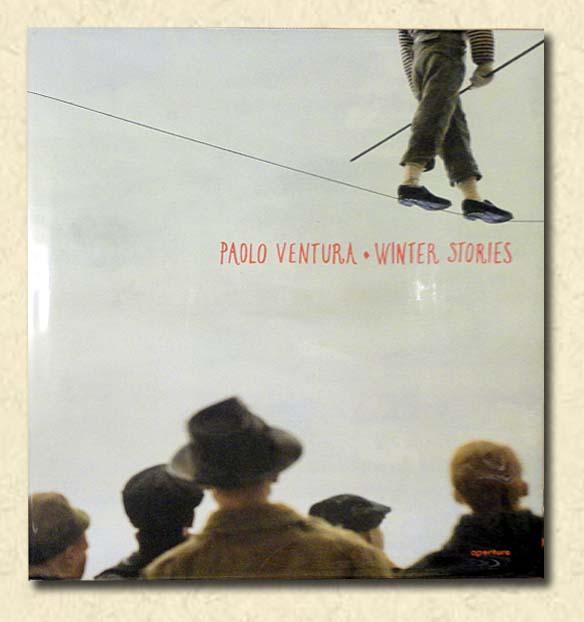
Folio; hardcover, with blind-stamped upper board and spine titling; 119pp., with many full-colour and monochrome illustrations. Minor wear. Dustwrapper professionally protected by superior non-adhesive polypropylene film. Near fine. In Winter Stories, internationally acclaimed artist Paolo Ventura presents scenes from the memory bank of a fictional circus performer as he looks back on his life during his final moments. Using his own childhood memories, beautiful miniature figures, and extraordinarily detailed sets constructed from props purchased at flea markets, Ventura creates a fictional Northern Italian town where a travelling carnival has stopped. Ventura's work evokes a simpler time from Italy's past, but with a dark twist - shadowy backdrops and retreating figures remind us that this is not quite Eden. A master of narrative staged photography, Ventura brings his imagined stories to life by building three-dimensional sets in miniature. With an essay by Eugenia Parry, Winter Stories showcases the ink drawings and watercolours that Ventura uses as a starting point for his stories, and images of the handmade album of Polaroids of works in progress that he creates as guides to his elaborate sets. Edition limited to 2,000 copies.
Click here to order

$65
201281
Weston, Edward (ed. Gilles Mora)
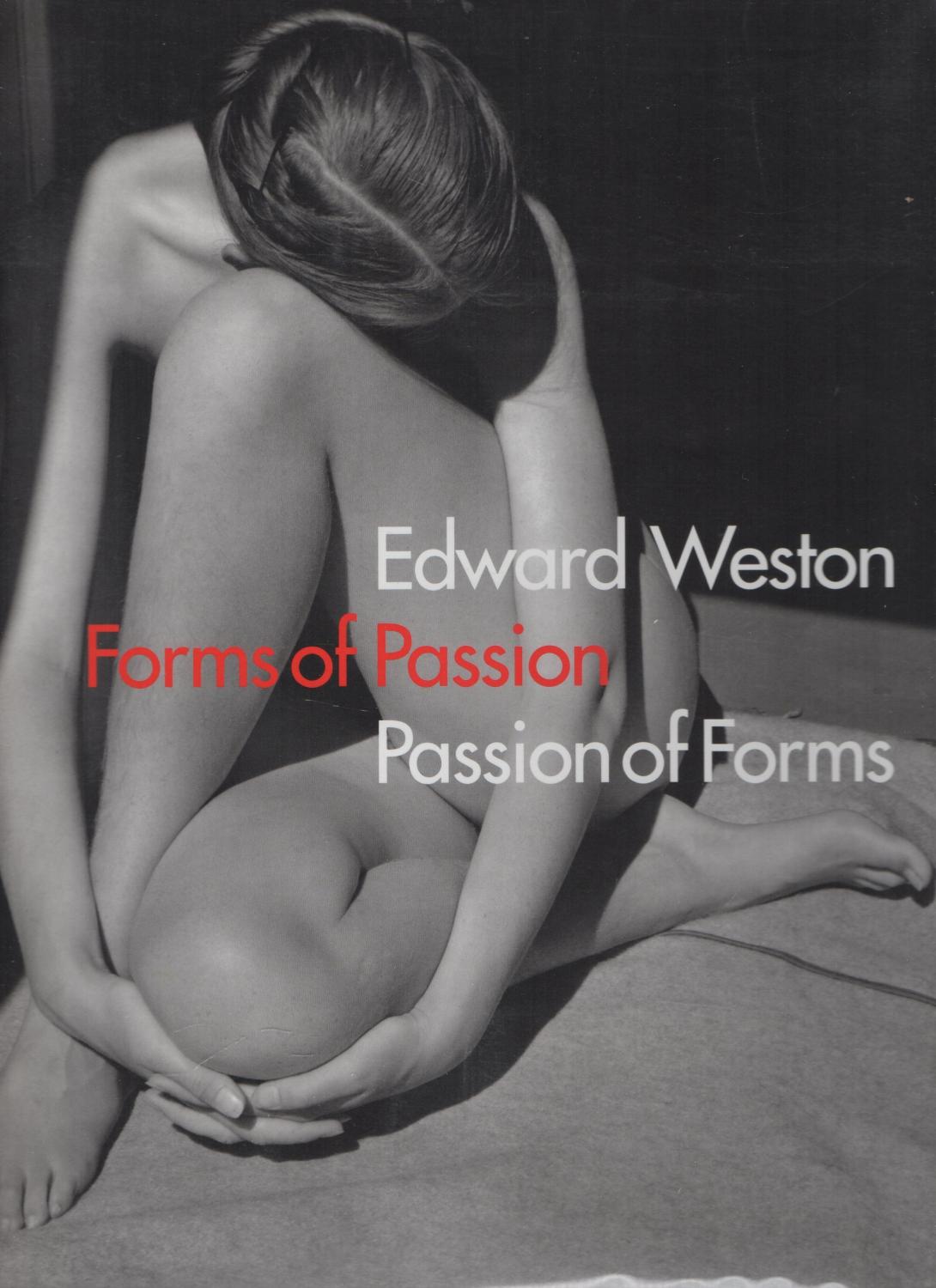
Forms of Passion, Passion of Forms
Thames & Hudson, London, 1995.
Large quarto hardcover; gray cloth boards with white spine titling and beige endpapers; 367pp., monochrome plates. Inscription in pencil. Minor wear only; near fine in like dustwrapper now professionally protected by superior non-adhesive polypropylene film. "This lavish text-and-picture reconstruction of early-20th-century art photography icon Edward Weston and his work aligns him within the defining cultural dimension of the 1990s: human sensuality. 'Weston's forms are nothing if not sensually motivated,' writes Mora, the book's editor and one of five photography historians who here analyze unfolding phases of his artistic development. We are shown his commercial portraiture and pictorialism and the Stieglitz Photo-Secession, Group f.64's unmanipulated style, his 'coherent whole' discovery in Mexico, an exploration and artistic transformation anew on Guggenheim grants and the pure-photography 'eternalizing' and 'objectification' of a universal subject, whether a seashell, a bell pepper ('reeks with sexuality') or the female form in seemingly limitless sensual variety. More than 50 nude studies are included." - Publishers Weekly
Click here to order

$100
89445
Weston, Edward (Susan Morgan, ed.; Foreword by Cole Weston)
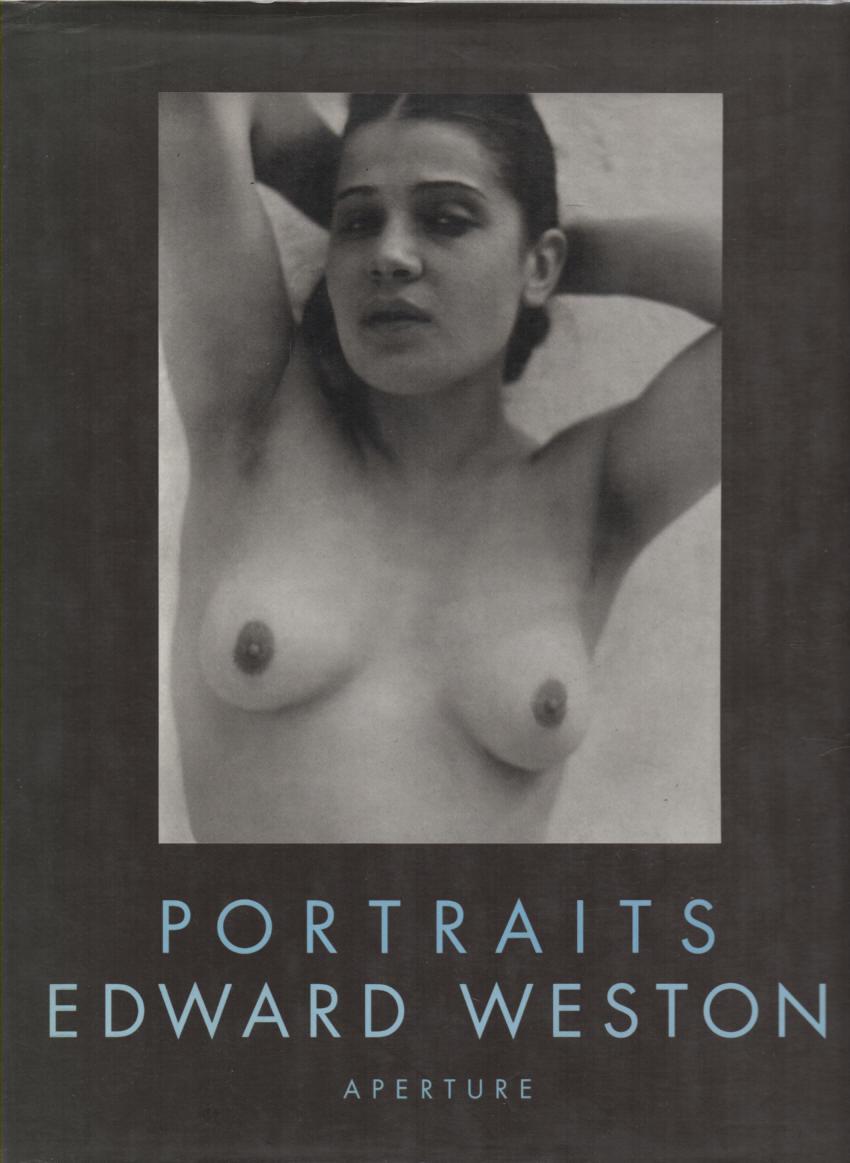
Edward Weston - Portraits
Aperture, New York NY, 1995.
First edition. Quarto hardcover; dark red buckram boards; 95pp., monochrome plates. Mild toning to text block edges; wear and a few scrapes to dustwrapper edges and corners, tiny tears at spine panel extremities. Very good to near fine otherwise and professionally protected by superior non-adhesive polypropylene film. Weston spent the greatest part of his towering career setting a standard of photographic portraiture. Included are images of Diego Rivera, Frida Kahlo, Tina Modotti, and James Cagney. Together these photographs create a powerful volume that demands a fresh look at this central endeavour of his life's work.
Click here to order

$32
74897
Williams. John (ed. & intro.)
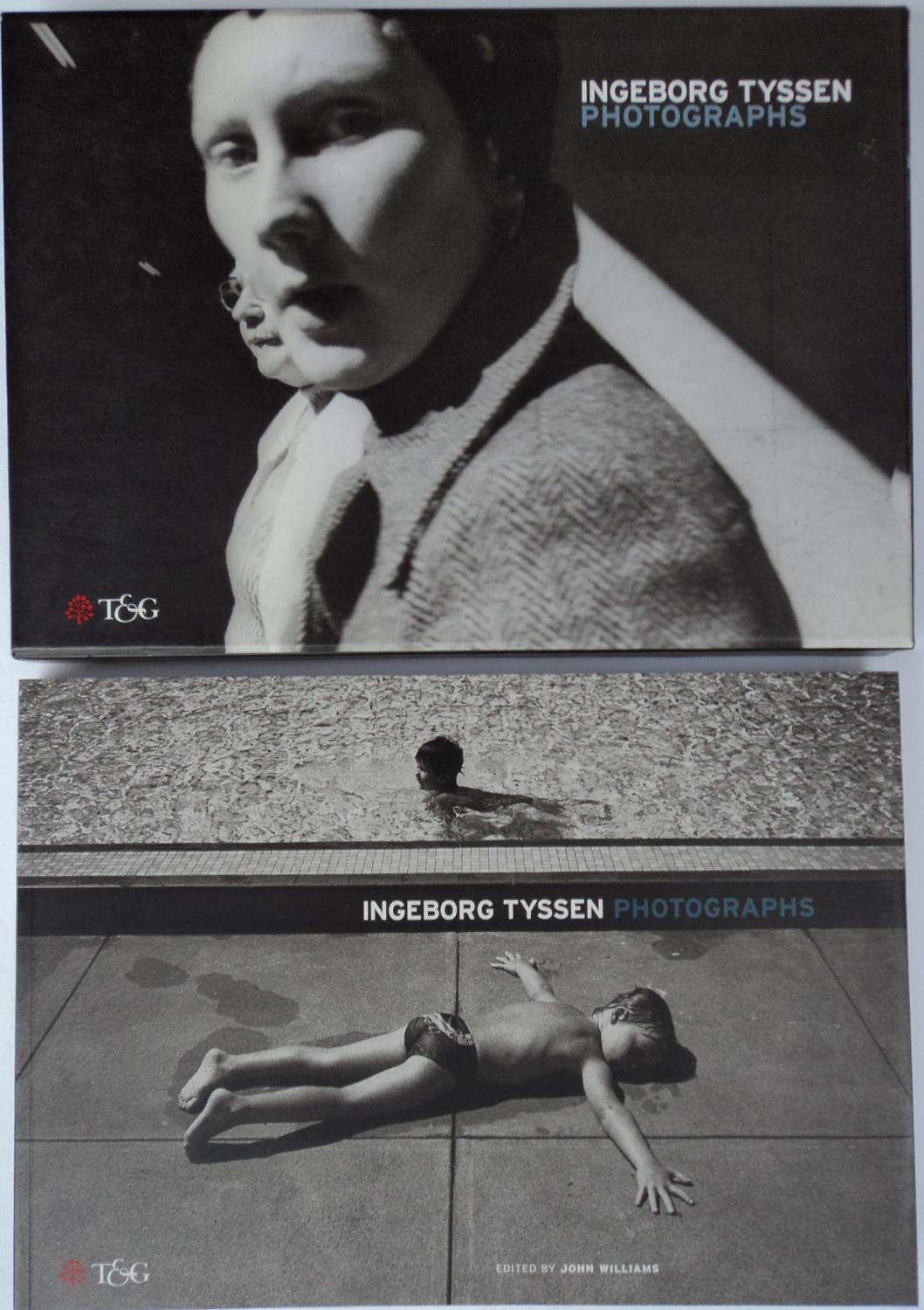
Ingeborg Tyssen: Photographs 1974 - 1992
T&G, Sydney, 2006.
Oblong quarto paperback in slipcase, 205pp., colour and monochrome illustrations. Fine in slightly scuffed slipcase. Ingeborg Tyssen was one of the great Australian photographers of her generation and generally overlooked by critics during her lifetime in favour of her male counterparts. This book spans 20 years of creative output from 1974-94, and shows Tyssen to be a highly original observer of modern life. Shaune Lakin of Monash Art Gallery remarked that "Tyssen's story is one of the great stories of Australian photography. Her arrival in Australia at the age of 12 as an immigrant from her native Holland and her struggle with displacement and new language and landscape is one that many Australians are familiar with. Being one of Australia's first street photographers, she made a significant contribution to the history of Australian photography. Her experience of migration gave Tyssen a rare ability to observe people in their environment. Her earliest photographs, taken in the city streets, fun parks, and suburbs of 1970s were acute depictions of the urban isolation she felt in her new homeland. Her experience and pictures certainly remain relevant to contemporary Australia." Tyssen studied photography under John Williams, who became her husband. She was a co-founder of the Photographers Gallery in South Yarra in 1975.
Click here to order

$45