lamdha books -
Catalogue of books on science and mathematics

Click on the small images at right to see a larger picture

96748
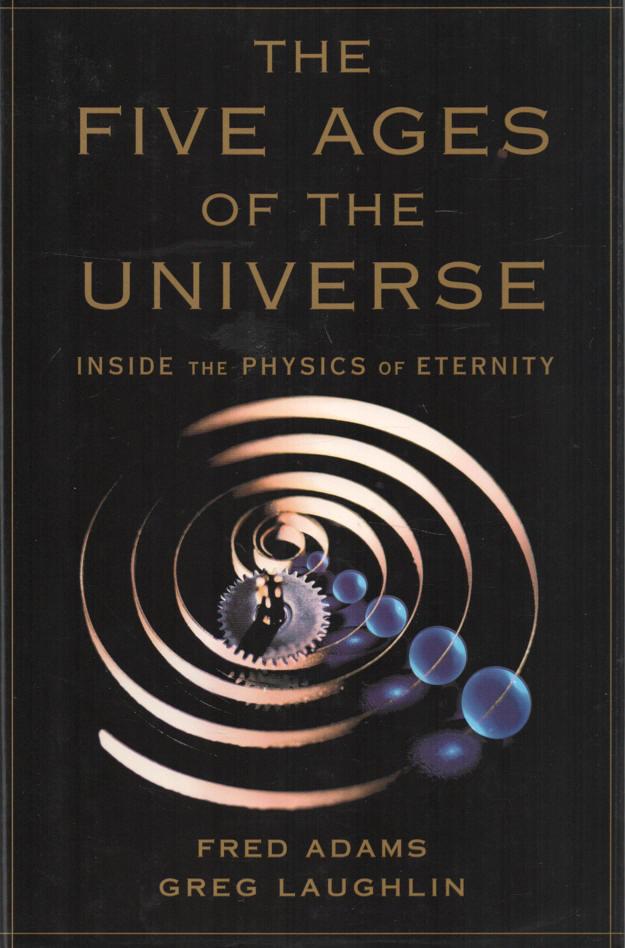
Adams, Fred, & Greg Laughlin
The Five Ages of the Universe Inside the Physics of Eternity
The Free Press/Simon & Schuster Inc., New York NY, 1999.
Octavo; hardcover, quarter-bound in papered boards with gilt spine-titling; 251pp., with diagrams and monochrome illustrations. Minor wear; text block to edge lightly spotted; some dog-eared pages. Dustwrapper. Very good to near fine. As the twentieth century closed, Fred Adams and Greg Laughlin captured the attention of the world by identifying the five ages of time. In The Five Ages of the Universe, Adams and Laughlin demonstrate that we can now understand the complete life story of the cosmos from beginning to end. Adams and Laughlin have been hailed as the creators of the definitive long-term projection of the evolution of the universe. Their achievement is awesome in its scale and profound in its scientific breadth. But The Five Ages of the Universe is more than a handbook of the physical processes that guided our past and will shape our future; it is a truly epic story. Without leaving earth, here is a fantastic voyage to the physics of eternity. It is the only biography of the universe you will ever need
Click here to order

$23
85309
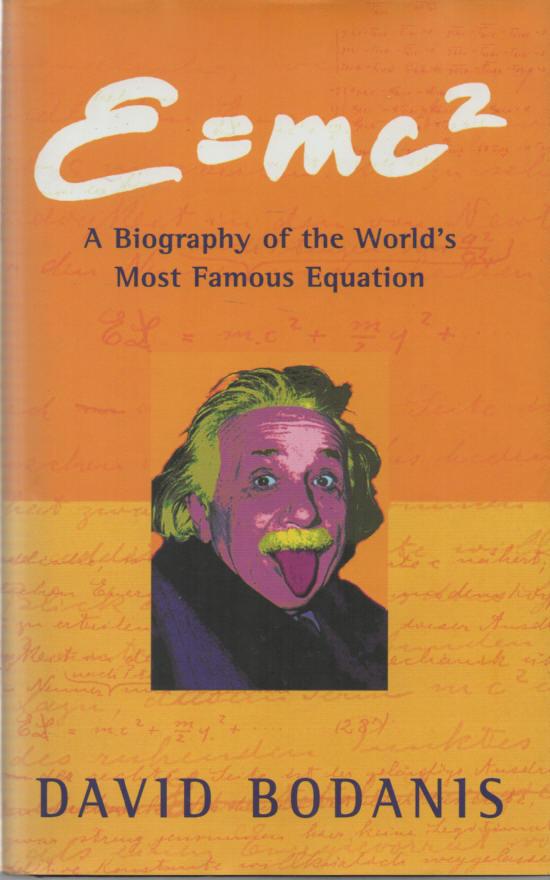
[Albert Einstein] Bodanis, David
E = mc2 A biography of the world's most famous equation
Macmillan, 2000.
Hardcover, octavo; blue boards with silver gilt spine titling; 324pp., monochrome illustrations. Mild wear; a few small spots on upper text block edges. Otherwise a near fine copy in like dustwrapper.
Click here to order

$18
37473
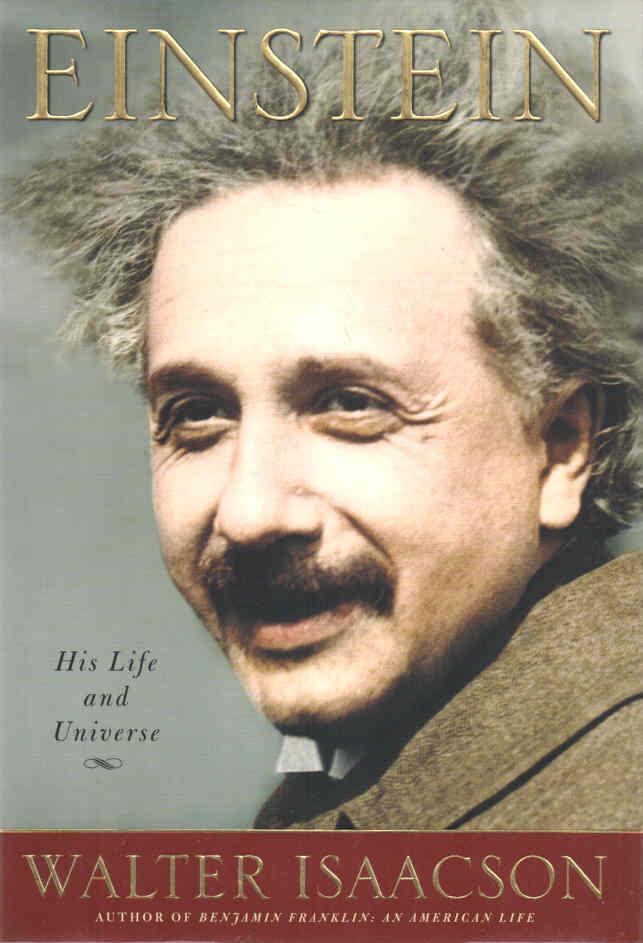
[Albert Einstein] Isaacson, Walter
Einstein His Life and Universe
Simon & Schuster Inc., New York NY, 2007.
Octavo; hardcover, quarter-bound in papered boards with gilt spine-titling and illustrated endpapers; 680pp., untrimmed, with many monochrome illustrations. Minor wear. Near fine in like dustwrapper. "In 2005, astronomers and cosmologists celebrated - in style - the 100th anniversary of their annus mirabilis: 1905. This was the year in which Albert Einstein wrote a set of scientific papers - including one containing the equation E=mc2 that changed our understanding of the universe - and which became the cornerstones of quantum mechanics and general relativity: the twin intellectual pinnacles of the 20th century... According to Isaacson, we should regard Einstein not as an august scientific priest, but 'as a rebel with reverence for the harmony of nature', a scientist who rated imagination far higher than knowledge and an individual whose motto, at least in his early years, was 'Long live impudence! It is my guardian angel.' Having displayed 'a sassy attitude' at the Zurich Polytechnic, where he studied physics, Einstein was his year's only graduate not to be offered a job. He was even rejected by the Swiss army for having flat feet and varicose veins. In the end, he made do with the Swiss patent office. And a good thing too, says Isaacson. Einstein did his day's work in a couple of hours and then sat back in his 'worldly cloister'...in order to create some of the most beautiful, challenging ideas of modern science. 'Physics was to be upended, and Einstein was poised to be the one to do it,' says Isaacson. It's one of the greatest stories of modern science and a riveting read." - Robin McKie
Click here to order

$30
95203
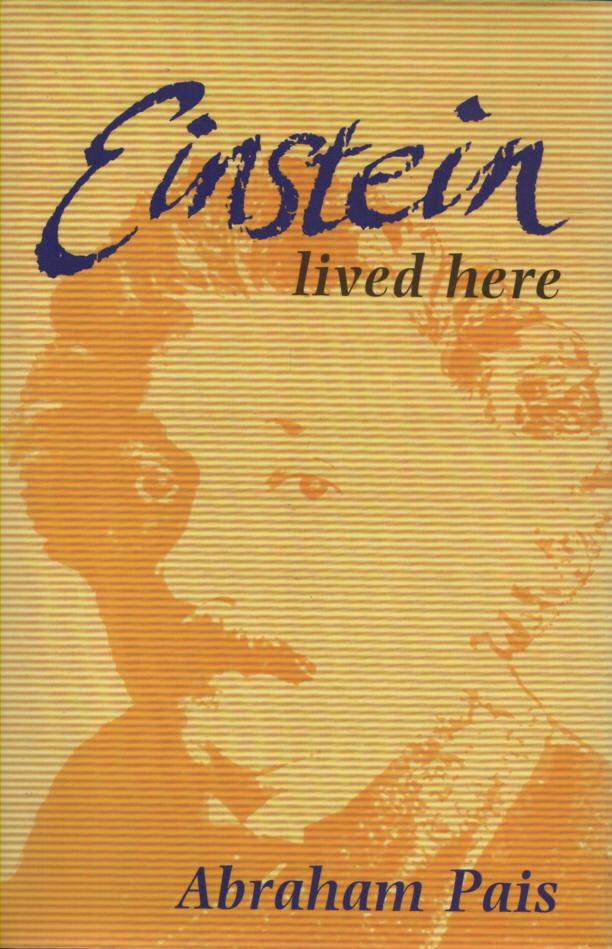
[Albert Einstein] Pais, Abraham
Einstein Lived Here
Clarendon Press, Oxford, 1994.
Hardcover, octavo; black boards with gilt spine titling; 282pp., monochrome illustrations and diagrams. Mild scattered spotting on upper text block edge. Near fine otherwise in like dustwrapper.
Click here to order

$25
98503
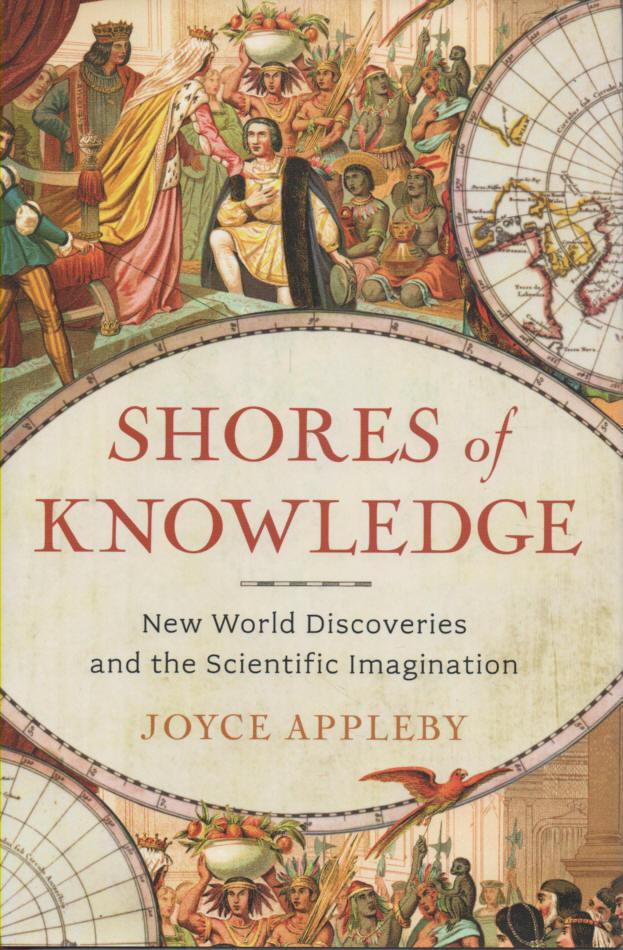
Appleby, Joyce
Shores of Knowledge: New World Discoveries and the Scientific Imagination
W.W. Norton, New York, 2013.
Octavo hardcover; 308pp. Dustwrapper. Remainder, new. When Columbus first returned to Spain from the Caribbean, he dazzled King Ferdinand and Queen Isabella with exotic parrots, tropical flowers, and bits of gold. Inspired by the promise of riches, countless seafarers poured out of the Iberian Peninsula and wider Europe in search of spices, treasure, and land. Many returned with strange tales of the New World. Curiosity began to percolate through Europe as the New World's people, animals, and plants ruptured prior assumptions about the biblical description of creation. The Church, long fearful of challenges to its authority, could no longer suppress the mantra 'Dare to know!' Noblemen began collecting cabinets of curiosities; soon others went from collecting to examining natural objects with fresh eyes. Observation led to experiments; competing conclusions triggered debates. The foundations for the natural sciences were laid as questions became more multifaceted and answers became more complex. Carl Linneaus developed a classification system and sent students around the globe looking for specimens. Museums, botanical gardens, and philosophical societies turned their attention to nature. National governments undertook explorations of the Pacific. Eminent historian Joyce Appleby vividly recounts the explorers' triumphs and mishaps, including Magellan's violent death in the Philippines; the miserable trek of the 'new Argonauts' across the Andes on their mission to determine the true shape of the earth; and how two brilliant scientists, Alexander Humboldt and Charles Darwin, travelled to the Americas for evidence to confirm their hypotheses about the earth and its inhabitants. Drawing on detailed eyewitness accounts, Appleby also tells of the turmoil created in the all societies touched by the explorations. This sweeping, global story imbues the Age of Discovery with fresh meaning, elegantly charting its stimulation of the natural sciences, which ultimately propelled Western Europe toward modernity.
Click here to order

$23
96837
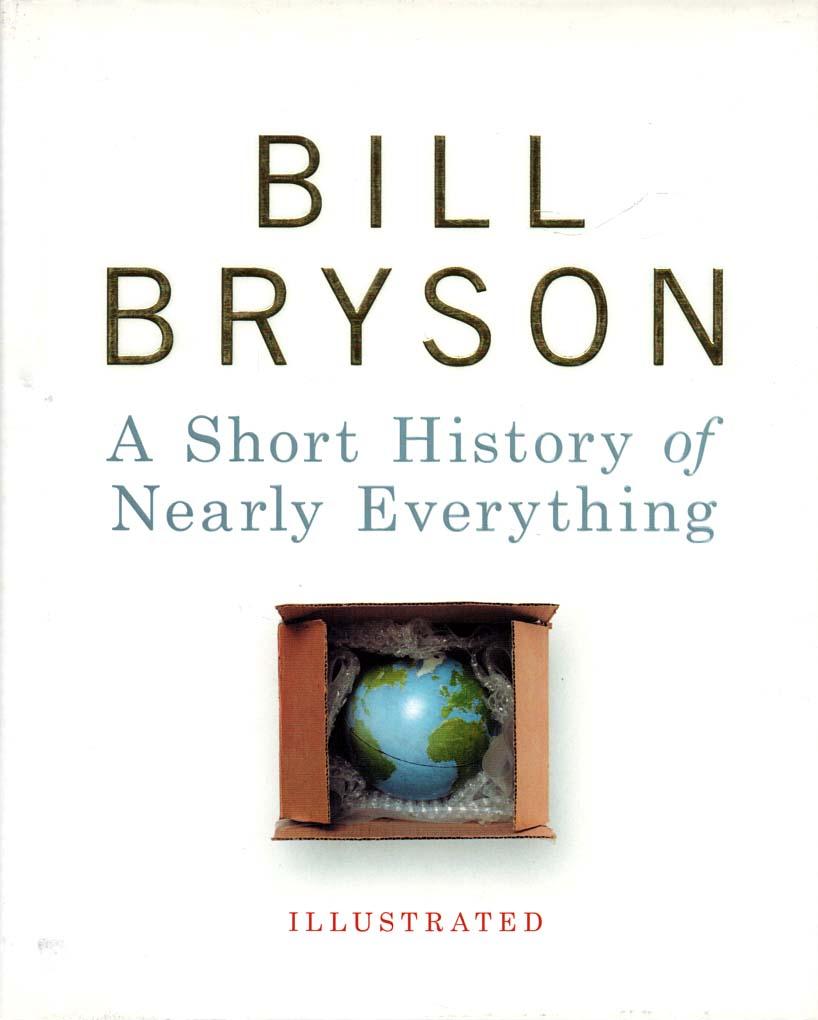
Bryson, Bill
A Short History of Nearly Everything Illustrated
Doubleday/Transworld Publishing/Random House (Aust.) Pty. Ltd., Milsons Point NSW, 2005.
First edition thus: quarto; hardcover, with gilt spine titling and decorated endpapers; 624pp., with many full-colour and monochrome illustrations. Minor wear; previous owner's ink inscription to the half-title page. Dustwrapper rubbed and edgeworn. Very good to near fine. In Bryson's biggest book, he confronts his greatest challenge: to understand - and, if possible, answer - the oldest, biggest questions we have posed about the universe and ourselves. Taking as territory everything from the Big Bang to the rise of civilization, Bryson seeks to understand how we got from there being nothing at all to there being us. To that end, he has attached himself to a host of the world's most advanced (and often obsessed) archaeologists, anthropologists, and mathematicians, travelling to their offices, laboratories, and field camps. He has read (or tried to read) their books, pestered them with questions, apprenticed himself to their powerful minds. "A Short History of Nearly Everything" is the record of this quest, and it is a sometimes profound, sometimes funny, and always supremely clear and entertaining adventure in the realms of human knowledge, as only Bill Bryson can render it. Science has never been more involving or entertaining.
Click here to order

$32
96017
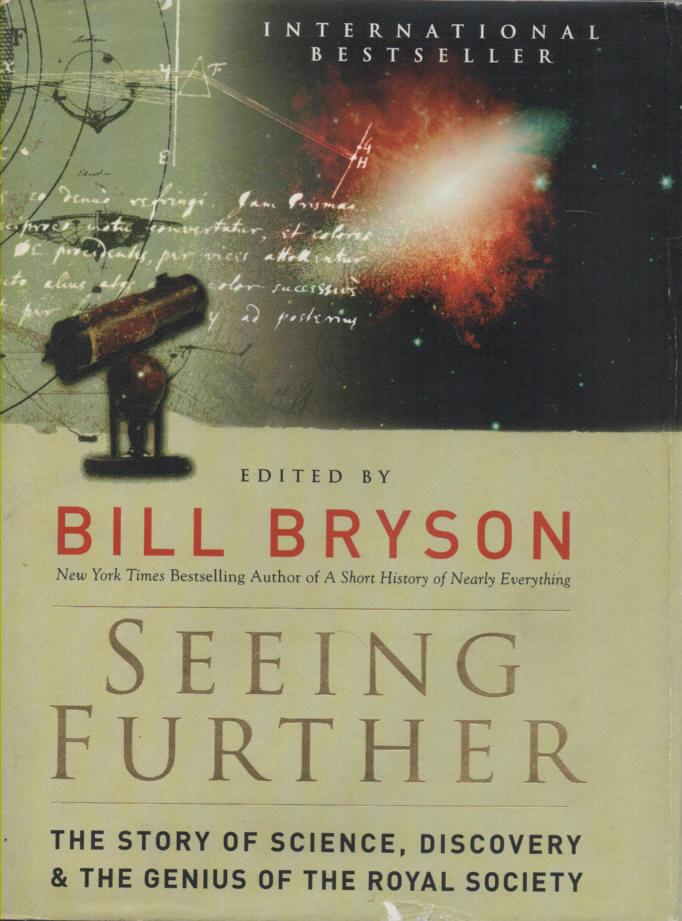
Bryson, Bill (ed.)
Seeing Further The Story of Science, Discovery and The Genius of the Royal Society
Harper Collins, London, 2010.
First UK edition. Small quarto hardcover; quarter bound black papered boards with green spine red gilt spine titling; 506pp., colour and monochrome illustrations. Minor wear; a few spots on text block edges; mild edgewear to dustwrapper with tiny tear and scrape on lower front edge. Very good to near fine and wrapper now professionally protected by superior non-adhesive polypropylene film. "Bryson's contributors celebrate aeronautics and evolution; suspension bridges and systematic biology; X-ray crystallography and lightning conductors; Bayesian distribution and Bakelite; climate science and complexity theory. This is a book of cerebral riches, heavy with history, to be consumed at leisure. It is also beautifully illustrated. All but one of its 22 contributors wrote specially for this anthology. Richard Holmes, fresh from his scientific history The Age of Wonder, provides new material on 18th-century balloon flights. Richard Dawkins sums up the significance of Darwin's achievement with renewed metaphorical force. The Natural History Museum palaeontologist Richard Fortey highlights the importance of collections; Steve Jones raises some of the puzzles of biodiversity; the physicist and science fiction author Gregory Benford contemplates the enigma of time. Every now and then, the book begins to seem like a royal variety performance: well-known acts trip on to the stage, perform a much-loved routine and disappear, to be followed by something completely different yet equally familiar. But all contributors in their different ways also remind us that the show goes on. Do we see more clearly than Hooke and Newton did three and a half centuries ago? Oliver Morton argues that we may have traded one picture of the Earth for another, but our understanding of the globe remains incomplete; Ian Stewart reminds us that for all Galileo's astuteness, even scientists can be oblivious to the subtle mathematics that underpin their research; John Barrow considers the apparent simplicity of cosmological physics and points out that we do not observe the laws of nature, we see only the outcomes of those laws. 'Outcomes are much more complicated than the laws that govern them.' The physicist and astrobiologist Paul Davies reminds us that even the keystone of the Copernican revolution - the assumption that there is nothing special about us - might be incompletely laid. Is the solar system typical? Perhaps, but supporting evidence began to emerge only 15 years ago, and carbon-based life exists on Earth but, as far as we know, nowhere else. Is there anything typical about our position in spacetime? Davies has his doubts; carbon, manufactured by burning stars, was not possible for the first five billion years, and may not be possible 100 billion years from now, although the universe could drag on, getting ever colder and darker, for another 10 billion billion empty years. Gregory Benford makes the same point: 'We seem to occupy an unusual niche in the long history of this universe.' The novelist Maggie Gee takes global warming as a text for an entertaining sermon on fiction's love affair with apocalypse. The astronomer Martin Rees, president of the Royal Society, who in a 2003 book warned that we might already have begun Our Final Century, is sure that many mysteries remain. 'Most of the questions still being addressed simply couldn't have been posed 50 years ago (or even 20): we can't conceive what problems will engage our successors." - Tim Radford in The Guardian.
Click here to order

$28
42482
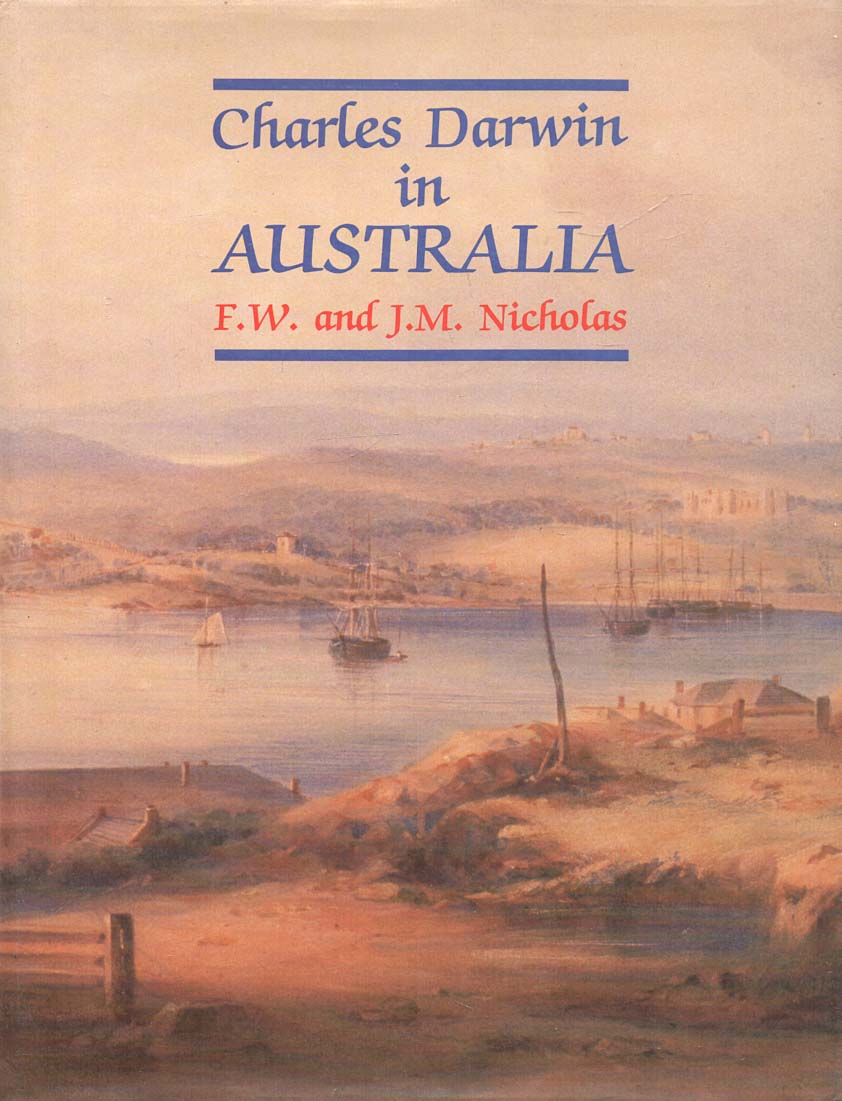
[Charles Darwin] Nicholas, F.W. & J.M.
Charles Darwin in Australia - signed copy With illustrations and additional commentary from other members of the "Beagle's" company including Conrad Martens, Augustus Earle, Captain FitzRoy, Philip Gidley King, and Syms Covington
Cambridge University Press, Sydney NSW, 1989.
Quarto; hardcover, with gilt spine-titling and endpaper maps; 175pp., with a colour portrait frontispiece and many full-colour and monochrome illustrations. Minor wear; text block top edge dusted; signed by the authors in ink to the title page. Dustwrapper lightly spotted on the verso; now professionally protected by superior non-adhesive polypropylene film. Very good. Based on a new transcription of the entire Australian section of Darwin's diary supplemented by extracts from the notebook he carried on a trip to Bathurst. The trip is covered thus in detail. His observations concern not only the flora and fauna but also the society of the day.
Click here to order

$90
96745
[Charles Darwin] Quammen, David
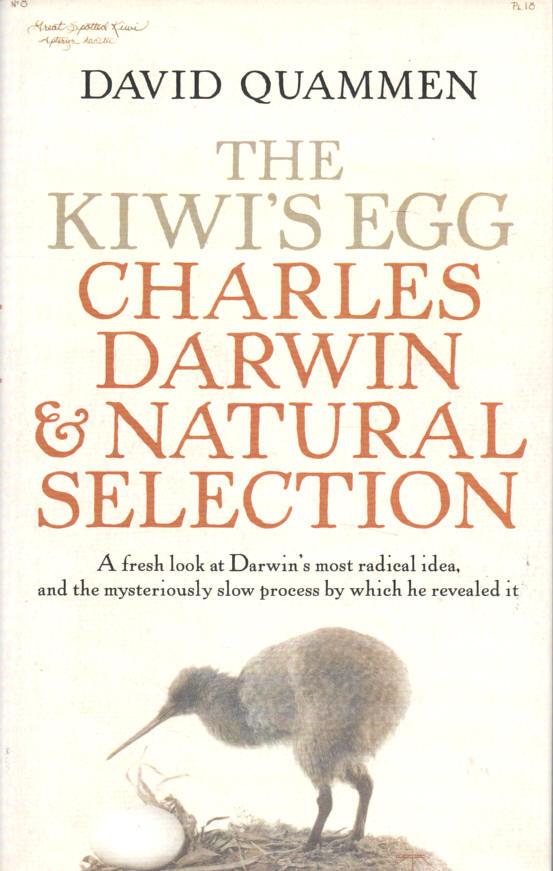
The Kiwi's Egg Charles Darwin & Natural Selection
Weidenfeld & Nicolson/The Orion Publishing Group Ltd., London, 2007.
Octavo; hardcover, with silver-gilt spine-titling; 304pp. Very minor wear. Dustwrapper. Near fine. "Darwin came up with the theory of evolution, right? Wrong. Evolution, if not in the scientific mainstream, was part of the common intellectual currency of his time. His own grandfather espoused a version of it. What Darwin proposed was the blind, purposeless and godless mechanism by which it worked: natural selection. Quammen pays due attention to Darwin's other scientific achievements: his naturalist's observations from the Beagle voyage, his research on barnacles and worms, and his foray into geology. He also presents an acute but sympathetic portrait of Darwin the man: intellectually proud but publicity-shy, an undemonstrative but loving family man, martyr to a mysterious vomiting ailment. An elegant and readable account of one of the last great Victorian gentleman scientists, this should convince unbelievers - including around 60 per cent of all Americans, according to recent surveys - that Darwin was in all essentials right. Don't hold your breath, though." - Brandon Robshaw
Click here to order

$22
215228
Collins, Harry
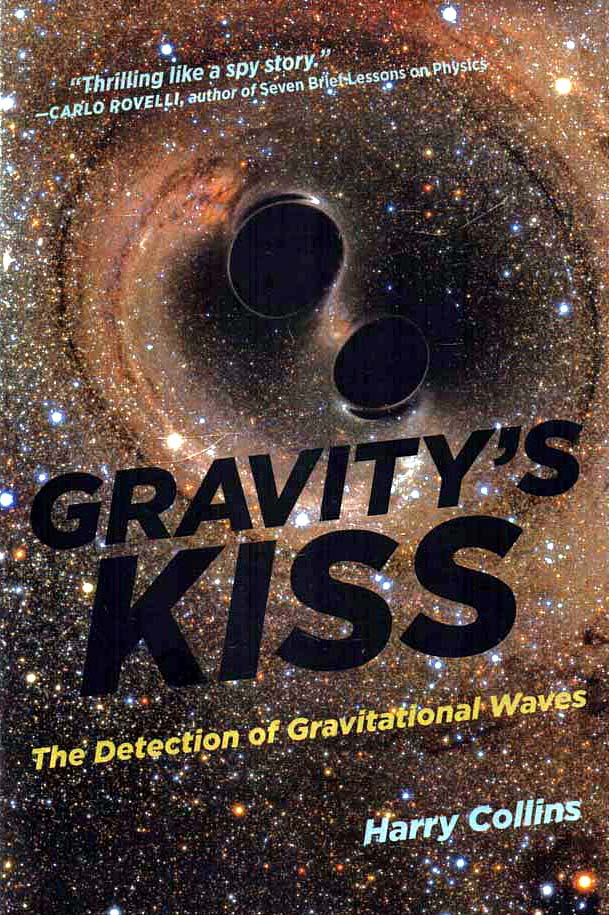
Gravity's Kiss The Detection of Gravity Waves
Massachusetts Institute of Technology/The MIT Press, Cambridge MA, 2017.
Octavo; hardcover, with gilt spine titles; 408pp., with diagrams and monochrome illustrations. Dustwrapper. Remainder. New. Scientists have been trying to confirm the existence of gravitational waves for fifty years. Then, in September 2015, came a "very interesting event" (as the cautious subject line in a physicist's email read) that proved to be the first detection of gravitational waves. In "Gravity's Kiss", Harry Collins - who has been watching the science of gravitational wave detection for forty-three of those fifty years and has written three previous books about it - offers a final, fascinating account, written in real time, of the unfolding of one of the most remarkable scientific discoveries ever made. Predicted by Einstein in his theory of general relativity, gravitational waves carry energy from the collision or explosion of stars. Dying binary stars, for example, rotate faster and faster around each other until they merge, emitting a burst of gravitational waves. It is only with the development of extraordinarily sensitive, highly sophisticated detectors that physicists can now confirm Einstein's prediction. This is the story that Collins tells. Collins, a sociologist of science who has been embedded in the gravitational wave community since 1972, traces the detection, the analysis, the confirmation, and the public presentation and the reception of the discovery - from the first email to the final published paper and the response of professionals and the public. Collins shows that science today is collaborative, far-flung (with the physical location of the participants hardly mattering), and sometimes secretive, but still one of the few institutions that has integrity built into it.
Click here to order

$30
212391
Costa, James T.
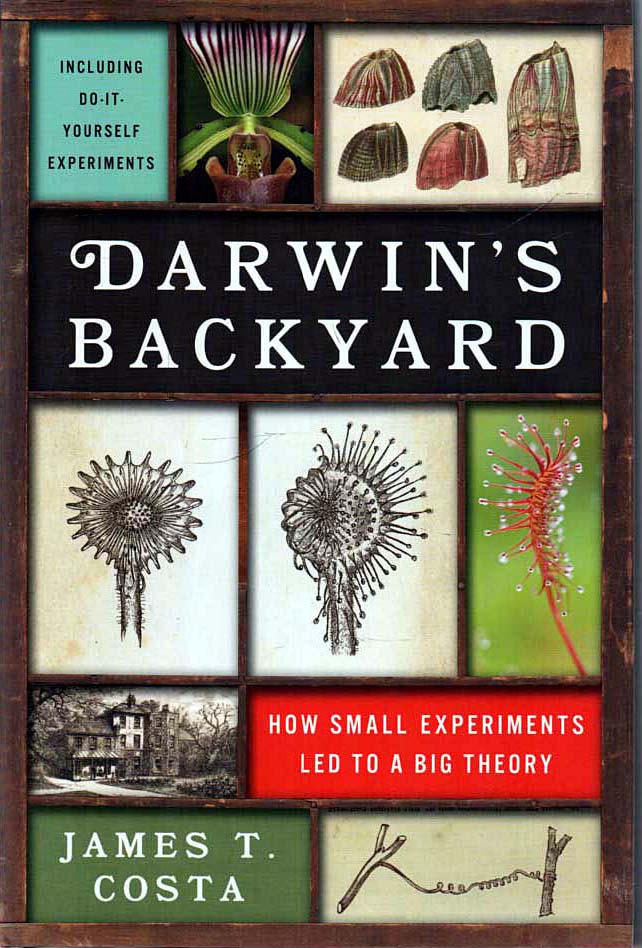
Darwin's Backyard How Small Experiments Led to a Big Theory; including do-it-yourself experiments
W.W. Norton & Company Inc., New York NY, 2017.
Octavo; hardcover, quarter-bound in papered boards with gilt spine titles; 441pp., with many monochrome diagrams and illustrations. Dustwrapper. Remainder. New. James T. Costa takes readers on a journey from Darwin's childhood through his voyage on the HMS Beagle, where his ideas on evolution began, and on to Down House, his bustling home of forty years. Using his garden and greenhouse, the surrounding meadows and woodlands, and even the cellar and hallways of his home-turned-field-station, Darwin tested ideas of his landmark theory of evolution through an astonishing array of experiments without using specialized equipment. From those results, he plumbed the laws of nature and drew evidence for the revolutionary arguments of "On the Origin of Species" and other watershed works. This unique perspective introduces us to an enthusiastic correspondent, collaborator, and, especially, an incorrigible observer and experimenter. And it includes eighteen experiments for home, school, or garden.
Click here to order

$25
214228
Cushing, James T.
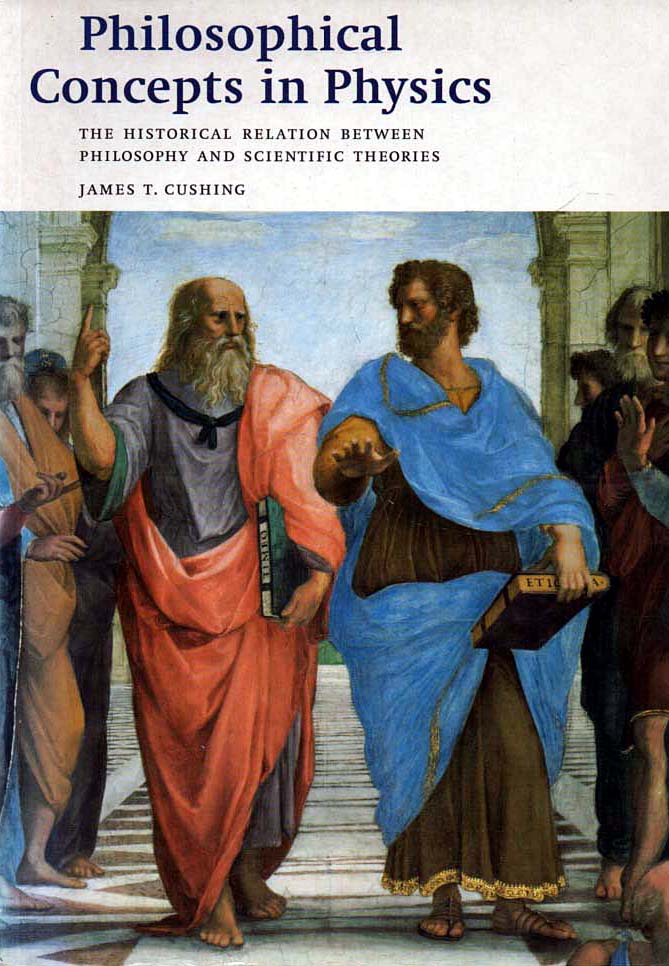
Philosophical Concepts in Physics The Historical Relation between Philosophy and Scientific Theories
Cambridge University Press, Cambridge UK, 1998.
Octavo; trade paperback; 424pp., with diagrams. Mild wear; covers a little rubbed and edgeworn; spine sunned. Very good.
Click here to order

$50
209897
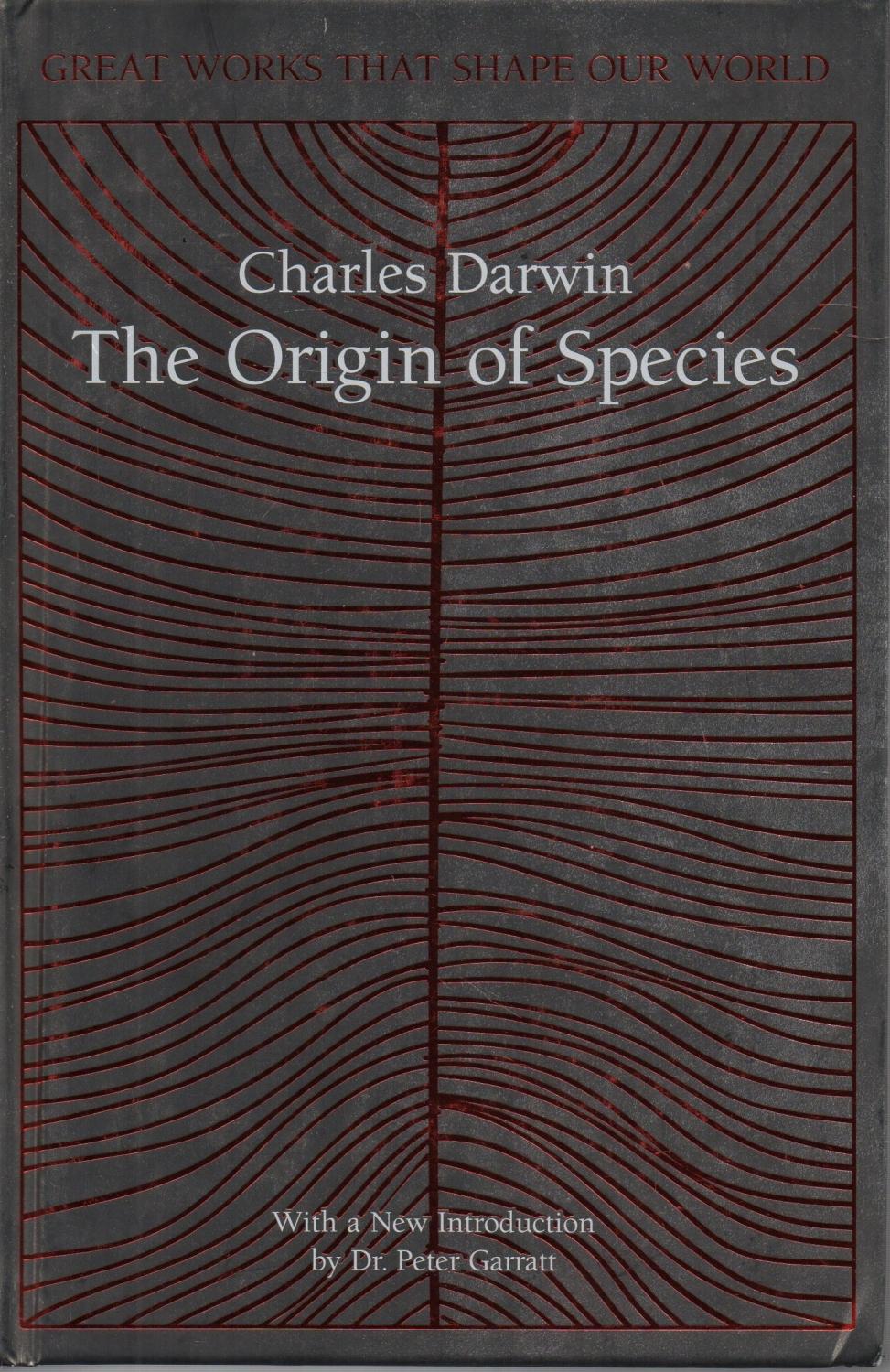
Darwin, Charles
The Origin of Species
Flame Tree, London, 2019.
Octavo; hardcover; decorated black boards, silver endpapers and gilt and white titles; 503pp. No dustwrapper. Remainder. New.
Click here to order

$25
61500
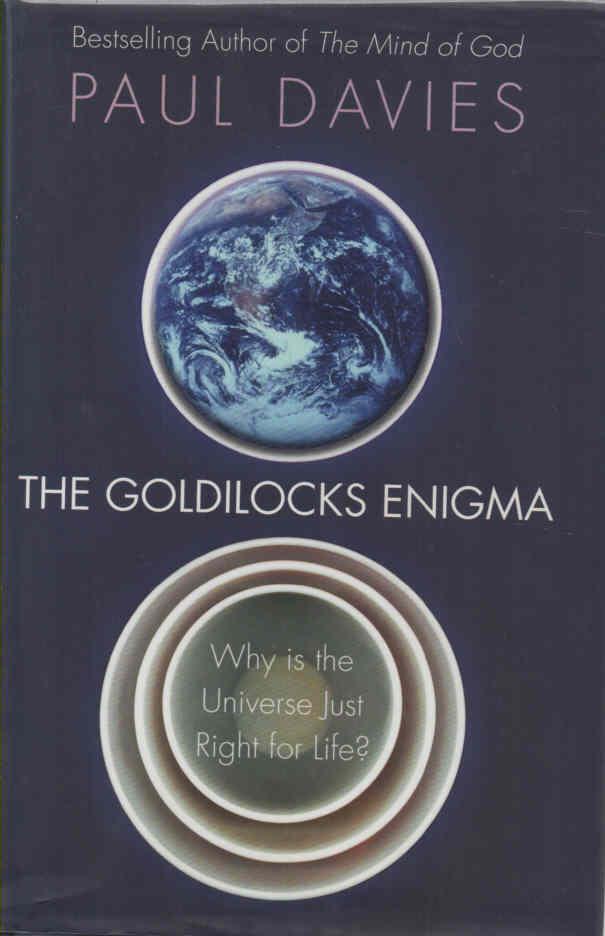
Davies, Paul
The Goldilocks Enigma Why Is the Universe Just Right for Life?
Penguin, London, 2006.
Hardcover, octavo; blue boards with silver gilt spine titling; 349pp., monochrome diagrams. Owner's name. Minor wear; toned text block edges; tiny tear on base of dustwrapper spine panel and some scraping at corners, and wear to edges. Otherwise very good. The Goldilocks Enigma is Paul Davies spectacular and eagerly awaited return to cosmology. Here he tackles all the 'big questions' and introduces the latest discoveries that have allowed scientists to piece together the story of the universe in unprecedented detail. And he explains why, despite all this, cosmologists are more divided than ever. Why is everything just right for life on earth? And how have we tried to explain this? How has belief shaped the scientific debate? What do we really know about our place in the universe? Paul Davies decodes the real science and gets to the very heart of our understanding of the universe.
Click here to order

$22
216974
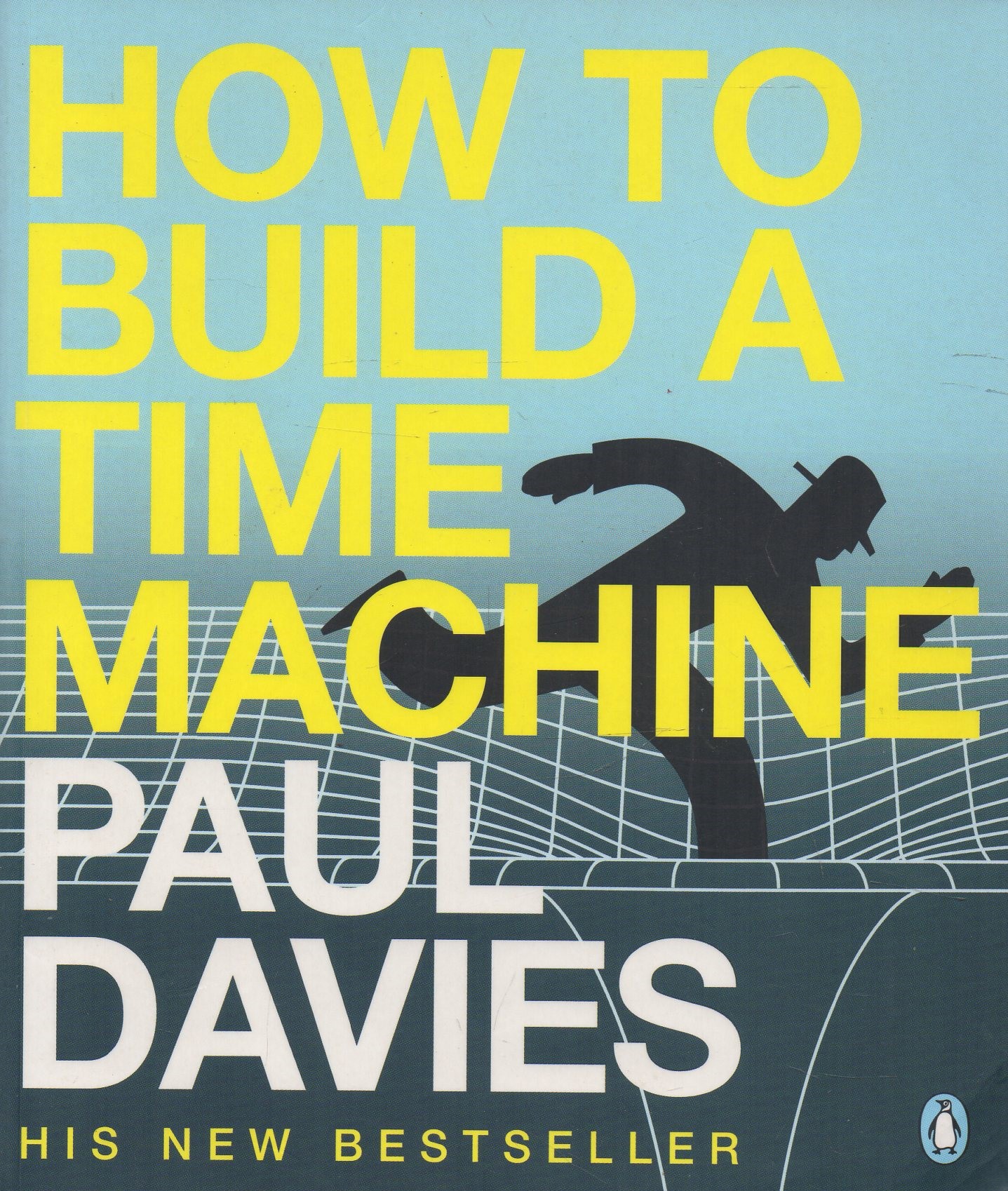
Davies, Paul
How to Build a Time Machine: signed copy
Penguin Books (Aust.) Ltd., Camberwell Vic., 2002.
Square octavo; paperback; 148pp., with many monochrome illustrations. Inscribed in ink to the owner. Minor wear; a few faint spots on text block edge. Very good.
Click here to order

$17
10501
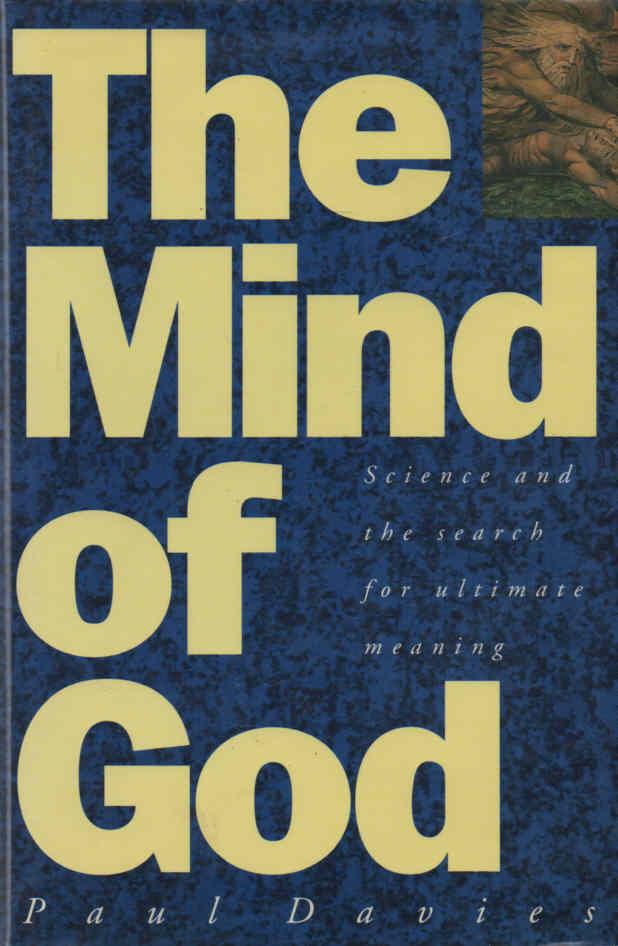
Davies, Paul
The Mind of God Science and the Search for Ultimate Meaning
Simon & Schuster, London, 1992.
First edition: octavo; hardcover; 254pp. Mild wear; pages a little toned; spotted upper text block edge. Dustwrapper now professionally protected by superior non-adhesive polypropylene film. Near fine. Throughout history, humans have dreamed of knowing the reason for the existence of the universe. In The Mind of God, physicist Paul Davies explores whether modern science can provide the key that will unlock this last secret. In his quest for an ultimate explanation, Davies reexamines the great questions that have preoccupied humankind for millennia, and in the process explores, among other topics, the origin and evolution of the cosmos, the nature of life and consciousness, and the claim that our universe is a kind of gigantic computer. Charting the ways in which the theories of such scientists as Newton, Einstein, and more recently Stephen Hawking and Richard Feynman have altered our conception of the physical universe. Davies puts these scientists' discoveries into context with the writings of philosophers such as Plato. Descartes, Hume, and Kant. His startling conclusion is that the universe is "no minor by-product of mindless, purposeless forces. We are truly meant to be here." By the means of science, we can truly see into the mind of God.
Click here to order

$20
96789
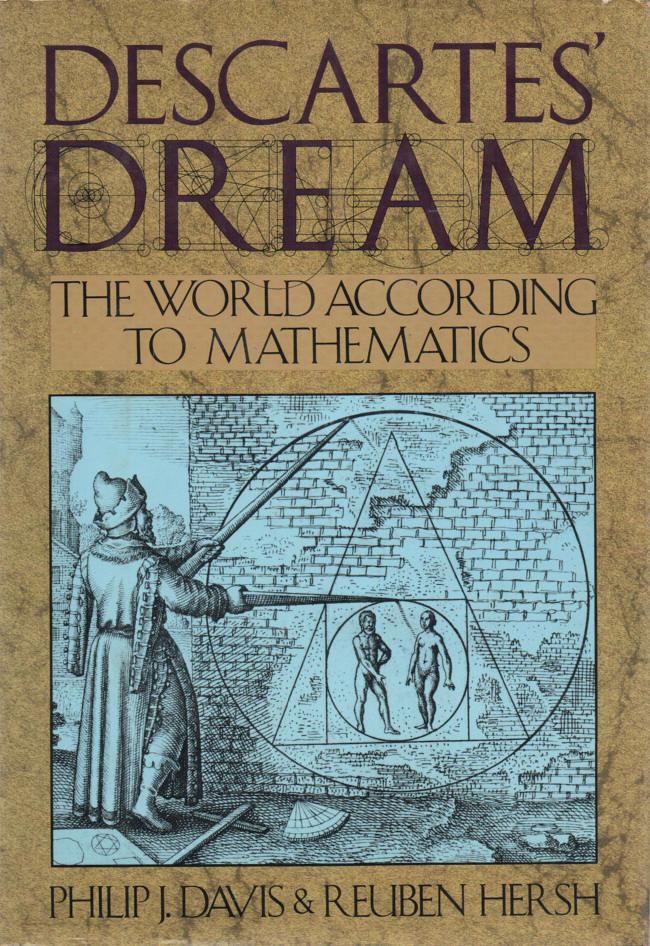
Davis, Philip J., & Reuben Hersh
Descartes' Dream The World According to Mathematics
Harcourt Brace Jovanovich Publishers Inc., San Diego CA, 1986.
First US edition. Octavo; hardcover, quarter-bound in papered boards; 321pp., with many diagrams and monochrome illustrations. Minor wear; spotting to the text block edges; retailer's bookplate to the front pastedown. Price-clipped dustwrapper mildly edgeworn; rear flap creased; now professionally protected by superior non-adhesive polypropylene film. Very good to near fine. Rationalist philosopher and mathematician Rene Descartes visualized a world unified by mathematics, in which all intellectual issues could be resolved rationally by local computation. This series of provocative essays takes a modern look at the seventeenth-century thinker's dream, examining the physical and intellectual influences of mathematics on society, particularly in light of technological advances. These essays survey the conditions of civilization that elicit the application of mathematical principles; the effectiveness of these applications; situations in which the applications are beneficial, dangerous, or irrelevant; and how applied mathematics constrain lives and transform perceptions of reality. Highly suitable for browsing, the essays require different levels of mathematical knowledge that range from popular to professional.
Click here to order

$23
208157
Dawkins, Richard
Science in the Soul
Penguin Random House LLC. New York NY, 2017.
First US edition. Octavo; hardcover, quarter-bound in papered boards with silver-gilt spine titles; 439pp. Dustwrapper. Remainder. New.
Click here to order

$25
87069
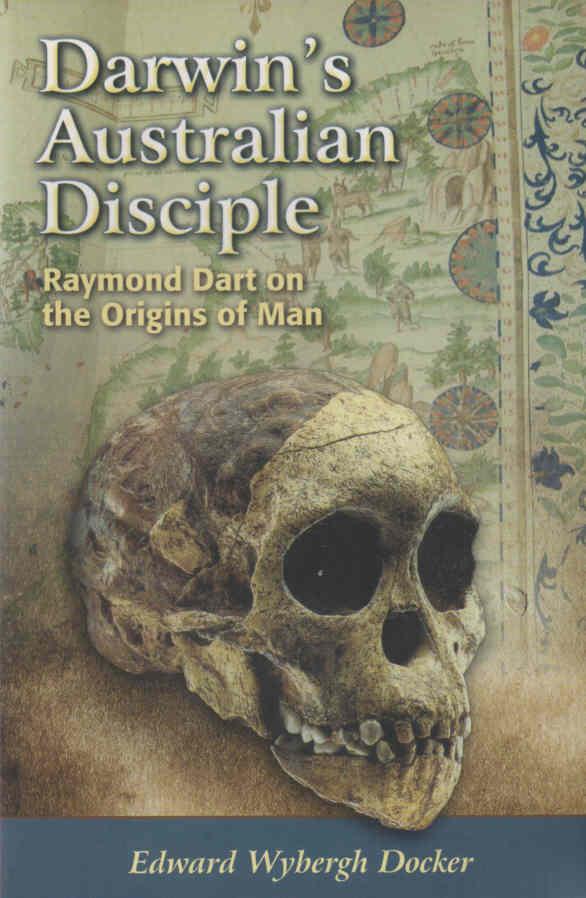
Docker, Edward Wybergh
Darwin's Australian Disciple Raymond Dart on the Origins of Man
Halstead Press, Braddon ACT, 2007.
Octavo; paperback; 160pp., with many colour and monochrome illustrations. Minimal wear to edges. Near fine. Raymond Dart was born above his father's fruit shop in Queensland but went from these humble beginnings to become one of the most groundbreaking palaeontologists of the Twentieth Century. Mostly ignored in his own country, Dart's excavations and discoveries in Africa not only filled in the gaps of how human beings evolved but vindicated many of Darwin's theories regarding that process. He discovered Australopithecus and posited the notion of a "cousin species" to Homo sapiens, igniting debate about whether or not human violent tendencies stem from territorial aggression between these races. This book resolves the oversight of Dart by his national peers, placing him back firmly amongst the giants of evolutionary science.
Click here to order

$25
209854
Einstein, Albert
Special & General Relativity
Flame Tree, London, 2019.
Octavo; hardcover; decorated black boards, silver endpapers and gilt and white titles; 239pp. No dustwrapper. Remainder. New.
Click here to order

$25
84950
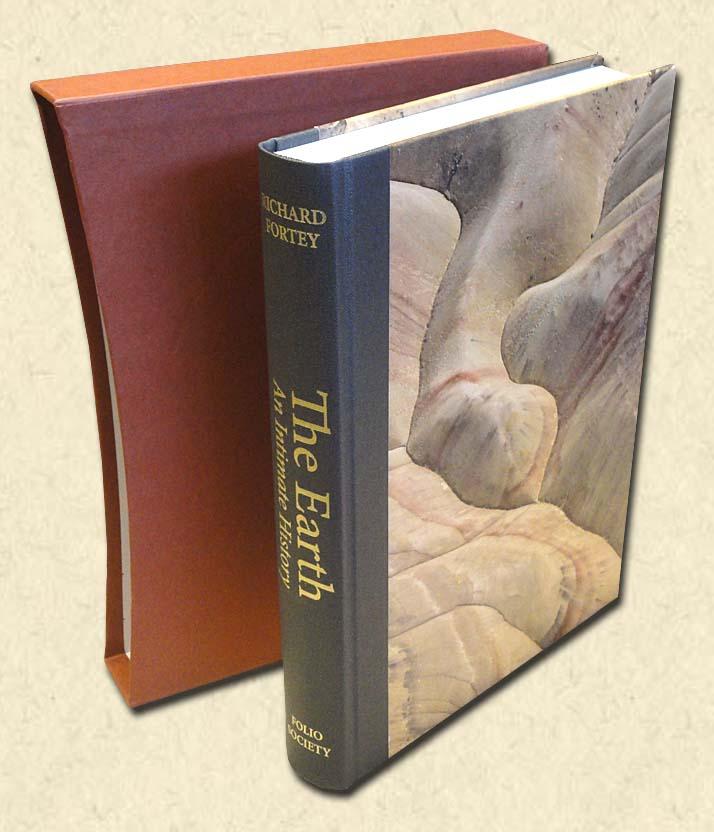
Fortey, Richard
The Earth - Folio Society edition An Intimate History
The Folio Society, London, 2011.
First printing. Octavo; hardcover, illustrated papered boards with gilt spine titling; 416pp., with many colour illustrations. Minor wear only. Fine in a like slipcase. Beginning with Mt. Vesuvius, whose eruption in Roman times helped spark the science of geology, and ending in a lab in the West of England where mathematical models and lab experiments replace direct observation, Richard Fortey tells us what the present says about ancient geologic processes. He shows how plate tectonics came to rule the geophysical landscape and how the evidence is written in the hills and in the stones. And in the process, he takes us on a wonderful journey around the globe to visit some of the most fascinating and intriguing spots on the planet.
Click here to order

$40
80081
Friedrich, Walter L. (Alexander R. McBirney, trans.)
Fire in the Sea The Santorini Volcano: Natural History and the Legend of Atlantis
Cambridge University Press, Cambridge UK, 2001.
Quarto; hardcover, with gilt spine titling; 258pp., with many colour illustrations. Minor wear only. Slightly scuffed dustwrapper. Near fine. "Fire in the Sea is a geological history of Santorini (Thera), a volcanic island in the Aegean that exploded in the middle of the second millennium BC and which is a likely source for the legend of Atlantis. Santorini is part of the Aegean volcanic island arc produced by the collision of the African and European plates and built by volcanic activity over the last two million years... The Minoan eruption left clear traces over a wide area and can be dated using a variety of methods- archaeology, Greenland ice-cores, radiocarbon dating, dendrochronology - giving a date of 1645 BC, to within five or ten years... Friedrich presents some clever 'detective work' to show that a caldera must have existed before the explosion. And he goes on to explore the possible connection of Santorini with the legend of Atlantis... Fire in the Sea is lavishly, almost extravagantly, provided with colour photographs of island landscapes, rocks and rock formations, and archaeological artefacts. It also has an extensive assortment of maps and diagrams. Appendices contain the relevant portions of Plato's Timaeus and Critias (the sources of the Atlantis legend) and complete lists of known island fossils and flora." - Danny Yee
Click here to order

$35
208654
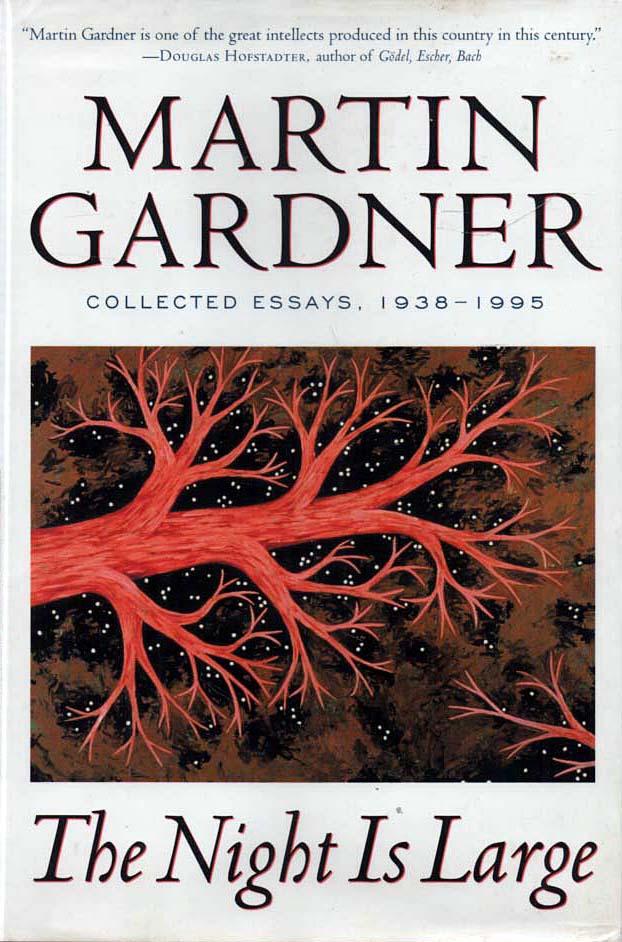
Gardner, Martin
The Night is Large Collected Essays, 1938-1995
St. Martin's Press, New York NY, 1996.
Octavo; hardcover, quarter-bound in cloth with gilt spine titles; 587pp, untrimmed, with a monochrome frontispiece and many illustrations likewise. Minor wear; spine heel softened; text block top edge very lightly dusted. Dustwrapper is rubbed and edgeworn; now professionally protected by superior non-adhesive polypropylene film. Very good.
Click here to order

$28
75242
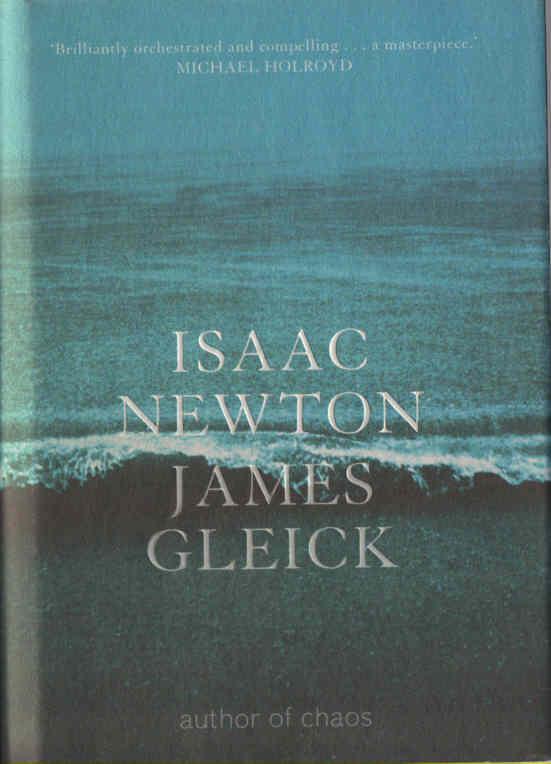
Gleick, James
Isaac Newton
Fourth Estate, London, 2003.
First edition: hardcover, octavo; plain white papered boards with blue spine titling and decorated endpapers; 289pp., monochrome diagrams and illustrations. Minor wear; remainder mark on lower text block edge and mildly toned text block edges; mild wear to dustwrapper edges. Very good otherwise.
Click here to order

$20
216694
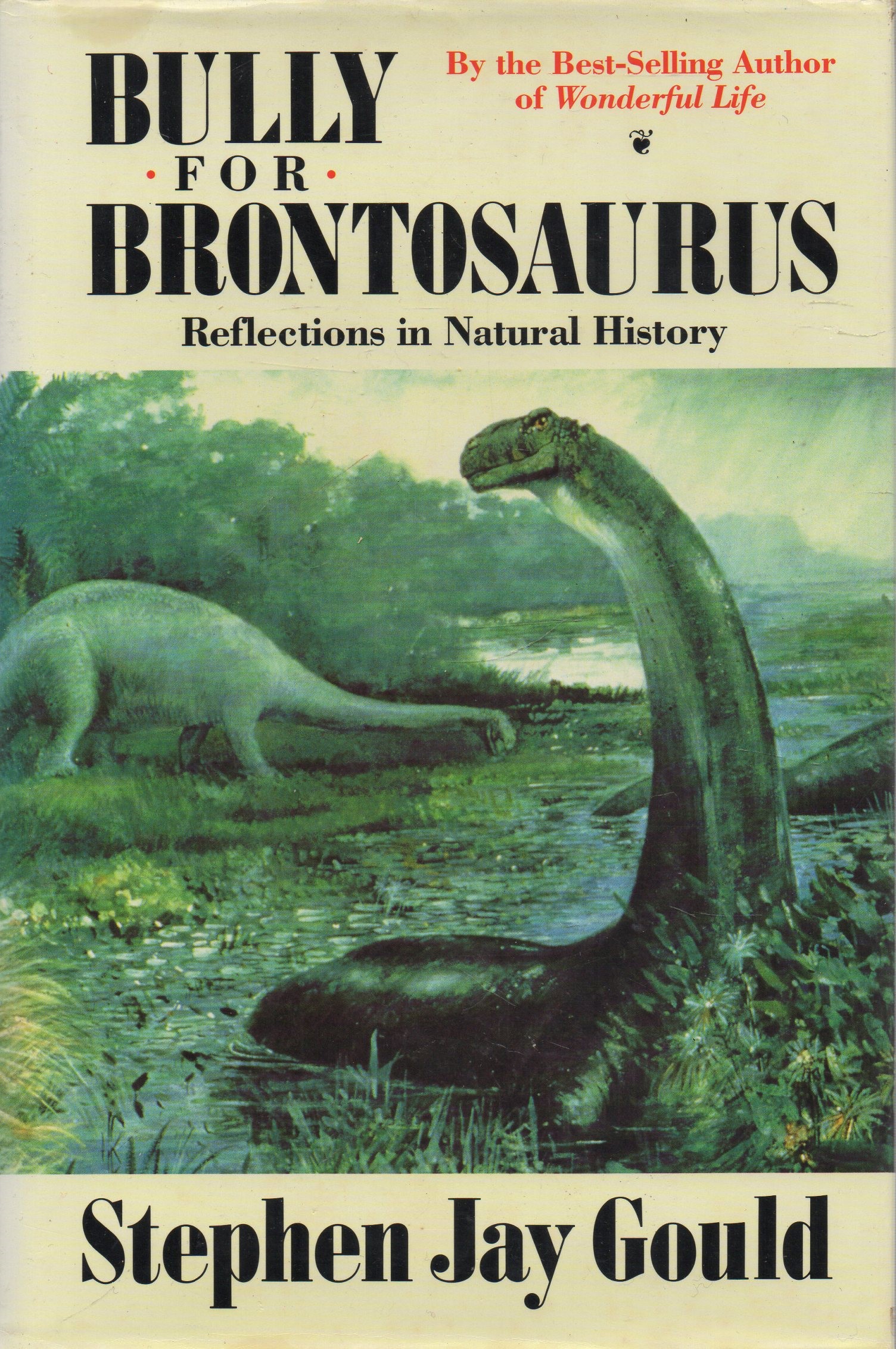
Gould, Stephen Jay
Bully for Brontosaurus: Reflections in Natural History
Hutchinson, London, 1991.
First UK edition: octavo hardcover; black boards with yellow endpapers; 540pp., b&w illustrations. Moderate wear; foxing to endpapers and half-title page; spotting and a few marks to text block edges. Slightly toned illustrated dustwrapper with mild wear to edges and corners; now professionally protected by superior non-adhesive polypropylene film. Very good.
Click here to order

$30
209615
Gould, Stephen Jay
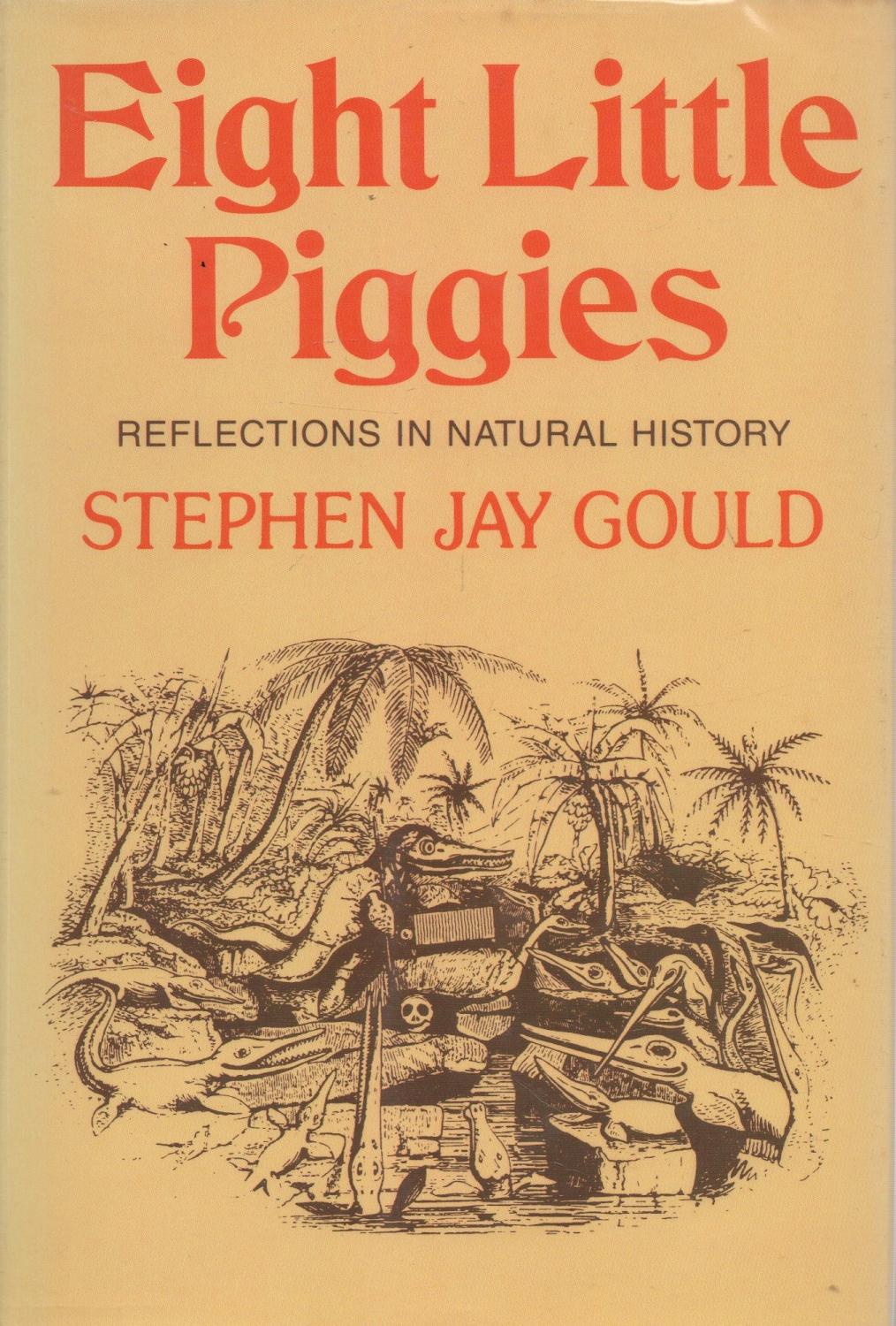
Eight Little Piggies Reflections in Natural History
W W Norton, New York, 1993.
First edition. Hardcover, octavo; quarter bound orange papered boards with beige cloth spine and red gilt spine titling; 479pp., monochrome illustrations. Spotting and rubbing to board edges; mildly spotted endpapers; spotting to text block upper edge with one or two spots otherwise; slightly sunned spine panel. Very good. Wrapper now professionally protected by superior non-adhesive polypropylene film.
Click here to order

$25
216467
Gould, Stephen Jay
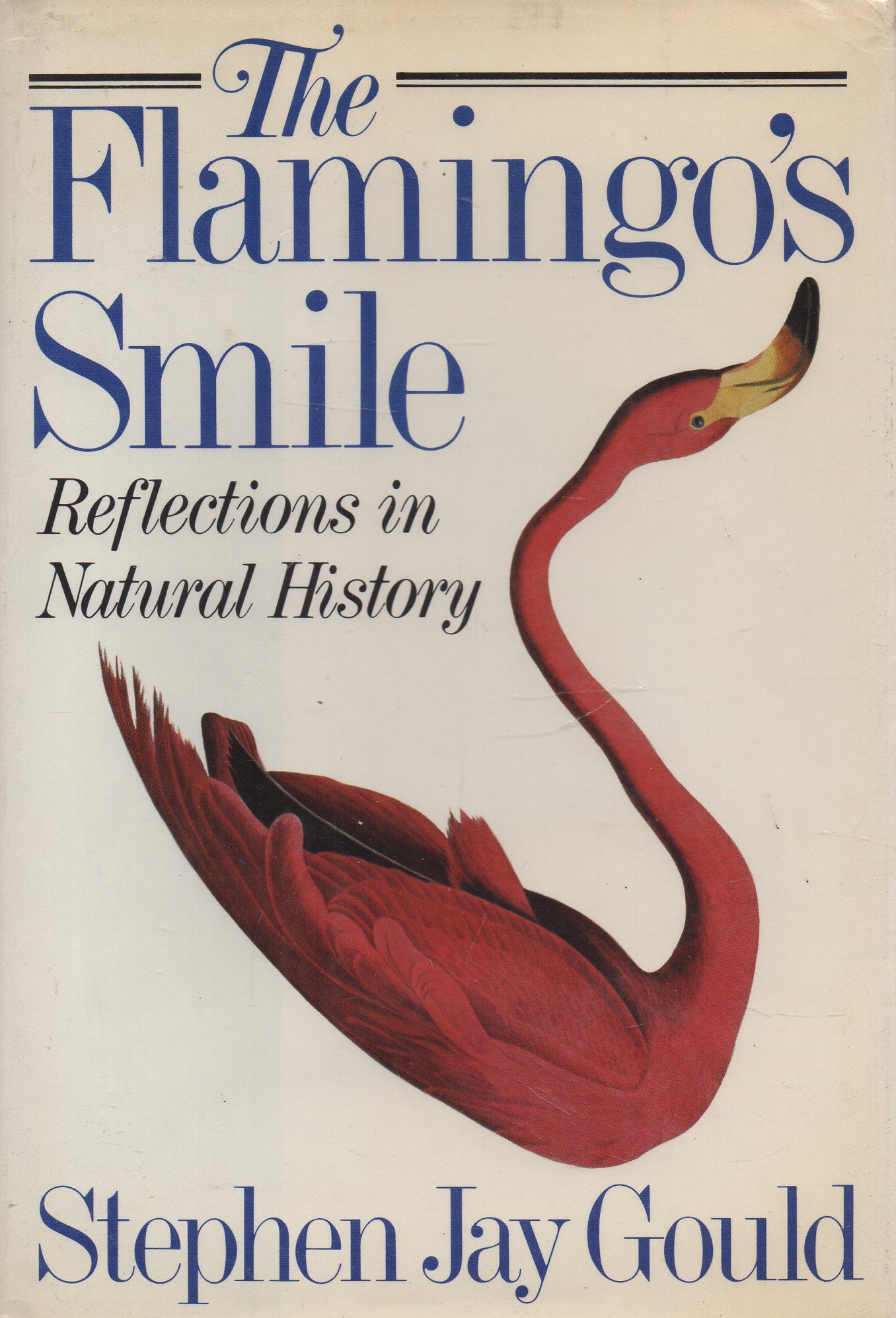
The Flamingo's Smile Reflections in Natural History
W.W. Norton, New York, 1985.
First edition. Octavo hardcover; quarter bound cream boards with maroon cloth spine and gilt spine titling; 476pp., b&w illustrations. Toned text block and page edges; offsetting to title page. Illustrated dustwrapper with browning and slight wear to edges, now professionally protected by superior non-adhesive polypropylene film, Very good. "The Flamingo's Smile is about history," writes Gould "... and about what it means to say that life is the product of a contingent past, not the inevitable and predictable result of simple, timeless laws of nature. Quirkiness and meaning are my two not-so-contradictory themes."
Click here to order

$25
70549
Gould, Stephen Jay
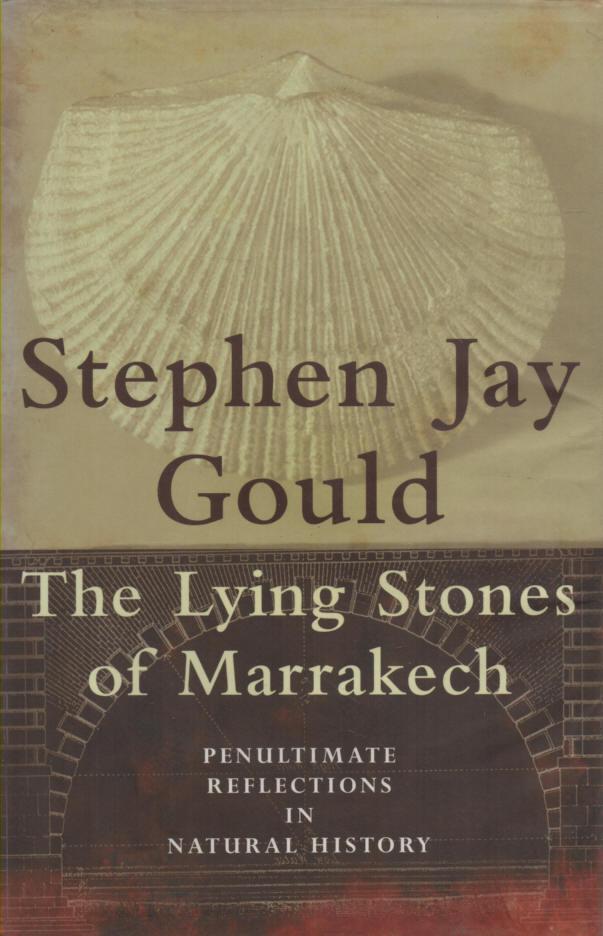
The Lying Stones of Marrakech Penultimate Reflections in Natural History
Jonathan Cape, London, 2000.
First edition: octavo; hardcover, with gilt spine titling; 372pp., with many monochrome illustrations. Minor wear; mild scattered spotting to text block edges; small mark on preliminaries. Dustwrapper spine mildly faded; now professionally protected by superior non-adhesive polypropylene film. Very good. Once again Stephen Jay Gould has applied biographical perspectives to the illumination of key scientific concepts and their history, ranging from the origins of palaeontology to modern eugenics and genetic engineering. The essays elucidate the puzzles and paradoxes great and small that have fuelled science and brought to our attention unexpected wonders.
Click here to order

$25
211409
Gould, Stephen Jay
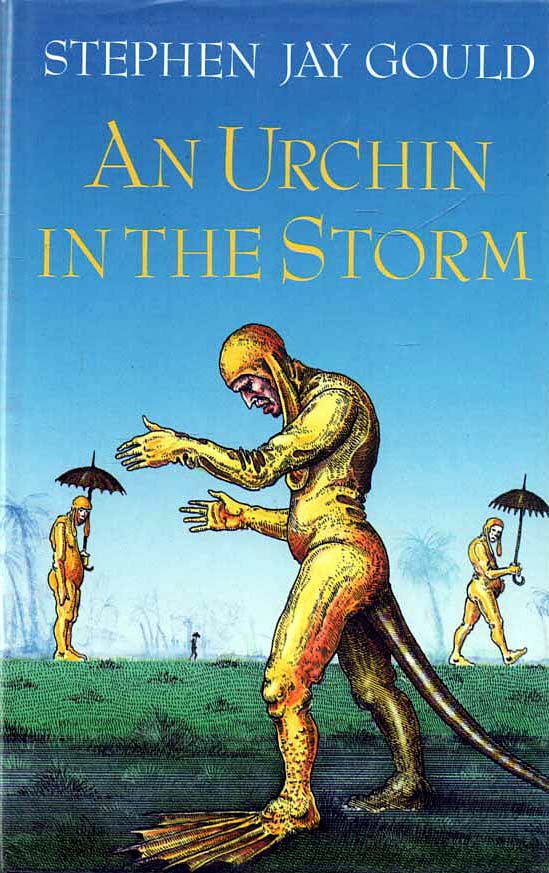
An Urchin in the Storm Essays about Books and Ideas
Collins Harvill, London, 1988.
First edition. Octavo; hardcover, with gilt spine titling; 255pp. Mild wear; toning with scattered spotting on text block edges. Dustwrapper slightly rubbed; mild edgewear; now professionally protected by superior non-adhesive polypropylene film. Very good.
Click here to order

$25
51647
Gribbin, John
Science A History, 1543-2001
Allen Lane/Penguin Books (Aust.) Pty. Ltd., Camberwell Vic., 2002.
First edition: octavo; hardcover, with gilt spine titles and a blue ribbon; 646pp., with many monochrome illustrations. Minor wear; light spotting to the text block top edge. Dustwrapper lightly worn at edges. Near fine. From our first realization that Earth was not the centre of the cosmos and that human beings are just one species of animal among many, to the Big Bang theory and the sub-microscopic study of the molecules that make us human, the incredible discoveries and inventions of scientists over the past 450 years have changed the way we see the universe - and ourselves. In this book, John Gribbin tells the story of the people who made science and the turbulent times they lived in. As well as famous figures such as Copernicus, Darwin and Einstein, there are also the obscure, the eccentric, even the mad. This diverse cast includes, among others, Andreas Vesalius, landmark 16th-century anatomist and secret grave-robber; the flamboyant Galileo, accused of heresy for his ideas; the obsessive, competitive Newton, who wrote his rivals out of the history books; Gregor Mendel, the Moravian monk who founded modern genetics; and Louis Agassiz, so determined to prove the existence of ice ages that he marched his colleagues up a mountain to show them the evidence. Although we tend to think of science in terms of unique geniuses, here John Gribbin shows that more often it involves ordinary people building step by step on the progress of previous generations - not out of lust for glory, but to satisfy their own intense curiosity about how the world works.
Click here to order

$30
202998
Harkness, Deborah E.
The Jewel House Elizabethan London and the Scientific Revolution
Yale University Press, New Haven CT, 2007.
Octavo; hardcover; 349pp., with many monochrome illustrations. Shaken; binding a touch rolled; some light marks to text block edges; small faint discolouration to upper corner of front board. Else very good in like dustwrapper. Author Deborah Harkness explores the streets, shops, back alleys, and gardens of Elizabethan London, where a boisterous and diverse group of men and women shared a keen interest in the study of nature. These assorted merchants, gardeners, barber-surgeons, midwives, instrument makers, mathematics teachers, engineers, alchemists, and other experimenters, she contends, formed a patchwork scientific community whose practices set the stage for the Scientific Revolution. While Francis Bacon has been widely regarded as the father of modern science, scores of his London contemporaries also deserve a share in this distinction. It was their collaborative, yet often contentious, ethos that helped to develop the ideals of modern scientific research. The book examines six particularly fascinating episodes of scientific inquiry and dispute in sixteenth-century London, bringing to life the individuals involved and the challenges they faced. These men and women experimented and invented, argued and competed, waged wars in the press, and struggled to understand the complexities of the natural world. Together their stories illuminate the blind alleys and surprising twists and turns taken as medieval philosophy gave way to the empirical, experimental culture that became a hallmark of the Scientific Revolution.
Click here to order

$28
204397
Holford-Strevens, Leofranc
A Short History of Time - Folio Society edition
Folio Society, London, 2007.
First printing. Octavo hardcover; blue decorated boards with gilt spine titling and dark blue endpapers; 137pp., monochrome illustrations and diagrams. Near fine in dark blue slipcase.
Click here to order

$20
75920
[Isaac Newton] Fara, Patricia
Newton The Making of a Genius
Macmillan/Pan Macmillan, London, 2002.
Octavo; hardcover, with gilt spine titles; 347pp., with 16pp. of monochrome plates. Moderate wear; remainder mark to the text block bottom edge; mild bindery error affecting the second set of plates with a few light marks. Dustwrapper lightly rubbed. Very good to near fine. Isaac Newton has become an intellectual avatar for our modern age, the man who, as even children know, was inspired to codify nature's laws by watching an apple fall from a tree. Yet Newton devoted much of his energy to deciphering the mysteries of alchemy, theology, and ancient chronology. How did a man who was at first obscure to all but a few esoteric natural philosophers and Cambridge scholars, was preoccupied with investigations of millennial prophecies, and spent decades as Master of the London Mint become famous as the world's first great scientist? Patricia Fara demonstrates that Newton's reputation, surprisingly limited in his day, was carefully cultivated by devoted followers so that Newton's prestige became inseparable from the explosive growth of science itself. Newton: The Making of Genius is not a conventional biography of the man but a cultural history of the interrelated origins of modern science, the concept of genius, and the phenomenon of fame. Beginning with the eighteenth century, when the word 'scientist' had not even been coined, Fara reveals how the rise of Isaac Newton's status was inextricably linked to the development of science. His very surname has acquired brand-name-like associations with science, genius, and Britishness - Apple Computers used it for an ill-fated companion to the Mac, and Margaret Thatcher has his image in her coat of arms. Fara argues that Newton's escalating fame was intertwined with larger cultural changes: promoting him posthumously as a scientific genius was strategically useful for ambitious men who wanted to advertise the power of science. Because his reputation has been repeatedly reinterpreted, Newton has become an iconic figure who exists in several forms. His image has been so malleable, in fact, that we do not even reliably know what he looked like. Newton's apotheosis was made possible by the consumer revolution that swept through the Atlantic world in the eighteenth century. His image adorned the walls, china, and ornamental coinage of socially aspiring British consumers seeking to identify themselves with this very smart man. Traditional impulses to saint worship were transformed into altogether new phenomena: commercialized fame and scientific genius, a secularized version of sanctity. Handsomely illustrated and engagingly written, this is an eye-opening history of the way Newton became a cultural icon whose ideas spread throughout the world and pervaded every aspect of life.
Click here to order

$25
86303
Jayawardhana, Ray
Neutrino Hunters The Thrilling Chase for a Ghostly Particle to Unlock the Secrets of the Universe
Scientific American/Farrar, Straus and Giroux, New York, 243 Martin's Press, New York, 2013.
Octavo; hardcover; 243pp. Dustwrapper. Remainder. New. Every second of the day, a hundred trillion neutrinos pass through your body - fortunately without effect. It's like drinking alcohol-free lager. Indeed, during your life, perhaps one neutrino will interact with an atom in your body, says astrophysicist Ray Jayawardhana in this absorbing, elegant history of the hunt to find the neutrino. The particle - which has virtually no mass - may be 'pathologically shy', he says, but it is also happens to be of immense importance to science for 'whenever anything cool happens in the universe, neutrinos are usually involved'. Today we use them to study supernovae and the births of black holes and to understand how matter first formed in the universe. Our past reliance on electromagnetic radiation - from radio waves to light to gamma rays - to study the heavens is now being supplemented by neutrino astronomy. The trick, of course, is to find ways to detect these elusive little entities, which - given the rarity of their interactions with normal matter - is not an easy business. Indeed, researchers have had to go to great pains to pinpoint neutrinos, constructing detectors deep underground so that spurious signals triggered by cosmic rays - which constantly batter Earth's atmosphere - do not produce false readings in their instruments. The end result has been the creation of an array of extraordinary devices in some of the planet's most remote places: IceCube, which is made up of several thousand photo-detectors buried a mile beneath the south pole; the Super-Kamiokande observatory, which consists of a tank of 50,000 tonnes of ultra-pure water built beneath Mount Kamioka in Japan; and the Sudbury neutrino observatory, which is situated more than a mile underground in Creighton mine, operated by Vale, in Sudbury, Ontario, Canada. To date, these detectors have spotted only modest numbers of neutrinos. Nevertheless, these observations have been of enormous importance, showing that when huge stars erupt as supernovae, they emit vast amounts of neutrinos in ways that have precisely confirmed astronomers' theories about the nuclear reactions involved in these stellar explosions. Future observations should provide further insights. The neutrino was originally postulated, in 1931, almost as 'a form of scientific witchcraft', says Jayawardhana. 'When scientists couldn't account for energy that went missing during radioactive decay, one theorist found it necessary to invent a new particle to account for that missing energy,' he adds. The theorist was the physicist Wolfgang Pauli. Many other scientists were dubious - including the Nobel laureate Paul Dirac and British astronomer Sir Arthur Eddington - because every effort to detect neutrinos invariably produced negative results. Then in 1953, two US scientists, Frederick Reines and Clyde Cowan, showed in an experiment they dubbed Project Poltergeist that gamma ray bursts observed by their instruments must have been caused by neutrinos colliding with atoms inside their detectors. The neutrino had been uncovered. Reines was eventually given a Nobel prize in 1995. Cowan had died 21 years earlier. It is an intriguing story, deftly told by Jayawardhana with commendable brevity and clarity. The Neutrino Hunters is comprehensive without being overburdened with detail or weighed down with too much theory, while the book's neat pen portraits of the men and women who tracked down the poltergeist particle give it added depth. Think of this as a great ghost story and a thumping good piece of science writing rolled into one. - Robin McKie
Click here to order

$18
95380
Kaplan, Robert (Ellen Kaplan, illus.)
The Nothing That Is A Natural History of Zero
Penguin Books (Aust.) Pty. Ltd., Camberwell Vic., 1999.
Octavo; hardcover, with silver-gilt spine titling; 225pp., with many monochrome illustrations. Minor wear; board edges lightly discoloured. Dustwrapper now professionally protected by superior non-adhesive polypropylene film. Near fine. Robert Kaplan's "The Nothing That Is: A Natural History of Zero" begins as a mystery story, taking us back to Sumerian times, and then to Greece and India, piecing together the way the idea of a symbol for nothing evolved. Kaplan shows us just how handicapped our ancestors were in trying to figure large sums without the aid of the zero. (Try multiplying CLXIV by XXIV). Remarkably, even the Greeks, mathematically brilliant as they were, didn't have a zero - or did they? We follow the trail to the East where, a millennium or two ago, Indian mathematicians took another crucial step. By treating zero for the first time like any other number, instead of a unique symbol, they allowed huge new leaps forward in computation, and also in our understanding of how mathematics itself works. In the Middle Ages, this mathematical knowledge swept across western Europe via Arab traders. At first it was called "dangerous Saracen magic" and considered the Devil's work, but it wasn't long before merchants and bankers saw how handy this magic was, and used it to develop tools like double-entry bookkeeping. Zero quickly became an essential part of increasingly sophisticated equations, and with the invention of calculus, one could say it was a linchpin of the scientific revolution. And now even deeper layers of this thing that is nothing are coming to light: our computers speak only in zeros and ones, and modern mathematics shows that zero alone can be made to generate everything.
Click here to order

$18
72068
Kidger, Mark
Cosmological Enigmas Pulsars, Quasars & Other Deep-Space Questions
John Hopkins University Press, Baltimore MD, 2007.
Quarto; hardcover, with silver-gilt spine-titling; 224pp., colour and monochrome illustrations. Dustwrapper. Remainder. New. What are quasars, blazars, and gamma-ray bursters? Could we ever travel to the stars? Can we really expect aliens to contact us? From the profound (what evidence do we have to support the big bang theory?) to the bizarre (can there be more than one universe, and, if so, how many dimensions does it possess?) to the everyday-yet-profound (why is the sky dark at night?). Kidger explains not only what we know but how we came to know it. The author takes us on the ultimate cosmic journey.
Click here to order

$24
88713
Kim, Mi Gyung
Affinity, That Elusive Dream A Genealogy of the Chemical Revolution
MIT Press, Cambridge MA, 2003.
Octavo; paperback; 599pp. Remainder. New.
Click here to order

$18
64382
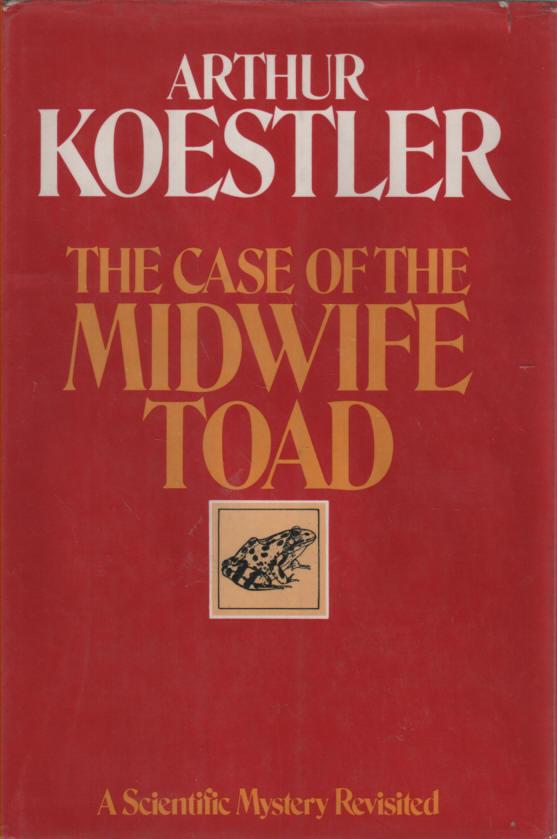
Koestler, Arthur
The Case of the Midwife Toad A Scientific Mystery Revisited
Random House, New York, NY, USA, 1971.
First US edition: octavo; hardcover, with bronze spine-titling and an upper board decoration; 187pp., with 4pp. of monochrome plates. Previous owner's ink inscription to the front free endpaper; lightly toned and spotted text block edges. Dustwrapper slightly edgeworn with chipping; now professionally protected by superior non-adhesive polypropylene film. Very good. On September 23, 1926, an Austrian experimental biologist, Dr. Paul Kammerer blew his brains out on a footpath in the Austrian mountains. His suicide was the climax of a great evolutionary controversy which his experiments had aroused. The battle was between the followers of Lamarck, who maintained that acquired characteristics could be inherited, and the neo-Darwinists, who upheld the theory of chance mutations preserved by natural selection. Dr Kamerer's experiments with various amphibians, including salamanders and the midwife toad lent much weight to the Lamarckian argument and drew upon him the full fury of the orthodox neo-Darwinists. Arthur Koestler had known about Dr Kammerer's work when he himself was a student and was interested in this tragic story. He gives a fascinating description of the venomous atmosphere in which the battle was fought and of the lengths to which apparently respectable scholars would go to discredit their opponents.
Click here to order

$20
92194
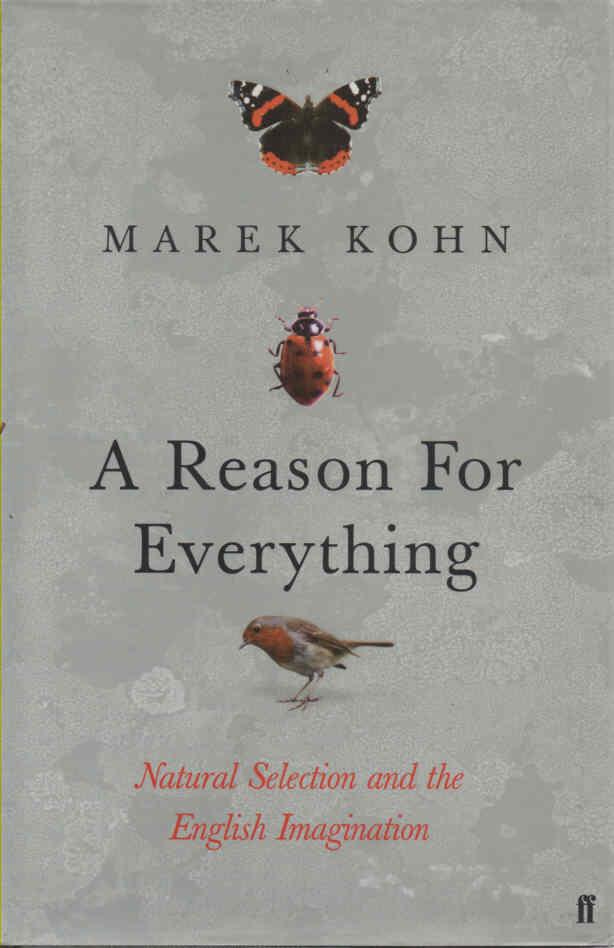
Kohn, Marek
A Reason for Everything Natural Selection and the English Imagination
Faber and Faber Ltd., London, 2004.
Octavo; hardcover; 392pp. Minor wear; mildly toned text block edges with light spotting on the top edge. Dustwrapper now professionally protected by superior non-adhesive polypropylene film. Near fine. "Marek Kohn has written yet another brilliant book about great debates in science. In this one, he uses the biographical method to discuss British post-Darwinian approaches to evolution and natural selection. Marek Kohn, as his selfish genes call their robot survival machine, has selected six names: Alfred Wallace, RA Fisher, JBS Haldane, John Maynard Smith (Kohn's much-loved teacher), Bill Hamilton and Richard Dawkins. After reading this book, nobody can doubt the spectacular fitness increase of British evolutionary thinking... The six men could only have done their work in this country, with its underlying confidence in universal design. Kohn claims that their situation 'represents the durability of the Victorian settlement between natural and supernatural accounts of the living world. As British evolutionists took over natural theology and replaced its chief executive, it carried on working smoothly under the new management'. In other words, Darwinism did not strip meaning from the world but intensified it, 'by identifying it in as many aspects of life as possible'." - Neal Ascherson
Click here to order

$28
95497
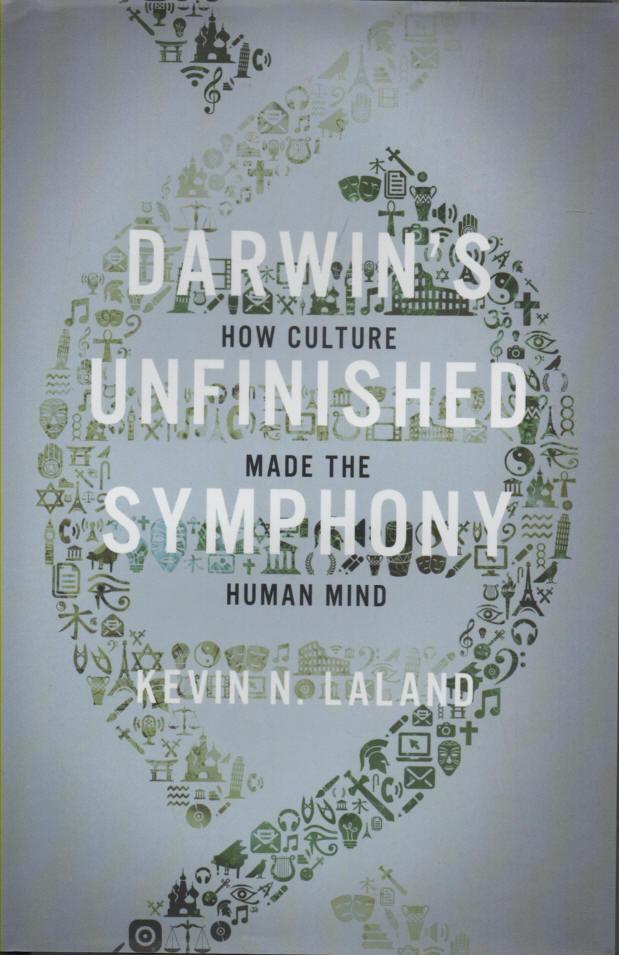
Laland, Kevin N.
Darwin's Unfinished Symphony How Culture Made the Human Mind
Princeton University Press, Princeton NJ, 2017.
Octavo; hardcover; 450pp., with many monochrome illustrations. Very minor wear. Near fine in like dustwrapper. Humans possess an extraordinary capacity for cultural production, from the arts and language to science and technology. How did the human mind - and the uniquely human ability to devise and transmit culture - evolve from its roots in animal behaviour? Darwin's Unfinished Symphony presents a captivating new theory of human cognitive evolution. This compelling and accessible book reveals how culture is not just the magnificent end product of an evolutionary process that produced a species unlike all others - it is also the key driving force behind that process. Kevin Laland shows how the learned and socially transmitted activities of our ancestors shaped our intellects through accelerating cycles of evolutionary feedback. The truly unique characteristics of our species - such as our intelligence, language, teaching, and cooperation - are not adaptive responses to predators, disease, or other external conditions. Rather, humans are creatures of their own making. Drawing on his own groundbreaking research, and bringing it to life with vivid natural history, Laland explains how animals imitate, innovate, and have remarkable traditions of their own. He traces our rise from scavenger apes in prehistory to modern humans able to design iPhones, dance the tango, and send astronauts into space. This book tells the story of the painstaking fieldwork, the key experiments, the false leads, and the stunning scientific breakthroughs that led to this new understanding of how culture transformed human evolution. It is the story of how Darwin's intellectual descendants picked up where he left off and took up the challenge of providing a scientific account of the evolution of the human mind.
Click here to order

$30
203002
Leakey, Richard, & Roger Lewin
Origins Reconsidered In Search of What Makes Us Human
Doubleday, New York, 1992.
Octavo hardcover; quarter bound black papered boards with blue cloth spine and gilt spine titling, time-line decorated endpapers; 375pp., monochrome plates and illustrations. Faint spotting and toning to text block edges; very faint offsetting to endpapers; well rubbed dustwrapper with mild wear to edges (now professionally protected by superior non-adhesive polypropylene film). Very good.
Click here to order

$24
78425
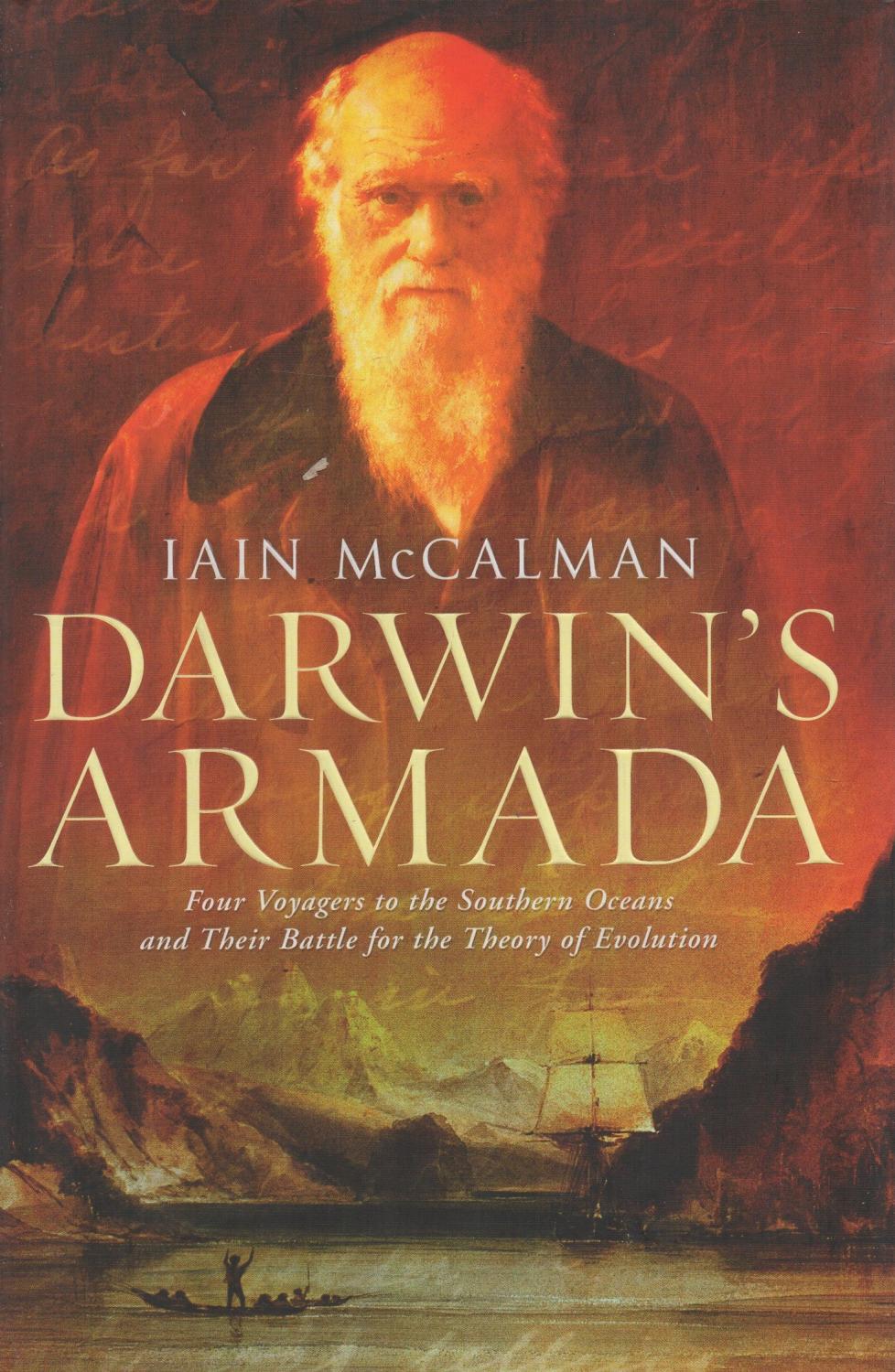
McCalman, Iain
Darwin's Armada Four Voyagers to the Southern Oceans and the Battle for the Theory of Evolution
Simon & Schuster UK Ltd., London, 2009.
First UK edition: Octavo; hardcover; 422pp., colour plates. Dustwrapper. Remainder. New. Iain McCalman revisits the rise of Darwinian thought through the lens of Darwin's most vocal supporters and colleagues, who were each crucial to the advancement of his theory of evolution: Joseph Hooker, a botanist and Darwin's closest ally; Thomas Huxley, Darwin's most effective defender in the fight against the clergy: and Alfred Wallace, the field naturalist who arrived independently at the theory of evolution by natural selection, spurring Darwin to publish his book. The book traces their diverse social origins and educations - from the wealthy gentry to the working class poor, from the spires of Cambridge to the socialist debating halls of London, and Wales - and charts their separate, dangerous, demanding and intellectually exciting travels in wooden ships to the remote southern lands and oceans. This well-salted little group became passionate campaigners in the savage war of ideas that Darwin's heretical theory of evolution by natural selection generated within Victorian Britain and elsewhere. Darwin's 'armada' changed the way that human beings think about themselves.
Click here to order

$23
83734
Mandelbrot, Benoit B.
The Fractalist Memoir of a Scientific Maverick
Pantheon, New York NY, 2012.
Octavo; hardcover; 324pp., with many monochrome illustrations. Dustwrapper. Remainder. New. A fascinating memoir from the man who revitalized visual geometry, and whose ideas about fractals have changed how we look at both the natural world and the financial world.
Click here to order

$24
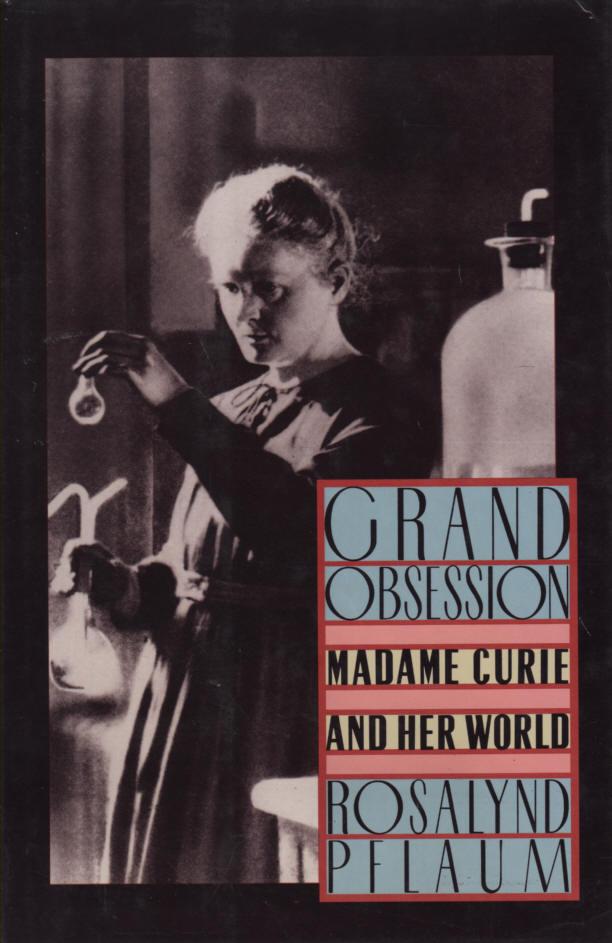
60410
[Marie Curie] Pflaum, Rosalynd
Grand Obsession Madame Curie and Her World
Doubleday, New York, NY, USA, 1989.
Octavo; hardcover, quarter-bound in papered boards with gilt spine-titling and decorated endpapers; 496pp., with 16pp. of monochrome photographic plates. Near fine in like dustwrapper. "Rosalynd Pflaum risked bodily harm from Marie Curie's still radio active notebooks to produce this exhaustive account of two generations of Nobel-winning Curies and their profound effect on the development of modern physics. A brilliant student born into poverty in 19th-century Poland, Marie Sklodowska discovered her purpose in life in chemistry class at the Sorbonne in Paris. A penny-pinching, utterly humourless Polish patriot, Marie allowed herself a modicum of pleasure and relaxation only when conversing with Pierre Curie, a rising star in the world of physics. Once the two were married, Pierre interrupted his own work to collaborate with Marie on her doctoral study of radioactivity, and their definitive work on the structure of the atom began. The partnership continued until shortly after the couple were awarded the Nobel Prize, when Pierre (still in his 30s) was run over by a carriage and killed. Marie carried grimly on with her two daughters, the elder of whom developed into a research partner and winner of her own Nobel prize in collaboration with her scientist-husband. An undercurrent of growing contamination underlies this otherwise benign family success story, both literally (all the Curies suffered from multiple ailments attributable to exposure to radiation) and morally (as the scientists became involved with both Nazis and the French resistance in an effort to continue their work during the war, and as their research contributed increasingly to the development of the nuclear age). It is this sinister undercurrent that gives the otherwise overdetailed story its power." Kirkus review.
Click here to order

$23
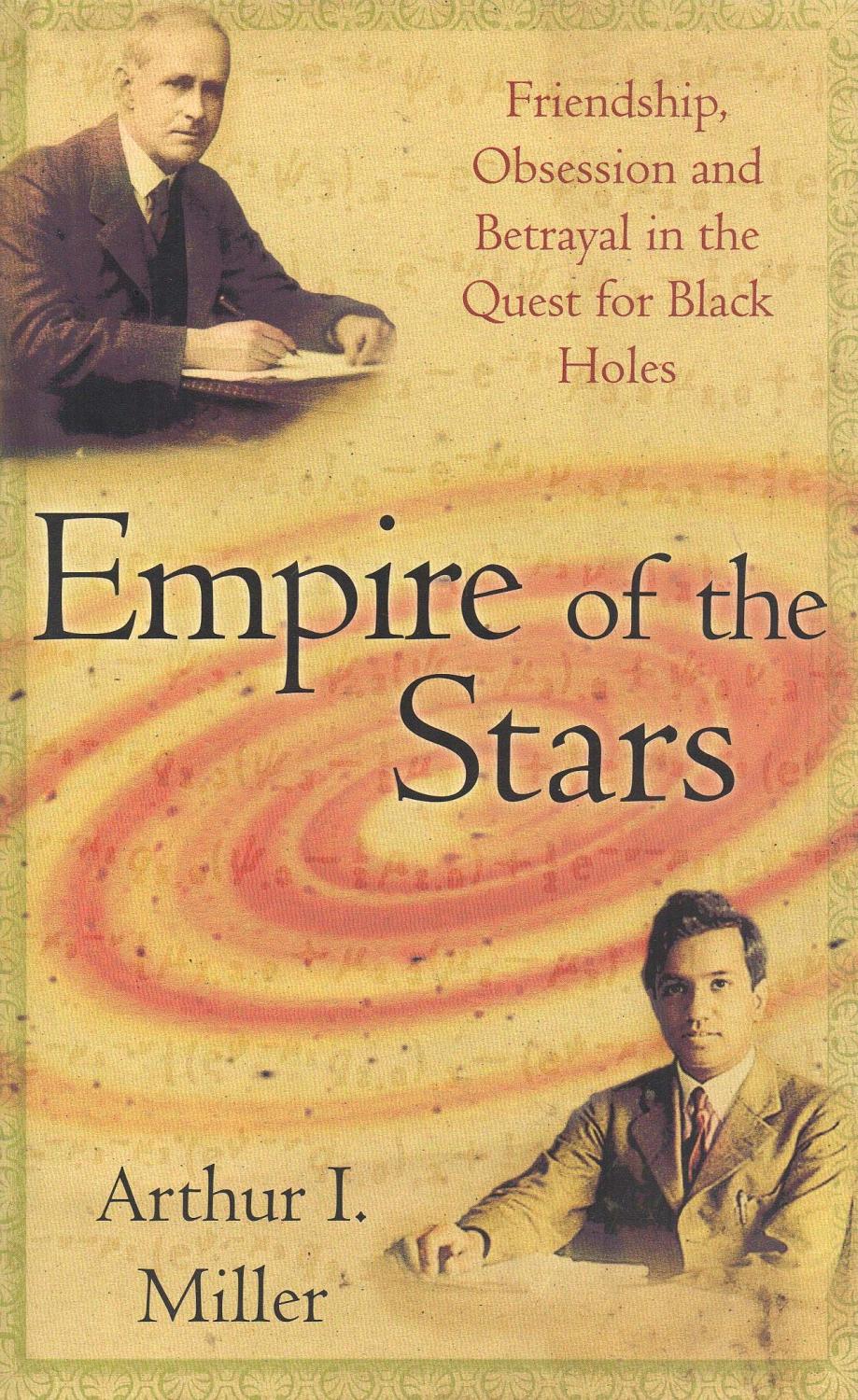
202995
Miller, Arthur I.
Empire of the Stars Friendship, Obsession and Betrayal in the Quest for Black Holes
Little Brown, London, 2005.
Octavo hardcover, with gilt spine titling; 400pp., colour and monochrome plates. Mild wear; lightly browned and spotted text block edges; scattered spotting throughout with a few small marks. Mild wear to dustwrapper edges. Very good. On January 11 1935, the young Indian astrophysicist, Subrahmanyan Chandrasekhar, known to all as 'Chandra', presented a revolutionary piece of work at a meeting of the Royal Astronomical Society. To an audience of eminent colleagues, Chandra showed how dying stars that are sufficiently fat will be unable to support themselves. The force of gravity will squeeze them away to nothingness, points of infinite concentration in space and time. Using an elegant amalgam of new-fangled ideas, he came up with an iron clad mathematical result that overturned the standard model of stellar evolution. Yet at this meeting, Chandra was humiliated and crushed. Sir Arthur Eddington, the high priest of British astrophysics, ridiculed his result with such venom that he left Chandra deeply traumatised. History is littered with scientific spats. Disagreement can strengthen a field of research, preventing bad ideas from emerging to the forefront. It can sharpen arguments in support of novel theories and concepts, making them even more compelling. Yet often the thrust of the discussion is distorted by personal prejudices and agendas. And when the intricacies of the social status of the participants is thrown into the mix, the intellectual merit of the different positions can be clouded. Arthur I. Miller has chosen a striking example of this. The young Chandra's research into the collapse of what are known as white dwarfs opened a plausible physical route to the formation of the most exotic of objects, black holes, nuggets in Albert Einstein's theory of gravity. Eddington was feverishly working on a theory that he believed would supersede Einstein's. He felt threatened by Chandra's result and did everything in his power to prevent its acceptance by the community at large. His relentless campaign delayed research in black holes for at least 30 years. Miller goes to great lengths to unpick the various forces at play in this row and to build up complex profiles of the two participants. Chandra's inner life is scrutinised in some detail. Newly arrived in Cambridge, he rapidly concluded that 'The formality of introduction is so great and even then it is not worth the trouble of getting introduced.' This inability to find a comfortable place within his social environment stayed with him throughout his life. Chandra would constantly be seduced by the establishment while at the same time feeling rejected by it, instilling in him a sense of unjustifiable insecurity. He was a flawed, tortured character who never really took pleasure in his outstanding talents. Eddington, on the other hand comes across as an unlikable character. He thrives in the parochial atmosphere of Oxbridge, relishing the power of his prestigious appointment and the social interplay of Trinity College. He is duplicitous with Chandra, supporting his research in private but publicly ridiculing him in his lectures and writings. In fact, Eddington clearly gets a kick out of making public jibes at all his junior colleagues. The scientific themes of the debate are developed in great detail. Miller unpeels the various conceptual layers that went into Chandra's argument. The range of topics is so vast that some explanations are inevitably insufficient, paragraphs too short to explain complex issues. But the collapse of white dwarfs, which lies at the core of Chandra's calculation, is explained so thoroughly and from so many different angles that it becomes crystal clear; while, to give us an idea of the importance of Chandra's discovery, Miller pursues the developments in astrophysics over the last 40 years. The story of the fight between Chandra and Eddington had to be told. Miller has had access to a wealth of private correspondence, enabling him to construct a compelling picture of the participants. The result is a disturbing tale of how personal ambitions and insecurities can leave a long-lasting aftershock in the progress of scientific thought." - Pedro G. Ferreira
Click here to order

$22
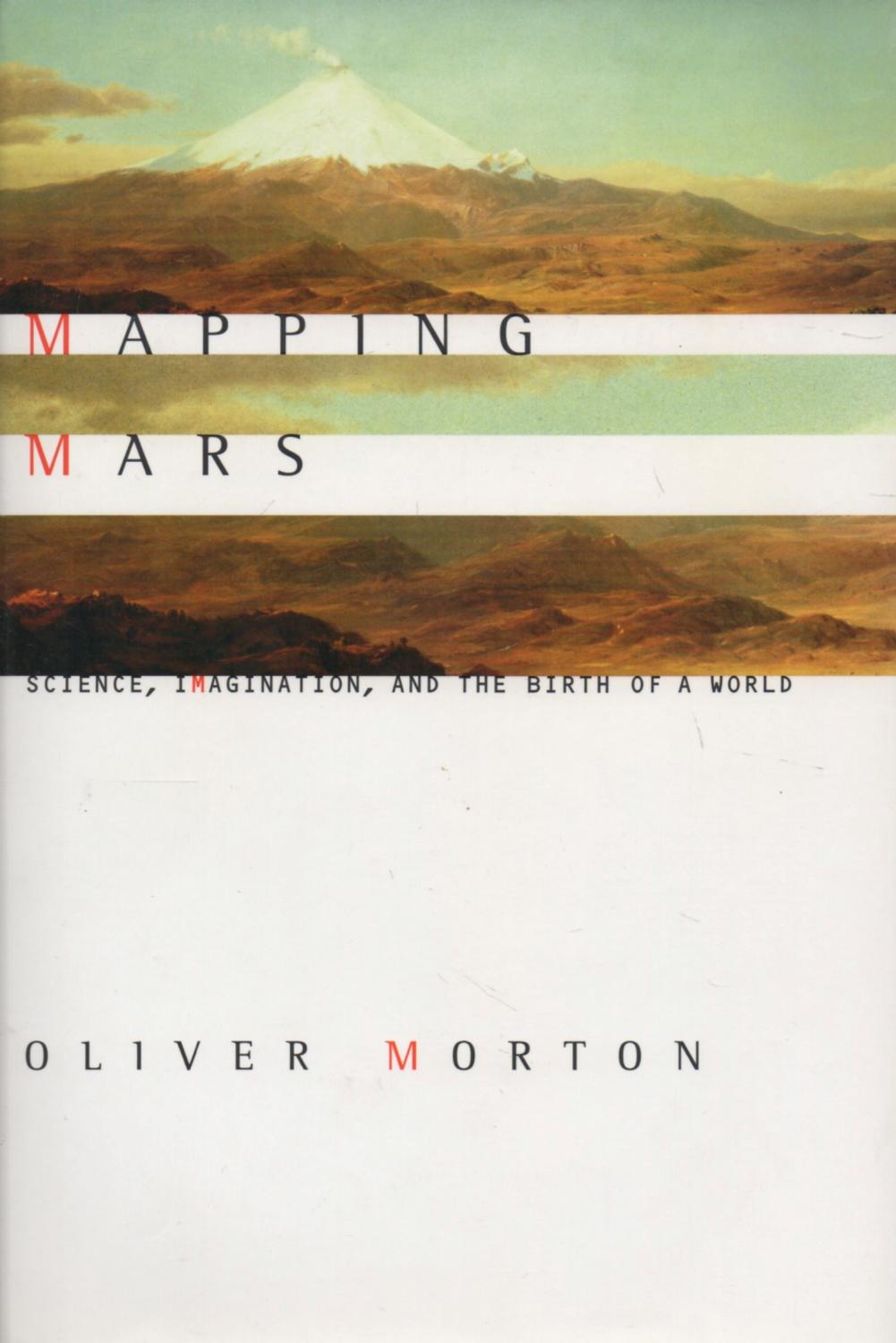
204391
Morton, Oliver
Mapping Mars
Picador, New York, 2002.
First edition: hardcover, octavo; red boards with silver gilt spine titling and map endpapers; 357pp., colour & monochrome plates. Minor wear only; near fine in like dustwrapper. A narrative history of the men and women who have explored Mars and mapped its surface from afar, and in so doing conditioned our understanding of our nearest planetary neighbour. The maps of Mars are exquisitely detailed representations of a land as large as all the continents of the earth combined. Yet they are being drawn before any human eye has seen the wonders they contain. In this fascinating mix of science, travel and the history of scientific imagination, Oliver Morton tells the story of the men and women who are mapping a dramatic, mysterious landscape, without having once set foot on its surface. Filled with awe-inspiring detail about volcanoes twice the height of Everest, basins deeper than the Pacific, 'Mapping Mars' is a breathtaking account of a world opening up to the imagination.
Click here to order

$28
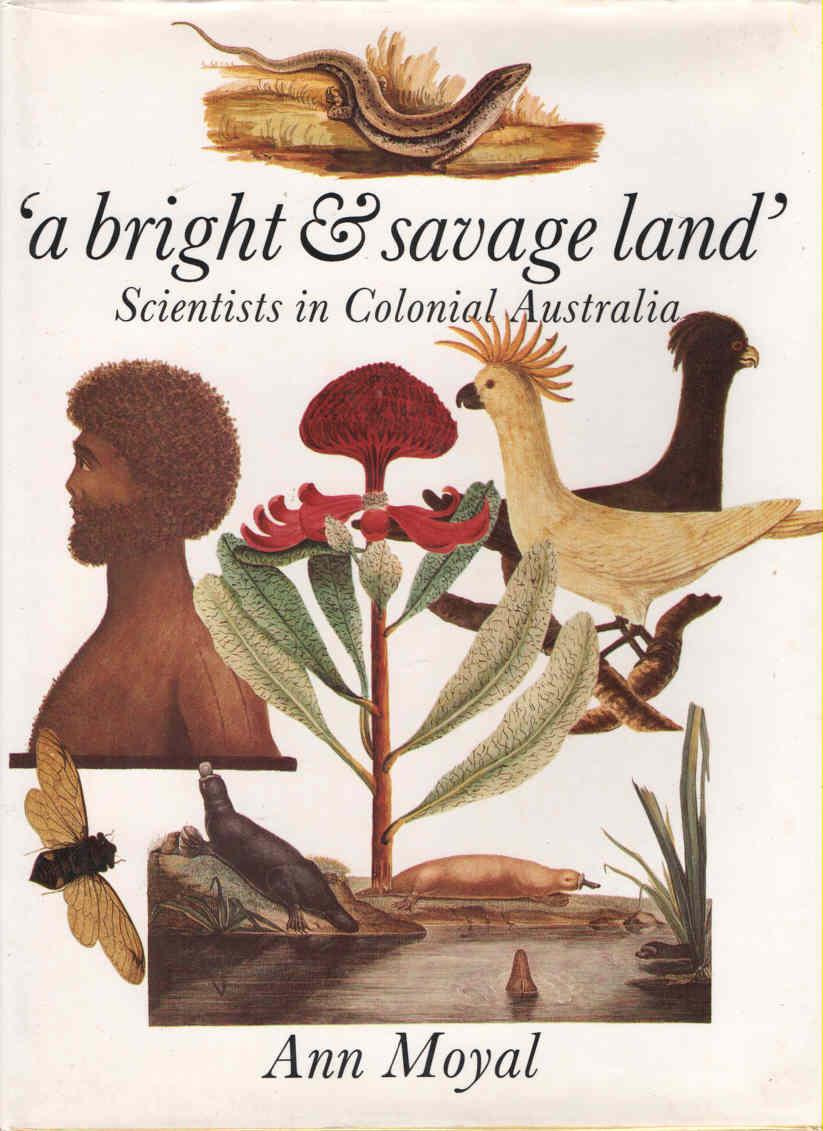
11001
Moyal, Ann
'A Bright & Savage Land' Scientists in Colonial Australia
William Collins Pty. Ltd., Sydney NSW, 1986.
Quarto; hardcover; 192pp., with many full-colour and monochrome illustrations. Minor wear; lightly edgeworn. Dustwrapper now professionally protected by superior non-adhesive polypropylene film. Very good. In the first hundred years after European settlement, scientists shipped preserved specimens of animals and flowers, and rocks to an excited Europe with much the same mystery and suspense as dust and photographs are now brought from the moon. With the aid of their letters, diaries and journals, Ann Moyal describes the work and characters of these pioneers. They were a diverse band of 'amateur and gentlemen' scientists: colonial doctors, clergymen, public servants, European travellers and British and American naturalists on the brink of distinguished careers. They joined together as colleagues, squabbled over priorities, fretted for greater contact with the centres of research and pushed the boundaries of knowledge outwards. Many of the early naturalists were also illustrators or they were accompanied by artists who left beautifully executed pictures of Australia's early scientific endeavour bringing rich information of the flora and fauna, the Aboriginal people and the landscape before the world.
Click here to order

$30
215095
Newton, Isaac
The Mathematical Principles of Natural Philosophy
Flame Tree, London, 2020
Octavo hardcover; illustrated boards; 479pp. No dustwrapper. Remainder. New.
Click here to order

$25
82561
O'Neil, W.M.
Early Astronomy from Babylonia to Copernicus
Sydney University Press, 1986.
Hardcover, octavo; 214pp., monochrome diagrams. Minor wear; lightly spotted text block edges with a few scattered spots on pastedowns and endpapers. Otherwise very good to near fine with dustwrapper professionally protected by superior non-adhesive polypropylene film. This book traces the early background of modern Western astronomy which spans some three and a half millenniums ending in the sixteenth century A.D. Western astronomy had its beginning in Mesopotamia at least as early as the beginning of the second millennium BC. At the outset, it was at best in proto-scientific form. By the second half of the first millennium BC it moved to a very precise quantitative, if theoretically primitive scientific state. The Greeks, by the time the Babylonian astronomers were reaching their greatest heights, took over many Babylonian data, added to them and applied new methods of mathematical analysis, substituting geometrical for arithmetical formulations, and generated novel mathematical models. This theorizing reached its peak with Ptolemy in the second century AD. By the fifth century Greek astronomy had gone into serious decline. From the ninth century Arab astronomers, stimulated by pre-Ptolemaic astronomy preserved in India, revived and added to Greek astronomy which had been preserved in Greek manuscripts or Syriac translations. They not only translated these earlier materials into Arabic or sometimes into Persian or Hebrew but also corrected many of the empirical values through their own observations and questioned some of the theoretical analyses. As Arab astronomy began to decline in the fourteenth century, astronomy had a reawakening in Europe culminating in the Copernican revolution which is usually regarded as opening the door for modern astronomy. Copernicus has often been regarded as the first great modern astronomer but in many ways he is better regarded as the last great astronomer in the ancient Babylonian-Greek-Arabian Traditions. Includes two appendices.
Click here to order

$18
60662
[Richard Feynman] Gleick, James
Genius Richard Feynman and Modern Physics
Little Brown & Co. (UK) Ltd., London, 1992.
First UK edition: octavo; hardcover, with silver-gilt spine titles and decorative endpapers; 532pp., with diagrams and 16pp. of monochrome plates. Minor wear. Dustwrapper with very minor edgewear. Near fine. An illuminating portrayal of Richard Feynman - a giant of twentieth century physics - from his childhood tinkering with radios, to his vital work on the Manhattan Project and beyond. Raised in Depression-era Rockaway Beach, physicist Richard Feynman was irreverent, eccentric, and childishly enthusiastic - a new kind of scientist in a field that was in its infancy. His quick mastery of quantum mechanics earned him a place at Los Alamos working on the Manhattan Project under J. Robert Oppenheimer, where the giddy young man held his own among the nation's greatest minds. There, Feynman turned theory into practice, culminating in the Trinity test, on July 16, 1945, when the Atomic Age was born. He was only twenty-seven. And he was just getting started. In this sweeping biography, James Gleick captures the forceful personality of a great man, integrating Feynman's work and life in a way that is accessible to laymen and fascinating for the scientists who follow in his footsteps.
Click here to order

$30
214086
Ridley, Matt
The Origins of Virtue
Viking, London, 1996.
First edition. Octavo hardcover; black boards with gilt spine titling; 295pp., b&w illustrations. A few pen markings and marginal notations. Toned and mildly spotted text block and page edges. Very good in like dustwrapper; now professionally protected by superior non-adhesive polypropylene film. The author explores the issues surrounding the development of human morality. The book, written from a sociobiological viewpoint, explores how genetics can be used to explain certain traits of human behaviour, in particular morality and altruism. Starting from the premise that society can on a simplistic level be represented as a variant of the 'prisoner's dilemma', Ridley examines how it has been possible for a society to arise in which people choose to co-operate rather than defect. Ridley examines the history of different attempts which have been made to explain the fact that humans in society do not defect, looking at various computer generated models which have been used to explain how such behaviour could arise. In particular he looks at systems based on the idea of tit for tat, where members of the group only cooperate with those who also cooperate and exclude those who do not. This allows altruistic behaviour to develop, and causes the optimum solution to the dilemma, to no longer be to defect but instead to cooperate. He applies this to humans and suggests that genes which generated altruistic-tit for tat behaviour would be likely to be passed on and therefore give rise to the kind of behaviour we see today. From this argument Ridley argues that society operates best in groups of around 150 individuals, which he suggests is the level at which humans are capable of being sure about which members to cooperate with and which to exclude. Although he avoids drawing any specific political points, Ridley ends his book by arguing for a smaller state operating on a more local level.
Click here to order

$24
207236
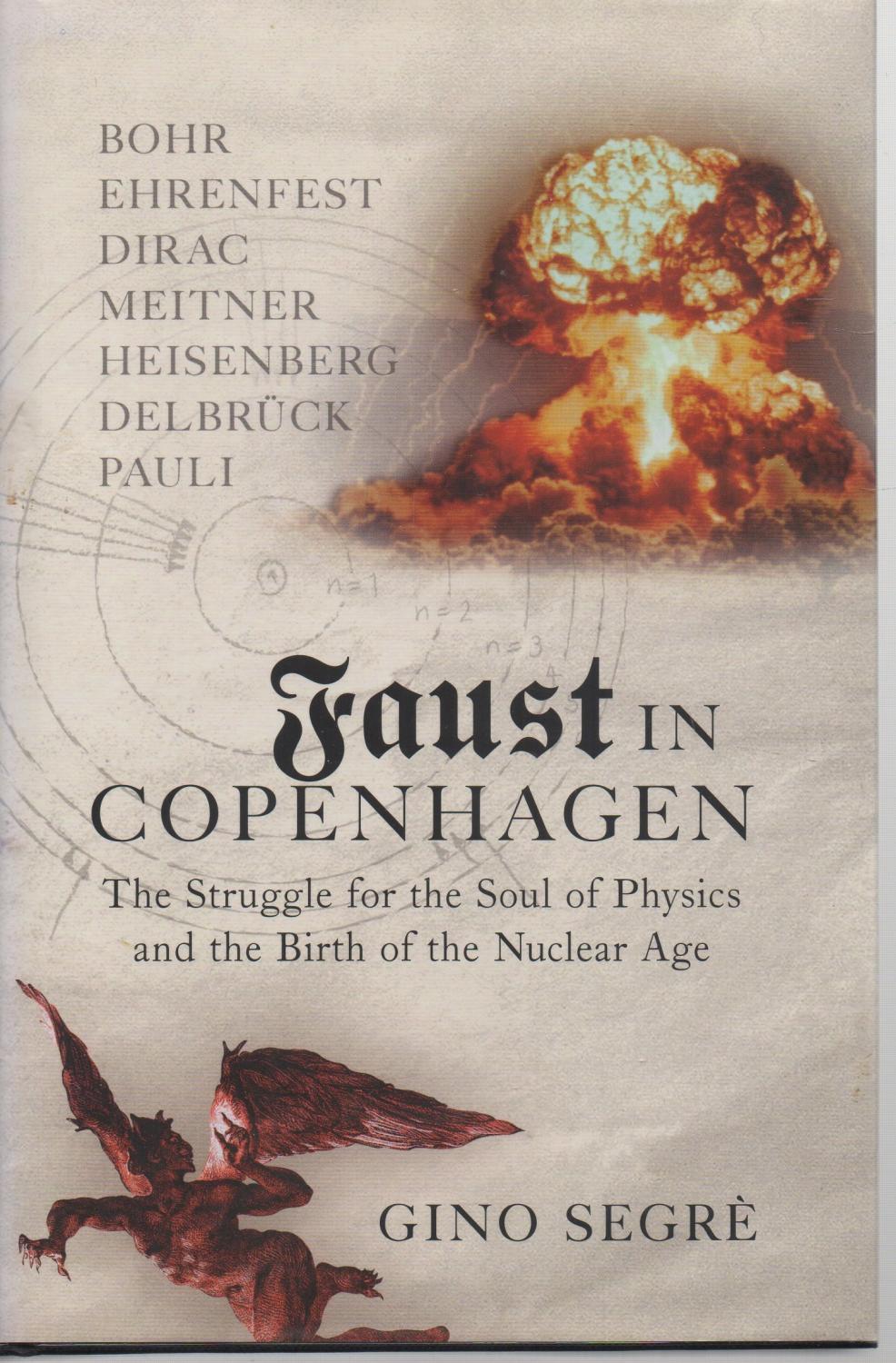
Segre, Gino
Faust in Copenhagen A Struggle for the Soul of Physics
Jonathan Cape Ltd./Random House Ltd., London, 2007.
Octavo; hardcover, with gilt spine-titling and black endpapers; 310pp., with monochrome illustrations and 8pp. of monochrome plates. Minor wear; somewhat rolled; text block edges toned. Dustwrapper now professionally protected by superior non-adhesive polypropylene film. Near fine. "As though their knowledge of the quantum secrets came with the power of prophecy, some three dozen of Europe's best physicists ended their 1932 meeting in Copenhagen with a parody of Goethe's Faust. Just weeks earlier, James Chadwick had discovered neutrons - the bullets of nuclear fission - and before long Enrico Fermi was shooting them at uranium atoms. By the time of the first nuclear explosion a little more than a decade later in New Mexico, the idea of physics as a Faustian bargain was to its makers already a cliche. Robert Oppenheimer, looking for a sound bite, quoted Vishnu instead: 'Now I am become Death, the destroyer of worlds.' Innocent of all that lay before them, the luminaries gathering at Niels Bohr's Institute for Theoretical Physics were in a whimsical mood. Werner Heisenberg, Paul Dirac and Lise Meitner were there. Max Delbruck, the young scientist charged with writing the spoof - it happened to be the centennial of Goethe's death - couldn't resist depicting Bohr himself as the Lord Almighty and the acerbic Wolfgang Pauli as Mephistopheles. They were perfect choices. The avuncular Bohr, with his inquisitive needling, had presided over the quantum revolution, revealing the strange workings within atoms, while the skeptical Pauli, who famously signed his letters 'The Scourge of God' could always be counted on for a sarcastic comment. Faust, who in the legend sells his soul for universal knowledge, was recast as a troubled Paul Ehrenfest, the Austrian physicist who despaired of ever understanding this young man's game in which particles were just smears of probability. Disguised with makeup, younger physicists played the parts of their 'elders.' (Pauli, who skipped the meeting, was just turning 32.) Faust's tormented love, Gretchen, appeared as the fairylike neutrino. It was only in retrospect that the silliness became profound. The players were becoming possessors of 'a truth with implicit powers of good and evil,' Gino Segre writes in Faust in Copenhagen, his inventive new book about the era. And 'the devil ... was in the details.' The story of the quantum revolution has been told so many times that it has become as ritualized as the stations of the cross. How Max Planck, faced with some curious observations about hot glowing objects, reluctantly proposed that light is sputtered out in packets - the quanta. How Albert Einstein, seeing deeper, realized that light must also travel that way, that its waves were also particles. How Bohr brought the graininess into the atom, with electrons hopping between orbits in quantum jumps. How Heisenberg, marooning himself on the bleak isle of Helgoland, saw that there were no orbits, that what happened inside atoms was different from anything that could be pictured by a human brain. Any reluctance I had to revisit these shrines was quickly overcome by Segre's inviting touch. A theoretical physicist at the University of Pennsylvania and a nephew of Emilio Segre, who collaborated with Fermi on radioactivity research, the author begins with the Faust parody and circles back to it again and again. It acts like a magnet, reshaping the familiar into an interesting new design. One of the most striking things about the quantum revolutionaries was their youthfulness. Heisenberg was 23 when he had his epiphany. Pauli, when not quite 25, came up with a fundamental tenet called the exclusion principle. Dirac was just a little older when he predicted the positron - another particle discovered the same year as the Copenhagen fest. By then the threesome was already past its prime. 'Old age is a cold fever / That every physicist suffers with!' the actor playing Dirac complained. 'When one is past 30, / He is as good as dead!' Bohr at 46 was the grand old man. Absent altogether was Einstein, past 50 and out of the loop, trying to overthrow quantum mechanics with a wastebasket full of crumpled ideas. In the Copenhagen Faust he has a cameo role - the king leading his pet fleas. In Goethe's telling, no one in the court dared complain about the pests, and so it was, the devilish Pauli proclaims, with the aging Einstein: Half-naked, fleas came pouring/From Berlin's joy and pride,/Named by the unadoring:/'Field Theories - Unified.' In the end the most inspired part of the production was the transformation of Ehrenfest into Ehrenfaust. Assailed by self-doubt and family problems, and overwhelmed by the rapid pace of the new physics, he was falling into a dark depression. Trading his soul for enlightenment might have seemed like a good deal. The shocking details of his suicide the following year, and the way Segre ties them back to the Faust legend, brings a solemn close to a memorable retelling of one of science's most heroic eras." - George Johnson
Click here to order

$30
208745
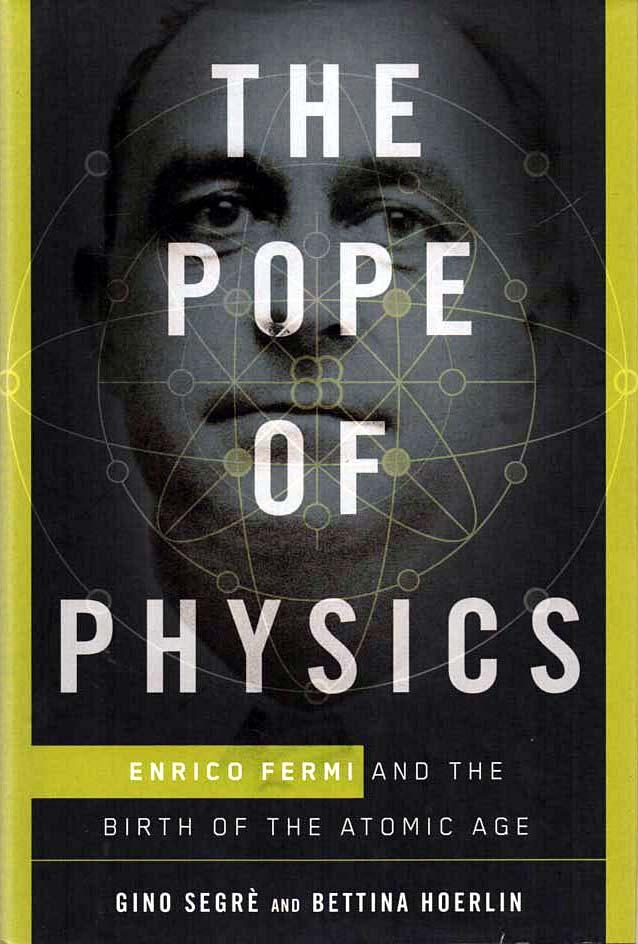
Segre, Gino, & Bettina Hoerlin
The Pope of Physics Enrico Fermi and the Birth of the Atomic Age
Henry Holt & Company, New York NY, 2016.
Octavo; hardcover, with silver-gilt spine titles; 353pp., with 8pp. of monochrome plates. Dustwrapper. Remainder. New. Enrico Fermi is unquestionably among the greats of the world's physicists, the most famous Italian scientist since Galileo. Called "the Pope" by his peers, he was regarded as infallible in his instincts and research. His discoveries changed our world; they led to weapons of mass destruction and conversely to life-saving medical interventions. This unassuming man struggled with issues relevant today, such as the threat of nuclear annihilation and the relationship of science to politics. Fleeing Fascism and anti-Semitism, Fermi became a leading figure in America's most secret project: building the atomic bomb. An examination of the human dramas that touched Fermi's life as well as a thrilling history of scientific innovation in the twentieth century, this is the comprehensive biography that Fermi deserves.
Click here to order

$24
203651
Sheller, Mimi
Aluminum Dreams The Making of Light Modernity
The MIT Press, Cambridge MA, 2014.
First edition: octavo; hardcover, with silver-gilt spine titles; 367pp., with many monochrome and colour illustrations. Very minor wear; reviewer's sticker to the first page. Dustwrapper. Fine. Aluminium shaped the Twentieth Century. It enabled high-speed travel and gravity-defying flight. It was the material of a streamlined aesthetic that came to represent modernity. And it became an essential ingredient in industrial and domestic products that ranged from aeroplanes and cars to designer chairs and artificial Christmas trees. It entered modern homes as packaging, foil, pots and pans and even infiltrated our bodies through food, medicine, and cosmetics. In "Aluminum Dreams", Mimi Sheller describes how the materiality and meaning of aluminium transformed modern life and continues to shape the world today.
Click here to order

$28
31025
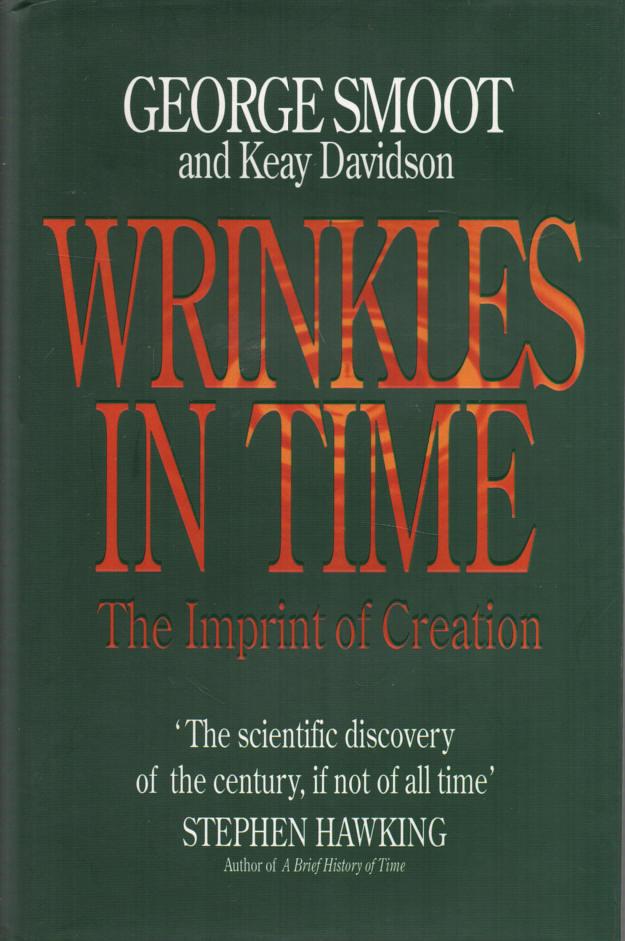
Smoot, George, & Keay Davidson
Wrinkles in Time The Imprint of Creation
Little, Brown & Co (UK) Ltd., London, 1993.
First edition. Octavo; hardcover; 333pp., with many diagrams, monochrome illustrations and 8pp. of colour plates. Minor wear; text block edges and pages toned. Dustwrapper mildly rubbed with some light edgewear. Very good.
Click here to order

$22
8231
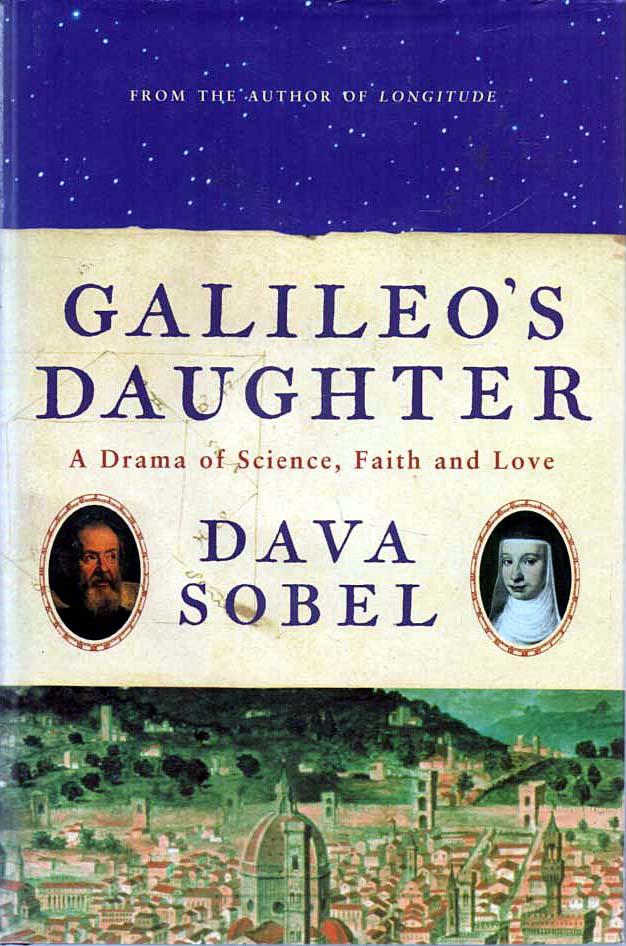
Sobel, Dava
Galileo's Daughter A Drama of Science, Faith and Love
Fourth Estate Ltd., London, 1999.
First edition: octavo; hardcover, with gilt spine-titling; 429pp., with many monochrome illustrations. Minor wear; text block edges lightly toned. Dustwrapper lightly rubbed and edgeworn; sunned along the spine panel. Very good.
Click here to order

$23
43975
Sobel, Dava
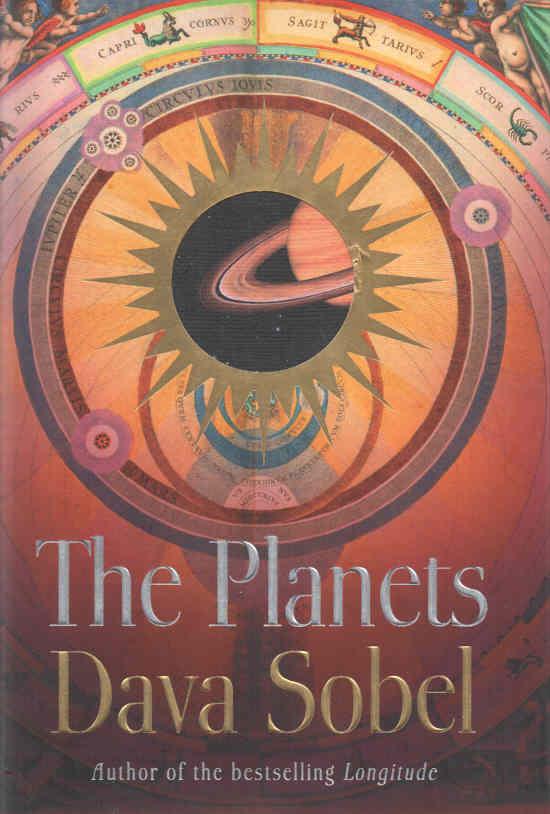
The Planets
Fourth Estate, London, 2005.
First edition. Octavo; hardcover with gilt spine-titling and decorated boards and endpapers; 271pp. with many monochrome illustrations. Minor wear; text block and page edges lightly toned;. Mild wear to keyhole-cut dustwrapper, with a small tear to the keyhole. Very good. A book of science, history, biography and storytelling; the story of each member of our solar family, from myth, history, astrology and science fiction to modern robotic space probes.
Click here to order

$23
91376
Sterrett, Susan G.
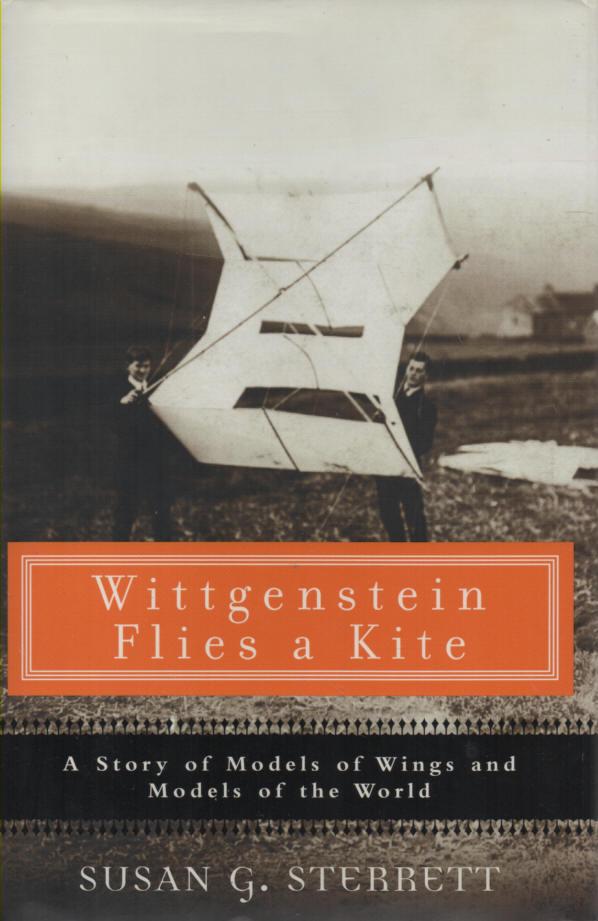
Wittgenstein Flies a Kite A Story of Models of Wings and Models of the World
Pi Press, New York NY, 2006.
Hardcover, octavo; black boards with bronze gilt spine titling; 329pp. Minor wear; very faint spotting to upper text block edges and remainder mark on lower edges. Near fine otherwise in like dustwrapper now professionally protected by superior non-adhesive polypropylene film. "While numerous critical studies have traced Wittgenstein's philosophy of language to his study of mathematics and logic under Bertrand Russell, Sterrett, professor of philosophy at Duke, bases this novel intellectual history on the assiduously researched and surprising idea that Wittgenstein's advances in logic and the philosophy of language were related to another early 20th-century invention: the airplane. Weaving together the history of ideas in fin-de-siecle Austria, Germany, England and the United States, Sterrett deftly demonstrates that Wittgenstein drew the inspiration for his groundbreaking Tractatus Logico-Philosophicus from theories of physics and of music. She traces his influences to physicists like Ludwig Boltzmann and Edgar Buckingham, as well as his own study of the gramophone and the sound waves it produced. Sterrett draws on Wittgenstein's early aeronautical research and experiences building kites, asserting that the philosopher of language used models of wings as a model of language. Much like scale models of propellers or other toys, he said, language represents facts as we perceive and imagine them. Although often mired in dense, labyrinthine prose, Sterrett's compelling history of ideas offers a new glimpse of this perennially difficult philosopher and his intellectual milieu." - Publishers Weekly
Click here to order

$20
87216
Stott, Rebecca
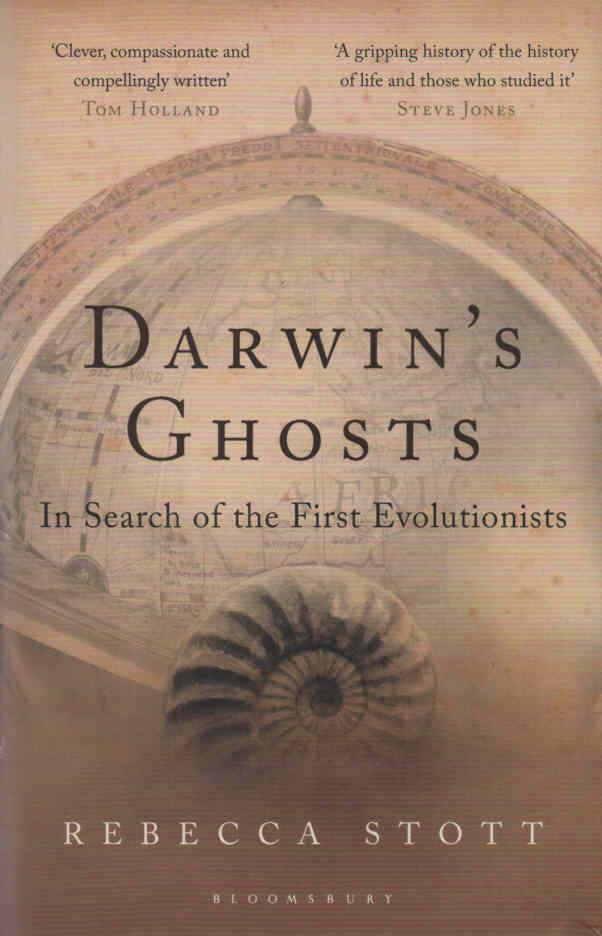
Darwin's Ghosts The Secret Journey of Evolution
Bloomsbury, London, 2012.
First UK edition. Hardcover, octavo; brown boards with gilt spine titling 383pp., monochrome illustrations; appendix, notes, bibliography and index. Fine in like illustrated dustwrapper. "Rebecca Stott has delved into the history of the idea of 'transmutation' more thoroughly than did Darwin. The supreme observer was no linguist, and nor was he a historian. He thoroughly acknowledged Wallace, Chambers, his grandfather Erasmus, and the great French biologist Jean-Baptiste Lamarck, but the rest of his list was a bit like a blunderbuss fired into a flock of possible predecessors, scoring a few rather arbitrary hits. Stott's list is more interesting. She has revealed an extraordinary batch of free thinkers who dared to consider mutability during times when such ideas might still cost the thinker his head... Every character that Stott introduces has a riveting story to tell, and all their histories are told with style and historical nous. I feel enriched for having learned about De Maillet, Tremblay, Palissy and al-Jahiz. There remains, though, the question of whether a tradition of 'transmutation' really influenced Darwin. Was he the successor of a suppressed current of speculation, a species of samizdat thought that finally had its day when the grip of religion weakened? The identification of a long line of intellectual 'ancestors' carries with it an implication of this kind. Doubtless, the 19th century was truly the right time for evolution to emerge from the shadows. Yet Darwin always strikes his readers as a 'bottom up' thinker, not quite Baconian in a devotion to facts before generating theory, but nonetheless somebody who took nothing for granted until he had tested it through experiment or by collecting facts. The proof of this facet of his character lies not in evolution, but in all the other, original contributions he made to science: the origin of coral reefs, the mechanisms of fertilisation in plants, the importance of worms in soil generation, facial expression in animals, the list goes on. Every time, he approached his object of study anew. It seems to me that, although Erasmus Darwin lay on his family tree, Charles was not receiving a subliminal message from a dead hypothesiser. As so often before and after, he was starting afresh, open to past influences, but fuelled by his Beagle voyage. Meanwhile, the world was also opening up to others with an unbiased eye, Wallace chief among them. Stott has done a wonderful job in showing just how many extraordinary people had speculated on where we came from before the great theorist dispelled all doubts." - Richard Fortey.
Click here to order

$22
71708
Uglow, Jenny
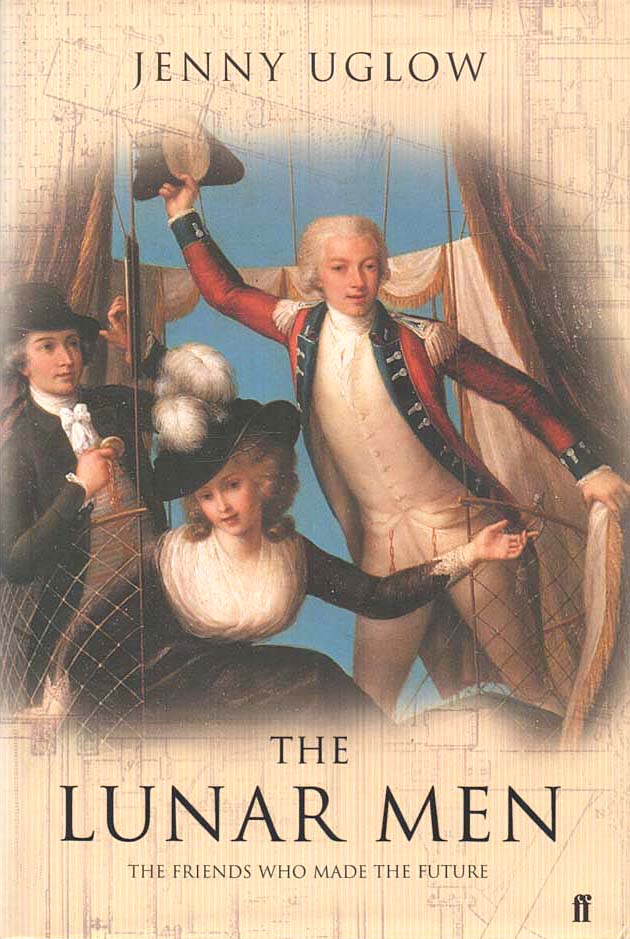
The Lunar Men The Friends Who Made the Future, 1730-1810
Faber and Faber Ltd., London, 2002.
First edition. Octavo; hardcover, 588pp., with 16pp. of full-colour and monochrome plates and many monochrome illustrations. Minor wear; lightly dusted text block top edge. Dustwrapper lightly edgeworn. Near fine. In the 1760s a group of amateur experimenters met and made friends in the Midlands. Most came from poor families, all lived far from the centre of things, but they were young and their optimism was boundless: together they would change the world. Among them were the ambitious toy-maker Matthew Boulton and his partner James Watt, of steam-engine fame; the potter Josiah Wedgwood; Erasmus Darwin, physician, poet, inventor and theorist of evolution (forerunner of his grandson Charles). With a small band of allies, including the exuberant followers of Rousseau, Richard Lovell Edgeworth and Thomas Day, they formed the Lunar Society of Birmingham (so called because it met at each full moon). Blending science, art and commerce the Lunar Men built canals, launched balloons, named plants, gases and minerals, changed the face of England and the china in its drawing rooms and plotted to revolutionise its soul. Jenny Uglow's vivid, exhilarating account uncovers the political passions, love affairs, friendships, and love of knowledge and power that drove these extraordinary men. It echoes to the thud of pistons and the wheeze and snort of engines, and brings to life the tradesmen, artisans and tycoons who shaped and fired the modern age.
Click here to order

$30